
How to Fix a Teeth Gap Without Braces
 Medically Reviewed by Whistle Dental Team
Yes, you can fix a teeth gap without traditional metal braces using modern treatments like clear aligners, dental bonding, porcelain veneers, dental crowns, or a frenectomy. The right approach depends on whether you want to physically move your teeth or simply mask the space.
Clear aligners represent the safest non-braces method to physically close a gap (known clinically as a diastema) by moving tooth roots into proper alignment within the bone. Cosmetic options like composite bonding and porcelain veneers conceal the gap in one to two dental visits by extending the width of your natural teeth. DIY methods, such as using rubber bands or attempting natural tongue exercises, are clinically unproven and extremely dangerous to your oral health.
Key Takeaways
- You can fix a teeth gap without traditional braces using clear aligners, dental bonding, porcelain veneers, dental crowns, or a frenectomy, depending on the cause and size of the gap.
- Clear aligners are the only non-braces option that physically moves teeth into proper alignment, providing long-lasting and natural-looking results.
- Dental bonding and porcelain veneers offer quick cosmetic improvements by concealing the gap rather than moving the teeth.
- Choosing the right treatment depends on your gap size, oral health, aesthetic goals, and whether you want a cosmetic fix or permanent orthodontic correction.
- Consulting an orthodontist ensures a personalized treatment plan that addresses the underlying cause of the gap while preserving your long-term oral health.
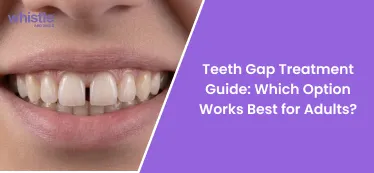
A gap between teeth (usually the front two) is called a diastema. It's a common finding, and people want to close it for cosmetic reasons.
But when we see a gap first thing that comes to our mind is braces ! The good news? One does not always need braces to fix the tooth gap.
What Causes Teeth Gaps and How Does the Cause Affect Treatment?
Dental gaps, known as diastemas, most commonly appear between the two upper front central incisors, though they can develop anywhere in your mouth. When patients ask how to remove teeth gap without braces, dental professionals evaluate your treatment options through two primary categories:
- Orthodontic Movement (Closing the Gap): Physically shifting the teeth and their underlying root structures closer together within the jawbone.
- Restorative Masking (Concealing the Gap): Leaving the tooth roots in their original positions while adding tooth-colored composite resin or porcelain to widen the teeth and cover the empty space.
Selecting between closing or concealing depends on your overall bite alignment, the width of the gap, the health of your gums, and your personal aesthetic timeline.
Why Teeth Gaps Form: The Cause Matters for Treatment
Before choosing a treatment, understanding why a gap exists helps predict whether it will stay closed after treatment and which options are appropriate.
Common causes of teeth gaps:
- Jaw-tooth size mismatch: If your jaw is proportionally larger than your teeth, natural spacing appears between them. This is genetic and very common. A 1–2mm midline gap often falls into this category.
- Oversized labial frenum: The labial frenum is the band of tissue running from the inside of your upper lip to your upper gum. If this tissue is thick or extends too far between the front teeth, it physically prevents them from sitting together — and can push them apart. A gap caused by an overgrown frenum often reopens after cosmetic treatment unless the frenum issue is addressed alongside it.
- Missing or undersized teeth: When a tooth is missing, neighbouring teeth gradually shift toward the space. This can create new gaps or widen existing ones.
- Tongue thrusting: Instead of pressing against the roof of the mouth during swallowing, some people push their tongue forward against the back of the front teeth. This sustained pressure gradually pushes teeth apart.
- Gum disease: When gum disease causes bone loss around teeth, the support structure weakens and teeth can shift. Gaps that develop in adults without prior history of spacing may indicate underlying periodontal disease — a consultation before any cosmetic treatment is essential.
- Childhood habits: Prolonged thumb sucking or dummy use in early childhood can move the front teeth forward and apart.
The cause of your gap determines whether a cosmetic fix is appropriate on its own, or whether addressing the underlying cause is part of the treatment plan.
Best Ways to Fix a Teeth Gap Without Braces
1. Clear Aligners (Like Whistle)
These are clear plastic trays that fit over your teeth and slowly move them into the right position. You wear a new set every couple of weeks.
Good for:
People with small or medium gaps who want to straighten their teeth without metal braces.
Pros:
- Almost invisible (most people won’t notice when worn).
- You can take them out to eat and brush your teeth.
- Diet is not affected
- More comfortable in social gatherings than metal braces.
Cons:
- It can be a bit on the higher side economically
- One has to wear them for most of the day (20–22 hours), with only breaks during meals
- It can be challenging for very large gaps or complex dental issues.
2. Laminates/Dental Bonding
A dentist applies a tooth-colored material called composite resin to your teeth, shapes it to close the gap, and then hardens it with a curing light.
Good for:
Small to medium gaps can be closed, and the effect is seamless, like a natural tooth
Pros:
- This is quick and painless and is usually done in one visit.
- requires no drilling, a little bit of shaping, or the removal of tooth structure.
- Looks natural when done well.
Cons:
- They are not permanent as they can chip or stain over time.
- It might require being touched up every few years.
3. Veneers
These are partial crowns, basically thin, custom-made shells (usually made of porcelain) that are glued to the front of your teeth. They’re like fake fingernails, but for teeth.
Good for:
Closing gaps and improving the overall look of your teeth (like color and shape).
Pros:
- They look very natural and beautiful.
- They last a long time (10–15 years or more with care).
- They don't stain like natural teeth.
Cons:
- They are more expensive than bonding.
- A dentist has to remove a little bit of your natural tooth(0.2-0.5mm)to make space for the veneer.
- They are irreversible (once done, you’ll always need veneers or crowns).
4. Crowns
A crown is like a cap that covers the whole tooth. Dentists use this when a tooth is damaged, but it can also be used to close a gap.
Good for:
Closing big gaps, or when your teeth are worn down, broken, or misshapen.
Pros:
- These are very strong and durable and last long.
- They can fix both cosmetic as well as structural problems.
Cons:
- These are more invasive - the dentist has to reduce the tooth from all sides so as to fit the crown.
- These are more expensive compared to bonding.
5. Frenectomy (If the Gap Is Caused by the Tissue Between Teeth)
Sometimes, a small piece of tissue between your front teeth (called a frenum) is too thick or tight and causes a gap. A dentist or oral surgeon can remove or trim it.
Good for:
People whose gap is caused by the frenum (especially in kids and teens).
Pros:
- It is a quick and simple procedure.
- It might allow the gap to close on its own afterward (or with the help of bonding or aligners).
Cons:
- These generally don’t close the gap by itself rather are usually just the first step.
Also Read:
The Most Important Distinction: Closing a Gap vs Concealing One
This is the one thing most articles on this topic don't explain clearly and it determines whether your result is permanent or temporary.
Cosmetic gap filling (bonding and veneers) adds material to the surfaces of existing teeth to make them appear wider, visually eliminating the space between them. The teeth themselves don't move. The gap still exists anatomically — it's been covered. These solutions can look excellent but don't change the actual position of your teeth.
Orthodontic gap closure (clear aligners or braces) moves the teeth together so the gap physically closes. No material is added. The space disappears because the teeth now occupy it. The result is structural, not cosmetic — though retention (retainers) is still needed to maintain position.
This distinction matters for several reasons:
Cosmetic fixes may need to be redone after several years (bonding) or replaced (veneers).
- If the underlying cause isn't addressed (e.g., a thick frenum, tongue thrust), cosmetic fills can fail as the original force continues acting on the teeth.
- Orthodontic closure addresses the position itself, producing a result that requires only standard retainer use to maintain.
- Neither approach is universally better - they serve different cases. But knowing what each one actually does helps you ask the right questions.
How Whistle Clear Aligners Close Teeth Gaps Without Metal Braces
Daily Care and Maintenance Guide for Teeth Gap Patients
- Wear Your Aligners for 20 to 22 Hours Daily: Consistent wear ensures steady biological pressure for predictable, on-schedule gap closure.
- Clean Your Aligner Trays with Lukewarm Water: Rinse trays with cool or lukewarm water and gently brush them with a soft toothbrush. Never use boiling water, which warps the medical polymer.
- Floss Daily Between Newly Closed Teeth: As teeth move closer together, food particles easily lodge in newly formed contact points. Daily flossing prevents interdental decay and gum irritation.
- Wear Your Post-Treatment Retainers as Directed: Wear your custom retainers full-time for the first 3 to 6 months, followed by nightly wear to keep your smile permanently locked in place.
- Avoid Chewing on Hard Objects: If you have composite bonding or veneers, avoid biting directly into hard candies, ice cubes, or opening packages with your front teeth.
How to remove teeth gap without braces using dental bonding or veneers?
Dental Bonding (Composite Bonding)
Dental bonding is the fastest, least invasive cosmetic method to close small to moderate gaps. Your dentist applies a high-grade, tooth-colored composite resin directly to the side edges of the teeth framing the gap. They shape the material to widen the teeth, cure it with a specialized blue light, and polish it to match your natural enamel texture. Bonding requires zero enamel reduction, takes just 30 to 60 minutes in a single visit, and delivers an immediate cosmetic fix.
Porcelain Veneers
Dental Crowns
Gap Size Guide: Which Treatment Fits Which Gap?
| Gap Size | Recommended Options | Not Appropriate |
|---|---|---|
| Very small (under 1mm) | Bonding | Veneers (over-engineering) |
| Small (1–2mm) | Bonding, Clear aligners | Crowns |
| Moderate (2–4mm) | Clear aligners, Veneers (if other cosmetic needs) | Bonding alone (teeth proportions become distorted) |
| Large (4mm+) | Clear aligners | Bonding, Veneers alone |
| Multiple gaps across the arch | Clear aligners | Bonding, Veneers (impractical at scale) |
| Gap caused by frenum | Frenectomy + aligners or bonding | Any cosmetic fix without addressing frenum first |
| Gap caused by gum disease | Treat gum disease first, then reassess | Any cosmetic treatment before gum health is restored |
What Happens If You Don't Treat a Teeth Gap?
Some gaps remain stable for life with no adverse effects. Others can create ongoing problems:
- Food consistently trapping in the space can irritate the gum and increase decay risk at the gap site
- If teeth shift over time (due to a missing tooth, continued tongue thrust, or gum disease), an existing gap can widen
- A gap caused by gum disease will typically worsen if the disease progresses untreated
- Bite misalignment accompanying a gap can cause uneven tooth wear or jaw discomfort
A professional assessment clarifies whether your gap is cosmetically inconvenient or medically significant and that distinction determines the urgency of treatment.
How can you fix diastema without braces using clear aligners?
Clear aligners are the premier choice for patients who want to fix diastema without braces by physically moving their natural teeth.
Unlike traditional metal braces that use brackets and wires, clear aligners consist of a series of custom-molded, medical-grade polyurethane trays. These virtually invisible trays fit snugly over your teeth, applying gentle, continuous mechanical force.
Each set of aligners moves your teeth by a fraction of a millimeter. Over several months, your teeth shift smoothly, closing the diastema completely.
Because aligners move the actual roots of your teeth within the bone, they preserve your natural tooth structure without requiring any enamel shaving or artificial bonding materials. Furthermore, clear aligners are completely removable, allowing you to brush, floss, and eat without dietary restrictions.
Your Next Steps
Fixing a teeth gap (diastema) doesn’t always require traditional metal braces. Depending on the cause, gap size, and your goals, options such as clear aligners, dental bonding, porcelain veneers, crowns, or a frenectomy may be considered.
Clear aligners can physically move teeth into better alignment, while bonding and veneers mainly improve the appearance by covering the space. A dental professional can determine the most suitable approach after evaluating your teeth and oral health.
Ready to fix your teeth gap? Book your appointment at your nearest Whistle partner clinic and get a personalized treatment recommendation.
Teeth Braces Clinics in Your City
Teeth Braces in Ahmedabad | Teeth Braces in Amritsar | Teeth Braces in Bengaluru | Teeth Braces in Bhiwadi | Teeth Braces in Chandigarh | Teeth Braces in Chennai | Teeth Braces in Derabassi | Teeth Braces in Dombivli | Teeth Braces in Faridabad | Teeth Braces in Ghaziabad | Teeth Braces in Greater Noida | Teeth Braces in Gurgaon | Teeth Braces in Hyderabad | Teeth Braces in Jaipur | Teeth Braces in Jalandhar | Teeth Braces in Kakinada | Teeth Braces in Ludhiana | Teeth Braces in Mohali | Teeth Braces in Navi Mumbai | Teeth Braces in New Delhi | Teeth Braces in Noida | Teeth Braces in Panchkula | Teeth Braces in Panvel | Teeth Braces in Pune | Teeth Braces in Secunderabad | Teeth Braces in Surat | Teeth Braces in Thane | Teeth Braces in Vadodara | Teeth Braces in Vijayawada | Teeth Braces in Vizag | Teeth Braces in Zirakpur
Book 3D Teeth Scan
Consult our experts and get a 3D preview of your smile transformation!
How to Fix a Teeth Gap Without Braces
Fix a Teeth Gap Without Braces
FAQ's
Q1.Can I permanently fix a teeth gap without braces?
Yes, Dental bonding and porcelain veneers can conceal a gap permanently (with normal maintenance and eventual replacement). Clear aligners can close a gap permanently, with retainer use required to maintain position. The permanence of any result depends on addressing the underlying cause and maintaining the outcome correctly.
Q2.Can a large gap be fixed without braces?
Large gaps (4mm+) are generally not suitable for cosmetic fixes like bonding or veneers alone - widening teeth that much creates proportional distortion and an unnatural appearance. Clear aligners are the appropriate non-brace treatment for large gaps, physically moving the teeth together to close the space.
Q3.Is dental bonding for gap teeth permanent?
Dental bonding is durable but not considered permanent. Composite resin typically needs replacement or touch-up every 5–7 years due to staining and normal wear. With good care - avoiding biting hard objects and managing staining foods it can last longer. Porcelain veneers last significantly longer than composite bonding.
Q4.Will a teeth gap close on its own?
Gaps do not close naturally in adults. In children, some gaps close as permanent teeth erupt and jaw growth continues - a dentist or orthodontist can advise whether watchful waiting is appropriate for a child. In adults, gaps typically remain stable or occasionally widen if underlying issues (like gum disease or continued tongue pressure) aren't managed.
Q5.Are veneers better than clear aligners for gap closure?
They solve different problems. Veneers cover the gap cosmetically quick, aesthetically excellent, but structural gap remains. Clear aligners close the gap by moving teeth structural result, no material added to teeth, longer process. For small cosmetic gaps with no alignment concerns, veneers or bonding are reasonable. For any gap with associated alignment or bite concerns, aligners are the more clinically sound choice.
Q6.What's the fastest way to fix a small gap in teeth?
The fastest way to fix a small gap in teeth is usually dental bonding (composite bonding). This treatment can often be completed in a single dental visit, where a tooth-colored composite resin is applied and shaped to close the gap.
Q7.Can I fix gaps in my teeth without braces?
Yes, many teeth gaps can be fixed without traditional braces. Depending on the size and cause of the gap, treatment options may include dental bonding, porcelain veneers, clear aligners, dental crowns, or a frenectomy if excess gum tissue is contributing to the spacing.
Q8.Is a frenectomy necessary to fix diastema without braces?
A frenectomy is necessary only if a thick, low-attaching labial frenum is physically blocking your front teeth from meeting. Your Whistle dentist will evaluate your tissue during your consultation.
You May Also Like



 Medically Reviewed by Whistle Dental Team












 Medically Reviewed by Whistle Dental Team

 Medically Reviewed by Whistle Dental Team