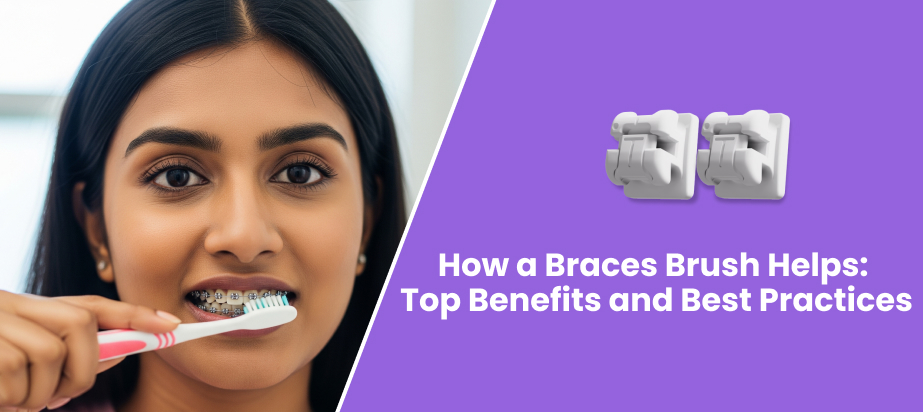
How a Braces Brush Helps: Top Benefits and Best Practices
 Medically Reviewed by Whistle Dental Team
Getting braces started does not mean it will start making your cavity and problem-free dreams come true immediately. No doubt braces will eventually give you healthy, clean teeth, which will be straighter and non-problematic.
A hearty congratulations for starting to love yourself and your smile, but now an uphill, difficult trip starts of maintaining the braces and your pearly teeth.
With the braces in place, there can be a lot of dirt accumulation around the brackets and wires; it becomes difficult to clean with a normal brush; therefore, specialized toothbrushes made for braces are essential to ensure deep cleaning and promote overall oral health during treatment.
So, we'll explore the various types of toothbrushes suitable for braces, discuss their unique qualities, and provide proper guidance on selecting the right one for yourself or your relatives—to equip them with a better smile and a healthier treatment in toto.
Why Do You Require It?
There are a lot of things that can happen when you don’t brush your teeth, which now have your new and shiny braces. Let's talk about them one by one:
| Effects | Meaning | Where is it seen? |
| Plaque | Dirt that collects on the tooth | Front and back surfaces of the tooth |
| Caries | Cavities that destroy your teeth | Anywhere on the tooth where food can get stuck |
| Gingivitis | Infection in the gums, making them red and swollen | On the gums where the teeth end and the gums start |
| Slows Treatment | The infection prevents the movement of the bone and teeth, delaying the treatment | No changes even after 1 month of the treatment |
| Ulcers | Painful white or red spot due to rubbing of brackets, followed by infection | On the cheek, gums, or tongue |
| Bad Breath | Smelly foul breath due to dirt and decomposing food particles in your mouth | When you breathe out air or on your tongue |
Why should you use Teeth Braces Brush?
Maintaining good oral hygiene is essential during orthodontic treatment, and using a teeth braces brush can help clean hard-to-reach areas around brackets and wires. These specially designed brushes help remove food particles and plaque buildup, reducing the risk of cavities, gum problems, and staining while wearing braces. Proper brushing techniques can also support healthier teeth and gums throughout treatment.
- A teeth braces brush is designed to clean around brackets and orthodontic wires effectively.
- A teeth clip brush can help remove plaque and food debris from difficult-to-reach areas.
- Regular brushing helps reduce the risk of tooth decay and gum inflammation during treatment.
- Orthodontic patients should brush after meals whenever possible.
- Combining specialized brushes with flossing can improve overall oral hygiene while wearing braces.
Why Regular Brushes Just Don’t Work!
Imagine trying to clean spaghetti off a fork with a feather. Sounds ineffective and weird, correct? Similarly, using a normal toothbrush on braces or aligner attachments is like that—not quite up to the task. Braces come with brackets, wires, and all sorts of nooks and crannies where food loves to hide, and plaque and microorganisms throw parties. Without the right shake-up, you're inviting cavities and gum issues to join the fun.
Dream Team for Braces
Let me introduce you to the superheroes of the toothbrush world:
- V-Shaped Bristle Brushes: These brushes have bristles angled at 45 degrees to hug your brackets and wires, ensuring a thorough clean and shiny smile.
- Interdental Brushes: These are tiny yet effective pipe or toothpick-like cleaners. They're perfect for sneaking between wires and brackets, removing food, dirt, and plaque from their hideouts.
- Electric Toothbrushes with Ortho Heads: Some electric brushes come with specialized heads designed to find and GPS the maze of braces, providing a deep clean with no stress of tilting your head or hands.
- Single-Tuft Brushes: These brushes focus on one tooth at a time, making them reliable for cleaning around single brackets and near the gums.
- Mouthwashes: The magic cleaners are liquids that will remove the dirt, kill the bacteria, and give you a fresh breath.
- Water Flosser: High-power sprays that push out stuck food and plaque with water spray jets.
Brushing Tips
- Brush After Every Meal: Sneaky and sticky food particles are kept at bay because of regular brushing.
- Use Fluoride Toothpaste: your orthodontist will give you a fluoride toothpaste, which will stop cavities from growing .
- Don’t forget to Floss: Use floss or water flossers to clean between teeth.
- Regular Dental Check-ups: Your dentist can spot issues before they become problems
Also Read:
- Braces Side Effects: Not What You Expect, But You’ll Love Them Anyway
- How Much Time Does Bracing Take to Fill Teeth Gaps?
FAQ: Toothbrushes for Braces
1. Special toothbrush for braces?
While you can use a regular toothbrush, specialized brushes like orthodontic or V-shaped bristle brushes are designed to clean around brackets and wires more effectively, reducing plaque buildup and preventing gum issues.
2. What is an electric toothbrush, and does it clean the braces?
Small heads of an electric brush with soft bristles are used for the removal of dirt and plaque, with a good fluoride toothpaste is used to clean the braces and teeth efficiently and maintain good oral hygiene.
3. How long can I use one toothbrush for?
The bristles break and become blunt, so every 2 - 3 months the brush should be changed.
4. What are the other things used for cleaning?
There are tools like interdental brushes, flossers, and water flossers that can help clean between brackets and under wires, ensuring a thorough oral hygiene routine.
Also Read:
Conclusion
Oral health maintenance during the braces or aligner treatment requires a lot of attention, but with correct equipment and techniques, it's completely manageable. Choose a toothbrush with soft, rounded bristles, either manual or electric, and keep in mind additional things like interdental brushes or water flossers. Regular brushing, flossing, and dental check-ups will keep your little pearlies healthy and your orthodontic tale on track.
Also Read:
Book 3D Teeth Scan
Consult our experts and get a 3D preview of your smile transformation!
You May Also Like



 Medically Reviewed by Whistle Dental Team














 Medically Reviewed by Whistle Dental Team

 Medically Reviewed by Whistle Dental Team