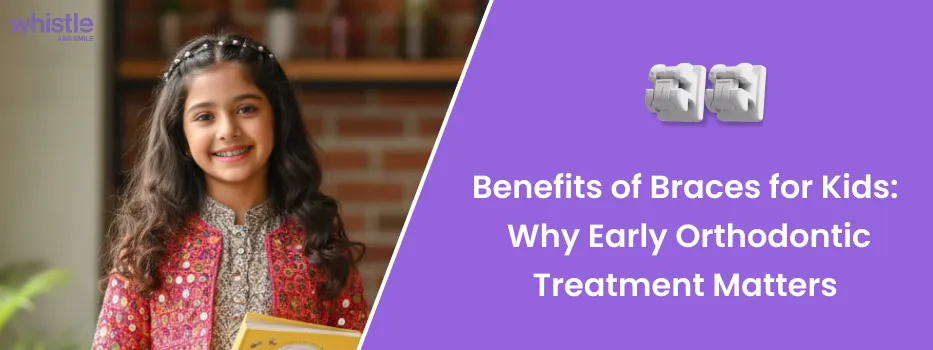
Benefits of Braces for Kids: Why Early Orthodontic Treatment Matters
 Medically Reviewed by Whistle Dental Team
As a parent, you want what’s best for your child- from their health to their confidence. But when it comes to dental care, many parents assume braces are only for teenagers.
The reality? Starting orthodontic treatment early can prevent bigger problems and set the foundation for a healthier, more confident smile.
Let’s explore why early orthodontic care matters- and how it can truly benefit your child.
What Does “Early Orthodontic Treatment” Mean?
Early orthodontic treatment, also known as interceptive treatment, usually begins between ages 7 and 10 when children have a mix of baby teeth and permanent teeth.
This phase allows orthodontists to:
- Monitor Growth
- Identify developing issues
- Intervene at the right time
Quick check:
Is your kid between 6-9 years old and starting to get his/her permanent teeth? This time is perfect for an orthodontic consultation.
Why Early Treatment Instead Of Waiting?
It’s a common thought: “Let’s wait until all the permanent teeth come in.”
But here’s the catch: by waiting, you may miss the chance to prevent problems rather than just treat them later.
Think of it like this:
- Fixing things = simpler, faster, less invasive treatment
- Delaying=more complex procedures later
Top benefits of Braces for Kids
1. Helps the Jaw Grow the Right Way
During childhood, the jaw is still developing. Orthodontic appliances can guide this growth effectively.
- Correct bite issues early
- Prevents jaw imbalance
- Improves Facial symmetry
Early treatment can help fix that while they’re still growing.
2. Creates Space For Incoming Teeth
One of the most common issues is a lack of space for permanent teeth.
Early treatment can:
- Expand the jaw
- Prevent severe crowding
- Reduce the chances of extractions later
- Better alignment from the beginning
- Avoids complicated corrections later
3. Stops Problems Before They Get Worse
Small orthodontic issues can turn into bigger ones if ignored
Braces can:
- Correct crossbites and open bites
- prevent uneven wear of teeth
- Reduce strain on jaw joints
4. Improves Eating And Chewing
- Misaligned teeth can make chewing difficult or inefficient
- With early correction:
- Food is chewed
- Digestion improves
- Less strain on teeth and muscles
5. Supports Clear Speech Development
Teeth and jaw alignment play a role in how your child.
Braces:
- Improve pronunciation
- Help correct speech difficulties linked to dental issues.
6. Boosts Confidence at a Young age
Kids today are highly aware of their appearance, and peers can be harsh
A well-aligned smile:
- Builds self-esteem
- Encourages social confidence
- Reduces the chances of teasing
Quick Thought:
Would your child feel more confident smiling in photos or speaking in class?
7. Protects teeth from Injury
Teeth that stick out (especially front teeth) are more prone to damage during falls or sports.
Braces Help:
- Align teeth into safer positions
- Reduce risk of fractures or trauma.
8. Improves Oral Hygiene Habits
Crooked teeth make brushing and flossing harder.
Aligned teeth:
- They are easier to clean
- Reduce risk of cavities and gum problems
- Encourage better hygiene habits early
Signs Your Child May Need Braces
Keep an eye out for these early indicators:
- Thumb sucking after age 5
- Tongue thrusting
- Lower jaw prominence
- Mouth breathing
- Crowded or overlapping teeth
- Difficulty chewing
- Teeth that don’t meet properly
- Jaws that shift or make sounds
- Early or delayed loss of baby teeth
Interactive Check:
Do you notice any of these signs in your child? If yes, it’s worth a consultation.
Also Read:
Types of Orthodontic Solutions For Kids
Depending on your child’s needs, treatment may include:
- Traditional braces
- Palatal expanders
- Habit-breaking appliances
- Space maintainers
Each plan is customized-no “one size fits all” approach here.
When To Visit an Orthodontist?
The ideal age for the first visit is 7 years. Even if treatment isn’t needed immediately, early evaluation helps:
- Detect hidden problems
- Plan future treatment
- Avoid surprises later
Common Myth: Early Treatment Means Longer Treatment
Not True!
In many Cases:
- Early treatment reduces total treatment time
- Makes future braces simpler (or sometimes unnecessary)
Final Takeaway
Early orthodontic treatment is not just about straight teeth- it’s about giving your child:
- A healthy bite
- Proper jaw development
- Better oral hygiene
- Strong self-confidence.
Final question for you:
Would you rather prevent the problem now or fix a bigger one later?
Conclusion
A simple orthodontic consultation at the correct age can make a huge difference in your child’s journey. Early intervention often means easier, faster, and more effective results.
Because when it comes to your child’s smile- starting early is the smartest step you can take.
Also Read:
Book 3D Teeth Scan
Consult our experts and get a 3D preview of your smile transformation!
FAQ's
Q1.Are Braces for Kids a Good Idea?
Yes, braces for kids can be a very good idea when there are issues like crooked teeth, gaps, overcrowding, or bite problems. Early orthodontic treatment can guide proper jaw growth, improve oral health, and create a healthier smile. Braces may also help children chew and speak more comfortably while preventing future dental complications. An orthodontic evaluation at the right age can help determine whether braces are needed.
Q2.Will My Teeth Move 10 Years After Braces?
Yes, teeth can still move even 10 years after braces if retainers are not worn properly. Teeth naturally shift over time due to aging, chewing pressure, and jaw changes. This is why orthodontists recommend wearing retainers after braces treatment to maintain the new alignment. Consistent retainer use helps keep teeth straight and prevents relapse after orthodontic treatment.
Q3.How Much Do 6 Month Braces Cost in India?
The cost of 6 month braces in India usually ranges from ₹30,000 to ₹1,00,000, depending on the type of braces, clinic location, and treatment complexity. Short-term braces are mainly used for minor cosmetic corrections of the front teeth. Metal braces are generally more affordable, while ceramic braces and clear aligners may cost more. A consultation with an orthodontist can provide a more accurate treatment estimate.
Q4.How Painful Is Braces on a Scale of 1 to 10?
Braces pain is generally considered mild to moderate and is often rated between 3 and 6 out of 10. Most people feel soreness or pressure during the first few days after getting braces or after adjustments. The discomfort usually improves within a week as the mouth adapts to the braces. Orthodontic wax, soft foods, and pain relief medications can help manage braces discomfort.
Q5.What Are the 5 Stages of Braces?
The 5 stages of braces treatment usually include:
- Consultation and Diagnosis – The orthodontist examines the teeth, takes X-rays, and creates a treatment plan.
- Braces Placement – Brackets and wires are attached to the teeth.
- Alignment and Leveling – Teeth gradually begin moving into better positions.
- Bite Correction and Space Closure – Bite issues and gaps are corrected for proper alignment.
- Retention Stage – Braces are removed, and retainers are used to maintain the results.
Each stage is important for achieving a healthy and properly aligned smile.
Q6.What Foods Should I Avoid With Braces?
People with braces should avoid hard, sticky, and chewy foods that may damage brackets and wires. Foods commonly avoided with braces include popcorn, chewing gum, hard candies, nuts, ice, caramel, and crunchy chips. Very sticky sweets and tough meats may also cause problems. Eating soft foods and maintaining good oral hygiene can help protect braces and improve treatment results.
You May Also Like
 Medically Reviewed by Whistle Dental Team

 Medically Reviewed by Whistle Dental Team
 Medically Reviewed by Whistle Dental Team