
Lower Teeth Braces: Treatment Options, Cost & Clear Aligners
 Medically Reviewed by Whistle Dental Team
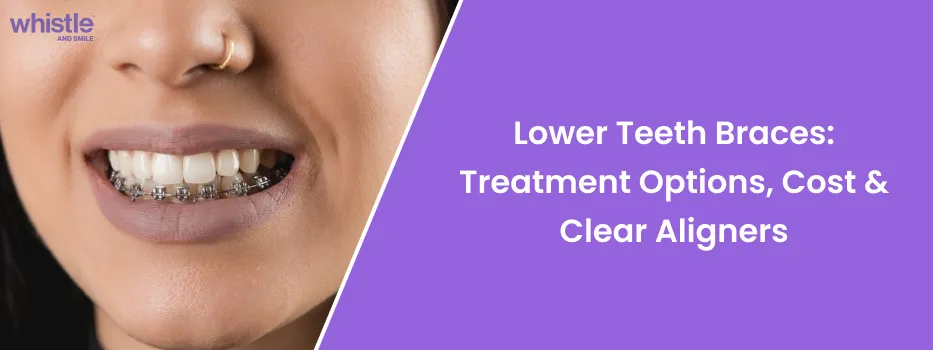
Lower teeth braces are orthodontic appliances designed to straighten crowded, crooked, or overlapping bottom teeth, though treating the lower jaw alone requires careful bite evaluation by an orthodontist.
While single-arch treatment is possible in select cases with adequate overjet, moving lower teeth in isolation frequently creates bite interferences when chewing. Treatment choices include traditional metal brackets, ceramic braces, and clear aligners.
Key Takeaways
- Single-Arch vs Dual-Arch Reality: While you can place braces for lower teeth only, over 80% of orthodontic patients require dual-arch treatment to prevent dangerous bite interferences when chewing.
- Why Lower Incisors Crowd First: Natural physiological mesial drift, late mandibular jaw narrowing, and childhood retainer abandonment make bottom front teeth the most vulnerable to crowding.
- Clear Aligners Reduce Lower Lip Irritation: Traditional metal lower teeth braces frequently rub against the sensitive inner lining of the lower lip; custom clear aligners provide a smooth, ulcer-free alternative.
- Single-Arch Treatment Does Not Cut Cost in Half: Fixed overheads for 3D digital intraoral diagnostics, orthodontic treatment planning, and final retainers mean single-arch treatment costs approximately 70% to 80% of a full dual-arch case.
- Permanent Retainers Are Mandatory: Lower front teeth have the highest orthodontic relapse rate in the human mouth; a fixed lingual bonded wire paired with a night-time clear retainer provides permanent stability.
At Whistle partner clinics, fixed braces range from Rs. 45,000 to Rs. 70,000, while clear aligners range from Rs. 60,000 to Rs. 2.5 Lakhs with flexible monthly EMI options across 600+ centers nationwide.
Why Do Bottom Teeth Get Crooked First?
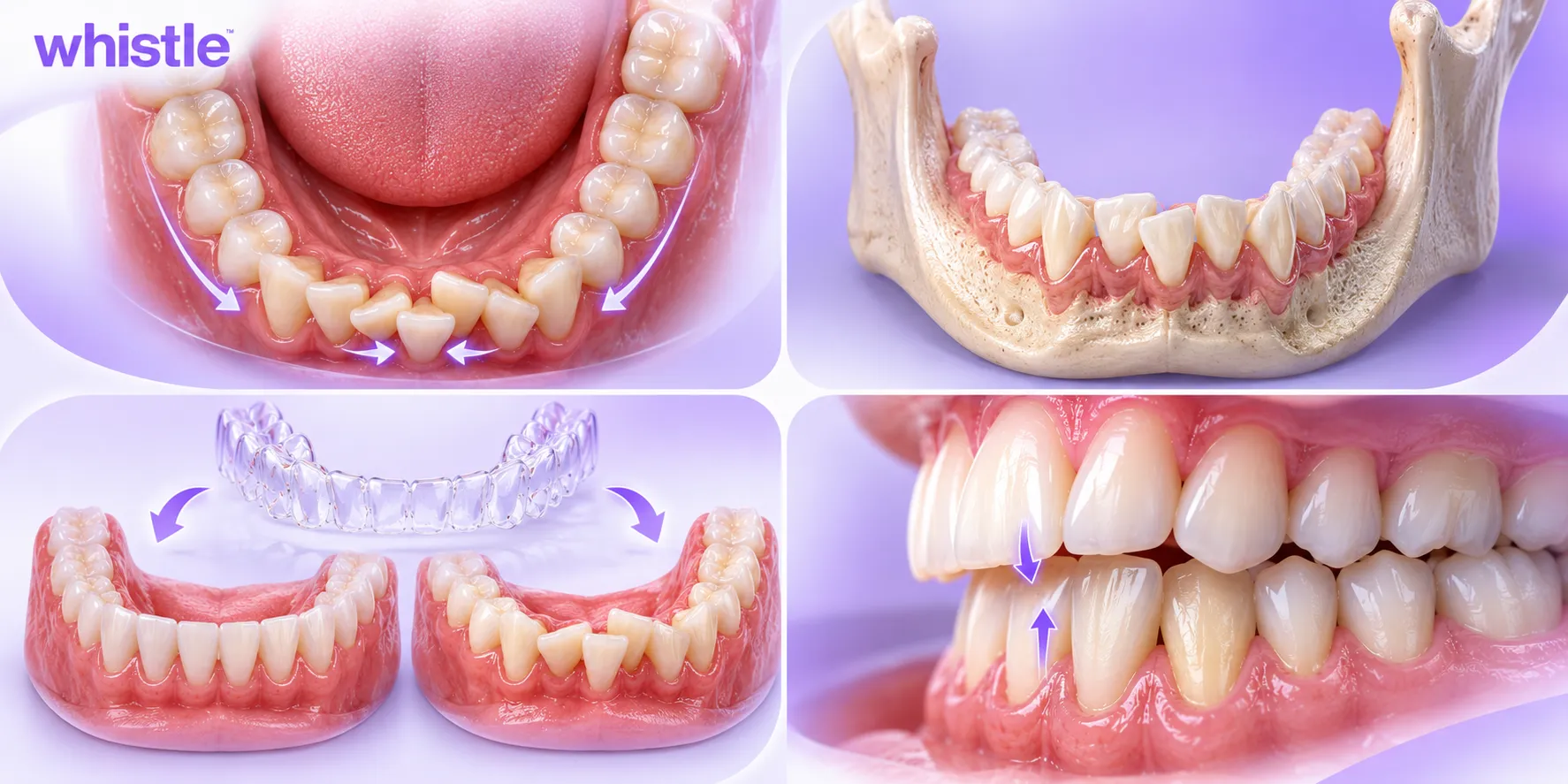
- Physiological Mesial Drift: Throughout your adult life, your back chewing teeth exert a continuous, subtle forward force toward the front of your mouth. Because the lower front incisors are the smallest, narrowest teeth in the human dental arch, they absorb the brunt of this forward migration, causing them to rotate and crowd together.
- Late Mandibular Growth and Arch Narrowing: Long-term cephalometric studies show that the lower jaw (mandible) continues subtle remodelling well into your twenties and thirties. During this phase, the distance between your lower canine teeth (intercanine width) naturally narrows by 1 to 2 millimeters, decreasing available arch space.
- Retainer Non-Compliance: If you wore braces as a teenager and stopped wearing your removable retainer, your bottom front teeth are almost always the first to shift. Elastic gum fibers (supra-alveolar fibers) retain a rotational memory for years, pulling straightened teeth back toward their original crooked positions.
- Deep Bite and Chewing Force: When you have a deep overbite, your upper front teeth overlap your lower teeth excessively. Every time you chew or clench, your upper teeth drive a backward wedge force against the lower incisors, forcing them inward and collapsing the lower arch.
Can You Get Braces on Just Your Bottom Teeth? The Single-Arch Dilemma
In orthodontic medicine, treating a single dental arch is called single-arch treatment. While it is technically possible to bond brackets to only your bottom row, orthodontists must evaluate the whole chewing system before approving this plan.
Think of your teeth like interlocking gears in a mechanical clock. For gears to turn smoothly without grinding down their teeth, the top and bottom cogs must mesh in perfect harmony. In human dentistry, your upper dental arch is naturally wider than your lower arch, allowing upper teeth to sit slightly outside and over the bottom teeth (normal overjet and overbite).
Clinical Risk: The "Edge-to-Edge" Bite Trap
When bottom teeth are crowded, unraveling them requires extra space. If your orthodontist straightens crowded lower teeth without touching the upper arch, those lower teeth must expand outward (flare). If your upper arch is not expanded simultaneously to accommodate them, your bottom front teeth will collide directly into the backs of your top front teeth.
This creates an edge-to-edge collision bite, leading to severe enamel chipping, chronic jaw pain (TMJ disorder), and inability to chew food comfortably.
When Is Single-Arch Lower Treatment Medically Safe?
An orthodontist may approve lower teeth braces exclusively if you meet three strict clinical criteria:
- You already possess an ideal Class I molar relationship with healthy bite balance in the back.
- You have sufficient horizontal space (at least 2 to 3 millimeters of overjet) between your upper and lower incisors, allowing lower teeth to move forward without striking the upper teeth.
- Your crowding is mild to moderate and can be resolved using Interproximal Reduction (IPR), a gentle polishing technique that creates tiny fractions of a millimeter between teeth so they align without flaring outward.
Also Read:
Treatment Options for Braces for Lower Teeth
If you need lower teeth alignment, several modern orthodontic appliances can guide your bottom teeth into a healthy arch:
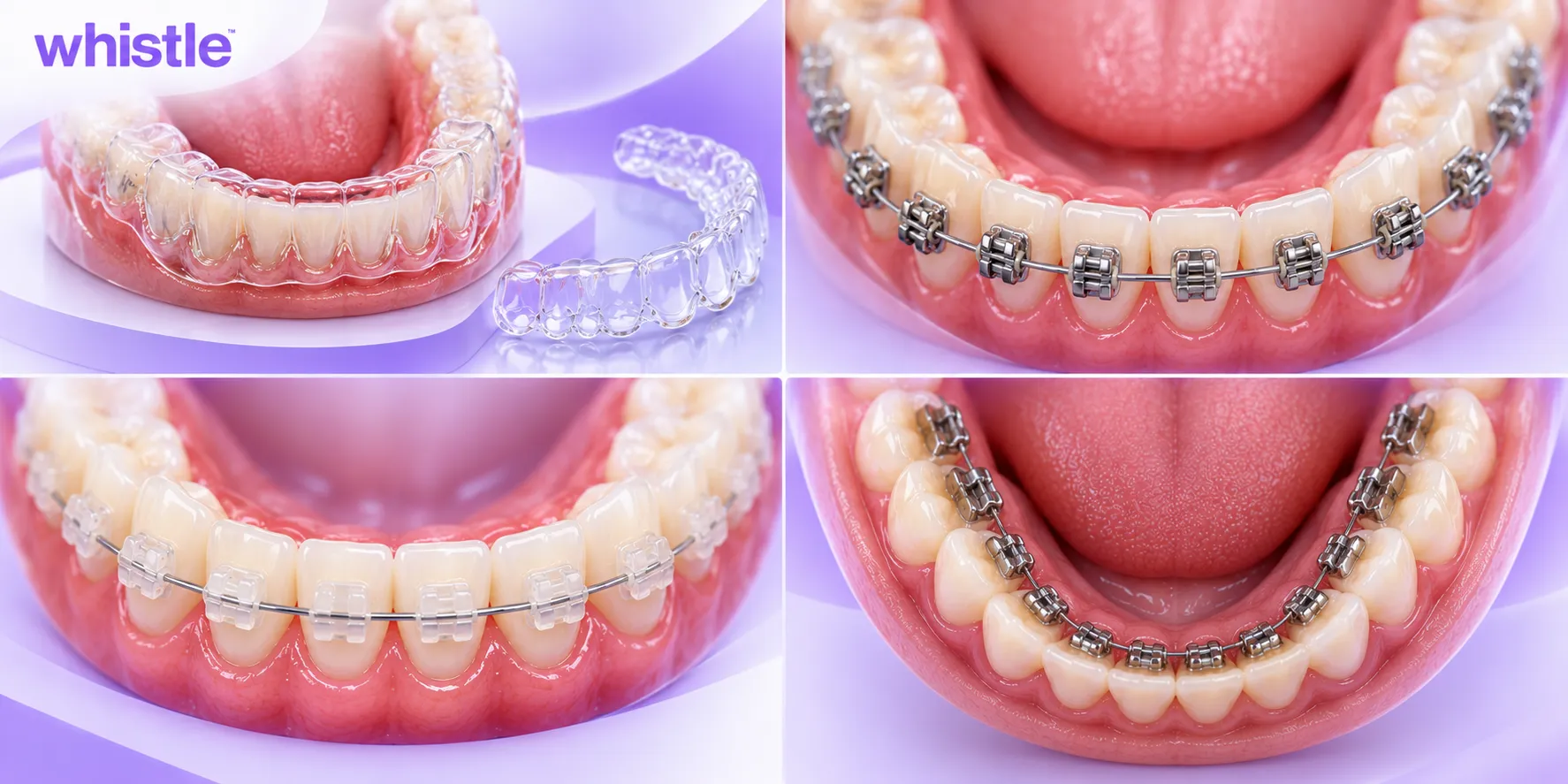
1. Clear Aligners (The Patient Favorite for Lower Teeth)
Clear aligners are custom-crafted transparent polyurethane trays that fit snugly over your lower teeth. When considering how to lower teeth without braces, clear aligners are the primary doctor-supervised medical solution. They apply programmed micro-forces to unravel crowding without a single metal wire or bracket.
Why Aligners Excel on the Lower Arch: Lower metal brackets sit directly opposite the delicate, highly vascular mucous membrane of your lower inner lip. Metal brackets on bottom teeth frequently scrape, snag, and cause painful recurring mouth ulcers whenever you speak or eat. Smooth, laser-trimmed clear aligners eliminate lip scraping entirely, making them substantially more comfortable for daily wear.
2. Traditional Metal Braces
Classic high-grade stainless steel brackets and archwires remain a powerhouse for complex lower arch corrections. They provide maximum mechanical torque for severely rotated lower canines, impacted premolars, or deep root repositioning.
However, metal lower teeth braces require diligent oral hygiene. Because saliva pools naturally in the floor of the mouth around bottom teeth, plaque and mineralized tartar accumulate around lower brackets much faster than upper brackets, demanding thorough brushing and regular prophylaxis.
3. Ceramic Clear Braces
Ceramic braces use tooth-colored or translucent polycrystalline alumina brackets bonded to the lower teeth. They work identically to metal braces but blend discreetly with your natural enamel. While aesthetically superior from a distance, ceramic brackets are slightly bulkier than metal brackets and can cause temporary lip fullness during the initial weeks of wear.
4. Lingual Braces (Hidden Lower Braces)
Lingual braces are custom-cast metal brackets bonded to the inside (tongue-facing) surface of your lower teeth, making them completely hidden from view. While 100% invisible, lower lingual braces occupy space in the floor of your mouth, which can cause significant tongue soreness and a temporary speech lisp during the initial adaptation period.
Direct Comparison: Lower Teeth Alignment Modalities
| Clinical Factor | Whistle Clear Aligners | Traditional Metal Braces | Active Spring Retainer |
| Visibility | Virtually invisible clear polymer | Noticeable silver metal brackets and wire | Visible thin wire across front incisors |
| Dietary Impact | Zero food restrictions; remove before eating | Must avoid hard, crunchy, sticky foods | Remove before meals |
| Typical Timeline | 6 to 12 months for most cases | 12 to 18 months for complex cases | 3 to 6 months for minor tipping |
The lower front jaw has limited bone thickness (cortical plates). When incisors are crowded, pushing them forward into a straight line without reducing their width can push tooth roots completely out of the supporting jawbone, leading to severe gum recession and loose teeth.
To avoid this, your orthodontist will often perform Interproximal Reduction (IPR). Using ultra-fine diamond polishing strips, your doctor gently polishes 0.2mm to 0.3mm of enamel from the sides of crowded lower teeth. This pain-free step creates just enough space for teeth to glide into perfect alignment without jeopardizing bone or gum tissue.
Cost Considerations: Why One Arch Does Not Cost Half
- Comprehensive Diagnostic Scans: Whether treating one arch or both, your orthodontist must capture complete 3D digital intraoral scans, panoramic OPG X-rays, and lateral cephalometric views to analyze your entire jaw relationship.
- Bite Planning Complexity: Planning single-arch movement requires even more precise biomechanical calculations because the treated teeth must fit into an unyielding, fixed upper arch.
- Clinical Chair Time: You still require regular doctor appointments, adjustments, progress evaluations, and emergency cover.
- Retention Infrastructure: Custom digital retainers are fabricated at the conclusion of treatment to prevent lower incisor relapse.
Common Mistakes Patients Make with Lower Teeth Braces
Avoid these frequent clinical errors when seeking lower teeth alignment:
- Insisting on Single-Arch Treatment Against Doctor Advice: Pressuring an orthodontist to treat only lower teeth when your bite requires dual-arch coordination results in an unstable bite, worn enamel, and chronic jaw fatigue.
- Neglecting Lower Gumline Hygiene: Salivary submandibular ducts empty right behind your lower front incisors, making tartar build up rapidly. Failing to clean thoroughly around lower brackets leads to swollen, bleeding gums and permanent enamel white spot lesions.
- Biting Directly into Hard Foods: Biting hard apples, carrots, or tough bread crusts places tremendous upward shearing force on lower brackets, easily popping them off the enamel and prolonging treatment time.
- Ignoring Aligner Seating on Lower Incisors: Lower incisors are tiny and slippery. If you do not use silicone chewies to seat your clear aligner trays fully onto lower teeth, the plastic will not grip the crowns, causing treatment lag and incomplete tooth movement.
- Skipping the Permanent Lingual Retainer: Because lower front teeth have the highest rate of post-orthodontic relapse, relying solely on an occasional removable retainer is risky. Orthodontists strongly advise placing a permanent bonded lingual wire behind the lower 6 front teeth for lifetime security.
Ready for a Smooth, Straight Smile?
Crowded or overlapping bottom front teeth do not just affect your smile aesthetics; they trap plaque, accelerate gum inflammation, and cause abnormal wear across your enamel. While seeking lower teeth braces or exploring how to lower teeth without braces is a common and understandable goal, safeguarding your functional bite must always take top priority.
Whether your orthodontist confirms you are a candidate for targeted single-arch aligners or recommends comprehensive dual-arch care, modern orthodontic technology makes the journey comfortable, discreet, and highly predictable.
By scheduling an in-person orthodontic evaluation with advanced 3D digital imaging, you can eliminate guesswork, protect your bite, and enjoy a lifetime of straight, healthy teeth.
Take our quick online smile assessment today and find a certified Whistle partner clinic near you!
Also Read:
Book 3D Teeth Scan
Consult our experts and get a 3D preview of your smile transformation!
Lower Teeth Braces
FAQ's
Q1.Do bottom teeth straighten faster than top teeth?
Bottom front teeth usually start moving very quickly because they are smaller! However, the bone in your lower jaw is quite dense, so completing your treatment safely still takes around 6 to 12 months on average.
Q2.Will I need a retainer for my bottom teeth afterward?
Yes, absolutely. Bottom front teeth are the most likely teeth in your mouth to shift back if you don't wear a retainer. Most dentists recommend wearing a clear removable retainer at night, and many will also place a tiny, invisible wire behind your bottom front teeth to keep them locked in place forever.
Q3.How long do lower teeth braces take to straighten crowded bottom teeth?
Most patients complete lower teeth alignment in 6 to 12 months with clear aligners or fixed braces. Mild lower incisor crowding or minor post-braces relapse can often resolve in 4 to 6 months, while complex crowding with severe rotations may take up to 14 to 18 months.
Q4.How to lower teeth without braces using modern treatments?
When exploring how to lower teeth without braces, doctor-supervised clear aligners are the primary clinically proven method. Custom clear aligner trays apply gentle, continuous micro-pressures to untwist crowded bottom teeth without sharp metal brackets or wires, eliminating the lip ulcers commonly caused by lower metal braces.
Q5.Does getting braces on just lower teeth cost half the price?
No, single-arch orthodontic treatment typically costs around 70% to 80% of a full dual-arch treatment. Comprehensive 3D digital scans, cephalometric X-rays, custom laboratory planning, regular doctor visits, and final retainers are fixed requirements regardless of whether one or both arches are treated.
Q6.Will I need a permanent retainer for my lower teeth after treatment?
Yes, orthodontists strongly recommend a fixed lingual bonded retainer (a thin wire glued behind the 6 front lower teeth) combined with a removable night-time clear retainer. Lower front teeth have the highest rate of orthodontic relapse, and bonded retainers keep them securely in place for life.
You May Also Like
 Medically Reviewed by Whistle Dental Team



 Medically Reviewed by Whistle Dental Team

 Medically Reviewed by Whistle Dental Team