
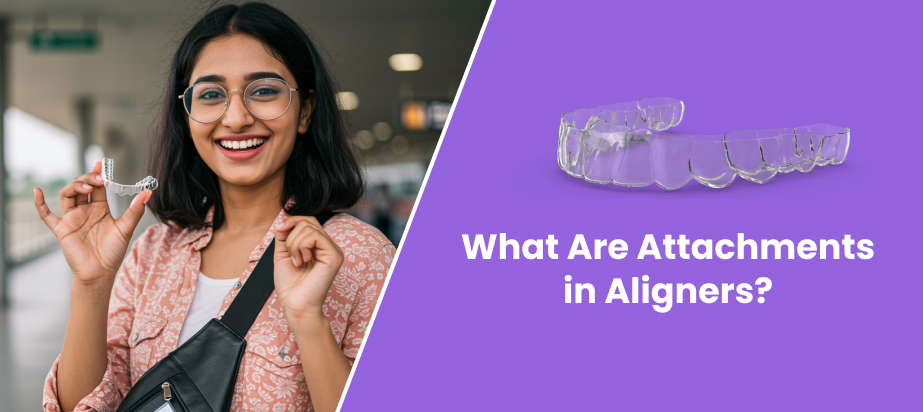
What Are Attachments in Aligners? Purpose, Types & Benefits Explained
 Medically Reviewed by Whistle Dental Team
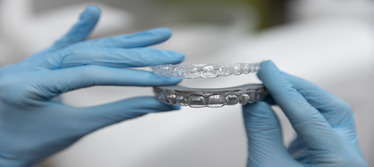
Attachments in aligners (also known clinically as engagers or force transducers) are tiny, tooth-colored composite resin shapes bonded temporarily to specific teeth during clear aligner treatment. Because smooth polyurethane plastic can easily slip over slick, cylindrical enamel, attachments act like precision handles.
They give clear aligners the mechanical leverage needed to perform complex movements such as rotating canines, pulling teeth downward (extrusion), uprighting roots (torque), and leveling deep bites. At Whistle partner clinics, customized attachments and bonding templates are 100% included in all clear aligner packages (ranging from Rs. 60,000 to Rs. 2.5 Lakhs) with flexible EMI options across 600+ clinics nationwide.
Key Takeaways
- The Mechanical Grip Factor: Attachments convert smooth sliding plastic into directed 3D force vectors, enabling clear aligners to treat complex malocclusions once reserved strictly for metal braces.
- 100% Biocompatible & Tooth-Colored: Made from high-grade dental composite resin, attachments are shade-matched to your natural enamel, remaining discreet and completely harmless to tooth structure.
- Painless Placement and Removal: Applied in a single 20-minute appointment using an indirect bonding template with zero drilling or injections, and effortlessly polished off at the end of treatment.
- Shape Dictates Direction: Modern attachments are engineered into specialized geometries (beveled, rectangular, ellipsoidal) mathematically calculated to push roots in precise anatomical directions.
- Included in Whistle Transparent Pricing: Whistle Clear Aligners range from Rs. 60,000 to Rs. 2.5 Lakhs (and Whistle Self-Ligating Braces from Rs. 45,000 to Rs. 70,000), covering all scans, attachments, follow-ups, and post-treatment retainers with flexible monthly EMI options.
When you think about clear aligner treatment - Whistle Aligners being the most recognizable name, what often comes to mind is the sleek, nearly invisible trays that gently move teeth into place. But for many patients, there's an unsung hero working behind the scenes: attachments.
These tiny, tooth-colored bumps may look insignificant, but they play a pivotal role in how well invisible aligners work. So, when exactly are attachments needed? And what makes them so essential in some cases and less so in others? Let’s break it down.
What Are Attachments in Aligners?
Types of Attachments in Orthodontic Aligners: Geometry & Function
The 5 Core Biomechanical Movements That Require Attachments
Do Attachments in Aligners Stain or Damage Tooth Enamel?
Because attachments are made of medical-grade dental composite resin (the same durable material used for tooth fillings), they do not damage your enamel in any way. However, composite resin is slightly more porous than natural enamel and can absorb pigments from turmeric, strong coffee, black tea, or red wine if oral hygiene is neglected.
To keep your attachments virtually invisible throughout treatment:
- Brush your teeth after consuming dark curries, coffee, or chai before reinserting your aligners.
- Use an alcohol-free fluoride mouthwash to flush away lingering pigments.
- Attend routine ultrasonic scaling appointments at your Whistle partner clinic to polish away surface stains.
The 4 Clinical Movements That Require Attachments
Comparing Aligner Treatment Capabilities
| Movement Type | Treatment Without Attachments | Treatment With Attachments |
|---|---|---|
| Minor Crowding | Highly Effective | Highly Effective |
| Closing Small Gaps | Highly Effective | Highly Effective |
| Rotating Canines | Very Poor (Plastic slips) | Excellent (Precise leverage) |
| Vertical Extrusion | Impossible | Excellent (Physical grip) |
Curious if your specific bite requires advanced aligner attachments? Book a free 3D smile scan at your nearest Whistle Partner clinic to see your digital treatment plan.
Are There Downsides to Attachments?
They’re generally safe, but here are a few considerations:
- Visibility: While small and tooth-colored, attachments can make aligners more noticeable.
- Aligner Insertion: Putting your trays in or taking them out can be a bit trickier with attachments, especially in the first few weeks.
- Wear and Tear: Over time, some attachments may wear down or dislodge. Your orthodontist can reapply them if needed.
Also Read:
Step-by-Step Clinical Process: How Attachments Are Placed and Removed
- Tooth Preparation: Your orthodontist cleans and polishes the enamel surfaces, followed by a mild conditioning gel (etchant) to create a microscopic bonding surface.
- The Attachment Template: A custom thermoformed plastic template (which looks identical to your aligners but features tiny hollow pockets) is loaded with shade-matched composite dental resin.
- Template Seating: The template is seated firmly over your dental arch.
- Light Curing: A high-intensity blue dental curing light is applied for 10 to 20 seconds per tooth, instantly polymerizing the resin into solid, durable attachments bonded to your enamel.
- Template Removal & Polishing: The template is removed, and any microscopic excess resin is gently smoothed away. Your aligners are then clicked onto the new attachments.
- End-of-Treatment Debonding: Once your alignment is complete, the orthodontist uses a specialized polishing bur to gently buff off the composite bumps, leaving your natural enamel completely intact, smooth, and untouched.
Expert Insight on Attachment Design
Your Next Steps
Your clear aligners are the engine driving your new smile, but the attachments are the steering wheel, providing the exact directional control needed for perfection. By utilizing advanced composite attachments, Whistle aligners can tackle complex orthodontic cases that were once strictly reserved for metal braces.
Do not let the fear of visible hardware keep you from a healthy bite. Book a free consultation at your nearest Whistle Partner clinic today to get your personalized treatment plan.
Book 3D Teeth Scan
Consult our experts and get a 3D preview of your smile transformation!
attachment in aligners
Teeth aligners attachtments
FAQ's
Q1.Are attachments in aligners noticeable?
They are very discreet. Because they are made from dental composite resin that is shade-matched to your specific tooth color, they blend in seamlessly. While they add a slight texture to the tooth, they are virtually invisible from a conversational distance.
Q2.Can I stain my attachments for aligners?
Yes. Because they are made of composite resin, they can absorb stains from heavy consumption of coffee, red wine, or turmeric. To keep them invisible, maintain excellent oral hygiene and brush your teeth immediately after consuming highly pigmented foods.
Q3.Are attachments hard to clean around?
They require a bit more attention than smooth enamel. Because the attachments create small ledges on your teeth, plaque can accumulate around their edges. Brushing thoroughly with a soft-bristled brush ensures they stay clean and invisible.
Q4.Does everyone need attachment aligners?
No, if you are only fixing very minor cosmetic crowding or closing a tiny gap, you may not need any attachments. Your orthodontist will determine this during your 3D digital scan.

 Medically Reviewed by Whistle Dental Team


 Medically Reviewed by Whistle Dental Team






 Medically Reviewed by Whistle Dental Team