Teeth Crowding Treatment: Causes, Severity Levels, and Modern Aligner Solutions
 Medically Reviewed by Whistle Dental Team
Key Takeaways for Patients
- Arch-Length Discrepancy: Dental crowding happens when the total tooth width exceeds the available jawbone perimeter, causing teeth to overlap and twist.
- Clear Aligner Effectiveness: Clear aligners for crowded teeth are highly effective for mild, moderate, and many severe crowding cases, moving teeth without metal wires.
- Non-Extraction Space Creation: Most adult crowding cases are resolved without extracting healthy teeth, using gentle arch expansion and micro-IPR (0.2 to 0.5 mm).
- Superior Oral Hygiene: Removable aligners allow normal brushing and flossing, preventing the plaque buildup and bleeding gums common with traditional fixed braces.
- Transparent Indian Pricing: Whistle Clear Aligners range from Rs. 60,000 to Rs. 2.5 Lakhs and Whistle Self-Ligating Braces range from Rs. 45,000 to Rs. 70,000 with flexible monthly EMI options.
What Is Teeth Crowding and Why Does It Occur?
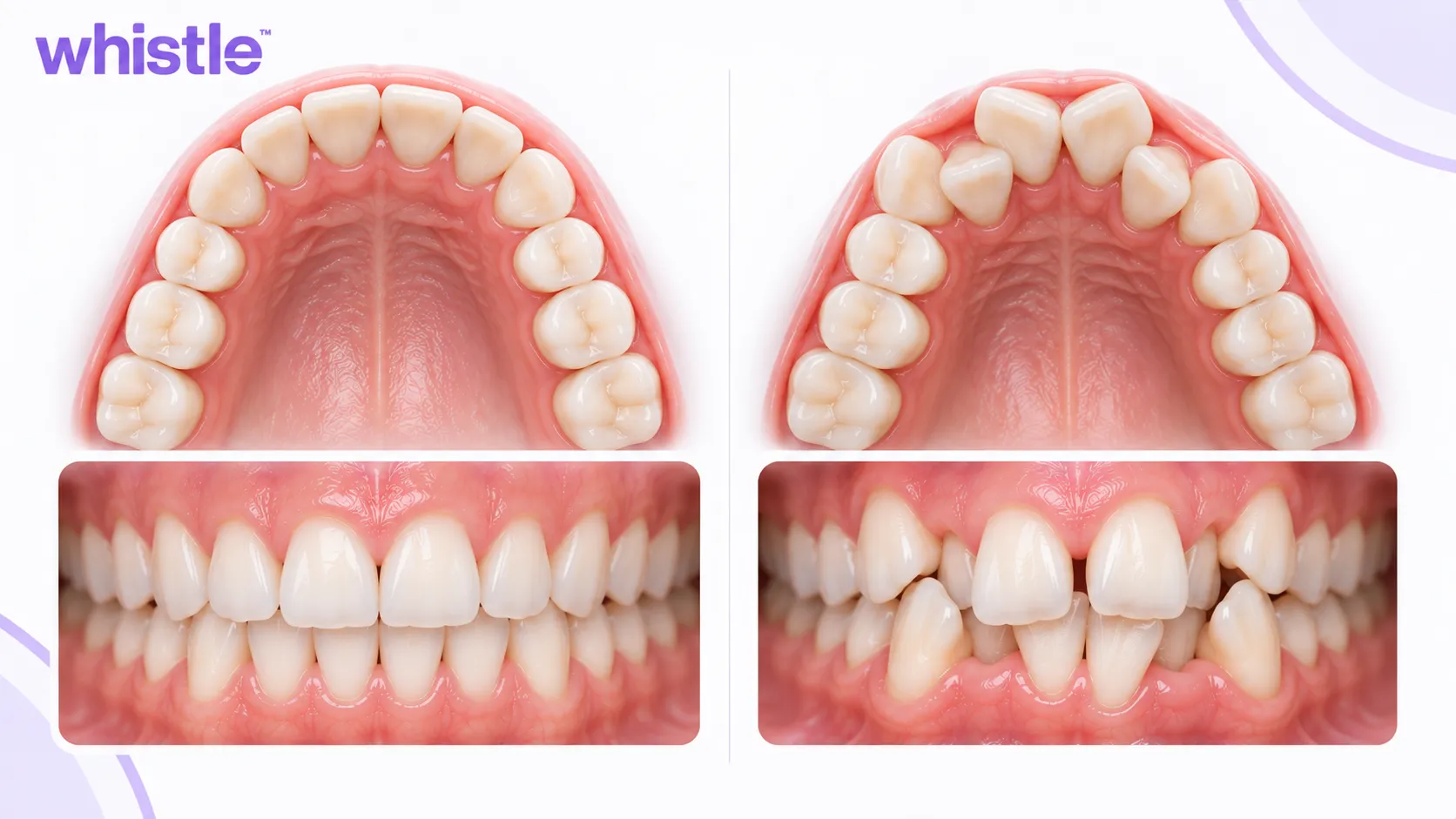
Primary Clinical Causes of Dental Crowding
- Genetic Jaw-to-Tooth Size Mismatch: Inheriting a smaller jaw structure from one parent and larger tooth dimensions from the other is the leading cause of primary dental crowding.
- Premature Loss of Primary (Baby) Teeth: When primary baby molars are lost early due to cavities, adjacent teeth drift into the empty space, blocking the eruption path for underlying permanent teeth.
- Late Eruption of Impacted Wisdom Teeth: Third molars erupting in late adolescence can exert anterior pressure along the arch, exacerbating anterior incisor crowding.
- Habitual Mouth Breathing and Tongue Thrusting: Chronic childhood mouth breathing causes the upper palate to develop in a narrow, high-arched V-shape, dramatically restricting dental arch perimeter.
- Natural Mesial Drift: As humans age, teeth exert a natural physiological drift toward the front of the mouth, causing gradual overlap of lower front incisors even in adults who had straight teeth in their youth.
The Physics of Teeth Crowding Treatment
Before an orthodontist can straighten a crowded tooth, they must give it room to move. There are three primary clinical methods used to create this space:
1. Interproximal Reduction (IPR) - IPR is the most common space-creation technique for mild to moderate crowding. The orthodontist uses a specialized polishing strip to gently buff away a microscopic amount of enamel (usually 0.2 to 0.5 millimeters) from the sides of specific teeth. This is completely painless (as enamel has no nerves) and creates just enough space for the teeth to slide past each other into alignment.
2. Arch Expansion - If your jaw arch is narrow (often V-shaped instead of a broad U-shape), the orthodontist can widen the entire arch. While easier to achieve in growing children, adults can still undergo mild dental expansion using advanced clear aligners to gently push the side teeth outward, creating more room in the front.
3. Tooth Extraction - In cases of severe crowding (where the teeth overlap by 6 millimeters or more), IPR and expansion are not enough. The orthodontist must extract specific teeth (usually the premolars) to create massive amounts of space. After extraction, braces or aligners are used to pull the front teeth back into the newly created space.
Classification: The Three Clinical Severity Levels of Teeth Crowding
Orthodontists measure dental crowding in millimeters of space deficiency by calculating the difference between the total tooth material width and the available arch perimeter:
| Crowding Severity Level | Space Deficiency (Millimeters) | Recommended Treatment Approach |
| Mild Crowding | Less than 3 mm per arch | Whistle Clear Aligners (6 to 8 months); minimal to zero IPR needed. |
| Moderate Crowding | 4 mm to 7 mm per arch | Whistle Clear Aligners with Precision Attachments + Minor IPR (8 to 14 months). |
| Severe Crowding | 8 mm or greater per arch | Whistle Self-Ligating Braces or Advanced Clear Aligners with Arch Expansion (14 to 20 months). |
Health Risks of Leaving Crowded Teeth Untreated
While many patients initially seek teeth crowding treatment for aesthetic reasons, leaving crowded teeth untreated can create serious long-term dental health consequences:
- Accelerated Plaque & Tartar Buildup: Overlapping tooth surfaces create tight, inaccessible interdental crevices where toothbrush bristles and dental floss cannot reach, allowing bacterial plaque to calcify into hardened tartar.
- Chronic Gum Disease (Gingivitis & Periodontitis): Persistent bacterial accumulation around crowded roots causes chronic inflammation, bleeding gums, bone loss, and eventual tooth mobility.
- Localized Interproximal Tooth Decay: Cavities frequently develop at the hidden contact points between tightly overlapping teeth, often remaining undetected until they reach the inner nerve.
- Abnormal Enamel Wear & Chipping: When teeth do not meet in harmonious alignment, biting forces concentrate on isolated enamel edges, causing premature wear, micro-fractures, and tooth sensitivity.
- Temporomandibular Joint (TMJ) Pain: An unbalanced bite forces jaw muscles to work unnaturally to chew food, leading to chronic jaw joint clicking, muscle soreness, and tension headaches.
| Method | Used For | Space Gained |
| IPR (Polishing) | Mild to Moderate Crowding | 1 mm to 4 mm (Total) |
| Arch Expansion | Narrow, V-shaped Jaws | 2 mm to 5 mm (Total) |
| Tooth Extraction | Severe Skeletal Crowding | 7 mm+ per Extracted Tooth |
Curious which space-creation method your smile needs? Book a free 3D smile scan at your nearest Whistle Partner clinic for a personalized digital assessment.
Can Clear Aligners Fix Crowded Teeth?
It depends! Clear aligners are usually successful with mild to moderate teeth crowding. Still, stuff like how serious the overcrowding is, how much the patient follows the treatment plan, and the orthodontist's skill can affect the result. They're mostly not a good fit for severe crowding or complicated cases.
How Whistle Aligners Fix Crowded Teeth
Once the space is planned, Whistle clear aligners take over. You will wear a series of custom, 3D-printed plastic trays for 20 to 22 hours a day. Each tray is mathematically programmed to push specific teeth into the newly created space.
Advantages of Clear Aligners
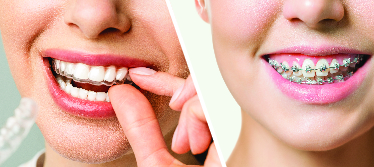
Clear aligners are filled with benefits. Because they're transparent, no one will notice you're wearing them. You can remove them for easy brushing and flossing. None of the wires and brackets that hurt your mouth in traditional braces are present in these.
1. Nearly Invisible Appearance
One of the biggest advantages of clear aligners is their transparent design. They blend naturally with your teeth, allowing you to straighten your smile without the noticeable appearance of metal brackets and wires.
2. Comfortable to Wear
Clear aligners are made from smooth, BPA-free plastic that fits comfortably over your teeth. Unlike traditional braces, there are no sharp brackets or wires that can irritate the cheeks and gums.
3. Removable for Eating and Drinking
You can remove your aligners before meals, allowing you to enjoy your favorite foods without restrictions. Simply wear them again after brushing your teeth.
4. Better Oral Hygiene
Since aligners are removable, brushing and flossing remain as easy as your normal routine. This helps reduce plaque buildup, cavities, and gum problems during treatment.
5. Fewer Dental Visits
Most clear aligner treatments require fewer in-clinic appointments than traditional braces. Regular progress checks and pre-planned aligner changes make treatment more convenient.
6. Predictable Treatment Results
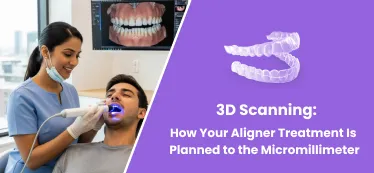
Advanced 3D digital treatment planning allows orthodontists to map every stage of your tooth movement. You can even preview your expected smile before treatment begins.
Clear Aligners Treatment Steps
Your Next Steps
To sum it up, clear aligners are a savvy way to treat crowded teeth. Discreet in design, comfy, and easy to remove, they're a great-looking and practical solution for orthodontic treatment. Following the correct procedure and taking care of your teeth, you can straighten your teeth and flash a confident, beautiful smile with clear aligners.
You do not have to live with the discomfort, hygiene struggles, and aesthetic frustration of a crowded smile. Whether your treatment requires microscopic polishing (IPR) or mild arch expansion, modern clear aligner therapy can gracefully unravel the most stubborn dental traffic jams.
Take the first step toward a healthier, perfectly aligned bite. Book a free consultation at your nearest Whistle Partner clinic today to get your personalized 3D treatment plan.
Also Read:
Book 3D Teeth Scan
Consult our experts and get a 3D preview of your smile transformation!
invisible braces
aligners
braces
clear aligners
teeth aligners
FAQ's
Q1.How long does teeth aligners treatment take for crowding?
It depends on the severity. Mild crowding can often be resolved with Whistle aligners in just 6 to 8 months. Severe crowding that requires tooth extraction can take 18 to 24 months to fully close the gaps and align the roots.
Q2.Does teeth crowding treatment hurt?
Moving teeth always involves a dull, aching pressure for the first few days of wearing a new aligner tray. However, the space-creation process (like IPR) is entirely painless because the outer layer of tooth enamel contains no nerve endings.
Q3.Is it too late to fix crowded teeth if I am an adult?
Never. As long as your jawbone and gums are healthy (free of active periodontal disease), teeth can be safely moved at any age. In fact, clear aligners are the preferred choice for adult professionals fixing childhood crowding.
Q4.Can children use aligners for crowded teeth?
Yes, but orthodontists often prefer "interceptive" treatment for children (Phase 1). This involves using expanders while the child's jaw is still growing, creating enough room so the adult teeth never become crowded in the first place.
Q5.Which clear aligner can treat gaps and crowding?
Modern clear aligners can effectively treat both gaps (spacing) and crowded teeth, depending on the severity of your case. Orthodontist-supervised systems like Whistle Clear Aligners use customized treatment plans to gradually move teeth into proper alignment. Mild to moderate spacing and crowding cases are often ideal for clear aligner treatment, while more complex cases may require attachments or additional orthodontic procedures for the best results.
Q6.Are there clinics that treat both gaps and mild crowding with one aligner plan?
Yes. Many orthodontic clinics offer personalized clear aligner treatment plans that can correct both gaps and mild crowding at the same time. After a digital scan and orthodontic evaluation, your provider creates a customized series of aligners that address multiple alignment issues simultaneously, reducing overall treatment time and improving smile aesthetics.
Q7.Who can help me fix buck teeth with clear aligners?
Buck teeth (protruding front teeth) can often be treated with clear aligners under the supervision of an experienced orthodontist. A specialist will evaluate your bite, jaw alignment, and tooth position using digital scans and X-rays before recommending a personalized treatment plan. Depending on the severity, attachments, elastics, or other orthodontic techniques may also be used alongside aligners for optimal results.
Q8.Are there providers that make custom aligners using 3D scans to treat crowded teeth?
Yes. Many reputable clear aligner providers, including Whistle, use advanced 3D intraoral scans to create custom-made aligners for crowded teeth. These digital scans allow orthodontists to design a precise treatment plan, simulate your expected smile transformation, and manufacture aligners that fit comfortably while moving your teeth accurately throughout the treatment process.

 Medically Reviewed by Whistle Dental Team


 Medically Reviewed by Whistle Dental Team




 Medically Reviewed by Whistle Dental Team