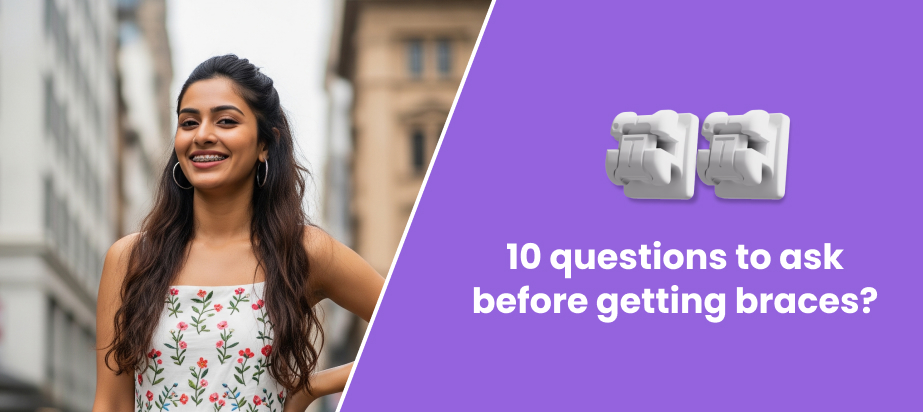
10 questions to ask before getting braces?
 Medically Reviewed by Whistle Dental Team
Getting braces isn’t just about picking the color of your bands or choosing between metal and clear. It’s a big commitment of time, money, and patience. And while your orthodontist is there to guide you, walking into your first consultation with the right questions can make a world of difference.
Whether you're 14 or 34, here are 10 honest, practical questions you should ask before saying yes to braces.
1. Do I actually need braces- or is this something else?
Not all crowded or uneven teeth need full-on braces. Some people might do just fine with a short-term aligner plan or even just a retainer to correct minor shifting. Ask your orthodontist: "Is this the best option for me, or just one option?" The goal is to get the result you want in the least invasive way possible.
2. What kind of braces are right for me?
Braces come in more types than you might think. There are the old-school metal ones, ceramic braces that blend in, and even braces that go behind your teeth (lingual). Then there are clear aligners- removable, nearly invisible, and increasingly popular.
Don’t just ask what’s available- ask what’s appropriate for your case. Aesthetic preferences matter, but so does the complexity of your tooth movement.
3. How long will I need them?
This answer is rarely exact, but your orthodontist should give you a general range. Most people wear braces for 12 to 24 months, but if your case is mild, it might be much less, sometimes 6 to 8 months with clear aligners like Whistle Aligners.
Ask what could extend the timeline (missed visits, broken brackets, not wearing aligners enough) so you know what to watch out for.
4. What’s the total cost- and what does that include?
Orthodontics isn’t cheap. Get the full breakdown:
What does the total fee cover?
Are x-rays, scans, or retainers included?
What happens if I break something or need extra trays?
Can I pay in parts or EMIs?
Also, ask about insurance or reimbursement if you’re covered under a plan. It’s better to be clear now than to be surprised later.
5. How often will I need to come in?
With traditional braces, you’ll likely visit every 4 to 6 weeks for adjustments. Aligners often need fewer visits but require discipline at home.
Ask: “How flexible is your schedule? What happens if I have an emergency?” If you live far from the clinic or have a tight work/school routine, appointment flexibility really matters.
6. Will it hurt? What should I expect in the first week?
This is one of the most common fears, and it’s valid. The truth? The first few days are uncomfortable. You’ll feel pressure, maybe some soreness, and it’ll take time to get used to the feeling of brackets or trays in your mouth.
Ask for honest expectations, not sugarcoated ones. And ask what you can do to make it easier: soft foods, wax, pain relief, etc.
5. How often will I need to come in?
With traditional braces, you’ll likely visit every 4 to 6 weeks for adjustments. Aligners often need fewer visits but require discipline at home.
Ask: “How flexible is your schedule? What happens if I have an emergency?” If you live far from the clinic or have a tight work/school routine, appointment flexibility really matters.
7. Can I eat normally, or are some things off the menu?
With braces, you’ll have to give up a few favorites- popcorn, gum, chewy candy, and anything that can damage wires or get stuck in brackets.
With aligners, you can eat anything- but only when they’re out. And if you're the type to snack often or sip coffee throughout the day, wearing aligners 22 hours a day may feel like a lifestyle shift.
Bring this up so you’re prepared to make changes if needed.
6. Will it hurt? What should I expect in the first week?
This is one of the most common fears, and it’s valid. The truth? The first few days are uncomfortable. You’ll feel pressure, maybe some soreness, and it’ll take time to get used to the feeling of brackets or trays in your mouth.
Ask for honest expectations, not sugarcoated ones. And ask what you can do to make it easier: soft foods, wax, pain relief, etc.
8. How will this affect how I speak or look?
It’s okay to care about this. Braces are visible. Some people embrace them; others feel self-conscious. Aligners are more subtle, but you might still have a slight lisp for a few days while adjusting.
Ask to see before-and-after photos of real patients with similar cases. And don’t hesitate to say, “I’m nervous about how I’ll look at work or school.” A good orthodontist won’t brush that off.
7. Can I eat normally, or are some things off the menu?
With braces, you’ll have to give up a few favorites- popcorn, gum, chewy candy, and anything that can damage wires or get stuck in brackets.
With aligners, you can eat anything- but only when they’re out. And if you're the type to snack often or sip coffee throughout the day, wearing aligners 22 hours a day may feel like a lifestyle shift.
Bring this up so you’re prepared to make changes if needed.
9. What happens after the braces come off?
This is the part no one warns you about: braces are just phase one. Once your teeth are in place, you’ll need to wear a retainer-sometimes for life- to keep them there.
Ask:
Will my retainer be removable or fixed?
How long do I need to wear it each day?
What happens if I lose it?
Skipping retainers is one of the main reasons people end up back in braces again.
Also Read:
- Braces Side Effects: Not What You Expect, But You’ll Love Them Anyway
- How Long Does It Take to Close a 1mm Gap to Braces?
- Can I Put Braces at the Age of 35?
8. How will this affect how I speak or look?
It’s okay to care about this. Braces are visible. Some people embrace them; others feel self-conscious. Aligners are more subtle, but you might still have a slight lisp for a few days while adjusting.
Ask to see before-and-after photos of real patients with similar cases. And don’t hesitate to say, “I’m nervous about how I’ll look at work or school.” A good orthodontist won’t brush that off.
10. What does success actually look like, for me?
Everyone wants straight teeth, but your version of “perfect” might not match someone else’s. Ask your orthodontist to explain what they’re aiming to achieve: better function? Aesthetics? Both?
Bring photos of smiles you like if that helps. The more specific your goals, the better they can be matched, or at least explained honestly.
Braces can be life-changing, but only when you go in with your eyes open. These 10 questions aren’t just a checklist; they’re about starting a real conversation. Be curious. Speak up. Push for clarity.
Whether you’re wearing metal brackets or discreet clear trays, one thing’s true for everyone: your smile, your rules.
9. What happens after the braces come off?
This is the part no one warns you about: braces are just phase one. Once your teeth are in place, you’ll need to wear a retainer-sometimes for life- to keep them there.
Ask:
Will my retainer be removable or fixed?
How long do I need to wear it each day?
What happens if I lose it?
Skipping retainers is one of the main reasons people end up back in braces again.
Also Read:
- Braces Side Effects: Not What You Expect, But You’ll Love Them Anyway
- How Long Does It Take to Close a 1mm Gap to Braces?
- Can I Put Braces at the Age of 35?
10. What does success actually look like, for me?
Everyone wants straight teeth, but your version of “perfect” might not match someone else’s. Ask your orthodontist to explain what they’re aiming to achieve: better function? Aesthetics? Both?
Bring photos of smiles you like if that helps. The more specific your goals, the better they can be matched, or at least explained honestly.
Braces can be life-changing, but only when you go in with your eyes open. These 10 questions aren’t just a checklist; they’re about starting a real conversation. Be curious. Speak up. Push for clarity.
Whether you’re wearing metal brackets or discreet clear trays, one thing’s true for everyone: your smile, your rules.
Book 3D Teeth Scan
Consult our experts and get a 3D preview of your smile transformation!
questions to ask before getting braces
You May Also Like



 Medically Reviewed by Whistle Dental Team

















 Medically Reviewed by Whistle Dental Team

 Medically Reviewed by Whistle Dental Team