
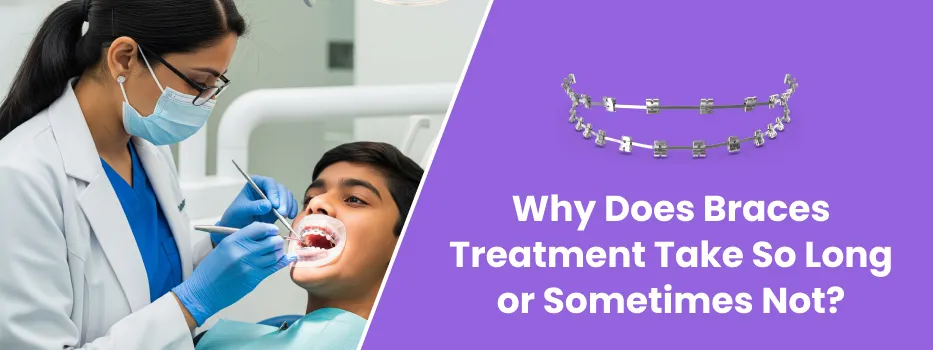
Why Does Braces Treatment Take So Long or Sometimes Not?
 Medically Reviewed by Whistle Dental Team
- Biological speed limits: Teeth move safely at a rate of roughly 1 millimeter per month to allow bone resorption and new bone formation.
- Bite correction takes longer than straightening: Aligning front teeth happens quickly, but correcting an overbite, underbite, or crossbite requires the majority of treatment time.
- Age impacts bone density: Children and teens experience faster tooth movement due to active jaw growth, whereas adult bone is fully calcified and denser.
- Patient compliance dictates success: Skipping elastic bands, missing monthly adjustments, or breaking brackets directly adds months to your total timeline.
- Modern clear aligners match efficiency: Whistle clear aligners use 3D digital planning to move teeth with precise forces under physical orthodontist supervision.
Attempting to rush this delicate cellular process can cause permanent root resorption, gum recession, or tooth instability. Treatment time depends on case complexity, bite alignment, patient age, and compliance with appointments and elastic bands.
Why does tooth movement require bone remodeling?
To understand why your braces treatment time cannot be rushed overnight, you have to understand what happens beneath your gums.
Your teeth are held securely in the jawbone by a thin layer of soft tissue called the periodontal ligament (PDL). Think of it as a natural cushion that connects each tooth to the surrounding bone while allowing controlled movement during orthodontic treatment.
This triggers bone remodeling, where osteoclasts remove bone on one side of the tooth while osteoblasts build new bone on the other. Because your body needs time to safely reshape the bone, tooth movement is naturally gradual.
Applying excessive force won't speed up treatment and may increase pain or cause complications such as root resorption.
How Braces Work
Braces function by exerting gentle, steady pressure on your teeth, directing them into their proper places gradually. When a tooth shifts, the bone on one side gradually diminishes, while new bone develops on the opposite side. This organic process modifies the supporting structures, allowing your teeth to adjust to their new alignment.
Every element of your braces serves a function - brackets secure the wire, the wire guides the movement, and added parts like elastics offer specific corrections. Your orthodontist observes and adjusts these movements periodically, making sure that your teeth shift securely and effectively into their optimal position.
Why does braces treatment take so long for some patients?
1. Degree of Crowding or Spacing
2. Complex Bite Corrections (Class II & Class III Malocclusions)
3. Impacted or Rotated Teeth
How long does a braces treatment take on average?
- Mild Cases (6 to 12 Months): Minor spacing, slight front tooth crowding, or minor relapse from previous orthodontic treatment.
- Moderate Cases (12 to 24 Months): Standard tooth crowding, noticeable rotation, mild overbites, and moderate space closure.
- Severe Cases (24 to 36 Months): Severe crowding, deep overbites, underbites, crossbites, impacted teeth, or cases requiring premolar extractions.
Factors Affecting Treatment Duration
Several things influence how long you’ll be wearing braces:
1. Severity of the Case
Mild crowding or small gaps can often be fixed in 6–12 months. Severe crowding, large gaps, or complex bite problems usually require more time.
2. Type of Misalignment
Crowding: Teeth too close together take longer because space has to be created before alignment.
Spacing: Gaps can close quickly, but stabilising the teeth in their new position takes time.
Bite Issues: Overbites, underbites, and crossbites often need extra correction beyond straightening.
3. Patient Compliance
Your role matters! Wearing elastics as prescribed, avoiding foods that damage braces, and keeping up with appointments can make a big difference.
4. Type of Braces
Different systems have different speeds of movement:
- Self-ligating braces: Use special clips instead of elastic ties, allowing for faster tooth movement and fewer adjustment visits.
Available in Zirconia, Ceramic and Metal variants.
- Traditional braces: Effective but may require more frequent adjustments.
Available in both Ceramic and Metal variants.
5. Age of the Patient
Younger patients usually see faster results because their bones are still developing. Adult bone is denser, which can slow movement.
6. Biological Response
Everyone’s body reacts differently to orthodontic forces. Some teeth move more easily; others are more resistant.
Does age affect braces treatment time in India?
Yes, age can influence how quickly your teeth respond to braces, but it's only one part of the picture. Factors like the complexity of your case, oral health, and how well you follow your orthodontist's instructions often have an even bigger impact on your overall treatment time.
Children and Teenagers
For Children and teenagers, treatment is often more efficient because their jaws are still growing. The bone around the teeth, called the alveolar bone, is more adaptable, making it easier for teeth to move in response to gentle orthodontic forces.
In younger patients, orthodontists can also take advantage of natural growth by using appliances such as palatal expanders to guide jaw development. Correcting jaw discrepancies during this stage can simplify treatment and, in some cases, reduce the overall time needed.
Adults
Adults can achieve excellent results with braces too, but treatment may take slightly longer because the jawbone is fully developed and remodels more slowly than in growing patients. Many adults also have existing dental work, mild gum recession, or previous tooth wear that requires a more cautious treatment approach.
The good news is that adults often have one major advantage: commitment. They are generally more consistent with wearing elastics, maintaining good oral hygiene, and attending appointments on schedule. This level of compliance can significantly improve treatment efficiency and help keep the overall timeline on track.
Reasons for Treatment Taking Longer Than Expected
Even with the best plan, some treatments take longer.
Common reasons include:
1. Missed Appointments-
If adjustments are delayed, tooth movement slows.
2. Non-Compliance-
Not wearing elastics, headgear, or aligner trays as instructed can extend treatment.
3. Breakages or Damage-
Broken brackets or wires mean lost treatment time.
4. Poor Oral Hygiene-
Gum problems or cavities can force a pause in treatment.
5. Biological Delays-
Some teeth are simply stubborn movers.
What is the difference between braces and clear aligners for treatment duration?
| Orthodontic System | Primary Mechanism | Average Treatment Duration | Aesthetics & Comfort | Patient Compliance |
|---|---|---|---|---|
| Traditional Metal Braces | Stainless steel brackets connected with elastic ties to gradually move teeth | 18–30 months | Highly visible metal brackets; may cause mild cheek or lip irritation initially | Fixed appliance; no daily wear-time compliance required, but regular appointments are essential |
| Self-Ligating Braces | Built-in sliding clips hold the archwire, reducing friction and allowing smoother tooth movement | 14–24 months | Available in metal and ceramic options; generally more comfortable with fewer adjustments | Fixed appliance; fewer adjustment visits, but good oral hygiene and follow-up appointments are important |
| Whistle Clear Aligners | Custom-made 3D polyurethane aligners apply controlled pressure to move teeth gradually | 6–18 months* | Virtually invisible, removable for eating and brushing, offering greater comfort and convenience | High compliance required; aligners should be worn 20–22 hours per day for effective results |
| Surgical Orthodontics | Corrective jaw surgery combined with braces to treat severe skeletal jaw discrepancies | 24–36 months | Treatment varies depending on the surgical procedure; focuses on correcting jaw alignment rather than aesthetics | High compliance required, including pre-surgical orthodontics, post-surgical recovery, and regular follow-up care |
Wondering how fast your smile can be transformed with custom clear aligners? Book a free Smile Assessment at your nearest Whistle partner clinic (no commitment required).
Self-Ligating Braces — A Faster Alternative
If you are someone on the lookout for braces that work faster, self ligating braces are the solution for you.
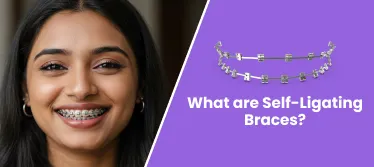
Instead of using elastic ties to hold the wire in place, self-ligating braces have a built-in clip. This allows the wire to move more freely and reduces friction, so your teeth can shift into place more efficiently.
Benefits include:
- More comfort due to gentler forces
- Easier cleaning because there are no elastic ties to trap food
- Fewer adjustment visits
- Shorter overall treatment times in many cases
Common Mistakes Orthodontists Often See
In clinical practice, orthodontists frequently observe patient habits that unintentionally double their treatment time. Here are five common mistakes to avoid:
- Inconsistent Elastic Band Wear: Failing to wear prescribed interarch elastics for 22 hours daily stops bite correction completely, pushing your finish date back by months.
- Eating Hard or Sticky Foods: Chewing hard nuts, ice, or sticky candy pops brackets off teeth. Every broken bracket halts active tooth movement until your next repair visit.
- Skipping Monthly Adjustment Appointments: Orthodontic wires lose their tension after 4 to 6 weeks. Delaying your adjustment visit leaves your teeth sitting idle without active force.
- Poor Oral Hygiene Around Brackets: Plaque accumulation causes swollen, inflamed gums (gingivitis). Inflamed gum tissue slows down tooth movement and forces your dentist to pause treatment to clean your gums.
- Not Wearing Aligners for 20-22 Hours Daily: Taking clear aligners out for extended periods allows teeth to relapse backward, preventing the next tray from fitting properly.
How can you help reduce your braces treatment duration?
- Maintain Flawless Oral Hygiene: Brush after every meal with an orthodontic toothbrush and use interdental brushes or a water flosser to remove plaque from around brackets.
- Follow Elastic Guidelines Exactly: Wear your rubber bands exactly as instructed, changing them for fresh bands daily to maintain constant force.
- Protect Your Appliances: Avoid hard, crunchy, and sticky foods that break brackets or bend wires.
- Never Miss Appointments: Attend every scheduled check-up at your Whistle partner clinic to keep your wire progression moving forward.
- Teeth Braces Price in India
- How to Use Dental Wax After Braces?
- What Is a Permanent Retainer after Braces?
- 1 Year Braces Cost in India
Expected vs. Red-Flag Emergency Signals
| Symptom | Normal & Expected | Contact Your Orthodontist or Whistle Partner Clinic Immediately If… |
|---|---|---|
| Tooth Sensitivity | Mild soreness or tenderness for 2–4 days after braces are fitted or adjusted is normal. | You experience severe, throbbing pain that lasts longer than a week or worsens over time. |
| Tooth Mobility | A slight feeling of looseness is expected as the bone around your teeth remodels during treatment. | A tooth feels extremely loose, unstable, or appears to be dislodged. |
| Soft Tissue | Minor cheek, lip, or tongue irritation from new brackets or wires is common and usually settles within a few days. | You develop large bleeding ulcers, significant facial swelling, pus, or fever, which may indicate an infection. |
| Appliance Status | A slightly poking archwire can often be managed temporarily with orthodontic wax until your next appointment. | A bracket breaks, a wire snaps, or any part of the appliance becomes loose or is accidentally swal |
- Braces for 2 Front Teeth Only? Why It’s Not That Simple
- Braces Side Effects
- Can I Put Braces at the Age of 25?
- Shortest Time for Braces: Is a Fast Fix Possible?
- Is There a Special Toothbrush for Braces? Here’s What You Need to Know
Your Next Steps
Understanding your braces treatment duration helps you stay patient and motivated throughout your smile transformation. Remember, moving teeth is a biological journey of bone breakdown and rebuilding that requires steady, gentle force. Whether you require 12 months for minor alignment or 24 months for complex bite correction, rushing the process compromises your long-term root health.
Ready to see how fast your smile transformation could be? Book a free Whistle Smile Assessment at your nearest Whistle partner clinic today.
Your perfect smile is waiting - let's make it happen together.
Also Read:
- Is Tooth Extraction Necessary for Braces?
- How Long Does It Take to Close a 1mm Gap to Braces?
- Can I Put Braces at the Age of 35?
- Can Braces Fix Facial Asymmetry?
Book 3D Teeth Scan
Consult our experts and get a 3D preview of your smile transformation!
Braces Treatment Time
FAQ's
Q1.Can braces treatment be completed in 6 months?
Yes, mild cases involving minor front tooth crowding or small teeth gaps can sometimes be completed in 6 to 12 months. However, complex bite corrections require more time.
Q2.Do clear aligners take less time than traditional metal braces?
Yes, custom clear aligners like Whistle aligners can resolve mild to moderate crowding faster because 3D software plans simultaneous tooth movements with uniform force distribution.
Q3.How can I speed up my braces treatment duration safely?
You can speed up treatment by maintaining excellent oral hygiene, avoiding hard foods that break brackets, attending all adjustment visits, and wearing elastics exactly as prescribed.
Q4.Why does bite correction take longer than straightening front teeth?
Straightening front teeth only requires moving tooth crowns, whereas bite correction involves moving dense back molars and shifting the entire lower jaw relationship.
You May Also Like
 Medically Reviewed by Whistle Dental Team







 Medically Reviewed by Whistle Dental Team
 Medically Reviewed by Whistle Dental Team