Can Braces Fix Facial Asymmetry? How Braces Correct an Asymmetrical Face, Uneven Jaw & Crooked Smile
 Medically Reviewed by Whistle Dental Team
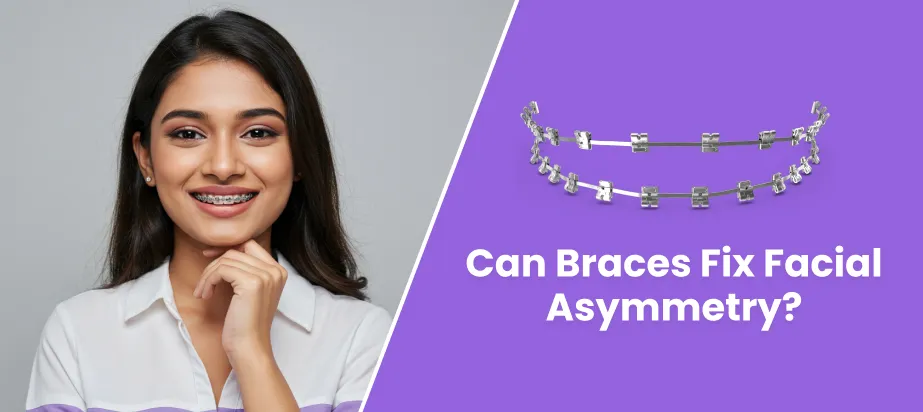
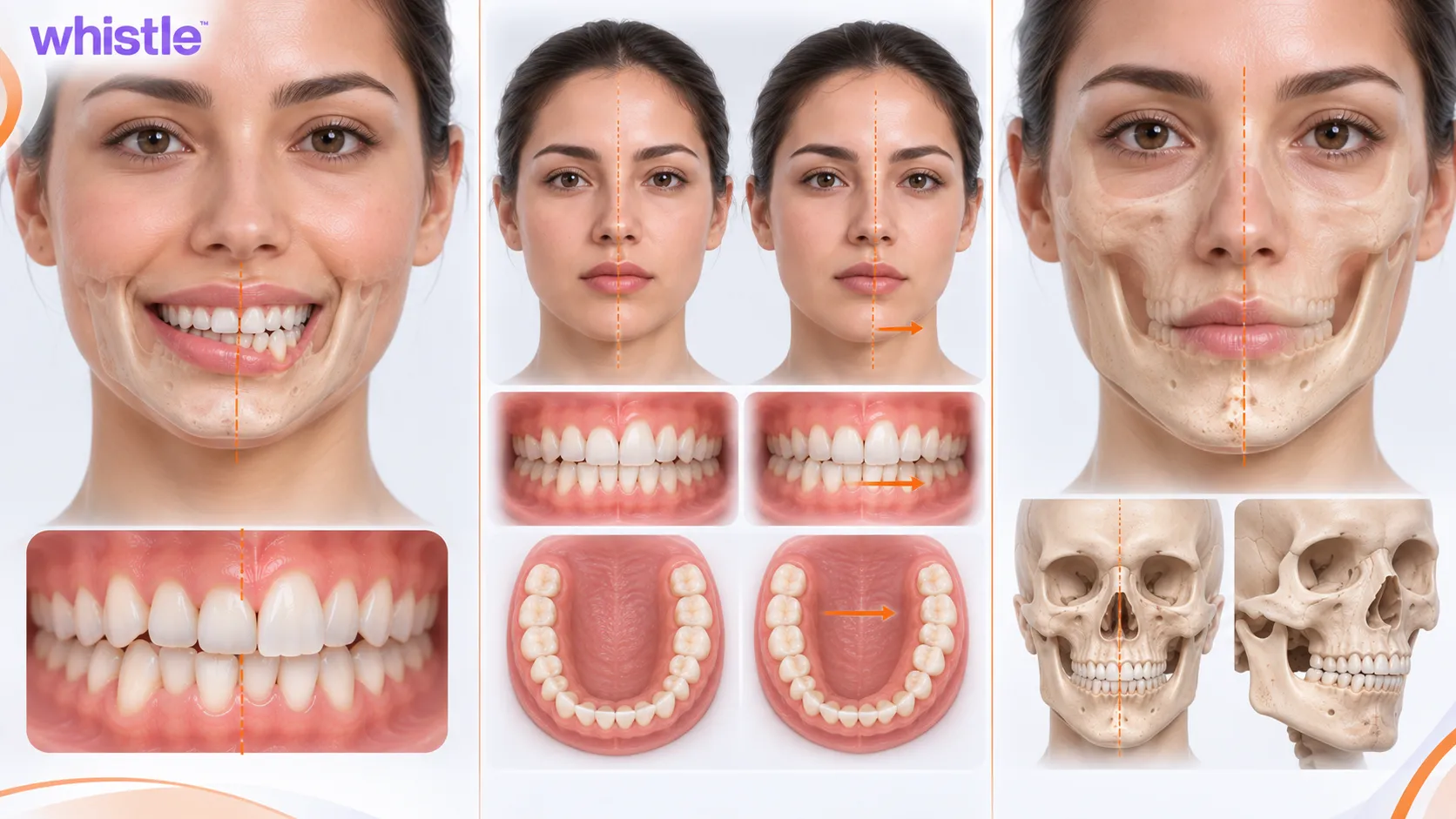
Yes, can braces fix facial asymmetry when the imbalance originates from dental misalignment, an uneven bite, or a functional jaw shift.
By aligning crooked teeth, expanding constricted arches, and eliminating crossbites that force the lower jaw to slide sideways, modern braces and custom clear aligners center the jawline and restore balanced lip support.
In a nutshell, the answer is yes, particularly if the asymmetry is caused by issues with the teeth or jaw.
Orthodontics can help with that. According to Dr. Amit Sachdeva, one of India’s leading orthodontists and Chief Product Officer at Whistle Braces, “Braces - especially modern self-ligating braces can work wonders on mild to moderate facial asymmetry without surgery.
Key Takeaways
- Dental vs. Skeletal Roots: Braces effectively resolve dental asymmetry, occlusal cants, and functional jaw shifts, while severe skeletal jaw discrepancy requires collaborative orthodontic and orthognathic surgical planning.
- Functional Shift Correction: A unilateral crossbite frequently forces the lower jaw to deviate sideways when closing to chew. Correcting the bite allows the jaw to center naturally into its true anatomical position.
- Lip Contours and Smile Symmetry: Straightening tilted front teeth restores balanced soft-tissue lip scaffolding, resolving lopsided lip posture and uneven cheek fullness.
- Adult vs. Teenager Capabilities: Growing teenagers benefit from skeletal growth modification appliances, whereas adults achieve transformative facial balance through precision dental camouflage and arch leveling.
- Comprehensive Appliance Options: Both low-friction self-ligating braces and custom clear aligners successfully correct dental asymmetry when designed with directional elastics and digital 3D planning.
When facial asymmetry stems from unilateral crossbites, midline shifts, or uneven tooth wear, modern Whistle Clear Aligners (Rs. 60,000 to Rs. 2.25 Lakhs) and Whistle Self-Ligating Braces (Rs. 45,000 to Rs. 70,000) effectively center the bite and restore facial harmony with flexible monthly EMI options across 600+ partner clinics nationwide.
What Causes an Asymmetrical Face? The 3 Clinical Categories
Can Teeth Alignment and Braces Fix Facial Asymmetry?
Can Braces Fix Asymmetrical Lips and a Crooked Smile?
Can Braces Fix Jaw Alignment in Adults? (Adults vs. Growing Teenagers)
- In Growing Children and Teenagers (Ages 8 to 16): The midpalatal suture (the connective tissue seam running down the roof of the mouth) and the mandibular condyles (jaw growth centers) are still active and pliable. Orthodontists can deploy palatal expanders, functional appliances, and orthopedic headgear to redirect skeletal bone growth, widen narrow jaws, and permanently prevent lifelong facial asymmetry.
- In Adults (Ages 18 and Above): Because facial bones and cranial sutures have fully fused, orthodontic appliances cannot alter the physical size or shape of the jawbones. However, can braces fix jaw alignment in adults? Yes, highly effectively. Orthodontists achieve remarkable facial symmetry in adults through orthodontic camouflage.
By correcting bite interferences, centering the dental midlines, leveling occlusal tilts, and reversing dental compensations, braces allow the adult jaw to sit in its optimal muscular resting position, dramatically improving jawline aesthetics without invasive surgery.
Common Causes of Asymmetrical Face
- Unilateral Chewing Habits: If you suffer from untreated cavities, broken fillings, or missing molars on one side, you unconsciously chew exclusively on the opposite side. Over years, this causes unilateral masseter muscle hypertrophy: the chewing muscle on your active side becomes significantly thicker and bulkier, making that cheek look swollen or uneven.
- Premature Tooth Loss Without Replacement: Missing posterior teeth cause neighboring teeth to tip into the empty space and opposing teeth to over-erupt. This collapses vertical bite height on that side, dragging the corner of the mouth downward.
- Chronic Side Sleeping or Postural Slumping: Consistently resting your face against a firm pillow on one side exerts hours of continuous low-grade lateral pressure on the developing jaw in growing children and teens.
- Childhood Habits (Thumb Sucking & Mouth Breathing): Chronic mouth breathing due to enlarged adenoids or prolonged thumb sucking leads to narrow, V-shaped upper dental arches and high vaulted palates, triggering posterior crossbites and lateral functional shifts.
How Braces Improve Facial Aesthetics: The Soft Tissue Impact
People often wonder, can brace fix asymmetrical face profiles when looking from the side? Braces do much more than just straighten the visible crowns of your teeth; they remodel the entire lower third of your face.
- Chin and Jawline Position: By correcting a deep bite or an underbite, braces allow your lower jaw to rest in its natural, centered anatomical position, immediately improving jawline contours.
- Cheek and Lip Support: Your teeth act as the scaffolding for your face. When teeth are pushed out into a wide, healthy arch using Whistle self-ligating braces, they provide uniform support to your lips and cheeks, eliminating the "sunken" or drooping look on one side.
- Profile Balance: Retracting protruding front teeth or advancing retroclined teeth drastically improves the harmony between your nose, lips, and chin.
Facial Asymmetry Before and After Braces: What Changes to Expect
| Facial Feature | Before Treatment State (Asymmetrical) | After Treatment Result (Symmetrical) | Underlying Clinical Correction |
| Chin Position | Chin point deviates 2 to 5 mm to one side upon closure. | Chin aligns squarely with the center line of the face. | Correction of unilateral posterior crossbite and functional shift. |
| Lip Contours & Smile Line | One corner of the mouth pulls higher or drops lower when smiling. | Balanced, horizontal smile arc with even lip elevation. | Leveling the occlusal cant and aligning tilted anterior teeth. |
| Cheek Fullness | One cheek appears flatter while the other appears fuller. | Symmetrical cheekbone drape and balanced facial fullness. | Arch expansion and equalized lateral tooth support. |
| Dental Midline | Upper and lower center lines do not match (offset by 2 to 4 mm). | Upper and lower midlines align perfectly with facial midline. | Asymmetric interproximal reduction (IPR) and directional elastics. |
| Jaw Joint (TMJ) Health | Clicking, popping, and muscle soreness on the shifted side. | Painless, smooth jaw movement with decompressed joint spaces. | Elimination of lateral chewing strain and muscular overcompensation. |
How Long Does It Take for Braces to Fix Facial Asymmetry? (Treatment Timeline)
Correcting facial asymmetry requires a sequential, biological approach because teeth, alveolar bone, and jaw joints must adapt concurrently. While treatment duration varies based on clinical severity, most patients follow this structured milestone timeline:
- Phase 1: Months 1 to 4 (Leveling & Alignment): Your orthodontist places initial flexible nickel-titanium archwires. Individual crooked, rotated, and crowded teeth straighten out into continuous arches. Initial soft-tissue improvements around the lips and smile line become noticeable.
- Phase 2: Months 5 to 9 (Bite Opening & Crossbite De-interference): Rigid stainless steel archwires and bite-raising blocks unlock the crossbite. The lower jaw is liberated from its habitual sideways slide, allowing your masticatory muscles to relax and re-center the chin.
- Phase 3: Months 10 to 15 (Midline Centering & Asymmetric Vector Mechanics): Directional elastics (rubber bands) are worn across custom vector points to bring the upper and lower dental midlines into alignment with your facial center. Occlusal canting is leveled.
- Phase 4: Months 16 to 20 (Micro-Settling & Occlusal Detailing): Fine-tuning the intercuspation ensures both sides of your jaw contact evenly during chewing, preventing muscle relapse.
- Phase 5: Post-Treatment Retention (Months 21 and Beyond): Custom rigid retainers (fixed lingual wires plus clear overlay retainers) stabilize the newly centered bone and muscle positions for life.
Orthodontist Observation Layer: 5 Real-World Mistakes Patients Make with Facial Asymmetry
- Assuming Every Asymmetrical Face Requires Jaw Surgery: Over 70% of patients who consult us for a "crooked jaw" actually suffer from a dental crossbite or functional shift that can be completely resolved non-surgically using clear aligners or self-ligating braces.
- Using Unmonitored DIY Chewing Exercisers: Attempting to "train" jaw muscles with hard silicone gum or facial devices places intense, asymmetrical strain on the temporomandibular joint, often causing disc displacement, joint clicking, and chronic headaches.
- Ignoring Crossbites in Children and Young Adults: Leaving a unilateral crossbite untreated during teenage growth phases causes the jawbone to grow asymmetrically, converting a simple dental issue into a permanent skeletal deformity.
- Chewing Exclusively on One Side of the Mouth: Habitually chewing food only on one side due to a cavity or missing tooth over-develops the masseter muscle on that side, creating visible muscular asymmetry.
- Skipping Retention After Midline Correction: Asymmetric tooth movements require diligent retainer wear. Without retainers, periodontal memory fibers will attempt to pull the midline back into its old shifted position.
Beyond Traditional Braces: What Else Helps?
Modern orthodontics offers several options beyond traditional metal braces. The right treatment depends on your age, bite, jaw development, and the complexity of tooth movement.
1. Functional Appliances
Functional appliances are mainly used in growing children and teenagers to guide jaw development and improve certain bite problems. They can help address issues such as overjet and some jaw discrepancies before they become more difficult to manage.
2. Clear Aligners
Clear aligners, such as Whistle Aligners, offer a discreet and removable way to straighten teeth. They may be suitable for concerns such as crowding, spacing, and certain bite problems. Since they can be removed while eating and brushing, they can also make daily oral hygiene easier.
3. Expanders and Elastics
Expanders help widen the upper dental arch when there is a jaw-width discrepancy or certain types of crossbite. Orthodontic elastics provide additional force to improve bite relationships and may be used with braces or aligners.
4. Retainers
Retainers help maintain your teeth in their new positions after orthodontic treatment. They can be removable, such as clear retainers, or fixed behind the teeth. Your orthodontist will recommend the most suitable type based on your treatment and risk of teeth shifting.
5. Permanent retainers after braces
Permanent retainers after braces are thin wires bonded behind the teeth to provide continuous retention. They can help maintain alignment long-term but require careful cleaning and regular dental checks.
Permanent retainers after braces may be suggested for long-term results.
Also read:
When Is Surgery Necessary?
In cases of severe skeletal asymmetry, surgery may be the only permanent solution. This usually involves repositioning the jawbone and is often done in adults after growth is complete. Orthodontics alone can’t fix bone-related size differences, but it is often used before and after surgery for ideal alignment.
Facial symmetry correction begins with proper diagnosis.
1. Clinical Exams and Imaging
X-rays, 3D scans, and photos help map the underlying issue—whether dental or skeletal.
2. Personalized Plans
No two faces are exactly the same. Treatment plans must consider bone structure, bite type, and facial proportions. Even small differences influence how fast you can get straight teeth.
Role of Your Orthodontist
Orthodontists especially those trained in facial harmony and balance - work closely with surgeons (if needed) to achieve balanced results. Their input is critical for effective diagnosis and managing discomfort, such as offering guidance on how to relieve brace pain during treatment and the right toothbrush for braces.
Age and Timing Matter
Orthodontic intervention during the growth phase (ages 10–16) can prevent lifelong asymmetry. That said, adult treatment is very effective too especially with systems like Whistle Self-Ligating Braces, which allow more efficient movement with less discomfort and faster results.
Your Next Steps
Facial harmony is not just about aesthetics; it is about ensuring your jaw joints, muscles, and teeth work together without destroying each other. If you avoid photos or struggle with uneven chewing, you do not have to live with the discomfort. Modern self-ligating orthodontics makes centering your bite highly predictable.
Ready to find your balance? Book a free consultation at your nearest Whistle Partner Clinic today.
Also, check out the current tooth braces price in India to make an informed choice for your journey toward facial harmony and confidence.
Also Read:
- How Long Does It Take to Close a 1mm Gap to Braces
- Why Does Braces Treatment Take So Long or Sometimes Not?
- 8 Reasons for Uneven Smile
Book 3D Teeth Scan
Consult our experts and get a 3D preview of your smile transformation!
Can Braces Fix Facial Asymmetry
FAQ's
Q1.Can braces fix an asymmetrical face?
Yes. Braces and clear aligners effectively correct facial asymmetry when the cause is dental, such as a shifted midline, tilted teeth, or a functional jaw shift caused by a unilateral crossbite. Aligning the teeth allows the lower jaw to center naturally and balances soft-tissue lip support.
Q2.What are teeth aligners used for?
Teeth aligners are used to correct misaligned, crooked, or gapped teeth. They gradually move teeth into the desired position, improving bite alignment and overall smile aesthetics without using metal brackets or wires.
Q3.Do braces enhance my jawline?
Certainly, particularly when crooked teeth impact your bite or jaw alignment.
Q4.How can I determine if my asymmetry is related to dental or skeletal issues?
A clinical evaluation with imaging is required to identify the root cause. An expert orthodontist on the basis of scans and radiographic imagings can easily help determine the same.
Q5.Can facial asymmetry return after braces?
Rarely, but only if post-treatment care (like retainer use) is neglected or habits like one-sided chewing return.
Q6.What are the top benefits of aligners over traditional fixed braces?
Aligners are nearly invisible, comfortable, and removable, making them easier to clean and eat with. They cause less irritation, require fewer dental visits, and offer a more aesthetic alternative to metal braces while effectively straightening teeth.
Q7.Does braces fix your asymmetrical face if it is caused by bone structure?
If facial asymmetry is caused by a significant skeletal discrepancy (where one side of the jawbone is physically longer than the other), braces alone cannot alter the bone length. However, orthodontics combined with corrective orthognathic surgery provides comprehensive symmetry correction.
 Medically Reviewed by Whistle Dental Team












 Medically Reviewed by Whistle Dental Team

 Medically Reviewed by Whistle Dental Team