

Do Ceramic Braces Turn Yellow? Causes, Prevention, and Stain Removal
 Medically Reviewed by Whistle Dental Team
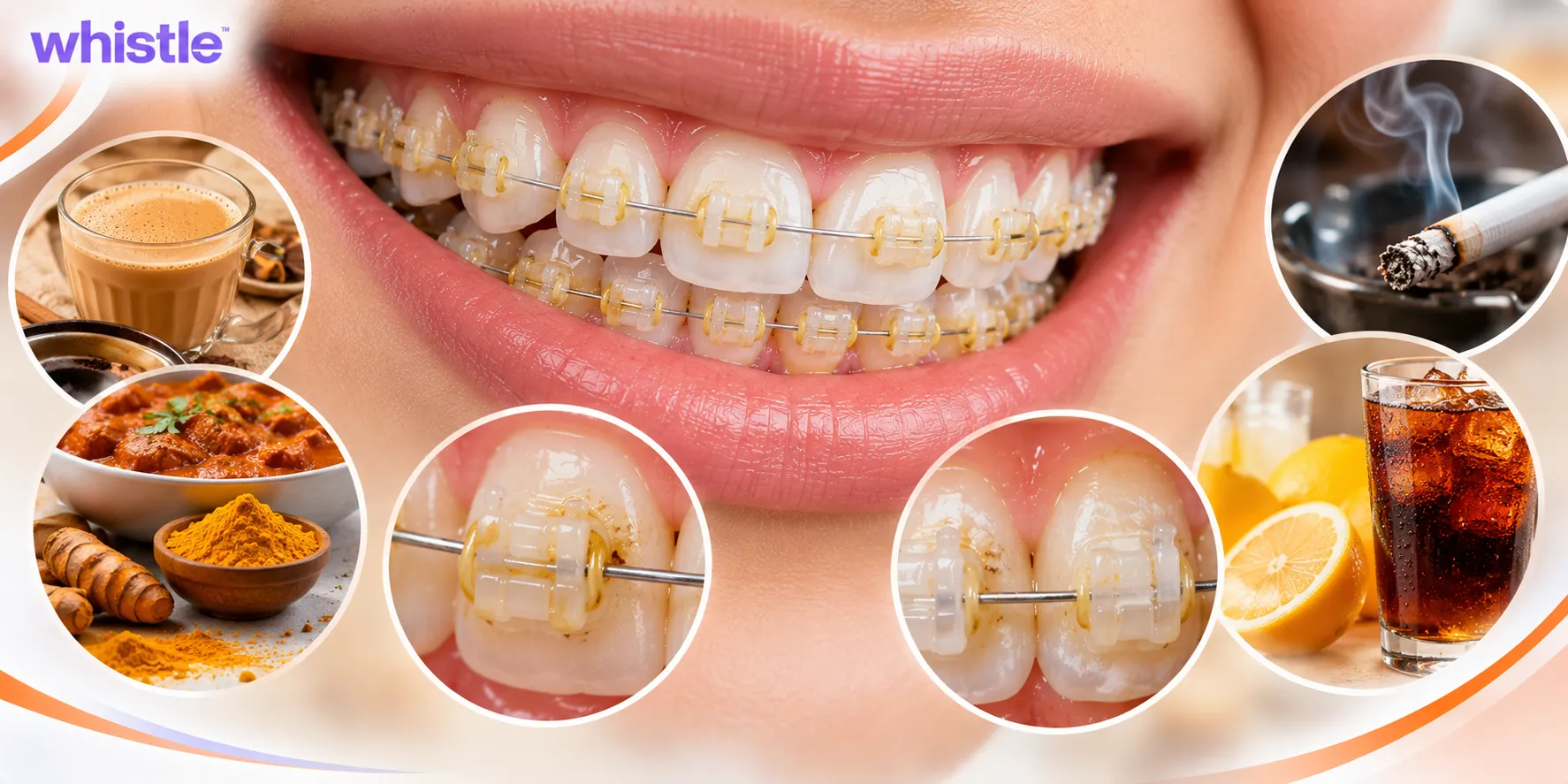
No, the ceramic brackets themselves do not turn yellow. High-grade dental ceramic is non-porous and completely stain-resistant. The yellow discoloration you see comes almost entirely from two culprits: the clear elastic rubber bands (ligatures) used to hold the archwire in place, and plaque buildup or excess bonding glue around the bracket edges.
These elastic ties absorb deep pigments from foods like turmeric, coffee, and curry. Fortunately, because your orthodontist replaces these elastic ties at every routine adjustment visit, yellowing is completely temporary and easily prevented.
Bracket vs Elastic Tie: What Actually Turns Yellow?
One of the biggest misunderstandings among braces wearers is assuming that the ceramic bracket itself has changed color. Understanding the physical components of your braces helps eliminate that worry:
- The Ceramic Bracket (Stain-Proof): Modern ceramic brackets are manufactured from polycrystalline or monocrystalline alumina (synthetic sapphire). They are baked at exceptionally high temperatures into a glass-like, non-porous surface. Natural pigments simply slide off them, meaning the actual ceramic bracket will remain the same shade from your first day to your last day of treatment.
- The Elastic Ligature Ties (Porous): To keep the archwire seated inside each bracket, orthodontists wrap a tiny rubber ring (called an elastic ligature or O-ring) around the bracket wings. Unlike rigid ceramic, these elastics are made of flexible polyurethane polymers. They behave like tiny sponges, gradually absorbing colors from spicy foods, coffee, tea, and sauces over several weeks.
- The Bracket Bonding Glue: Orthodontists use a composite resin cement to bond each bracket to your tooth enamel. If tiny amounts of excess glue extend beyond the bracket perimeter, that resin surface can pick up surface staining over time.
The 5 Main Causes of Yellowing Around Ceramic Braces
If your ceramic braces are starting to look discolored midway between clinic appointments, one of these five factors is almost always the cause:
1. High-Pigment Foods and Spices (Turmeric, Chai, and Dark Curries)
In Indian cuisine, turmeric (haldi) is a vibrant staple. Turmeric contains curcumin, an intense yellow pigment that binds quickly to porous clear rubber bands. Even a single bowl of rich dal or curry can turn clear elastic ties bright neon yellow within minutes. Strong black coffee, steeped chai, dark colas, mustard, and soy sauce also gradually tint elastics over time.
2. Plaque and Tartar Accumulation
Brackets create tiny nooks and crannies where food debris and mouth bacteria hide. When dental plaque is left unbrushed, it hardens into yellowish tartar around the base of the bracket. This makes your teeth and braces look dull and yellow even if your elastic ties are fresh.
3. Smoking, Vaping, and Tobacco Tar
Nicotine and tobacco tar penetrate porous materials rapidly. Patients who smoke or use tobacco during orthodontic treatment often notice severe yellow or dark brown discoloration across their elastic ties, bonding resin, and natural tooth enamel within days.
4. Enamel Demineralization (Early White Spot Lesions)
When acidic bacterial plaque sits around a bracket for weeks without proper cleaning, it dissolves essential minerals from your tooth enamel. This creates chalky white and yellowish borders around the bracket footprint. Unlike stained elastics, enamel demineralization represents permanent tooth surface damage that requires professional remineralization treatments.
5. Acidic Drinks Softening Elastic Surfaces
Frequent sipping of carbonated sodas, citrus juices, or sports drinks creates an acidic mouth environment. This acidity softens the surface texture of polyurethane ligatures, making them absorb dark pigments twice as fast as they would in neutral saliva.
How to Prevent Ceramic Braces and Ties from Turning Yellow
You do not need to give up your favorite home-cooked meals or morning beverages to keep your smile looking bright. Following these practical daily habits makes a massive difference:
1. Choose the Right Ligature Colors (Skip Clear and White)
While many patients ask for completely clear or stark white elastic ties thinking they will be invisible, they actually stain the fastest. Clear ties turn yellowish-brown quickly, and bright white ties make natural teeth look yellow by contrast. Instead, ask your orthodontist for:
- Silver or Light Gray: These mimic the subtle shine of the wire and blend seamlessly without showing food stains.
- Pearl or Tooth-Toned: These match natural tooth enamel shades and disguise everyday pigment absorption.
- Smoke: A very subtle tint that resists darkening between visits.
2. Master the Water Rinse Habit
If you enjoy turmeric dishes, curry, or strong tea, make it a rule to swish your mouth thoroughly with clean water immediately after eating. Rinsing clears away loose food pigments before they have hours to soak into the porous elastic ties.
3. Sip Staining Drinks with a Straw
When drinking iced coffee, tea, or dark juices, use a reusable straw positioned toward the back of your tongue. This directs pigmented liquids past your front teeth and ceramic brackets, minimizing contact with your front elastics.
4. Upgrade Your Cleaning Tools
Standard toothbrushes cannot clean effectively around bracket wings. Add these two tools to your daily oral routine:
- Interdental (Proxy) Brushes: Tiny tree-shaped brushes that slip easily under the archwire and around bracket corners to scrub away sticky plaque.
- Water Flossers: High-pressure water pulses that flush trapped food particles out of tight spaces where string floss is difficult to thread.
How to Get Rid of Yellow Stains on Ceramic Braces
If your braces have already turned yellow, here is how orthodontists handle the problem safely:
1. Routine Elastic Replacement (Every 4 to 6 Weeks)
Because elastic ties are designed to be temporary, your orthodontist replaces all of them at every scheduled adjustment visit. As soon as your doctor snaps on a fresh set of ties, any accumulated yellowing instantly disappears, resetting your smile to a fresh, clean look.
2. Professional In-Clinic Scaling and Polishing
If the discoloration is caused by hardened tartar or sticky plaque along the bracket gumline, a gentle professional scaling session removes the buildup safely, restoring the natural shine of your enamel and ceramic brackets.
Doctor Warning: Never Use Whitening Strips or Bleaching Gels with Braces On
Do not use over-the-counter whitening strips, bleaching kits, or abrasive charcoal pastes to remove yellow stains while wearing braces. Whitening gels only bleach the exposed enamel around the bracket; they cannot penetrate beneath the ceramic base.
If you bleach your teeth during treatment, you will be left with dark, unbleached yellow squares on every tooth once your brackets are removed. Always save professional teeth whitening until after your braces are completely off.
Common Mistakes People Make with Ceramic Braces
- Choosing Clear or Pure White Ties: Clear elastics highlight curry and coffee stains within days. Choosing silver, pearl, or enamel-matched ties keeps your braces looking clean throughout the month.
- Scrubbing Brackets with Abrasive Baking Soda: Baking soda and charcoal powders can scratch the polished glaze of your ceramic brackets, creating microscopic grooves that trap future stains even faster.
- Postponing Routine Adjustment Visits: Skipping clinic appointments leaves old, stretched elastics on your teeth for 8 to 10 weeks. This increases staining and slows down your biological tooth movement.
- Attempting At-Home Bleaching: Using whitening products leaves permanent uneven color patches across your smile once the brackets are detached.
- Ignoring Gumline Plaque: Brushing only the front face of the ceramic bracket while neglecting the narrow gap between the bracket and your gums leads to yellow tartar rings and puffy, bleeding gums.
Your Next Steps: Enjoy a Confident, Stain-Free Smile
Whether you are considering ceramic braces or searching for an alternative that eliminates food staining altogether, consulting an orthodontic specialist is your best move.
At Whistle partner clinics, our orthodontists offer:
- High-precision ceramic braces with stain-resistant ligature selections.
- Advanced self-ligating brackets that eliminate elastic rubber ties entirely.
- Custom clear aligners that you remove during meals so you can enjoy turmeric, coffee, and all your favorite foods with zero staining worries.
- Transparent clinical guidance with flexible zero-interest payment assistance tailored to your budget.
Get the straight smile you deserve without compromising your confidence. Visit a Whistle partner clinic near you for a comprehensive consultation today.
Book 3D Teeth Scan
Consult our experts and get a 3D preview of your smile transformation!
Do Ceramic Braces Turn Yellow
FAQ's
Q1.Do the ceramic brackets themselves ever absorb stains permanently?
No. High-grade orthodontic ceramic is completely non-porous and impervious to stains. Only the temporary elastic rubber bands, plaque accumulation, or exposed bonding cement absorb color.
Q2.Can I eat turmeric and curry with ceramic braces?
Yes, you can eat turmeric and curry. However, because curcumin stains clear elastic ties quickly, it is best to enjoy heavy curry dishes just a few days before your scheduled adjustment visit, when your elastics will be replaced anyway. Rinsing thoroughly with water right after eating also helps minimize staining.
Q3.Can I drink coffee and tea with ceramic braces?
Yes. To prevent coffee and tea pigments from darkening your elastic ties, use a straw to bypass your front teeth and rinse your mouth with plain water immediately after finishing your drink.
Q4.Are self-ligating ceramic braces better at preventing yellowing?
Yes. Self-ligating ceramic brackets use a tiny built-in mechanical door or clip to hold the archwire instead of rubber ties. Because they eliminate elastic bands completely, they remove the primary reason ceramic braces appear yellow.
Q5.Can my orthodontist change my stained elastics before my next regular appointment?
Yes. If your elastic ties get heavily stained before an important event like a wedding or job interview, most orthodontic clinics will happily schedule a quick ten-minute appointment to replace your ties with fresh ones.
You May Also Like





 Medically Reviewed by Whistle Dental Team





























 Medically Reviewed by Whistle Dental Team

 Medically Reviewed by Whistle Dental Team