
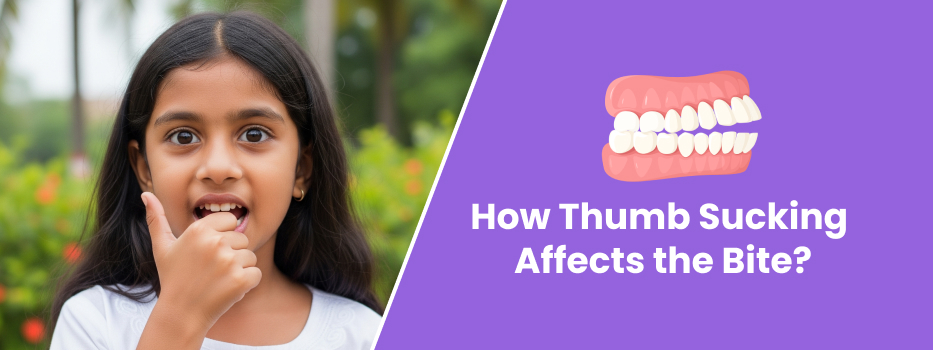
How Thumb Sucking Affects the Bite?
 Medically Reviewed by Whistle Dental Team
Thumb sucking is one of those things most babies just do - no one teaches them, it just happens. For the first few years, it’s harmless. It helps them fall asleep, feel safe, and self-soothe when the world feels too big.
But what many parents don’t realize is that when this habit sticks around for too long, it can slowly begin to shape their child’s mouth in ways that aren’t so innocent.
Let’s talk about when thumb sucking becomes a problem and what you, as a parent, can do about it.
Why Thumb Sucking Becomes a Problem
Your child’s jaw and teeth are still developing for years. Their upper palate is soft. Their front teeth are figuring out how to grow in. If a thumb is sitting in that space for hours a day, especially during sleep, it creates gentle but repeated pressure. And over time, that pressure adds up.
This can cause:
- An open bite- where the front teeth don’t meet when your child bites down.
- Protruding top teeth- often called “buck teeth,” though that’s a harsh term.
- A narrow upper jaw- leading to crossbites or crowding later.
- Changes in tongue posture- which can affect speech and swallowing.
It’s not instant, and it’s not guaranteed. But the longer and more intensely your child sucks their thumb, the higher the risk.
When Should You Step In?
If your child is under 3, you don’t need to worry.
Between 3 and 5? Start keeping an eye on it.
By 6, especially if permanent teeth are starting to come in, it’s time to start helping them let go of the habit.
Keep in mind: it’s not just about age. A child who sucks passively may not see much damage. But if your child is sucking forcefully, especially at night, that’s when real changes can happen.
How a Dentist Can Actually Help
Many parents think this is just a home problem. But your dentist can be a huge help, and not just by spotting changes in your child’s bite.
Here’s what we can do:
Talk to your child in a way that’s friendly, not scary. Sometimes hearing “why” from a dentist clicks more than hearing it from a parent.
Track their progress- celebrating wins instead of focusing on failures.
Suggest tools, like thumb guards or gentle reminders.
In some cases, we might use a small in-mouth appliance that stops the thumb from fitting comfortably. It’s not painful, just annoying enough to break the habit.
And if any changes have already happened, we’ll let you know how serious they are, and whether they’re likely to self-correct or need some orthodontic help down the line.
Helping at Home Without Pressure
Breaking a comfort habit isn’t easy, for kids or adults. So skip the punishments. Instead:
- Use gentle reminders.
- Give them something else to hold at night (a soft toy or fidget item).
- Set up a sticker chart or small rewards for thumb-free nights.
- You’re not trying to force change overnight. You’re helping them grow into it with support.
Thumb sucking isn't “bad.” It’s comfort. But like many childhood habits, there’s a time to let it go.
Your job isn’t to panic, it’s just to stay aware. With support from your dentist and a little bit of patience, your child can move past the habit, and their smile can stay on track.
Also Read:
Book 3D Teeth Scan
Consult our experts and get a 3D preview of your smile transformation!
How Thumb Sucking Affects the Bite
You May Also Like







 Medically Reviewed by Whistle Dental Team


































 Medically Reviewed by Whistle Dental Team


 Medically Reviewed by Whistle Dental Team