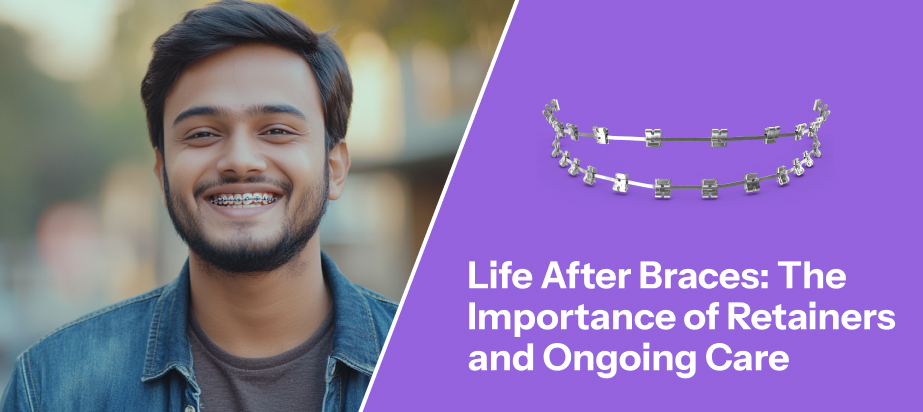
Life After Braces: The Importance of Retainers and Ongoing Care
 Medically Reviewed by Whistle Dental Team
You must wear a retainer after braces to prevent your teeth from naturally shifting back to their original, crooked positions.
For removable retainers, orthodontists generally require full-time wear (22 hours a day) for the first 3 to 6 months. After your jawbone stabilizes, you will transition to wearing them only at night.
To guarantee your teeth never shift, nighttime wear is recommended indefinitely. Fixed retainers are bonded to the teeth and remain in place permanently.
Key Takeaways:
- Retainers are essential after braces to prevent teeth from shifting back (relapse) and to preserve the results of your orthodontic treatment.
- Most patients wear retainers full-time for the first 3-6 months, followed by nighttime wear as recommended by their orthodontist for long-term stability.
- There are two main types of retainers: removable retainers (clear or Hawley) and fixed retainers, with the best option depending on your treatment needs and lifestyle.
- Proper retainer care is important, including daily cleaning, storing it safely when not in use, and replacing it if it becomes damaged or no longer fits correctly.
- Regular follow-up appointments help maintain your smile, allowing your orthodontist to monitor tooth stability, assess your retainer, and address any early signs of teeth shifting.
If you are researching a retainer after braces, your biggest questions are likely about which type is most comfortable, how to clean it, and exactly how long you will be forced to wear it.
Let's break down the definitive timeline for wearing retainers and compare the best options to protect your newly aligned smile.
Why Do You Need a Retainer After Braces?
When an orthodontist moves your teeth, they are not just sliding the visible tooth crown; they are dragging the root of the tooth through your jawbone.
This process stretches the periodontal ligaments (the fibers that anchor the tooth to the bone). When braces are removed, these stretched ligaments immediately try to snap back like a rubber band, pulling the tooth back to where it started.
A retainer physically holds the tooth in place, giving the jawbone time to rebuild and harden around the root in its new position.
The moment your braces come off, your teeth start to move - sometimes subtly, sometimes significantly.
A retainer helps by:
- Holding your teeth in their new position so they don’t relapse.
- Allowing the bone and gums to adapt to the new alignment.
- Preventing gaps and crowding from returning.
- Ensuring that your smile stays just as perfect as the day your braces came off.
Types of Retainers After braces?

- Removable Retainers (Hawley or Clear Plastic): These are easy to clean and often more convenient for mealtimes, but require discipline to wear consistently.
- Fixed Retainers: A small wire is bonded behind the teeth, making compliance easier since you can’t remove it.
Each type has pros and cons, and your orthodontist will recommend the best option based on your lifestyle and dental needs.
Which Retainer is Best after Braces?
| Retainer Type | Best For | Pros | Cons |
|---|---|---|---|
| Hawley Retainer | Patients looking for a durable and adjustable removable retainer | Durable, adjustable by an orthodontist, allows natural bite settling, and has a long lifespan with proper care. | More noticeable due to the metal wire, bulkier than clear retainers, and must be worn consistently for effective results. |
| Essix (Clear Plastic) Retainer | Patients who prefer a discreet and nearly invisible retainer | Virtually invisible, lightweight, comfortable, custom-fitted, and easy to remove for eating and oral hygiene. | Can crack, stain, or warp over time, is not adjustable, and may require replacement sooner than Hawley retainers. |
| Permanent (Bonded) Retainer | Patients with a higher risk of relapse or those who may forget to wear removable retainers | Provides continuous retention, remains hidden behind the teeth, requires no daily reminders, and effectively maintains front tooth alignment. | Requires careful brushing and flossing, cannot be removed without professional assistance, and may need repair if the bonded wire becomes loose or damaged. |
How to Maintain Retainers after Braces?
Improper care is the number one reason retainers break or become unusable.
- Clean Daily: Brush your removable retainer with a soft-bristled toothbrush and mild dish soap. Do not use standard toothpaste, as the abrasives will scratch the plastic and harbor bacteria.
- Never Boil Them: Never wash a clear plastic retainer in hot or boiling water. The heat will instantly melt and warp the plastic, ruining the fit.
- The Case Rule: If it is not in your mouth, it must be in its case. Do not wrap it in a napkin while eating at a restaurant, as it will inevitably be thrown away.
What Happens After Your Braces Treatment?
Completing your braces treatment is only the first step. Once your teeth have moved into their ideal positions, wearing a retainer is essential to prevent them from shifting back.
Most patients wear a retainer full-time for the first 3 to 6 months, before transitioning to nighttime wear. For long-term stability, many orthodontists recommend wearing retainers at night on an ongoing basis.
Common Types of Retainers
- Clear Retainers: Transparent, removable retainers custom-made to fit your newly aligned teeth. They are comfortable, discreet, and a popular choice after braces treatment.
- Hawley Retainers: Made from a combination of acrylic and metal wire, these removable retainers are durable, adjustable, and help maintain your new smile while allowing your bite to settle naturally.
- Fixed Retainers: A thin wire bonded to the back of the front teeth to provide continuous support. Since it stays in place, it offers long-term stability without relying on daily wear, although it requires extra attention during brushing and flossing.
The type of retainer recommended depends on your orthodontic treatment, bite condition, and long-term smile goals. Following your orthodontist's instructions and attending regular follow-up appointments will help ensure your teeth remain properly aligned for years to come.
How Long to Wear Retainers After Braces? The Timeline
Patients constantly ask, "After removing braces how long to wear retainer?" Here is the standard clinical timeline:
- Months 1 to 6: Full-time wear (20 to 22 hours a day). Only remove them to eat, drink anything other than water, and brush your teeth.
- Months 6 to 12: If your orthodontist confirms your bone has stabilized, you will transition to nighttime wear (putting them in after dinner and wearing them while you sleep).
- Year 1 and Beyond: Nighttime wear indefinitely. As long as you want your teeth to remain perfectly straight, you must wear your retainer at night.
For fixed retainers after braces how long they last depends on your oral hygiene. They are meant to remain in your mouth indefinitely, though the bonding glue may need to be touched up by an orthodontist every 5 to 10 years.
Comparing Your Retainer Options
| Feature | Clear Plastic (Essix) Retainer | Hawley Retainer (Wire & Acrylic) | Fixed (Permanent) Retainer |
|---|---|---|---|
| Best Suited For | Patients seeking a discreet, nearly invisible retainer | Long-term durability and adjustable retention | Patients at a higher risk of relapse or those who may forget to wear removable retainers |
| Visibility | Nearly invisible | Visible metal wire across the front teeth | Completely hidden behind the teeth |
| Removable | Yes | Yes | No |
| Comfort | Thin, lightweight, and comfortable | Slightly bulkier but highly durable | Comfortable after the initial adjustment period |
| Maintenance | Clean daily with a soft toothbrush and keep away from hot water | Brush daily and clean the acrylic and wire thoroughly | Requires careful brushing and flossing with a floss threader or water flosser |
| Durability | Can crack or warp if not handled properly | Highly durable and can be adjusted by an orthodontist | Long-lasting but may require rebonding if the wire becomes loose |
| Best Advantage | Virtually invisible and easy to wear | Durable, adjustable, and allows natural bite settling | Provides continuous retention without relying on patient compliance |
Your Next Steps
Book 3D Teeth Scan
Consult our experts and get a 3D preview of your smile transformation!
Retainer After Braces
Effects of not Wearing Retainer After Braces
After Removing Braces How Long to Wear Retainer
Types of Retainer After Braces
metal retainer after braces
FAQ's
Q1.Which retainer is best after braces?
There is no universal "best" retainer. Clear plastic retainers are best for adults who want invisible retention. Hawley retainers are best for maximum durability. Fixed retainers are best for patients who know they will forget to wear a removable tray. Your orthodontist will recommend the best fit for your specific bite.
Q2.Can I stop wearing my retainer after 5 years?
No. Even if your jawbone has completely hardened, the natural aging process causes teeth to gradually shift forward and crowd together. Wearing your retainer at night indefinitely is the only guaranteed way to prevent this natural, age-related shifting.
Q3.What happens if I forget to wear my retainer for a week?
Your teeth will likely shift slightly. When you put the retainer back in, it will feel extremely tight and may cause a dull ache as it forces the teeth back into alignment. You must wear it full-time for a few days until the teeth restabilize and the tightness fades.
Q4.How often should I replace my clear plastic retainer?
Clear plastic (Essix) retainers gradually stretch out and wear down from the friction of you grinding or clenching your teeth at night. On average, they need to be replaced every 1 to 3 years to ensure they are still holding the teeth tightly.
Q5.Do I need a retainer if I only used clear aligners, not metal braces?
Yes. Regardless of whether you used traditional metal braces, ceramic braces, or clear aligners to move your teeth, the biological response of the jawbone is exactly the same. You are at the exact same risk of orthodontic relapse and must wear a retainer as directed.
You May Also Like

 Medically Reviewed by Whistle Dental Team


 Medically Reviewed by Whistle Dental Team

 Medically Reviewed by Whistle Dental Team