
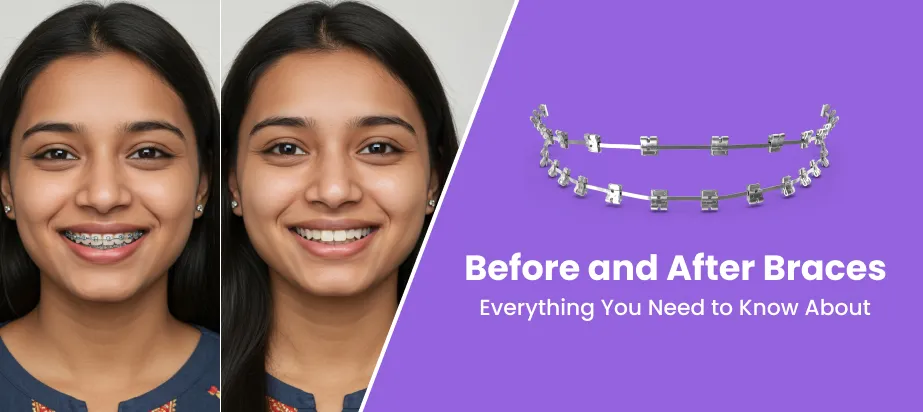
Before and After Braces – Everything You Need to Know
 Medically Reviewed by Whistle Dental Team
Evaluating braces before and after teeth reveals dramatic improvements in dental alignment, bite function, and long-term oral health.
Beyond cosmetic straightening, orthodontic treatment unravels severe crowding, closes wide gaps, corrects deep overbites, and aligns functional chewing planes across upper and lower dental arches.
Key Takeaways:
- Structural Bite Correction: Braces before and after teeth transformations resolve foundational occlusal discrepancies, preventing premature enamel wear, fractured cusps, and jaw joint strain.
- Overbite and Spacing Resolution: Severe overbites and wide diastemas are corrected through biological root torque and bodily space closure, establishing balanced tooth contact.
- Appliance Comparison: Traditional metal, clear ceramic brackets, and invisible aligners deliver equivalent tooth alignment excellence when managed by certified orthodontists.
- Extraction Space Closure: In cases requiring 4 teeth extraction for braces before and after, premolar gaps close entirely, creating optimal arch space without compromising dental health.
- Retention Secures the Results: Wearing custom fixed or removable retainers post-treatment is mandatory to prevent orthodontic relapse and maintain lifelong smile stability.
Treatment options include traditional metal braces, ceramic systems, and Invisible clear aligners.
What Really Changes: Teeth Before and After Braces
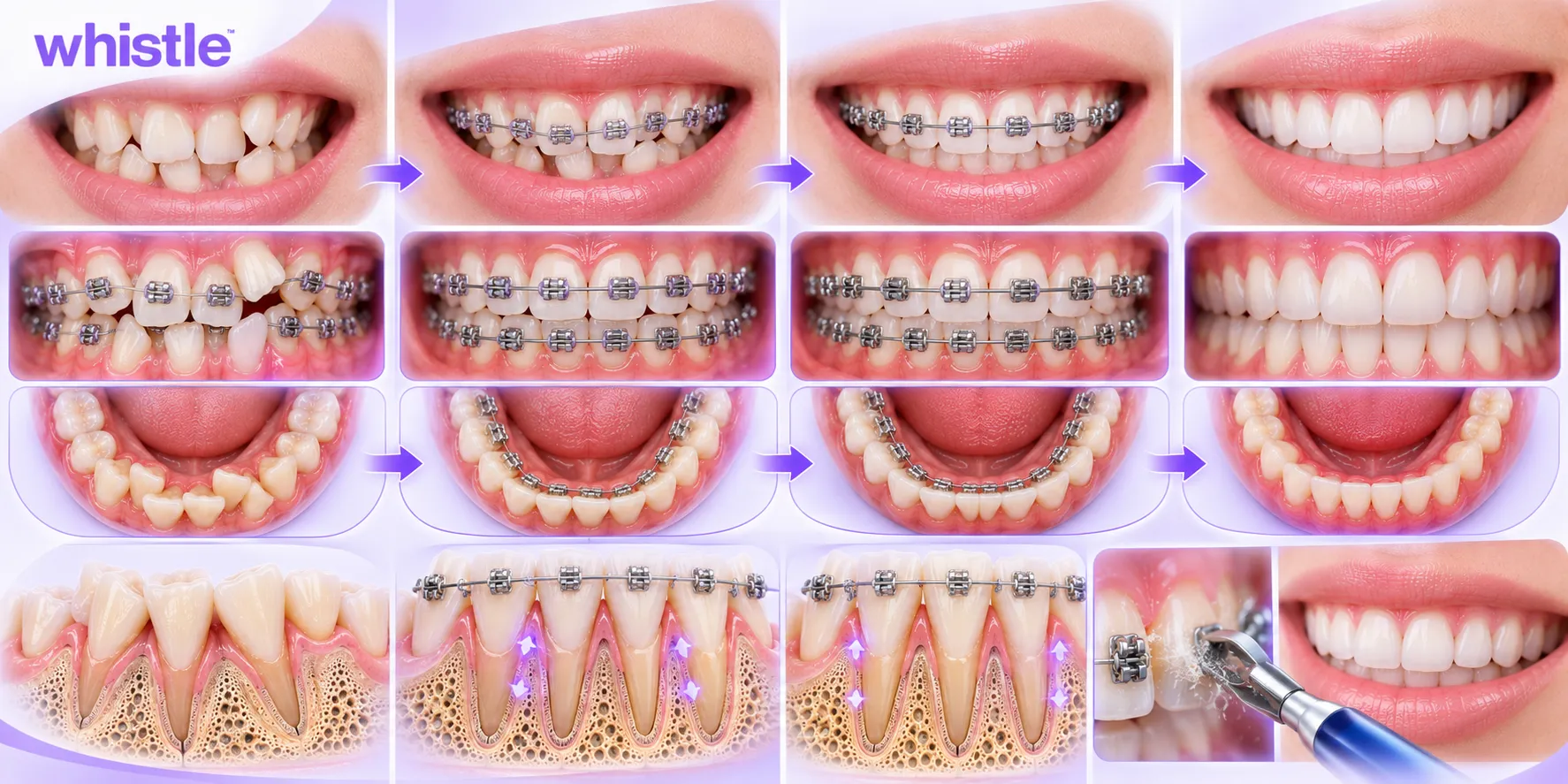
Clinical Dental Transformations: Before and After Teeth Braces
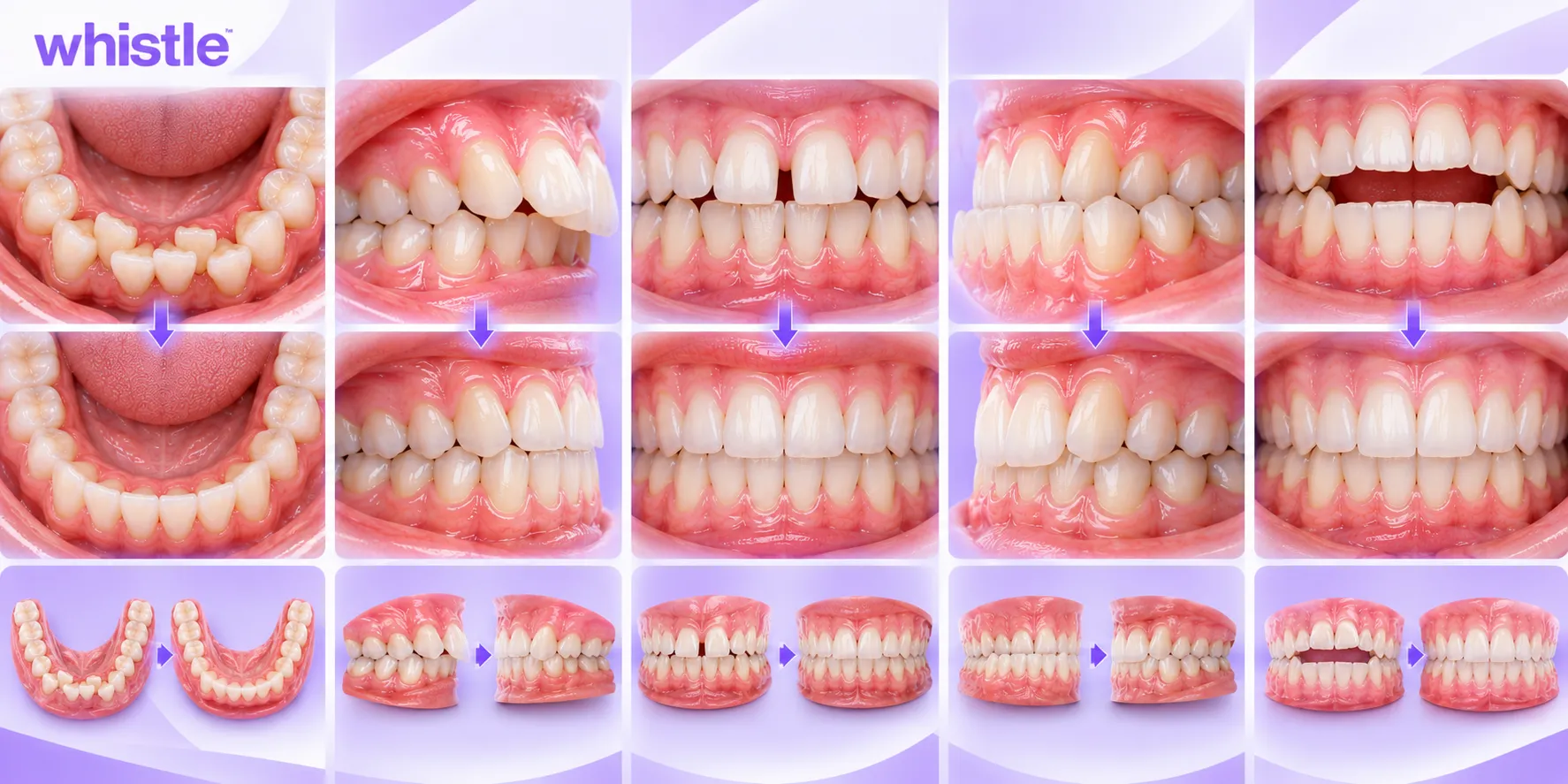
1. Severe Crowding & Overlapping Teeth
2. Overbite Before and After Braces
Comparing Transformations Across Different Appliance Systems
Direct Comparison: Braces Modalities for Dental Transformations
| Clinical Factor | Whistle Clear Aligners | Traditional Metal Braces |
| Primary Aesthetic Advantage | 100% transparent; removable for photos & meals | Proven strength for complex severe cases |
| Hygiene During Treatment | Effortless; remove trays to brush and floss | Demanding; requires threaders and water flossers |
| Average Treatment Duration | 6 to 14 months for most cases | 12 to 24 months depending on severity |
The Month-by-Month Tooth Movement Timeline
Understanding how teeth shift over time helps set realistic expectations throughout your orthodontic journey:
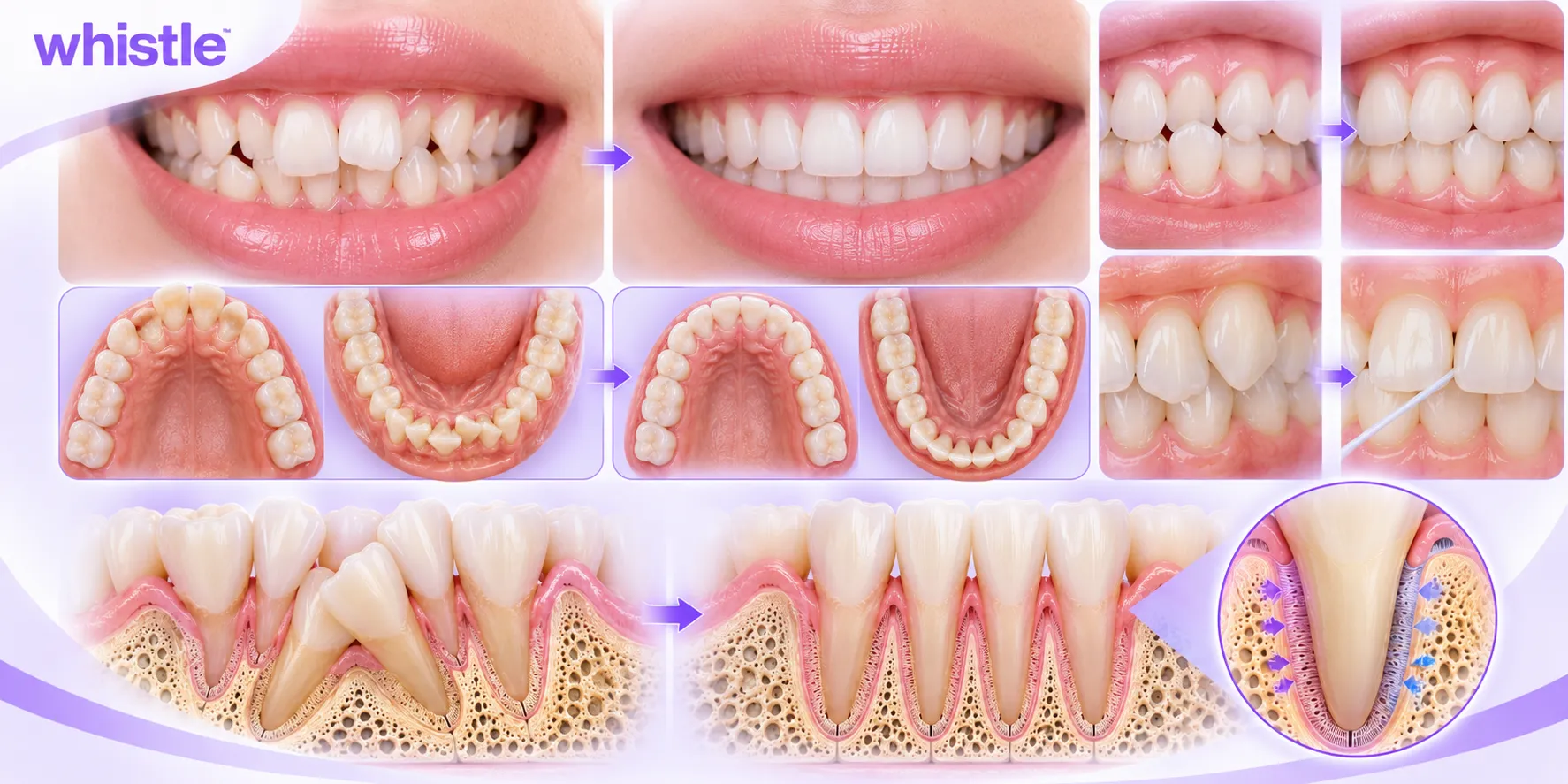
Months 1 to 3 (Alignment & Leveling Phase): Flexible nickel-titanium archwires or initial aligner trays begin unraveling crowded teeth and leveling biting edges. Rotated incisors begin turning into line. This is often the most exciting phase because visual changes occur rapidly.
- Months 4 to 9 (Space Closure & Arch Coordination): Heavier rectangular stainless steel wires or specialized aligner power ridges take over. Extraction spaces close, gaps consolidate, and upper and lower arch widths are coordinated so they fit together like matching puzzle pieces.
- Months 10 to 18 (Bite Detailing & Settling): Your orthodontist uses fine artistic bends or refinement aligners to achieve solid intercuspation (the precise meshing of upper and lower molar cusps). Minor rotations are perfected and root angulations are finalized.
- Debonding Day (The Big Reveal): Brackets are gently removed with specialized debonding pliers, composite bonding cement is safely polished away, and diagnostic post-treatment 3D scans and photographs are captured. Your teeth feel wonderfully smooth and look dramatically transformed.
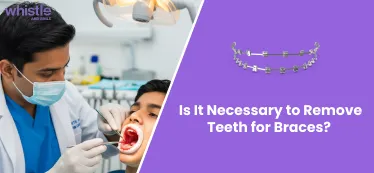
4 Teeth Extraction for Braces Before and After: When and Why Is It Necessary?
One of the most frequent questions patients ask when reviewing teeth before and after braces is whether tooth extractions are unavoidable. A common clinical protocol for severe crowding or severe dental protrusion is 4 teeth extraction for braces before and after, involving the removal of the four first premolars (one in each quadrant).
Orthodontist Clinical Insight: The Biology of Premolar Extractions
Human jawbones have strict biological boundaries. When a patient has 10mm to 12mm of severe crowding, trying to force all teeth into a straight line without extractions pushes tooth roots completely out of the supporting jawbone (cortical bone dehiscence), causing irreversible gum recession, loose teeth, and an unstable flared bite. By removing four bicuspids (premolars), your orthodontist creates 14mm to 16mm of total arch space.
This space allows crowded front teeth to retract smoothly into healthy, dense bone. Once treatment is complete, the extraction gaps are 100% closed, leaving zero empty spaces and a strong, functional chewing table.
At Whistle partner clinics, our MDS Orthodontists always follow a conservative, non-extraction first philosophy. Extractions are only recommended when digital 3D scans and cephalometric X-rays demonstrate that keeping all teeth would compromise bone health or destabilize your bite.
Common Mistakes Patients Make During Their Braces Journey
To ensure your before-and-after results are flawless, avoid these common patient errors:
- Neglecting Interdental Flossing: Food trapped around brackets breeds acid-producing bacteria. Failing to clean between teeth causes permanent chalky white demineralization scars (white spots) that become visible once brackets are removed.
- Eating Prohibited Sticky and Hard Foods: Biting into hard nuts, sugarcane, or ice pops brackets off teeth. Every broken bracket halts active tooth movement and adds weeks or months to your total treatment timeline.
- Skipping Elastics Compliance: If your orthodontist prescribes intermaxillary rubber bands to correct an overbite or crossbite, wearing them inconsistently stalls bite correction. Teeth only shift when elastic force is maintained 22 hours a day.
- Assuming Treatment Ends on Debonding Day: The day your braces come off is not the end of treatment; it is the transition to retention. Bone tissue around newly moved teeth takes 6 to 12 months to re-calcify. Skipping your retainers guarantees orthodontic relapse.
- Failing to Attend Scheduled Adjustments: Missing regular monthly appointments or aligner progress checks leads to uncontrolled movements or stalled biomechanics, compromising your final smile outcome.
Expected Sensations vs Emergency Warning Signals
Knowing what sensations to expect during your braces journey ensures peace of mind:
| Treatment Phase | Normal Expected Sensation | Signal to Contact Your Whistle Partner Clinic |
| Wire Tightening / Tray Switch | Mild pressure and tooth tenderness when chewing for 24-48 hours | Severe, throbbing, unrelenting pain preventing sleep after 4 days |
| Bracket Friction | Minor cheek or lip irritation manageable with orthodontic relief wax | Sharp broken wire poking deeply into cheek tissue causing open ulcers |
| Tooth Mobility | Slight natural wiggling when touched (normal ligament widening) | Severe tooth looseness with localized gum swelling, pus, or discoloration |
| Bite Contact Shift | Temporary sensation that molars touch differently during active movement | Severe premature single-tooth contact preventing jaw closure |
Conclusion: The Lasting Value of a Healthy, Balanced Bite
Reviewing braces before and after teeth journeys demonstrates that orthodontic care is one of the most rewarding investments you can make in your lifetime health and self-confidence.
Aligning crooked teeth, correcting deep overbites, and establishing a balanced chewing relationship eliminates premature enamel destruction, protects jaw joints, and gives you a radiant smile you will proudly share for decades to come.
Whether you choose traditional fixed braces or seamless Whistle Clear Aligners, the secret to a successful transformation lies in certified orthodontic supervision and diligent post-treatment retention. Take the first step toward your new smile by booking a comprehensive 3D digital consultation at a Whistle partner clinic near you today.
Also Read:
Book 3D Teeth Scan
Consult our experts and get a 3D preview of your smile transformation!
Before and After Braces
FAQ's
Q1.What should I expect before and after getting braces?
Before getting braces, you'll undergo a detailed consultation, X-rays, and digital scans to create a personalized treatment plan. After your braces are removed, you'll need to wear retainers and attend regular follow-up visits to maintain your newly aligned smile.
Q2.How long does braces treatment usually take?
Braces treatment typically takes between 12 and 24 months, depending on the severity of the misalignment, the type of braces used, and how well you follow your orthodontist's instructions.
Q3.Why do I need to wear retainers after braces?
Retainers help keep your teeth in their corrected positions while the surrounding bone and tissues stabilize. Without retainers, your teeth may gradually shift, affecting your treatment results.
Q4.What foods should I avoid while wearing braces?
During braces treatment, it's best to avoid hard, sticky, chewy, and crunchy foods that could damage brackets or wires. Choosing softer foods and maintaining good oral hygiene can help ensure a smooth treatment experience.
Q5.Can adults achieve the same braces before and after teeth results as teenagers?
Yes, healthy teeth can be moved at any age. While adult jawbones are fully mature and no longer growing, periodontal ligament bone remodeling occurs throughout life. Adults achieve identical tooth alignment and aesthetic smile transformations with fixed braces or discreet clear aligners.
Q6.Will my teeth stay straight permanently after braces?
Teeth remain straight permanently only if you wear your retainers as prescribed. Natural aging and elastic gum memory cause teeth to drift over time. Wearing a custom clear night retainer or a fixed lingual bonded wire prevents orthodontic relapse and secures your smile for life.
You May Also Like



 Medically Reviewed by Whistle Dental Team



















 Medically Reviewed by Whistle Dental Team

 Medically Reviewed by Whistle Dental Team