
Common Problem with Braces and How to fix them?
 Medically Reviewed by Whistle Dental Team
- Mild soreness and tooth tenderness are expected physiological responses following bracket placement and scheduled wire adjustments, resolving within 3 to 5 days.
- Orthodontic relief wax, warm salt water rinses, and soft diets provide immediate non-invasive relief for cheek chafing and minor wire irritation.
- Adults experience distinct orthodontic dynamics compared to adolescents due to mature bone density, slower osteoclast activity, and pre-existing restorations.
- Early intervention for underlying malocclusions such as severe crowding, crossbites, and deep bites prevents long-term masticatory and TMJ complications.
- Post-treatment bite settling requires continuous retainer wear under professional supervision to stabilize newly remodeled alveolar bone and prevent relapse.
Why Do Braces Cause Discomfort?
- Periodontal Ligament Compression and Ischemia (Temporary Micro-Pinching): When an archwire exerts pressure on a bracket, it compresses the periodontal ligament (PDL) on one side of the root while stretching it on the other. This transient decrease in local capillary blood flow stimulates pain receptors (nociceptors), creating a sensation of pressure or dull ache.
- Cytokine and Prostaglandin Cascade (Localized Chemical Signatures): Within hours of force application, compressed cells release biochemical mediators including prostaglandins and substance P. These mediators recruit osteoclasts (bone-resorbing cells) to clear bone on the pressure side and osteoblasts (bone-forming cells) on the tension side.
- Mucosal Friction and Keratinization Response (Cheek and Lip Adaptation): The soft tissues of the inner lips and buccal mucosa are composed of non-keratinized epithelial lining. Contact with ceramic or stainless steel brackets causes friction until the tissue adapts through natural keratinization, a process typically taking 7 to 14 days.
- Archwire Deflection Dynamics (Biomechanical Shape-Memory): Modern orthodontic archwires fabricated from nickel-titanium (NiTi) alloys possess thermal shape-memory. Activated by body heat, they continuously exert light, continuous leveling forces that gradually decrease as teeth move into alignment.
Braces Problems and Solutions: Practical Clinical Troubleshooting
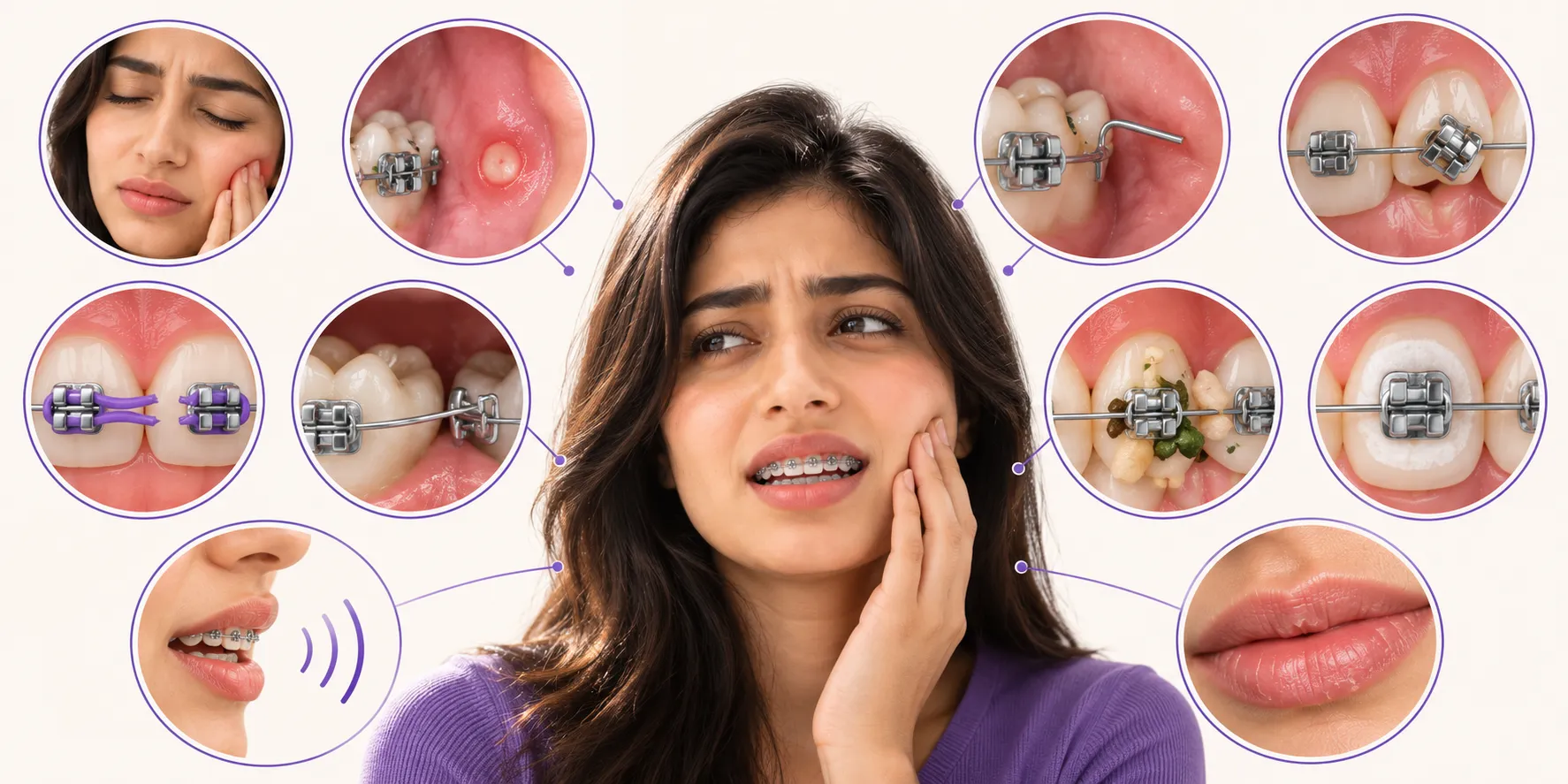
During the course of comprehensive orthodontic treatment, patients encounter predictable hardware challenges and physical adaptations. Below is a detailed clinical troubleshooting guide covering the most frequent scenarios.
1. Tooth Tenderness and Generalized Soreness
- Clinical Cause: Biomechanical activation following initial bonding or archwire changes triggers temporary inflammatory mediator release within the PDL.
- Solution: Switch to soft nourishing foods such as khichdi, dalia, steamed vegetables, curd, and lukewarm soups for the first 48 to 72 hours. Rinse with warm saline (half a teaspoon of table salt in a glass of lukewarm water) three times daily to soothe irritated tissues. Over-the-counter analgesics recommended by your treating orthodontist may be taken as directed.
2. Soft Tissue Irritation and Mouth Ulcers
- Clinical Cause: Mechanical friction between bracket edges, hooks, or wire ends and the delicate inner mucosa.
- Solution: Dry the irritating bracket with a clean tissue, pinch a pea-sized sphere of medical-grade orthodontic wax, and press it firmly over the offending component. Applying an antiseptic, soothing oral gel directly onto mucosal abrasions promotes rapid tissue regeneration.
3. Poking or Sliding Archwire
- Clinical Cause: As crowded teeth align, the dental arch perimeter shortens, causing excess wire length to protrude from the back molar tube. Alternatively, chewing hard foods can cause flexible wires to slide to one side.
- Solution: For mild poking, use the smooth eraser end of a clean pencil or a sterile cotton swab to gently nudge the flexible wire flat against the tooth surface. Cover the sharp tip with a generous ball of orthodontic wax. Contact your Whistle partner clinic so an orthodontist can safely trim the distal extension with specialized flush-cut pliers.
4. Loose or Dislodged Brackets
- Clinical Cause: Excessive shear forces from biting into hard, crunchy, or sticky foods (such as whole apples, nuts, hard chikki, or raw carrots), or direct impact during sports.
- Solution: If the bracket remains attached to the wire, apply orthodontic wax to secure it against the tooth and prevent rotation. If the bracket dislodges completely, store it safely in a clean container and bring it to your next visit. Schedule a repair appointment with your orthodontist promptly; an unbonded tooth loses active rotational and torque control, which can prolong treatment timelines.
5. Snapped Ligature Ties or Power Chains
- Clinical Cause: Polymer elastomeric degradation, masticatory stress, or vigorous tooth cleaning.
- Solution: If a single elastic module slips off, it is generally not an emergency. Leave it as is and inform your orthodontist during your next scheduled activation. If an entire power chain segment breaks, notify your clinic to evaluate whether an earlier visit is warranted to maintain space closure forces.
6. Slipped Wire Out of the Molar Tube
- Clinical Cause: Hypermobility of light initial leveling wires during chewing.
- Solution: Using sanitized tweezers, you may gently guide the flexible wire tip back into the molar buccal tube. If unsuccessful, stabilize the wire against the adjacent bracket using orthodontic wax and seek assistance from your orthodontic team.
7. Food Impaction and Plaque Stagnation
- Clinical Cause: Complex fixed appliance topography creates stagnation niches that trap fibrous Indian food items, cooked rice, and roti.
- Solution: Carry an orthodontic travel hygiene pouch containing a V-cut orthodontic toothbrush, interdental proxy brushes, and an orthodontic floss threader. Rinsing thoroughly with water after every meal dislodges loose particles before bacterial fermentation initiates enamel demineralization.
8. Enamel Decalcification (White Spot Lesions)
- Clinical Cause: Bacterial bio-film accumulation around bracket margins generates lactic acid, leeching calcium and phosphate ions from the enamel matrix.
- Solution: Maintain disciplined twice-daily brushing using a fluoridated toothpaste. Incorporate an alcohol-free fluoride mouthwash at night. Professional prophylaxis and topical fluoride varnish application during periodic orthodontic check-ups provide essential enamel protection.
9. Speech Changes and Temporary Lisping
- Clinical Cause: Fixed brackets, bite turbos, or transpalatal arches alter intraoral volume and impede natural tongue articulation, especially for sibilant sounds ('s', 'z', 'sh').
- Solution: The speech center and tongue adapt quickly. Practice reading books or newspapers aloud for 10 to 15 minutes daily. Most patients regain crystal-clear articulation within 7 to 10 days.
10. Dry, Cracked Lips and Angular Cheilitis
- Clinical Cause: Lip incompetence caused by brackets pushing the lips slightly forward, coupled with mouth breathing or frequent lip licking.
- Solution: Keep lips well-hydrated with a petroleum jelly or lanolin-based lip balm. Stay properly hydrated throughout the day.
Problems with Braces in Adults: Key Biological and Lifestyle Considerations
- Mature Alveolar Bone Architecture: Adult bone is denser, with reduced cellularity and vascular supply. As a result, osteoclastic bone resorption and osteoblastic deposition proceed at a measured pace, requiring precise, gentle orthodontic forces to prevent root resorption.
- Pre-Existing Periodontal Susceptibility: Adults are more prone to gingival recession, thin gingival biotypes, and horizontal bone loss. Orthodontic movement in the presence of active plaque can exacerbate pocket depths, necessitating immaculate oral hygiene and periodontal clearance prior to bonding.
- Presence of Dental Restorations and Implants: Unlike adolescents with intact virgin dentition, adults often have composite restorations, ceramic crowns, root canal-treated teeth, or missing molars. Dental implants cannot be moved orthodontically because they lack a periodontal ligament (osseointegration). Orthodontists use specialized bonding primers for porcelain or design multi-disciplinary anchorage plans.
- Professional and Social Visibility: Working professionals frequently express concern over metal bracket visibility in meetings and presentations. Many adults opt for ceramic tooth-colored brackets, self-ligating clear appliances, or transition to clear aligners when suitable for their malocclusion.
Orthodontist Observation Layer: 5 Common Mistakes Patients Make
Based on clinical observations across our nationwide network of partner clinics, orthodontists frequently encounter preventable errors that delay treatment progress:
- Mistake 1: Attempting DIY Repairs with Household Tools: Using nail cutters, pliers, or paper clips to bend wires can crack tooth enamel, swallow small metal fragments, or permanently detach brackets.
- Mistake 2: Ignoring Interdental Proxy Brushes: Relying solely on regular manual brushing leaves bracket undercuts uncleaned, leading to gingival swelling (hyperplasia) and white spot demineralization.
- Mistake 3: Biting Directly into Hard or Sticky Delicacies: Biting into whole apples, hard guava, peanut chikki, or sugarcane places catastrophic shear stresses on bracket adhesive bonds.
- Mistake 4: Postponing Clinic Visits for Detached Brackets: Leaving a bracket loose for weeks halts tooth movement, allowing adjacent teeth to tip and extending total treatment duration.
- Mistake 5: Sporadic Retainer Wear After Debonding: Wearing retainers only a few nights a week leads to relapse, requiring costly re-treatment or corrective alignment.
Types of Teeth Problems for Braces: Malocclusions Being Corrected
Braces are precision biomechanical tools designed to correct a spectrum of dental and skeletal discrepancies. Understanding your specific malocclusion clarifies why targeted forces are necessary:
- Dental Crowding: Occurs when the dental arch is too narrow or teeth are too large, causing teeth to overlap, rotate, or erupt ectopically. Braces create room by arch expansion, interproximal reduction (IPR), or planned extractions.
- Spacing and Diastema: Gaps between teeth resulting from missing teeth, small tooth anatomy, or an overactive labial frenum. Braces use elastomeric power chains to consolidate spaces symmetrically.
- Overjet (Excessive Horizontal Overlap): Upper incisors protrude significantly forward relative to the lower incisors, increasing susceptibility to dental trauma.
- Deep Bite (Excessive Vertical Overlap): Upper front teeth cover almost all of the lower teeth when biting, leading to palatal tissue impingement and abnormal incisal wear.
- Underbite (Class III Malocclusion): Lower anterior teeth bite in front of upper teeth due to mandibular excess or maxillary retrusion.
- Crossbite (Anterior or Posterior): Upper teeth bite inside the lower teeth, leading to facial asymmetry, unbalanced chewing, and TMJ stress.
- Open Bite: Lack of vertical overlap between upper and lower incisors when molars are closed, often stemming from childhood thumb-sucking, tongue-thrusting, or skeletal growth patterns.
Bite Problems After Braces: Understanding Post-Treatment Settling and Stability
A common concern among patients is noticing subtle bite changes or feeling that their back teeth do not touch completely right after braces are removed. This is a recognized phase in clinical orthodontics known as occlusal settling.
During active treatment, brackets and wires hold individual teeth in rigid mechanical alignment. Once debonded, teeth undergo physiological micro-movements under the forces of daily mastication, allowing opposing cusps and fossae to interdigitate into a stable, comfortable resting bite. Orthodontists often schedule a refinement check 4 to 8 weeks post-debonding to verify balanced occlusal contacts.
- Retainer Compliance: The Primary Shield Against Relapse. Periodontal ligament fibers possess elastic memory and take up to 12 months to completely reorganize in newly formed bone. Skipping retainer wear allows transseptal fibers to pull teeth back toward their pre-treatment positions, causing secondary bite discrepancies. Wearing your custom vacuum-formed or Hawley retainers as prescribed protects your newly aligned smile.
Conclusion: Navigating Your Braces Journey with Confidence
Experiencing minor problems with braces, such as brief soreness, localized cheek irritation, or occasional bracket detachment, is an expected part of the smile transformation process. These temporary hurdles reflect active biological remodeling as your teeth transition into their ideal functional and aesthetic alignment.
By mastering practical home troubleshooting techniques, maintaining meticulous oral hygiene, and staying connected with your treating orthodontist, you can easily manage daily challenges. If you ever encounter unmanageable discomfort or hardware issues, schedule a consultation with an MDS Orthodontist at a Whistle partner clinic across our 600+ physical locations nationwide.
Also Read:
- Do Braces Weaken Teeth? Myths vs. Facts
- Can We Get Single Braces for Teeth?
- Clear Braces for Adults
- How to Care for Dental Braces | Essential Tips for Oral Hygiene
Book 3D Teeth Scan
Consult our experts and get a 3D preview of your smile transformation!
Common Problems with Braces & How to Fix Them
FAQ's
Q1.How long do common problems with braces usually last?
Most initial discomfort, including tooth tenderness and cheek sensitivity, subsides within 3 to 7 days as periodontal tissues adjust and oral mucosa becomes accustomed to the brackets. Scheduled adjustment soreness is typically milder and resolves within 48 to 72 hours.
Q2.What should I do if a bracket comes loose at home?
If the loose bracket remains secured to the archwire, apply a small ball of orthodontic wax over it to prevent movement and cheek irritation. Avoid chewing on that side and schedule a repair appointment with your orthodontist within a few days so active realignment is not delayed.
Q3.Why do adults experience more problems with braces than teenagers?
Adult alveolar bone is denser with lower cellularity, meaning bone remodeling occurs at a slower physiological rate. Additionally, adults are more prone to gingival recession, previous dental restorations, and workplace communication concerns, requiring tailored biomechanical planning.
Q4.What types of teeth problems require braces instead of simple cosmetic bonding?
Braces are necessary for structural malocclusions involving skeletal discrepancies, severe rotational crowding, deep bites, crossbites, and open bites that involve root repositioning. Cosmetic bonding only alters tooth contour, leaving the underlying misaligned roots and bite stress uncorrected.
Q5.Will braces cause permanent white spots on my teeth?
Braces themselves do not cause white spots; rather, uncleaned bacterial plaque around bracket edges produces acids that demineralize enamel. Diligent brushing after meals, interdental flossing, and using fluoride mouthwashes completely prevent decalcification.
You May Also Like

 Medically Reviewed by Whistle Dental Team
 Medically Reviewed by Whistle Dental Team
 Medically Reviewed by Whistle Dental Team