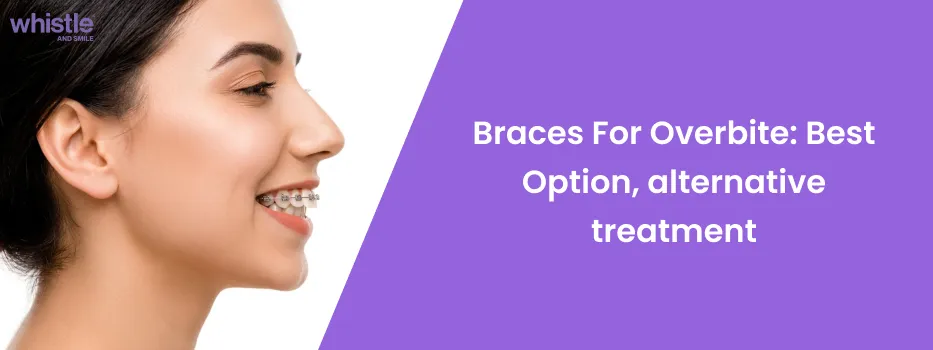
Braces For Overbite: Best Option, alternative treatment
 Medically Reviewed by Whistle Dental Team
A frequent pull-over in dental practice and even complicated to correct, the Overbite. Usually, patients think it's a cosmetic issue, but it also causes problems like jaw pain, extra wearing off of tooth surfaces, breaking of enamel, and severe damage to your gums.
Key Facts:
- Overbites are more than a cosmetic concern - they can lead to jaw pain, tooth wear, enamel damage, and gum problems if left untreated.
- Braces and clear aligners are effective treatment options, with the right choice depending on the severity of your overbite and your orthodontist's recommendation.
- Additional appliances such as elastics, bite blocks, and springs may be used alongside braces or aligners to achieve optimal bite correction.
- Successful treatment requires commitment, including regular check-ups, following your treatment plan, and wearing your aligners or braces as instructed.
- Retainers are essential after treatment to maintain your corrected bite and prevent your teeth from shifting back over time.
Fortunately, we have a wonderful solution to this: Braces or Aligners.
What is a Deep Bite?
Now that you know you have an overbite and also that we have a treatment for it, let's see which category of overbite you fall into.
| Type | Diagnosis | Explanation |
| Class 1 | Severe | The lower front tooth hits the palate (area behind upper tooth). |
| Class 2 | Concerning | The lower front tooth hits the gums of the upper tooth. |
| Class 3 | Moderate-Severe | The lower front tooth hits the gums of the upper tooth, and the upper front tooth hits the gums of the lower tooth. |
Which Treatments Can Be Done for You?
The right treatment for correcting an overbite depends on its severity, your oral health, and your lifestyle. Here are the most effective orthodontic treatment options available.
Braces
The traditional practice for correction of overbite, whether it is severe or mild, are these metal or ceramic braces.
- Braces can be used depending on the comfort levels and the budget: The old classic non-self-ligating and the new self-locking and comfortable self-ligating.
- The new treatments include traditional braces transformed to Whistle Zirconia metal braces with the strength of metal and the looks of ceramic, which is the new trend.
Aligners
With modern needs, the need for new and comfortable treatment modalities has increased, creating the necessity for aligners. Clear aligners, like Whistle, are more discreet options. These specially made (specially made for your teeth) trays gently shift your teeth over time.
- The orthodontist will plan and show you the desired results at the end of treatment.
- Generally, aligner treatment takes 10 to 18 months depending on the severity of the problem. But, they can only be used in mild to moderate cases.
- Modern day orthodontic practice includes Temporary Anchorage Device (TAD) for correction of Deep Bite as well.
Surgical Treatment
Jaw/orthognathic surgery is considered one of the treatments for skeletal deep bite correction. Since this is a surgical procedure & is difficult and is often additive to braces and aligners for severe malocclusions.
What Else is Used with Braces and Aligners?
| Modality | Used with | Used for |
| Elastics (Rubber Bands) | Braces | Elastics connect your top and bottom braces to apply specific forces that help align your jaws and correct the bite. It's essential that you wear them exactly as I instruct you. |
| Bite Blocks | Braces and Aligners | Used to guide your bite into proper form to create forces on your teeth for movement. |
| Springs | Braces | Used in extremely complicated cases, joining upper and lower braces to correct severe jaw and teeth faults. |
Living the Smile-Metamorphosis!
Your smile transformation begins with careful planning, continues with personalized treatment, and ends with long-lasting results through proper retention and follow-up care.
Pre-Treatment Modules
There will be a scanning evaluation and final discussion with your Orthodontist/Dentist, where you will understand the treatment in detail and also get to know how your smile will look by the end of treatment.
Expectation to Reality
Before your Whistle aligner treatment starts, you will require a proper cleaning, followed by which your first set of aligners will be given to you, and you will be guided by the best and most qualified orthodontist of your city at your nearest Whistle Provider Clinic..
There will be constant follow-up and pre-planned appointments for you.
Ending with a Golden Smile
When your Whistle treatment gets completed, the work isn't quite finished.
The retention phase is arguably the most important part of the entire process.
We will provide you with a Whistle retainer that you must wear as instructed.
This will prevent your teeth from shifting back and will ensure that your new, healthy smile lasts a lifetime.
Conclusion
Every overbite is different, which is why there is no one-size-fits-all treatment. What works for one person may not be the best option for another. A proper diagnosis, a personalized treatment plan, and regular follow-ups are the key to successful results. If you have been putting off treatment, now is the right time to explore your options and take the first step towards a healthier, more confident smile.
Also Read:
Book 3D Teeth Scan
Consult our experts and get a 3D preview of your smile transformation!
Braces For Overbite
Overbite Braces
FAQ's
Q1.How to search for an overbite?
General Diagnosis includes increased overlap of the front teeth, jaw pain, tooth wear, or difficulty biting. An orthodontic examination can give final completion.
Q2.Is there any other way to treat overbite than surgery?
Yes. Most mild to moderate overbites can be corrected with braces or clear aligners. Surgery is needed only for severe cases.
Q3.How much time does overbite take to be normal ?
The usual timeline is somewhere between 10 to 18 months for any amount of overbite.
You May Also Like



 Medically Reviewed by Whistle Dental Team














 Medically Reviewed by Whistle Dental Team

 Medically Reviewed by Whistle Dental Team