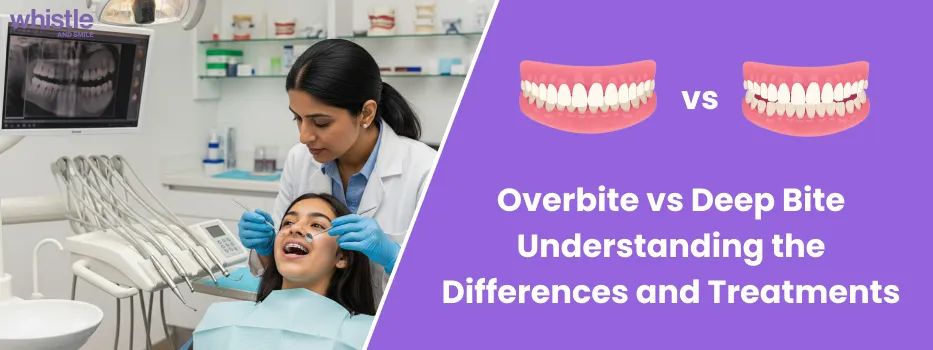
Overbite vs Deep Bite | Understanding the Differences and Treatments
 Medically Reviewed by Whistle Dental Team
If you have ever looked in the mirror and noticed that your top front teeth completely cover your bottom teeth, you are not alone. Many adults spend years dealing with chipped lower teeth or jaw pain without realizing that a severe overlap is the culprit. When dentists talk about a "deep bite vs overbite," the terms can sound confusing, but the distinction is critical. Treating the right condition early can save you from a lifetime of premature tooth wear and chronic facial tension.
- Normal vs. Severe: A slight overbite is completely normal and functional. A deep bite is a severe form of overbite that requires clinical correction.
- The 6 mm Rule: While a normal bite overlaps by 2 to 4 millimeters, a 6 mm overbite is classified as a severe deep bite that can cause physical damage to your gums and teeth.
- Overbite vs. Overjet: Many people mistakenly call buck teeth an overbite. Horizontal protrusion is an "overjet," while vertical overlap is an "overbite."
- Hidden Damage: Deep bite teeth often grind against the gums or roof of the mouth, causing severe enamel attrition, tooth sensitivity, and chronic headaches.
- Advanced Correction: Whistle offers both highly discreet clear aligners and precision braces that safely treat both dental and skeletal deep bites.
Dental malocclusion is a condition where the upper and lower teeth do not align properly when the jaws are closed.
It can be of different types, affecting the anterior/front teeth or the posterior or back teeth, such as crowding, spacing, deep bite, under bite, cross bite, scissor bite, etc. Misaligned teeth cause difficulty in chewing, poor facial appearance, and also affect the overall tooth and periodontal health.
What is an Overbite and a Deep Bite?
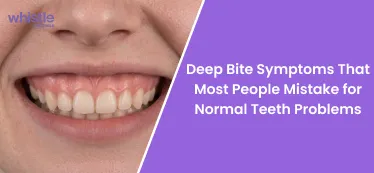
Overbite is a general term for the vertical overlap of the upper and lower front teeth when the jaws are closed, whereas an excessive overbite, where the upper teeth cover the lower teeth excessively, is known as a deep bite.
The normal overbite ranges between two to four millimeters, where the incisal margins of lower teeth touch or lie just above the cingulum of upper teeth. In case of a deep bite, this can range from more than 4mm. Deep bite can be classified as mild, moderate, or severe.
A deep bite greater than 6 mm is termed a severe deep bite.
Deep Bite vs Overbite: Understanding the Difference
When comparing deep bite and overbite, it is important to know that a deep bite is actually a type of overbite. The difference between overbite and deep bite lies in the severity of the overlap between the upper and lower front teeth. A normal overbite involves slight vertical overlap, while a deep bite occurs when the upper front teeth excessively cover the lower front teeth, which may lead to functional and oral health concerns if left untreated.
- An overbite refers to the vertical overlap of the upper front teeth over the lower front teeth.
- A deep bite is a more severe form of overbite with excessive tooth overlap.
- Deep bites may contribute to tooth wear, gum issues, and jaw discomfort.
- Orthodontic treatments such as braces or clear aligners can help correct both conditions and improve bite alignment.
Dental vs. Skeletal: Understanding the Causes
Deep bite can be caused by a combination of inherited and acquired factors. Genetics plays a significant role where the size of the jaws and teeth.
Environmental and behavioral factors, use of pacifiers, grinding and clenching of teeth habits, also contribute to the development of a deep bite. Lack of teeth in the posterior region causes forward movement of the front teeth, leading to worsening of an existing deep bite.
Skeletal Causes (Bone Structure)
Dental Causes (Teeth Position)
- Childhood Habits: Prolonged pacifier use, thumb-sucking, and tongue thrusting can alter the alignment of the front teeth as they develop.
- Missing Back Teeth: If you lose a posterior molar and don't replace it, the front teeth naturally shift backward, deepening an existing bite.
- Teeth Grinding: Chronic bruxism (clenching and grinding) wears down the height of the back teeth over time, which causes the bite to "collapse" and become deeper at the front.
Symptoms of Deep Bite
- Gingival injury in the lower front teeth region
- Attrition of lower front teeth
- Sensitivity to cold food and drinks
- Chewing / Biting Difficulty
- Pain in the Jaw muscles
- Headaches and Migraine (in severe cases)
- Dry Mouth
Tooth sensitivity is the most common symptom of a deep bite. The lower anterior teeth have excessive wear/attrition, causing sensitivity and a reduced occluso-gingival height of the tooth.
There is a feeling of dull pain or tingling while eating or drinking cold food. This pain is sometimes so sharp and sudden that it affects the day-to-day quality of life. The gums and the periodontal tissues get inflamed, and there is gingival recession with a higher risk of irritation and gum injury.
This can lead to pulp exposure and subsequent root canal treatments and crowns. Pain in the jaw with discomfort in the temporomandibular joint may be a sign of an untreated deep bite.
This pain worsens in cases of bruxism or clenching during stressful situations. There is an alteration in speech with overall altered esthetics in cases of severe deep bite.
The Overbite vs Overjet Confusion
- Overbite: The vertical overlap (top to bottom).
- Overjet: The horizontal protrusion (front to back).
Complications if left untreated on Time
Worn-down lower teeth that compromise tooth structure and require dental interventions
Crooked or cramped teeth that can’t be corrected until the deep bite is treated
Development of a temporomandibular joint disorder
Problems when eating or drinking
Understanding the difference between overbite and deep bite is important. Deep bite is a common oral health condition, and early treatment helps to avoid more serious oral health conditions from developing later.
A regular visit to a dentist can help diagnose the problem early and determine a more appropriate treatment plan in order to correct a deep bite.
Also Read:
- How to Reduce Gap Between Teeth Naturally | Effective Solutions
- What are Buck teeth: Causes, Risks & Treatment Options
- Orthodontics Isn’t Just About Straight Teeth - Here's What You Didn't Know
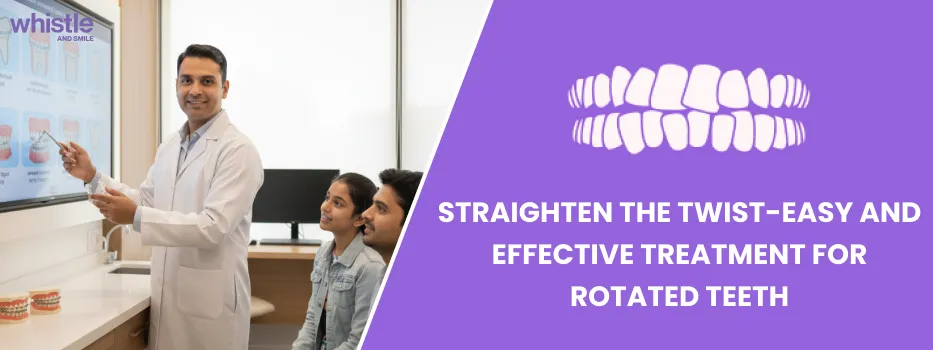
- Straighten the Twist-Easy and Effective Treatment for Rotated Teeth
Treatment Options for Deep Bite Correction
Correction of a deep bite depends upon the age of the patient, the severity of the deep bite, and the underlying cause.
The preliminary approach is to find a nearby orthodontist/ dentist who can explain the treatment options available, as well as the best treatment modality, as per the age, severity, and cause.
A full mouth X-Ray (OPG) and a lateral cephalogram help to understand the cause of a deep bite, whether it is due to an altered jaw size or other contributing factors involved.
A proper diagnosis helps in better treatment planning. The treatment options available include dental appliances, braces, aligners, or surgery.
Dental Appliances
Dental appliances can be used to intercept the problem so that further consequences are reduced.
- These appliances help to position the upper and lower teeth at a desirable position until the bite can be permanently corrected with the help of braces or any other treatment.
- It is made of wires and plastic material, takes support from the gums and tongue, and helps to reposition the jaws without having much contact with the teeth.
- It is recommended to wear a dental appliance at night as the jaws shift more easily during sleep. It can be either fixed or removable.
- The fixed appliances have springs that help to position the jaws, can be adjusted only by the dentist, and cannot be removed, whereas a removable appliance can be removed easily and cleaned.
Braces
Braces are a more common way used to correct a deep bite. These can be metallic or ceramic, depending upon the patients’ aesthetic concerns.
The brackets are attached to the teeth, and a series of wires is used to reposition the teeth gradually to a desired bite.
Whistle Aligners
These are clear trays that can be fabricated using a 3D scan. These are removable trays that need to be worn at least 20-22 hours a day. Each tray creates a continuous and light force upon the teeth in order to move them to a desired place.
Surgery
Severe deep bite cases, which are beyond the scope of braces and aligners, should be treated surgically. For all these kinds of cases, orthognathic surgery is indicated.
- Surgery involves cutting through the jawbone to realign it and often requires metal screws or plates in the jawbones so that they can be moved into place more easily.
- Different procedures are recommended depending on the severity of misalignment and how much the overlap is when the teeth are closed together. It is typically performed under general anesthesia, although sometimes local anesthesia can be used.
After surgery, a mouthguard is given to be worn at night for several weeks so that the mouth is healed completely. In some cases, surgery may also involve removing bone from one side of the jaw to make room for it to come forward more easily.
Why a Deep Bite Needs to Be Treated
Living with a normal 2-millimeter overbite is completely fine. However, living with deep bite teeth (especially a 6 mm overbite or more) leads to a cascade of functional complications:
- Severe Enamel Attrition and Sensitivity: The most common symptom. Because the lower teeth constantly crash into the back of the upper teeth, the enamel wears away rapidly. This causes intense sensitivity to cold drinks and foods.
- Gum and Palate Injury: In severe cases, the lower front teeth actually bite directly into the roof of the mouth (the palate), causing painful sores, ulcers, and permanent gum recession.
- TMJ Disorders and Migraines: A collapsed bite forces your jaw muscles to remain in a constant state of unnatural tension. Over time, this leads to jaw clicking, difficulty chewing, and chronic tension headaches or migraines.
- Digestive Issues: Because the teeth do not meet properly, chewing efficiency plummets. Swallowing poorly chewed food can trigger long-term digestive discomfort.
- Speech Impairments: A severe overlap can interfere with tongue placement, making certain phonetic sounds difficult to pronounce clearly.
Your Next Steps
An untreated deep bite rarely stays the same - it usually deepens with age as the back teeth naturally wear down. Fixing it isn't just about aesthetics; it is about saving your teeth from painful wear and relieving your jaw from chronic stress.
Ready to see what your bite could look like? Book a free Smile Assessment at your nearest Whistle Partner clinic today.
- Biting Teeth in Sleep: Causes, Symptoms, and Treatments
- What Happens If You Keep Delaying Braces or Aligners?
Book 3D Teeth Scan
Consult our experts and get a 3D preview of your smile transformation!
overbite vs deep bite
difference in overbite and deep bite
FAQ's
Q1.What is the main difference between deep bite and overbite?
An overbite is the normal, natural vertical overlap of your upper teeth over your lower teeth (usually 2-4 mm). A deep bite is simply a severe form of an overbite, where the overlap exceeds 4 mm, often completely hiding the lower teeth.
Q2.Why are my deep bite teeth so sensitive?
When you have a deep bite, your lower front teeth constantly grind against the back of your upper teeth. This aggressive friction wears away the protective enamel layer (attrition), exposing the sensitive dentin underneath to hot and cold foods.
Q3.Can a deep bite cause chronic headaches?
Yes. A severe deep bite prevents your jaws from resting in their natural position. This forces your facial and jaw muscles to remain tense all day, which can lead to temporomandibular joint (TMJ) disorders, jaw pain, and chronic tension headaches.
Q4.At what age should a deep bite be corrected?
While adults can safely fix a deep bite at any age, early intervention is best. An orthodontic evaluation around age 7 allows a dentist to use appliances to gently guide the jawbone's growth, preventing a severe deep bite from fully forming.



 Medically Reviewed by Whistle Dental Team

 Medically Reviewed by Whistle Dental Team




 Medically Reviewed by Whistle Dental Team