
Overlapping Teeth: Why They Happen & How to Get a Straighter Smile
 Medically Reviewed by Whistle Dental Team
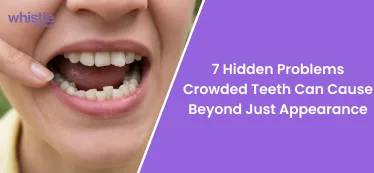
Overlapping teeth, commonly referred to as dental crowding, happens when your jaw does not have enough room for all your teeth to sit neatly side-by-side, causing them to twist, overlap, or get pushed out of line. This misalignment creates tight spaces where toothbrush bristles cannot reach, leading to trapped plaque, bad breath, and bleeding gums.
Key Takeaways on Overlapping Teeth
- More Than a Cosmetic Issue: Overlapping teeth create tight food traps where plaque hides, raising your risk of gum swelling, bleeding, and interdental cavities.
- Why It Happens: Genetics, a narrow jawbone, early loss of baby teeth, childhood mouth breathing, and natural aging all cause teeth to crowd together.
- Teeth Do Not Straighten on Their Own: In fact, crowding tends to increase with age as the lower jaw naturally constricts over time.
- Straightening Without Tooth Removal: Modern orthodontics uses gentle enamel slenderizing (IPR) and arch expansion so that most mild and moderate overlap cases never need extractions.
- Comfortable Modern Choices: You can choose discreet, removable clear aligners for lifestyle freedom or low-friction braces for complex tooth movement.
Today, overlapping teeth are safely corrected using removable clear aligners or gentle low-friction braces under the care of certified MDS Orthodontists across 600+ Whistle partner clinics nationwide.
What Are Overlapping Teeth?
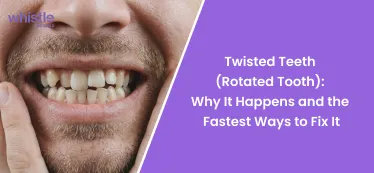
Overlapping teeth occur when there isn’t enough space along the jaw for all the teeth to sit in a straight, evenly spaced row. Instead of aligning edge to edge, adjacent teeth rotate, tip, or stack on top of one another, most commonly in the lower front (mandibular incisors) and upper front teeth.
Orthodontists refer to this broadly as crowding, and it’s measured by comparing the total width of all the teeth to the available arch length. When tooth width exceeds arch space, the excess has to go somewhere - usually resulting in rotation or overlap.
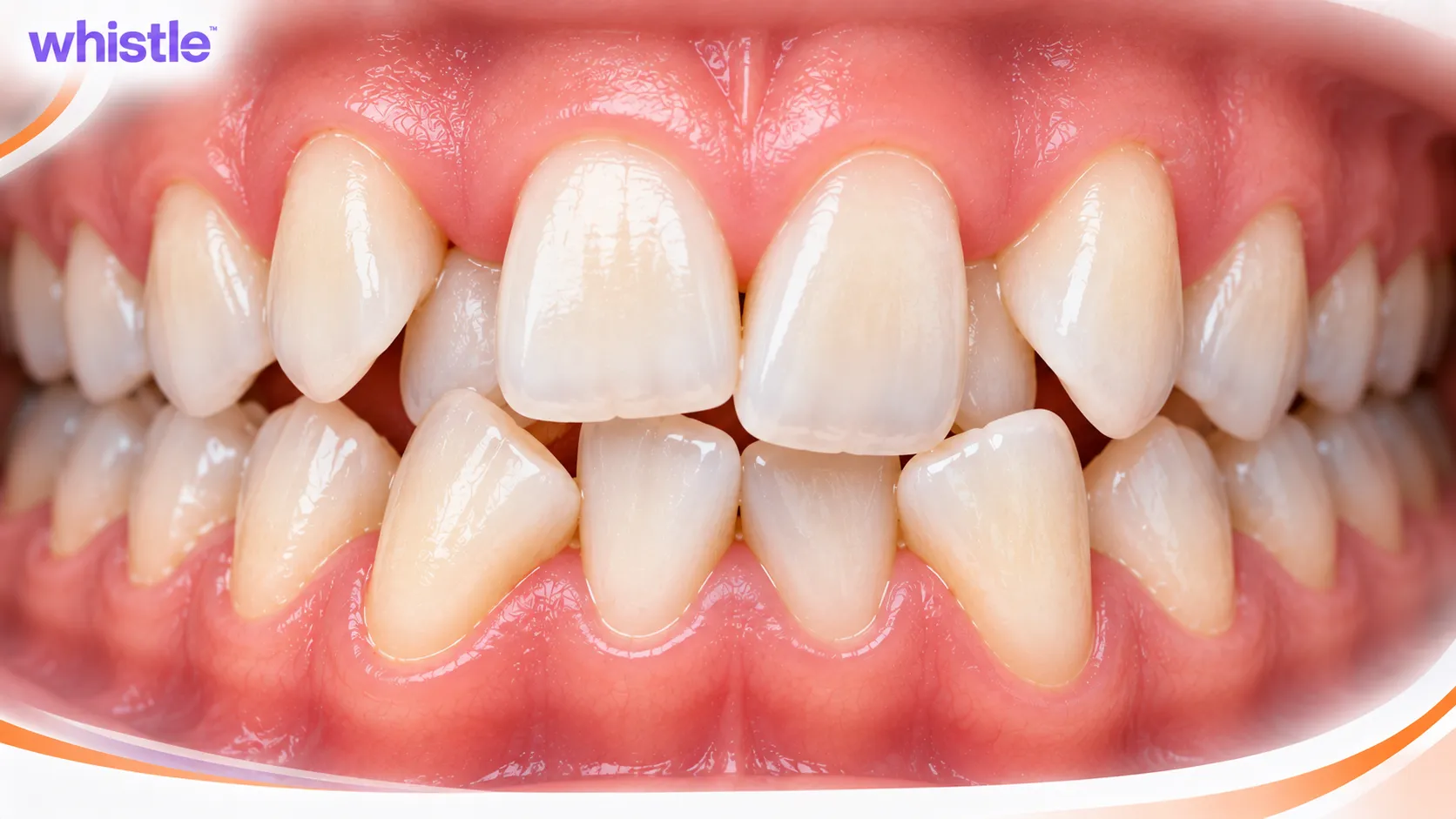
Crowding is different from spacing (gaps between teeth) and from bite problems like overbite or underbite, though a person can have more than one of these issues simultaneously. It can involve just one or two teeth (localized crowding) or the entire arch (generalized crowding).
Mild, Moderate, and Severe Tooth Overlap: How Orthodontists Classify Crowding
Orthodontists typically grade crowding based on the amount of arch-length discrepancy, measured in millimeters:
- Mild crowding (1–3 mm): Slight rotations or minor overlap, often correctable without removing any teeth, sometimes even resolved with interproximal reduction (IPR) alone.
- Moderate crowding (4–6 mm): Noticeable overlap of two or more teeth, usually requiring a combination of IPR, arch expansion, and aligner or braces movement.
- Severe crowding (7 mm or more): Significant rotation and displacement, which may require tooth extraction or, in growing children, jaw expansion to create adequate space.
This classification, along with X-rays and 3D scans, helps the orthodontist decide whether your case can be treated with aligners alone or needs a more involved approach.
What Causes Overlapping Teeth? (Genetic & Habitual Triggers)
Overlap rarely has a single cause - it’s usually a combination of inherited jaw structure and environmental or behavioral/habit factors during childhood development.
1. Genetics and Jaw Size Discrepancies
The most common cause is a simple mismatch between tooth size and jaw size, and this is largely hereditary. You may inherit a small jaw from one parent and large teeth from the other, leaving insufficient room for all 28–32 teeth to erupt in alignment. Congenitally missing or extra teeth (supernumerary teeth) as a structural cause. Family history of crowding is one of the strongest predictors of whether a child will need orthodontic treatment.
2. Childhood Habits (Thumb Sucking, Pacifier Use & Tongue Thrusting)
If a child keeps sucking their thumb or using a pacifier after they are 3 or 4 years old and if they also push their tongue against their teeth when they swallow, this can create steady, gentle pressure. This pressure can make the part of the mouth narrower and push the teeth forward. This can lead to protruded teeth and make it worse. Mouth breathing and airway obstruction (enlarged tonsils/adenoids) are well-documented contributors to narrow arches and crowding in children.
3. Premature Loss of Baby Teeth and Shifting Dentition
Baby teeth act as natural space-holders for permanent teeth. If a primary tooth is lost early, due to decay or trauma, neighboring teeth can drift into the space, leaving too little room for the permanent tooth to erupt correctly.
4. Impacted Wisdom Teeth and Late Mandibular Crowding
Third molars, called wisdom teeth, often appear during the late teenage years or early twenties. Third molars can sometimes press against the back of the arch. Researchers have found that the issue known as " lower crowding" has many causes and is not only caused by wisdom teeth. Impacted or erupting third molars can add extra pressure to an arch that is already tight.
Upper vs Lower Overlapping Teeth: Why Do Lower Teeth Crowd More?
While upper overlapping teeth are the most visible when you smile, lower front incisors are actually the most vulnerable to severe crowding. Here is why:
- Narrower Bone Base: The lower jawbone (mandible) is naturally narrower and denser than the upper jaw. Even a single millimeter of extra tooth width can force lower front teeth to twist sideways.
- Forward Chewing Pressures: Every time you chew, your natural biting forces push teeth slightly toward the center of your mouth. Because lower teeth sit behind the upper teeth, they have nowhere to go except over and behind each other.
- Arch Expansion Limits: While orthodontists can gently widen the upper palate to create room for overlapping teeth, the lower jaw has limited room for expansion, making precise digital alignment planning essential.
The Hidden Health Risks of Overlapping Teeth
Many people assume overlapping teeth are purely an aesthetic concern. In reality, crowded teeth can create ongoing functional and health issues in your mouth:
| Oral Health Issue | How Overlapping Teeth Cause It | What Happens If Left Untreated |
| Hidden Plaque Traps & Bad Breath | Where two teeth overlap, the tight contact prevents toothbrush bristles and regular floss from cleaning between them. | Trapped food and bacteria produce unpleasant odors (halitosis) and cause hidden cavities between teeth. |
| Bleeding Gums (Gingivitis) | Plaque sitting undisturbed along overlapping tooth margins constantly irritates the gums. | Gums become red, tender, and bleed during brushing, eventually leading to gum recession and bone loss. |
| Uneven Tooth Wear & Chipping | Crooked, overlapping teeth strike opposing teeth at unnatural, sharp angles when you chew. | Premature enamel wear, sensitive exposed yellow dentin, and chipped front biting edges. |
| Jaw Joint (TMJ) Soreness | Your jaw muscles must work harder and slide awkwardly to find a stable bite around overlapping teeth. | Chronic morning jaw tiredness, clicking sounds in the jaw joints, and tension headaches. |
Modern Ways to Fix Overlapping Teeth
Straightening crowded teeth no longer requires bulky, painful hardware or automatically pulling healthy adult teeth. Today's orthodontic advancements offer comfortable, patient-friendly solutions:
1. Whistle Clear Aligners (Discreet, Removable Comfort)
Clear aligners are custom-made transparent plastic trays that fit snugly over your teeth. Every week or two, you switch to the next tray in your sequence, which gently shifts your overlapping teeth by 0.2 to 0.3 millimeters at a time.
- Nearly Invisible: Made from medical-grade polyurethane, they are virtually undetectable at work, college, or social gatherings.
- 100% Removable: Take them off to enjoy all your favorite meals with zero food restrictions.
- Effortless Oral Hygiene: Simply remove your aligners to brush and floss your teeth normally, keeping your gums clean and healthy throughout treatment.
2. Self-Ligating Metal & Ceramic Braces (Continuous Gentle Control)
Modern braces have evolved far beyond older traditional brackets. Self-ligating braces use an engineered micro-slide clip instead of elastic rubber bands to hold the wire:
- Low Friction: Teeth slide smoothly along the wire with light, continuous forces, minimizing post-adjustment soreness.
- Discreet Ceramic Options: Choose tooth-colored ceramic brackets that blend naturally with your tooth enamel.
- Great for Complex Cases: Highly effective for severe skeletal crowding or deeply rotated teeth requiring continuous torque.
3. Creating Space Without Extractions: The Science of IPR
Patients often worry that fixing overlapping teeth requires pulling healthy teeth. Fortunately, in the vast majority of mild to moderate cases, modern orthodontists create room using Interproximal Reduction (IPR):
IPR gently polishes away just 0.2 to 0.3 millimeters of outer enamel between adjacent teeth.
It is completely painless because enamel has no nerves.
Gaining 0.2mm across several teeth easily creates 2 to 3mm of total arch space, allowing overlapping teeth to align smoothly without extractions.
4. Why Dental Veneers Are Not Real Treatment for Overlap
Some cosmetic clinics offer porcelain veneers to mask overlapping front teeth in just two visits. However, veneers do not move your tooth roots. To place a veneer over a twisted, overlapping tooth, the dentist must grind away a large amount of healthy natural enamel. Orthodontic alignment with aligners or braces moves your whole tooth and root into healthy bone, preserving your natural enamel for life.
Orthodontist Observation Layer: 5 Real-World Mistakes People Make
- Waiting for Teeth to Straighten on Their Own: Many parents and young adults assume mild overlap will sort itself out as the mouth matures. In reality, jawbones narrow with age, turning mild overlap into severe crowding that is harder to treat later.
- Grinding Down Enamel for Quick Cosmetic Veneers: Shaving healthy front teeth to camouflage overlap often leads to tooth sensitivity, root canals, and repeat crown replacements over your lifetime. Moving natural teeth with aligners is far healthier.
- Falling for Cheap Mail-Order Aligner Kits: Mail-order DIY kits send plastic trays to your home without a doctor ever checking your tooth roots or jawbone on an X-ray. Moving crowded teeth without clinical supervision can lead to loose teeth, gum recession, and bite collapse.
- Skipping Flossing Because It Is Too Tight: When teeth overlap, floss can shred or feel difficult to insert. Skipping flossing allows plaque to eat away at hidden tooth contacts. Use thin waxed floss or a water flosser daily.
- Forgetting to Wear Retainers After Treatment: Once your teeth are straight, periodontal fibers in your gums need 9 to 12 months to settle into place. Skipping your night-time retainer will allow teeth to drift right back into overlap.
Clinical Safety Warning: Never use home remedies, mail-order aligners, or elastic bands to straighten overlapping teeth. Safe tooth movement requires precise biological force calibration and in-person supervision by a licensed MDS Orthodontist to protect your bone and tooth roots.
Your Next Steps: How to Fix Overlapping Teeth for Good
Living with overlapping teeth can make you hesitate to smile openly and turn daily brushing into an uphill battle. But you do not have to live with crowded teeth or fear painful metal brackets. Modern orthodontic solutions make straightening overlapping teeth comfortable, virtually invisible, and easily adaptable to your busy routine.
Whether you choose the lifestyle convenience of Whistle Clear Aligners or the continuous alignment of Self-Ligating Braces, your treatment is guided by transparent planning and personal hands-on care from certified MDS Orthodontists. Take your first step toward a healthy, radiant smile by booking an in-person 3D scan and smile assessment at your nearest Whistle partner clinic today.
Also Read:-
Book 3D Teeth Scan
Consult our experts and get a 3D preview of your smile transformation!
What Is an Overbite in Teeth
Overbite in Teeth
FAQ's
Q1.Can overlapping teeth fix themselves without treatment?
No. Overlapping teeth cannot correct themselves. Because jawbones naturally narrow slightly as we age, untreated crowding usually becomes progressively worse over time.
Q2.Can clear aligners fix overlapping teeth as effectively as braces?
Yes. Custom clear aligners are highly effective for mild, moderate, and many complex overlapping teeth cases. Tooth-colored attachments and gentle IPR help aligners grip and rotate crowded teeth smoothly.
Q3.Will I need to have teeth pulled to fix my overlapping teeth?
In most mild to moderate cases, extractions are not necessary. Orthodontists create space by gently slenderizing outer enamel (IPR) by 0.2mm or widening the arch perimeter. Extractions are reserved only for severe crowding.
Q4.Is it painful to fix overlapping teeth with aligners or braces?
Treatment is not painful. You will feel a mild, dull tightness or pressure for the first two to three days after switching to a new aligner tray or receiving a wire adjustment, which is a normal sign that teeth are safely shifting.
Q5.Can overlapping teeth cause gum problems?
Yes. Overlapping teeth create tight crevices where plaque accumulates. If left uncleaned, this bacterial buildup leads to chronic gum inflammation, bleeding, and gum disease.
 Medically Reviewed by Whistle Dental Team
 Medically Reviewed by Whistle Dental Team

 Medically Reviewed by Whistle Dental Team