Keeping Your Mouth Clean with Braces or Aligners: A Real-World Survival Guide
 Medically Reviewed by Whistle Dental Team
A mouth care procedure is a systematic, evidence-based oral hygiene protocol designed to eliminate bacterial plaque, debride food residues, hydrate sensitive mucosal tissues, and prevent infectious oral diseases.
Executed across standard ambulatory settings, assisted care environments, and orthodontic routines, a clinical mouth care procedure protects oral tissues through five core phases: thorough mucosal assessment, targeted soft-bristle mechanical brushing, interdental plaque removal, dorsal tongue cleansing, and antiseptic or therapeutic mucosal hydration.
Key Takeaways
- Universal Preventive Standard: A complete mouth care procedure requires 2 full minutes of 45-degree angled sulcular brushing, daily interdental debridement, and posterior tongue cleaning.
- Aspiration Safety Guardrail: For dependent or bedridden individuals, mouth care must be performed in an upright or lateral side-lying position using moist non-dripping swabs to prevent aspiration pneumonia.
- Orthodontic Modification: Fixed braces require dual-angle brushing above and below the archwire with interdental proxy brushes, while clear aligners mandate daily effervescent sanitization.
- Mucosal Hydration Priority: Spitting toothpaste foam without immediate aggressive water rinsing preserves a protective fluoride layer on enamel, while water-soluble lip balm prevents painful crusting.
- Professional Supervision: Home oral procedures cannot remove calcified tartar; regular clinical checkups at Whistle partner clinics every six months are essential for long-term dentofacial health.
Consistent execution of these mouth care procedure steps shields teeth from enamel demineralization, halts periodontal breakdown, relieves dry mouth symptoms, and prevents pathogenic oral bacteria from aspirating into the respiratory tract.
Ready to Get Started?
A structured mouth care procedure is the foundation of lifelong oral and systemic health. Whether caring for yourself, supporting a dependent family member, or navigating the complexities of orthodontic brackets and clear aligners, adopting consistent, evidence-based mouth care procedure steps ensures optimal plaque removal, mucosal comfort, and tissue protection.
Dedicating a few mindful minutes each morning and evening to methodical brushing, interdental cleaning, and gentle tongue care safeguards your smile and enhances your overall health. A good oral care routine adds a couple of minutes to your day, but it pays off fast. When your treatment ends, you want your teeth to be healthy, strong, and clean not just straight.
Want to learn more about starting your smile transformation? Book a 3D smile scan at a certified Whistle partner clinic near you today!
What Is a Mouth Care Procedure?
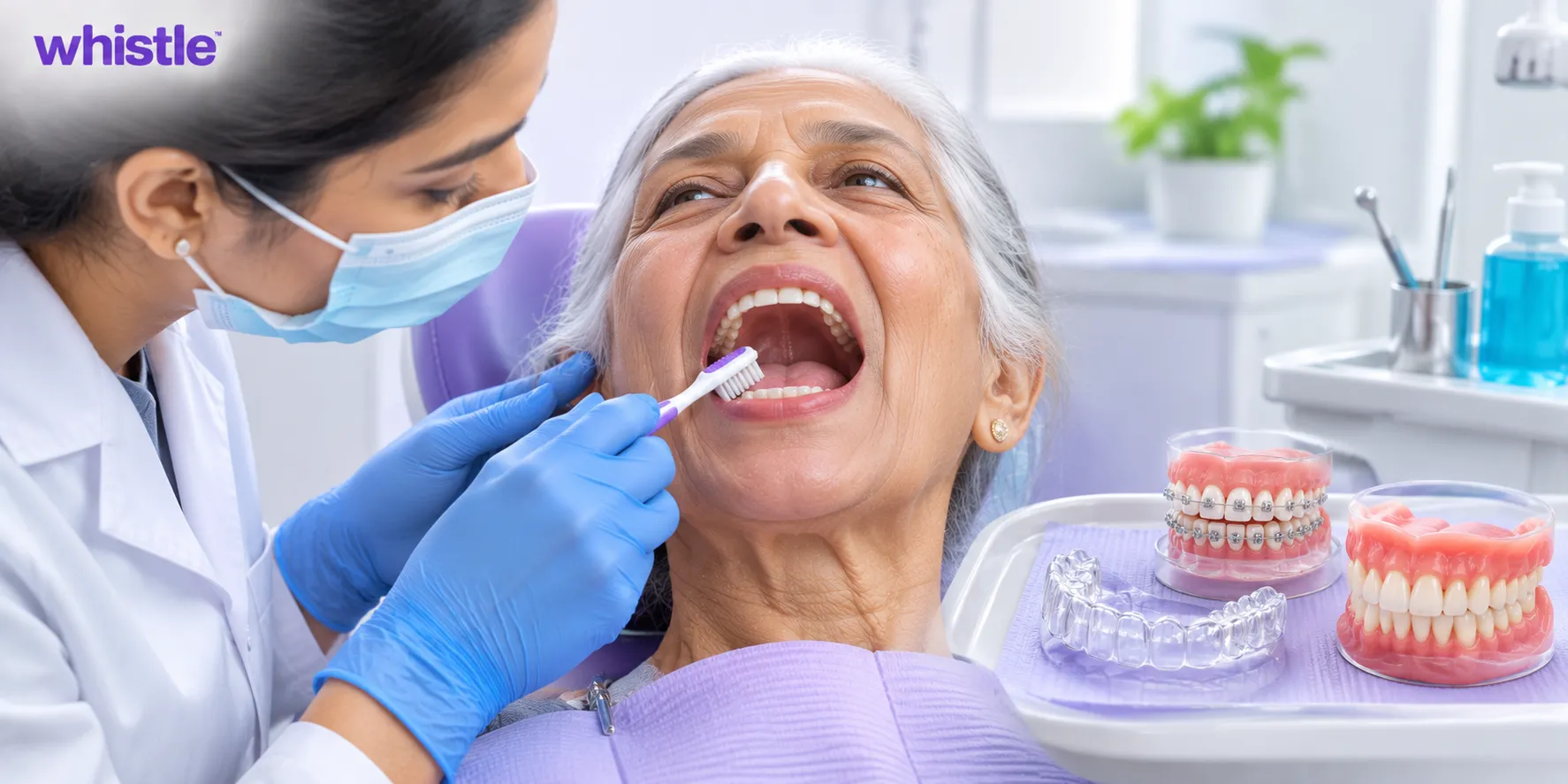
Clinical Objectives of the Mouth Care Procedure
- Biofilm Disruption: Dislodges tenacious bacterial plaque from tooth surfaces, orthodontic brackets, and gingival margins before acids erode enamel.
- Gingivitis and Periodontitis Prevention: Reduces inflammatory bacterial loads along the gumline, preventing gingival bleeding, tissue swelling, and alveolar bone destruction.
- Mucosal Hydration and Comfort: Moisturizes delicate oral tissues, preventing painful xerostomia (dry mouth), tongue fissures, and angular cheilitis (cracked lip corners).
- Prevention of Halitosis: Removes sulfur-producing anaerobic bacteria lodged on the posterior dorsal surface of the tongue and interdental spaces.
- Mitigation of Systemic Complications: Prevents the micro-aspiration of virulent oral pathogens into the lungs, significantly reducing the clinical incidence of hospital-acquired aspiration pneumonia.
Standard Mouth Care Procedure Steps for Independent Daily Care
For ambulatory individuals and independent adults, following standardized mouth care procedure steps twice daily guarantees total biofilm control and long-term oral vitality:
Step 1: Preliminary Oral Rinse
Swish vigorously with lukewarm water for 20 to 30 seconds before touching a toothbrush to your teeth. This initial hydraulic rinse loosens large food particles, softens sticky sugars, and hydrates dry mucosal folds, preventing you from scrubbing abrasive food particles against your enamel.
Step 2: 45-Degree Angled Sulcular Brushing
Apply a pea-sized amount of fluoride toothpaste to a dry or slightly dampened soft toothbrush. Position the bristles at a 45-degree angle toward the gumline, engaging both the tooth surface and the gingival sulcus. Use gentle, vibratory, circular motions (the Modified Bass Technique) for two full minutes. Ensure you systematically clean all three surfaces: the outer facial walls, the inner lingual/palatal walls, and the horizontal chewing surfaces of all molars.
Step 3: Interdental Plaque Removal
Toothbrush bristles reach only 60 percent of your tooth surfaces. The remaining 40 percent lies within interproximal contact zones where tooth decay and gum disease frequently start. Gently slide waxed dental floss or an appropriately sized interdental brush between each tooth once daily, hugging the natural curve of the tooth in a C-shape to clear trapped plaque beneath the contact area.
Step 4: Dorsal Tongue Debridement
Up to 80 percent of oral bacteria reside on the rough papillae of the tongue. Extend your tongue and place a clean tongue scraper or soft brush at the posterior third of the tongue dorsum. Gently draw the instrument forward toward the tip using light, even pressure. Rinse the scraper under running water between strokes and repeat 3 to 4 times to clear yellowish-white microbial coating.
Step 5: Mucosal Hydration and Post-Brush Care
Spit out excess toothpaste foam thoroughly. Avoid rinsing immediately with large amounts of cold water, as leaving a thin residual film of fluoride on your enamel maximizes topical remineralization. If you use an alcohol-free mouthwash, swish for 30 seconds at a separate time of day to sustain antimicrobial protection without washing away concentrated toothpaste fluoride.
Essential Supplies and Equipment Checklist
- Soft or Ultra-Soft Bristled Toothbrush: A compact-head manual brush or sonic toothbrush with rounded bristles that cleans effectively without scratching enamel or traumatizing inflamed gums.
- Orthodontic V-Trimmed Brush: Specialized brush featuring shorter central bristles and longer peripheral bristles, designed to glide smoothly over brackets and archwires.
- Fluoride Toothpaste (1000 to 1450 ppm): Strengthens enamel crystal structure through fluorapatite formation and arrests microscopic sub-surface demineralization.
- Interdental Brushes and Floss Threaders: Crucial tools designed to clean tight contact points between teeth, under orthodontic archwires, and around implant abutments.
- Tongue Cleaner or Scraper: Medical-grade stainless steel or flexible plastic debrider designed to remove accumulated cellular debris and fungal residues from the tongue.
- Alcohol-Free Therapeutic Mouthwash: Neutral pH fluoride rinse or antibacterial cetylpyridinium chloride (CPC) solution that hydrates without burning sensitive or ulcerated oral mucosa.
- Assisted Care Tools (Dependent Patients): Disposable medical foam swabs, suction catheters, padded tongue depressors (to avoid involuntary biting), emesis basin, and water-soluble lip balm.
Clinical Mouth Care Procedure Steps for Dependent or Bedridden Patients
When assisting bedbound individuals, post-stroke patients, or elderly family members who cannot perform self-care, caregivers must exercise heightened clinical precautions to prevent pulmonary aspiration:
1. Pre-Procedure Positioning
Never perform oral care on a dependent patient lying completely flat on their back. If the patient is conscious, elevate the head of the bed to a high-Fowler's position (60 to 90 degrees) or at least a semi-Fowler's position (30 to 45 degrees). For an unconscious or cognitively impaired patient, turn the individual into a lateral side-lying position with their head tilted slightly downward toward the caregiver. Gravity will allow pooled secretions to drain safely outward into an emesis basin placed beneath the chin.
2. Clinical Mucosal Assessment
Before inserting any instrument, put on clean disposable gloves and gently inspect the oral cavity using a penlight. Check for swollen gums, spontaneous bleeding, white patchy plaques (indicative of oral thrush or candidiasis), ulcerations, broken tooth fragments, or dry encrusted saliva on the palate.
3. Controlled Cleansing Technique
Never force open a patient's mouth using bare fingers, as involuntary bite reflexes can cause severe injury. If necessary, gently insert a padded tongue depressor to maintain access. Moisten a soft-bristled toothbrush or medical oral foam swab with normal saline or an alcohol-free chlorhexidine rinse.
Squeeze out excess liquid so the applicator is damp rather than dripping. Gently clean the teeth, gums, tongue, and inner cheeks, wiping from the back toward the front. Keep bedside suction functional and ready to clear secretions instantly.
4. Post-Care Mucosal Hydration and Lip Protection
Gently wipe the oral cavity dry with sterile gauze. Apply a thin layer of water-soluble lip moisturizer or pure medical-grade petroleum jelly across both lips to prevent cracking, bleeding, and painful crusting. Document the procedure, noting any observed ulcers, red lesions, or bleeding episodes in the patient's daily health log.
Specialized Mouth Care Procedure Steps for Orthodontic Patients
Protocol for Fixed Braces
- Step 1 (Hydraulic Pre-Rinse): Rinse with warm water for 30 seconds to dislodge food trapped in bracket wings.
- Step 2 (Dual-Angle Bracket Brushing): Hold an orthodontic V-trim brush at a 45-degree angle pointing downward from above the archwire to clean upper bracket margins, then invert the brush pointing upward from beneath the wire to clean lower margins.
- Step 3 (Under-Wire Interdental Cleaning): Thread an interdental proxy brush vertically under the archwire between each bracket pair, removing plaque that horizontal toothbrushes skip entirely.
- Step 4 (Interdental Flossing with Threaders): Pass waxed floss under each archwire segment using a flexible nylon floss threader or utilize a targeted orthodontic water flosser on low-to-medium pulse pressure.
Protocol for Clear Aligners
- Cold Water Drinking Only: Never drink hot tea, coffee, or sugary beverages while wearing aligner trays. Heat warps custom thermoplastic aligners, while sugars seep beneath the trays, creating an acidic incubation chamber that rapidly destroys enamel.
- Always Clean Teeth Before Reinsertion: Never snap clear aligners over unbrushed teeth after meals. Doing so traps carbohydrates directly against your teeth. If brushing is impossible while dining out, vigorously rinse your mouth and the trays with water, reinsert, and complete a full mouth care procedure upon returning home.
- Dedicated Trays Sanitation: Clean aligner trays twice daily using a soft brush and cool water. Once daily, soak them in specialized effervescent aligner cleaning crystals or mild antimicrobial denture soak. Never soak aligners in hot water or abrasive whitening toothpastes, which create microscopic surface scratches that harbor odor-causing bacteria.
- Rigid Protective Storage: Store aligners in their ventilated hard plastic case whenever they are removed for meals. Never wrap aligners in paper napkins, as this is the primary cause of accidental appliance loss and damage.
Health Risks of Neglecting Routine Mouth Care
- Enamel Demineralization (White Spot Lesions): Bacterial acids dissolve calcium and phosphate crystals from enamel within four weeks of poor hygiene, leaving permanent chalky white scar outlines around orthodontic brackets.
- Severe Marginal Gingivitis and Periodontitis: Persistent microbial plaque triggers acute immune inflammation, leading to swollen, bleeding gums, gum recession, and irreversible alveolar bone loss around tooth roots.
- Hospital-Acquired Aspiration Pneumonia: In dependent or bedridden patients, pathogenic oral bacteria colonize oral secretions. When aspirated into the lower airways, they cause life-threatening lung infections, especially in elderly and immunocompromised individuals.
- Oral Stomatitis and Fungal Infections: Dry, neglected oral tissues develop painful erythematous patches and Candida albicans overgrowth (thrush), causing severe burning sensations and preventing adequate nutritional intake.
Critical Safety Precautions and Anti-DIY Warnings
Performing oral hygiene improperly or adopting unverified home hacks introduces severe dental trauma and infection risks:
- Never Use Sharp Metal or Wooden Objects: Never pick at food trapped around teeth or braces using safety pins, needles, paperclips, or wooden toothpicks. These objects scratch protective enamel, bend delicate orthodontic archwires, and puncture delicate gum tissue, causing deep periodontal infections.
- Never Force Open a Dependent Patient's Jaw: Prying open teeth with bare fingers can cause serious bite injuries and fracture loose incisors. Always use a soft, padded medical bite block or moist foam swab.
- Avoid Abrasive Household Pastes: Brushing with baking soda, charcoal powders, or acidic lemon juice strips away protective enamel, exposing yellow dentin and causing permanent dentinal hypersensitivity.
- Avoid Hot Water on Dental Appliances: Exposing clear aligners, retainers, or acrylic dentures to boiling or hot water causes immediate thermoplastic shrinkage and distortion, destroying appliance fit.
When to Consult a Dentist or Specialist
While daily home mouth care procedures maintain baseline oral cleanliness, professional clinical intervention is essential under the following conditions:
- Persistent Gingival Bleeding: Gums that continue to bleed after 7 to 10 days of diligent brushing and flossing require professional ultrasonic scaling and periodontal evaluation.
- Non-Healing Oral Ulcers: Any mouth sore, white plaque, or mucosal lesion that persists for more than 14 days requires clinical examination and mucosal biopsy to rule out systemic pathology.
- Loose Orthodontic Hardware: If an orthodontic bracket detaches or an archwire pokes into the cheek, contact your orthodontist immediately. Place sterile orthodontic relief wax over the sharp edge in the interim.
- Routine Professional Maintenance: Schedule comprehensive dental examinations and professional prophylaxis every six months to eliminate calcified calculus (tartar) that home brushing cannot remove.
Ready to Get Started?
A structured mouth care procedure is the foundation of lifelong oral and systemic health. Whether caring for yourself, supporting a dependent family member, or navigating the complexities of orthodontic brackets and clear aligners, adopting consistent, evidence-based mouth care procedure steps ensures optimal plaque removal, mucosal comfort, and tissue protection.
Dedicating a few mindful minutes each morning and evening to methodical brushing, interdental cleaning, and gentle tongue care safeguards your smile and enhances your overall health. A good oral care routine adds a couple of minutes to your day, but it pays off fast. When your treatment ends, you want your teeth to be healthy, strong, and clean not just straight.
Want to learn more about starting your smile transformation? Book a 3D smile scan at a certified Whistle partner clinic near you today!
Book 3D Teeth Scan
Consult our experts and get a 3D preview of your smile transformation!
Mouth Care Procedure
FAQ's
Q1.What is the standard duration for a complete mouth care procedure?
A comprehensive routine mouth care procedure takes approximately 3 to 4 minutes: 2 full minutes of angled brushing with fluoride toothpaste, 1 minute of thorough interdental flossing or proxy brushing, and 30 seconds of gentle dorsal tongue scraping.
Q2.Can I use regular dental floss while wearing fixed braces?
Yes, but standard floss cannot pass between teeth from the top due to the archwire. You must use a specialized flexible nylon floss threader to guide the floss beneath the wire, or use an orthodontic water flosser for effective interproximal debridement.
Q3.Is mouthwash an acceptable substitute for brushing and flossing?
No. Mouthwash is an adjunctive chemical rinse that reduces surface bacteria and freshens breath, but it lacks the mechanical shear force required to dislodge sticky bacterial plaque and food debris from enamel and interdental spaces.
Q4.How should clear aligners be cleaned during a daily mouth care procedure?
Clean aligners twice daily using a soft-bristled brush and cool water, and soak them daily in an effervescent aligner cleaning crystal solution. Never use hot water, colored soaps, or abrasive toothpastes that scratch the medical-grade plastic.

 Medically Reviewed by Whistle Dental Team



 Medically Reviewed by Whistle Dental Team






 Medically Reviewed by Whistle Dental Team