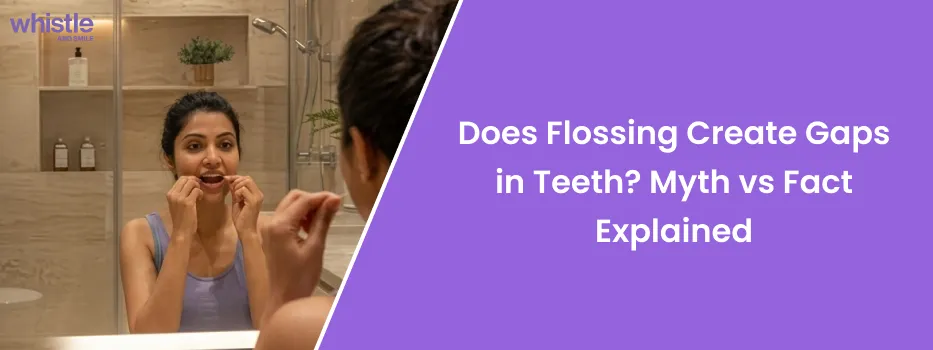
Does Flossing Create Gaps in Teeth? Myth vs Fact Explained
 Medically Reviewed by Whistle Dental Team
No, flossing does not create gaps in teeth or push teeth apart. Dental floss is less than 0.1 millimeters thick and cannot exert the continuous, sustained orthodontic pressure required to move teeth rooted in jawbone.
The appearance of new spaces after flossing is an optical illusion: flossing removes swollen gum inflammation and dislodges hardened tartar bridges that were artificially masking your natural tooth contours.
While snapping floss aggressively can traumatize gum tissue causing localized recession, proper gentle flossing protects your gums and preserves healthy tooth alignment.
Key Takeaways
- No Physical Movement: Dental floss cannot physically widen spaces between teeth because moving a tooth requires weeks of continuous biomechanical force, not seconds of gentle flossing.
- The Optical Illusion: Spaces appear more visible after flossing because inflamed, swollen gums heal and shrink back to their healthy shape, and trapped tartar bridges are cleaned away.
- Danger of Snapping Floss: Aggressive, sawing flossing can slice delicate gum papillae (creating floss clefts) and cause minor gum recession, which highlights dark triangular gaps.
- True Causes of Teeth Gaps: Genuine widening spaces stem from untreated periodontitis (bone loss), missing teeth, tongue thrusting, genetic diastema, or teeth shifting after skipping retainers.
- Orthodontic Protection: Flossing is critical during braces and clear aligner treatment. Clear aligners make flossing effortless because trays are removable, while closing genuine gaps permanently.
Let us solve this mystery for you, it's not the flossing; and understanding why it looks that way is important, since it's a reason people often stop flossing, which only makes things worse.
The Anatomy of Flossing: Why Dental Floss Cannot Move Teeth
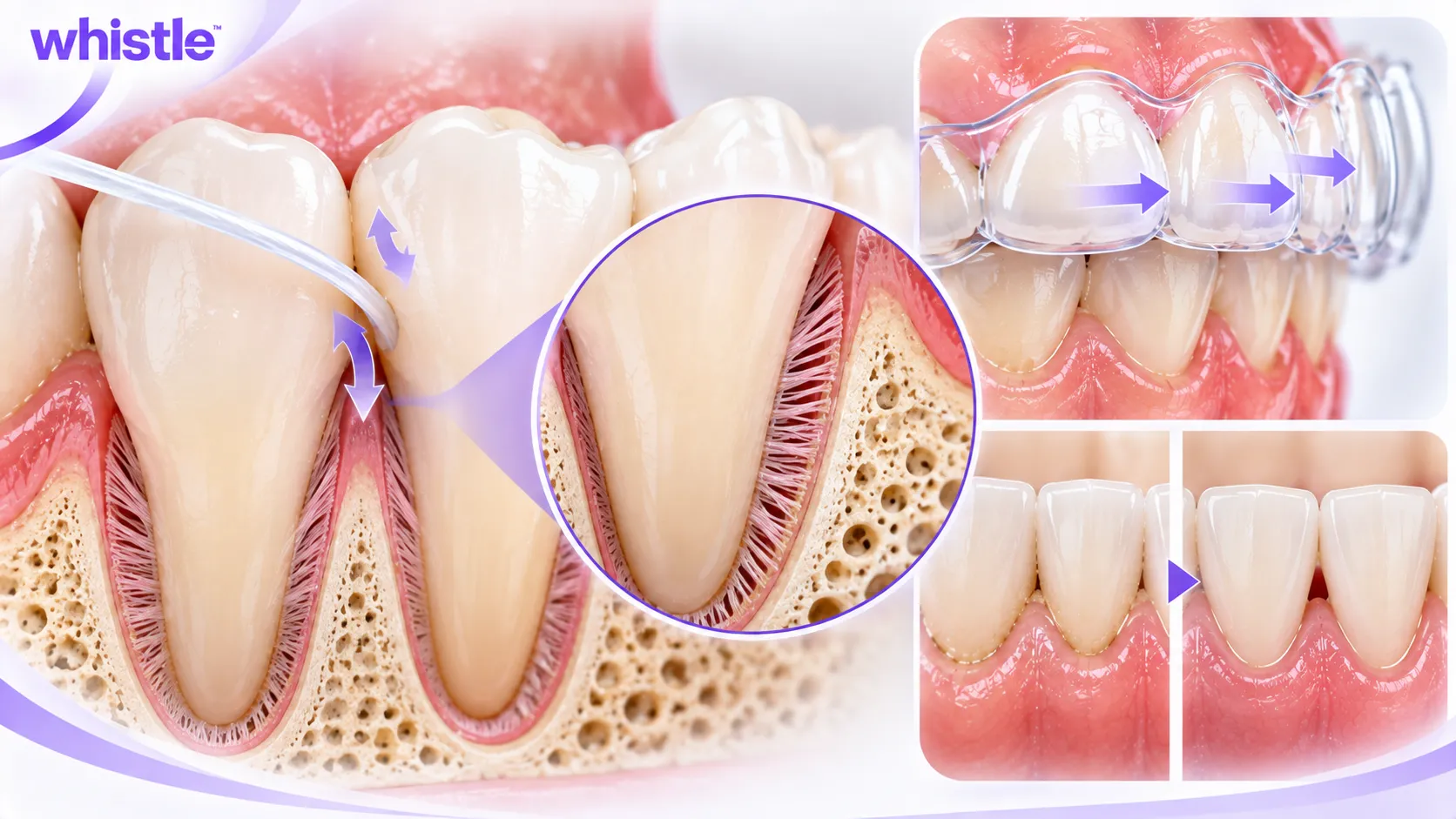
Why Does It Look Like Flossing Creates Gaps?
If dental floss cannot physically move teeth, why do so many people swear that flossing increases the gap between their teeth? Dentists explain that you are seeing one of three completely natural clinical phenomena:
1. Inflamed, Puffy Gums Are Finally Healing
When you do not floss regularly, bacterial plaque accumulates along your gumline. Your immune system responds with inflammation, causing your gum tissue (the interdental papilla) to become red, swollen, and puffy. This swollen gum tissue acts like an overinflated cushion, bulging outward and filling the natural gaps between your teeth.
When you start flossing daily, you remove the plaque bacteria. Within 7 to 10 days, the swelling disappears. Your gums firm up, turn a healthy pale pink, and shrink back to their tight, natural contour. The space you now see was always there; it was simply hidden beneath swollen gum tissue. Flossing did not create the gap, it uncovered your true, healthy gumline.
2. Dislodging Hardened Calculus (Tartar Bridges)
If plaque sits between your teeth for months, minerals in your saliva turn it into hard, cement-like calculus (tartar). In many adults, tartar builds up between the lower front teeth into a solid yellowish block known as a calculus bridge. This hardened buildup fills the space between teeth like dental grout.
When thorough flossing or a professional dental cleaning dislodges these hardened deposits, the empty space between the teeth is suddenly exposed. Patients often mistake the removal of dirty tartar for loss of tooth structure. In reality, leaving that tartar in place would destroy the underlying jawbone.
3. Aggressive Flossing Causing Gum Trauma (Floss Clefts)
This is the one situation where improper flossing technique can cause visible changes. If you snap floss forcefully downward against your gums rather than sliding it gently, the sharp thread can slice into the delicate gum triangle. Repeated snapping causes permanent micro-cuts known as floss clefts and localized gum recession, exposing more of the root and creating small dark spaces near the gumline.
Aggressive Technique Can Cause Gum Recession
This is the one case where flossing technique, not flossing itself can contribute to visible changes. When floss is snapped hard down into the gum rather than guided gently, the repeated trauma can cause the gum tissue to pull back slightly from the tooth surface over time.
Receded gums expose more of the tooth's root, making teeth look longer and the spaces between them look wider. This isn't a gap in the teeth, it's a change in the gum line. And it's entirely preventable with correct technique.
What Actually Causes Gaps in Teeth?
If you're seeing new or widening gaps and flossing isn't the explanation, the real causes are worth knowing:
- Advanced Periodontal Disease (Bone Loss): This is the primary reason teeth drift apart in adulthood. When plaque bacteria are left uncleaned, they destroy the jawbone supporting the tooth roots. As bone support weakens, teeth lose their stability and slowly migrate forward, creating noticeable new gaps.
- Missing Teeth Leading to Tooth Drift: When an adult tooth is extracted and not replaced with an implant or bridge, the adjacent teeth tilt inward, and opposing teeth over-erupt. This domino effect opens gaps across the entire dental arch.
- Habitual Tongue Thrusting: Swallowing by pressing your tongue forward against your front teeth exerts continuous muscle force. Over years, this habit pushes front teeth outward and fans them apart.
- Natural Genetic Diastema: A prominent labial frenum (the muscle band connecting your upper lip to your gumline) or small tooth proportions can leave natural spaces between teeth.
- Skipping Post-Braces Retainers: If you had orthodontic braces or aligners in the past but stopped wearing your night retainer, your teeth will slowly drift back toward their original positions, reopening old gaps.
How to Floss Your Teeth Correctly
Technique is everything. Done correctly, flossing is gentle, takes about two minutes, and your gums won't bleed after the first week of consistency. Here's how to do it right.
- Start with enough floss - Pull out about 45cm - roughly the length of your forearm. Wind the ends around both middle fingers until you have a clean 3–4cm section to work with. Your middle fingers do the holding; your thumbs and index fingers do the guiding.
- Ease it in, don't snap it down - Gently slide the floss between two teeth using a light back-and-forth zigzag motion. Never force it straight down — snapping floss into the gum is the single most common cause of flossing-related gum damage.
- Hug the tooth - This is the step most people skip. Once the floss reaches the gumline, don't just pull it straight back out. Curve it around the tooth like a C — wrapping it against one side — and slide it gently just below the gum. You're trying to clean the small pocket between the tooth and gum, not just the gap between two teeth. Then curve it the other way and do the same for the neighbouring tooth before moving to the next gap.
- Scrape, don't just pass through - Move the floss up and down against the tooth surface a few times. The goal is to physically dislodge the plaque film — not just pass the floss through and call it done.
- Use a fresh section for every tooth - Unwind a little more floss as you move along so you're cleaning with a clean section each time, not redepositing what you just removed.
Which floss should you use? Waxed floss slides more easily through tight contacts. Unwaxed floss offers more surface grip. Floss picks are useful on the go but less effective at the gumline than traditional floss. Water flossers are a good supplement, particularly useful for orthodontic patients but shouldn't replace string floss entirely. Choose what you'll actually use consistently; technique matters more than type.
Understanding Black Triangles (Open Gingival Embrasures)
Many patients who ask if flossing creates gaps are noticing small dark spaces near the gumline called black triangles (clinically termed open gingival embrasures). Understanding their cause helps prevent unnecessary worry:
| Factor | What Really Happens | Is Flossing to Blame? | How to Manage It |
| Tooth Shape | Triangular teeth taper toward the roots, naturally leaving an open space near the gumline. | No; tooth anatomy is purely genetic. | Cosmetic bonding or clear aligner contouring. |
| Past Bone Loss | Prior gum disease dissolved underlying bone, leaving less support for gum tissue. | No; stopping flossing will worsen bone loss. | Deep periodontal cleaning and consistent hygiene. |
| Over-Aggressive Snapping | Forcing floss straight into the gum tissue cuts the papilla over time. | Yes; caused by improper flossing technique. | Switch to gentle C-shape wrapping or water flosser. |
Flossing with Braces and Aligners
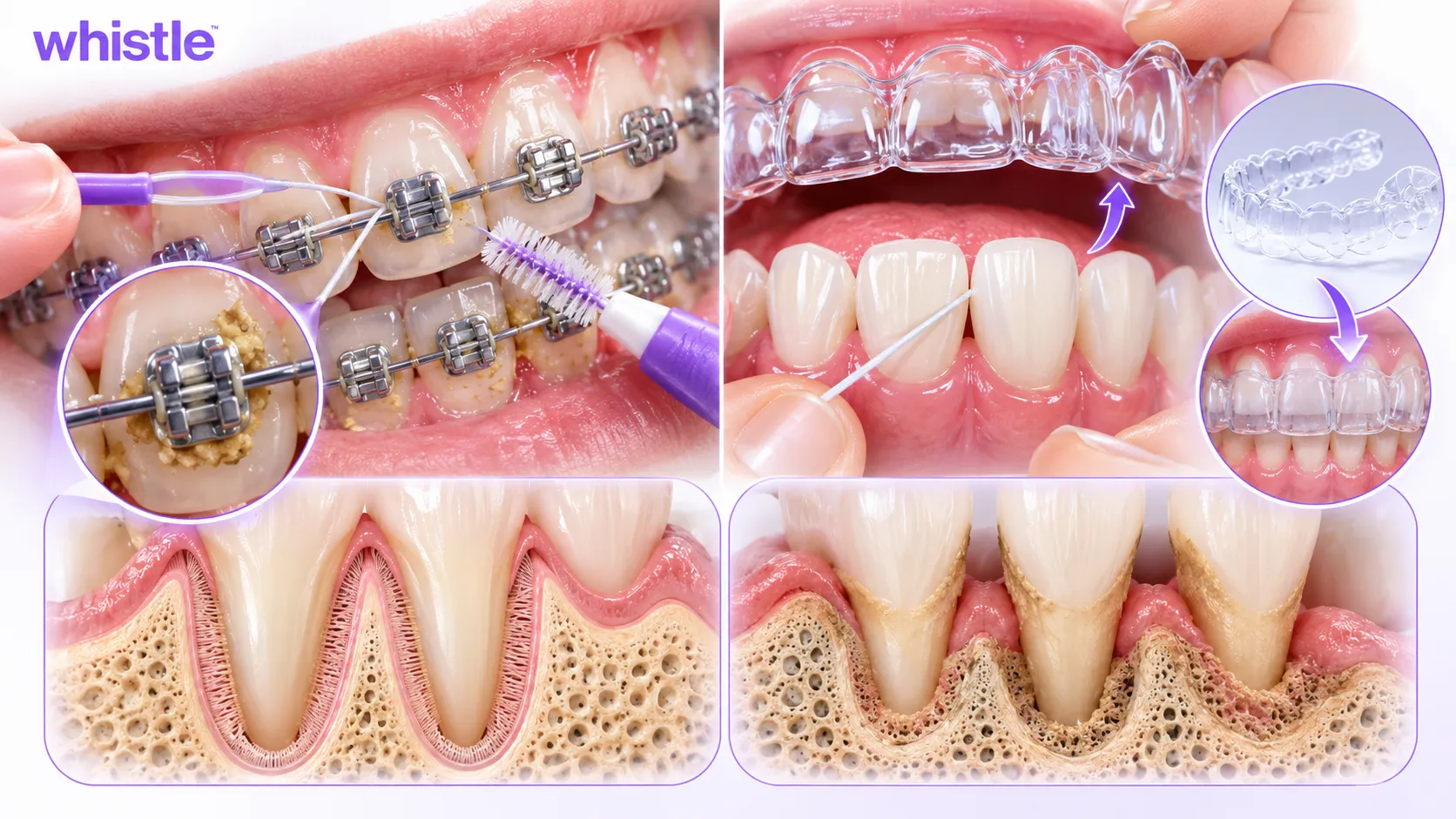
Flossing with Traditional Braces
Flossing with Clear Aligners (The Huge Advantage)
Abandoning flossing because you fear it creates gaps is the fastest way to cause permanent tooth spacing. When you stop flossing, interdental bacteria multiply rapidly, causing chronic periodontitis. The resulting jawbone loss will loosen your teeth and cause them to fan apart permanently. Daily flossing preserves the bone that keeps your teeth firmly anchored
Conclusion: Flossing Protects Your Smile - It Doesn’t Create Gaps
Flossing does not create gaps between your teeth. In many cases, the spaces you notice after starting a regular flossing routine were already there but hidden by swollen gums, plaque, or food debris. As your gums become healthier, their natural shape becomes more visible.
The key is to floss gently and consistently. Avoid snapping or forcing the floss into your gums, and pay attention to any gaps that are genuinely new or getting wider. If you notice widening spaces along with bleeding gums, recession, pain, or loose teeth, consult a dentist or periodontist to identify the underlying cause.
A healthy smile starts with healthy gums and daily flossing is an important part of keeping both healthy. If you’re concerned about gaps or considering orthodontic treatment, book you consultation at your nearest Whistle Partner Clinic and explore your options and get personalized guidance.
Also Read:-
Book 3D Teeth Scan
Consult our experts and get a 3D preview of your smile transformation!
Does Flossing Create Gaps in Teeth
Flossing create gaps
FAQ's
Q1.Does flossing make gaps between teeth bigger?
No. Flossing removes plaque and allows inflamed gums to heal and return to their normal size. Spaces that appear after starting to floss were there before. These gaps were earlier hidden by swollen gum tissue or build-up. If gaps are genuinely widening, the cause is more likely gum disease, tooth movement, or a bite issue not flossing.
Q2.How often should I floss?
Once a day is the standard recommendation. Before bed is ideal, it removes the day's accumulation before bacteria have hours of undisturbed time to work on it overnight.
Q3.Can I floss with a water flosser instead of string floss?
A water flosser is a useful addition, especially for orthodontic patients, but most dentists recommend using it alongside string floss rather than as a complete replacement. String floss provides physical scraping action against the tooth surface that water pressure alone doesn't replicate.
Q4.When should I see a dentist about gaps in my teeth?
The earlier the visit, the better it tends to be when planning for teeth gap treatments. Even for uniform gaps that are present since childhood, it is advised that you visit an orthodontist and get them checked as untreated gaps may keep on increasing in size. In case of new, widening, or teeth gaps that are accompanied by bleeding gums, gum recession, or loose teeth, book an appointment with your periodontist first, followed by an orthodontic evaluation.
Catching underlying factors early makes a significant difference to the outcome.
Q5.My gums bleed when I floss. Should I stop?
No, not at all. Initial slight bleeding once you start flossing for the first time is pretty common as the gums are sensitive and not used to it. Some amount of it also is the result of the existing gum disease, which makes the gums inflamed and prone to bleeding. This initial bleeding will subside in a week or two of regular flossing. If it still doesn’t improve after two weeks, or is accompanied by gum pain or swelling, visit your dentist as it may be indicative of gum disease.

 Medically Reviewed by Whistle Dental Team



 Medically Reviewed by Whistle Dental Team





 Medically Reviewed by Whistle Dental Team