
Mouth Ulcer Causes: Nutritional Deficiencies, and Orthodontic Management
 Medically Reviewed by Whistle Dental Team
- Multifactorial Triggers: Common mouth ulcers causes include local friction (sharp teeth, braces hardware, hard brushing), emotional stress, sleep deprivation, and acidic dietary irritants.
- Nutritional Deficiencies: When asking what deficiency causes mouth ulcers, clinical blood tests frequently reveal low levels of vitamin B12, iron (ferritin), folic acid, and zinc.
- Repeated Mouth Ulcers Causes: Recurrent aphthous stomatitis (RAS) can stem from underlying gastrointestinal conditions (Celiac disease, Crohn's), SLS toothpastes, or immune dysregulation.
- Orthodontic Friction Management: Metal brackets and wires often trigger friction sores; switching to low-profile self-ligating braces or smooth clear aligners eliminates sharp mucosal scraping.
- The Two-Week Warning Rule: Any solitary mouth ulcer that fails to heal after 14 days, feels hard or painless, or bleeds spontaneously warrants an immediate biopsy to rule out oral squamous cell carcinoma.
At Whistle partner clinics, experienced MDS Orthodontists diagnose bite interferences and provide smooth clear aligner alternatives across 600+ partner dental clinics nationwide, in partnership with Clove Dental. Any solitary, non-healing ulcer persisting beyond 21 days requires urgent clinical evaluation.
What Are Mouth Ulcers and How Do They Form?
To understand what causes mouth ulcers, one must examine the delicate micro-anatomy of the oral cavity. Unlike the skin, the non-keratinized mucosal lining of the inner cheeks, lips, ventral tongue, and soft palate lacks a tough outer stratum corneum, making it uniquely vulnerable to localized immune activation:
- Cell-Mediated Immune Dysregulation: The primary biological mechanism of recurrent aphthous stomatitis (RAS) involves an abnormal cell-mediated immune response. When exposed to specific systemic or local triggers, CD8+ cytotoxic T-lymphocytes release pro-inflammatory cytokines, specifically tumor necrosis factor-alpha (TNF-alpha) and interleukin-2. These mediators trigger focal keratinocyte apoptosis, leading to epithelial shedding and ulcer crater formation.
- Exposure of Nociceptive Free Nerve Endings: Shedding of the mucosal roof exposes bare sensory nerve endings in the underlying lamina propria. Contact with normal oral fluids, salivary amylase, or acidic foods directly depolarizes these pain fibers, causing sharp burning pain during speaking and chewing.
- Microvascular Ischemia and Tissue Fragility: Deficiencies in essential micronutrients compromise capillary microcirculation and collagen synthesis within the submucosa, preventing rapid cellular repair when minor micro-abrasions occur.
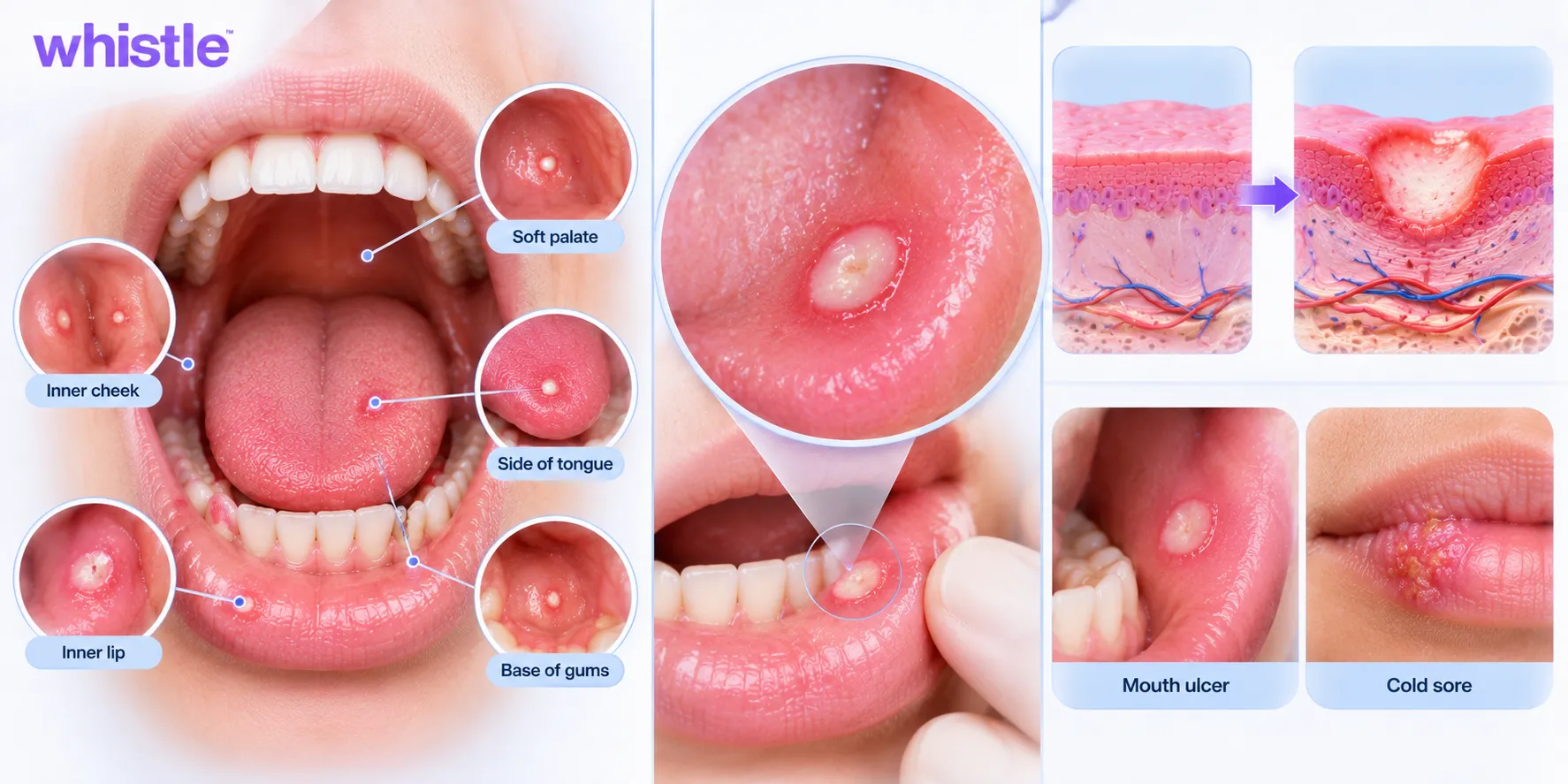
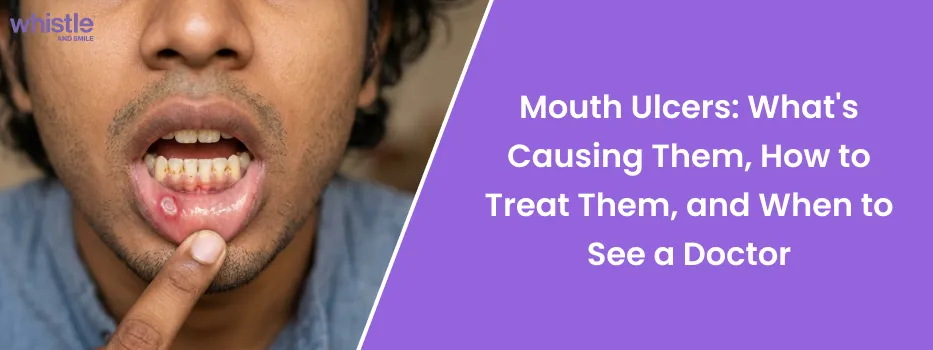
Visually, an aphthous ulcer presents as a round or oval crater with a white, gray, or pale yellowish fibrinous base, encircled by an intensely erythematous (inflamed red) halo.
Unlike cold sores (fever blisters), which are caused by the Herpes Simplex Virus (HSV-1) and appear on the outer lips or hard palate, aphthous mouth ulcers are 100% non-contagious and cannot be spread through kissing, sharing utensils, or drinking glasses.
Primary Mouth Ulcers Causes: From Daily Habits to Systemic Triggers
- Accidental cheek, lip, or tongue biting while chewing food rapidly or talking.
- Aggressive toothbrushing with hard bristles or accidental slips of the toothbrush head into the gingival sulcus.
- Sharp, fractured tooth cusps, worn fillings, or broken dental restorations rubbing continuously against soft tissue.
- Friction from traditional orthodontic hardware, including sharp bracket wings, protruding archwires, or metal band hooks.
- Thermal burns from scalding hot tea, coffee, pizza cheese, or deeply fried snacks.
- Acidic and Citrus Fruits: Lemons, oranges, pineapples, tomatoes, and vinegar-rich dressings.
- Spicy and Salty Foods: High concentrations of chili powder, raw mustard, and abrasive potato chips.
- Sodium Lauryl Sulfate (SLS): A synthetic foaming agent found in many commercial toothpastes. SLS strips away the mouth's natural protective mucin layer, leaving epithelial cells vulnerable to acid penetration and ulceration. Switching to an SLS-free toothpaste often reduces ulcer frequency by over 60%.
Which Vitamin Deficiency Causes Mouth Ulcers?
| Deficient Micronutrient | Biological Role in Oral Health | Associated Systemic Symptoms | Recommended Dietary Sources |
| Vitamin B12 (Cobalamin) | Vital for DNA synthesis, red blood cell production, and rapid mucosal cellular turnover | Pernicious anemia, smooth red tongue (glossitis), fatigue, hand/foot tingling | Dairy, eggs, poultry, fish, fortified plant milks, B12 supplements |
| Iron & Ferritin | Carries oxygen to mucosal tissues and supports enzyme function in epithelial cells | Iron-deficiency anemia, pale conjunctiva, brittle nails, chronic fatigue | Spinach, lentils, chickpeas, pumpkin seeds, jaggery, lean meats |
| Folic Acid (Vitamin B9) | Essential for nucleic acid synthesis and healthy mucosal tissue regeneration | Megaloblastic anemia, lethargy, poor concentration, digestive upset | Dark leafy greens, broccoli, beans, peas, citrus fruits, whole grains |
| Zinc | Critical mineral co-factor for epithelial wound healing, collagen synthesis, and immune modulation | Delayed wound healing, altered taste (dysgeusia), hair thinning, skin rashes | Pumpkin seeds, cashews, chickpeas, dairy, whole grains, seafood |
| Vitamin B2 (Riboflavin) & B6 (Pyridoxine) | Supports cellular energy metabolism and maintains mucosal lining integrity | Angular cheilitis (cracks at mouth corners), swollen lips, red sore tongue | Almonds, mushrooms, eggs, bananas, potatoes, fortified cereals |
Mechanical Causes of Mouth Ulcers: Dental Trauma and Orthodontic Friction
- Fixed Orthodontic Hardware Friction: Stainless steel brackets, hooks, power chain attachments, and protruding archwire extensions constantly contact the non-keratinized inner lips and cheeks during mastication, swallowing, and speech. Friction rubs away surface cells, creating painful localized traumatic sores.
- Accidental Cheek and Lip Biting: Misaligned teeth, crowded premolars, or deep bites alter the natural chewing plane, causing accidental bite lacerations during rapid eating or stressful grinding.
- Fractured Cusps and Sharp Restorations: Broken enamel edges on decayed molars, rough margins of worn silver amalgam fillings, or fractured composite bonding act like mini-scalpels against the lateral border of the tongue.
- Aggressive Toothbrushing Habits: Using stiff, hard-bristled toothpastes with heavy horizontal scrubbing often causes the brush head to slip, gouging the gingival sulcus or labial sulcus.
Repeated Mouth Ulcers Causes: Understanding Recurrent Aphthous Stomatitis (RAS)
| Etiological Category | Underlying Trigger Factor | Clinical Mechanism of Recurrence | Management & Prevention |
| Chemical Mucosal Stripping | Sodium Lauryl Sulfate (SLS) in toothpaste | SLS denatures protective salivary mucins, increasing epithelial permeability. | Switch to an SLS-free, non-foaming toothpaste. |
| Psychological & Lifestyle | Severe emotional stress & sleep deprivation | Elevated cortisol stimulates pro-inflammatory cytokines (TNF-alpha). | Stress mitigation, 7-8 hours sleep, and topical soothing gels. |
| Dietary Sensitivities | Spicy Indian spices, citrus fruits, vinegar | Low pH and capsaicin chemically irritate subepithelial nerve fibers. | Temporary elimination diet; avoid sour chaat, raw tomatoes, citrus. |
| Gastrointestinal Disorders | Celiac disease (gluten sensitivity) & Crohn's | Intestinal villous atrophy causes severe malabsorption of iron and B12. | Gastroenterologist consultation; strict gluten-free diet if confirmed. |
| Hormonal Fluctuations | Luteal phase of menstrual cycle / pregnancy | Progesterone shifts alter mucosal blood flow and micro-vascular stability. | Anticipatory gentle oral hygiene and topical barrier pastes. |
| Autoimmune Conditions | Behcet's syndrome, Lupus (SLE), Reiter's | Systemic immune complex deposition attacks micro-vessels in the mucosa. | Multi-disciplinary rheumatology and oral medicine management. |
Systemic Medical Conditions Linked to Chronic Recurrent Ulcers
- Celiac Disease (Gluten Intolerance): An autoimmune reaction to gluten that destroys small intestinal villi, severely impairing iron, folate, and B12 absorption. Chronic mouth ulcers are often the earliest oral sign of undiagnosed celiac disease.
- Inflammatory Bowel Disease (IBD): Both Crohn's disease and Ulcerative Colitis present with deep linear oral mucosal ulcers, reflecting ongoing gastrointestinal inflammation.
- Behçet's Syndrome: A rare, chronic autoimmune vasculitis characterized by recurrent painful oral ulcers, genital ulcerations, and ocular uveitis.
- Autoimmune Disorders & Immunodeficiency: Systemic Lupus Erythematosus (SLE), Reactive Arthritis, and compromised immune states can trigger severe, treatment-resistant oral ulcerations.
Orthodontist Observation: Common Patient Mistakes
Across our nationwide network of partner clinics, our orthodontists regularly identify preventable habits that exacerbate mouth ulcers:
- Mistake 1: Treating Recurrent Ulcers Solely with Numbing Gels: Relying indefinitely on topical anesthetics masks symptoms while unaddressed Vitamin B12 or ferritin deficiencies worsen systemically.
- Mistake 2: Aggressive Toothbrushing: Scrubbing vigorously with hard bristles slips easily, causing traumatic mucosal lacerations that develop into painful sores.
- Mistake 3: Consuming Acidic and Spicy Comfort Delicacies: Eating spicy street food, sour lemon chaat, or hot tomato soups while an ulcer is active triggers severe chemical nerve stinging and delays re-epithelialization.
- Mistake 4: Using SLS-Heavy Foaming Toothpastes: Continuing to use toothpastes with high concentrations of sodium lauryl sulfate strips the mucosal barrier, precipitating recurrent ulcer clusters.
- Mistake 5: Ignoring Non-Healing Ulcers Past 3 Weeks: Assuming every oral sore is a harmless canker sore and failing to seek clinical evaluation when a lesion persists past 21 days.
Can Braces and Orthodontic Aligners Cause Mouth Ulcers?
Yes. Orthodontic patients represent a significant demographic seeking relief from mouth ulcers. Traditional fixed braces utilize stainless steel brackets, ligatures, and archwires that protrude directly against the vascular mucous membrane of the lips and cheeks.
During the first 2 to 4 weeks of orthodontic treatment, the soft inner lining of the mouth must undergo a process called hyperkeratinization (gradual toughening of the tissue). Before this protective callus forms, bracket friction easily produces painful traumatic ulcerations.
Conclusion: Identifying the Root Cause for Lasting Relief
Book 3D Teeth Scan
Consult our experts and get a 3D preview of your smile transformation!
FAQ's
Q1.What is the fastest way to cure a mouth ulcer?
While a mouth ulcer takes 7 to 10 days to heal completely, you can accelerate recovery by rinsing with warm salt water, applying an over-the-counter antimicrobial or triamcinolone acetonide paste, avoiding spicy and acidic foods, and using an SLS-free toothpaste to protect the epithelial barrier.
Q2.Why do I keep getting repeated mouth ulcers?
Repeated mouth ulcers causes typically involve Recurrent Aphthous Stomatitis (RAS), chronic stress, sleep debt, genetic predisposition, toothpastes containing Sodium Lauryl Sulfate (SLS), or underlying conditions like Celiac disease, Crohn's disease, or immune dysregulation.
Q3.Which vitamin deficiency causes mouth ulcers most commonly?
Deficiencies in Vitamin B12 (cobalamin), Vitamin B9 (folic acid), and Iron (ferritin) are the most frequent nutritional triggers for recurrent mouth ulcers. Depletion of these micronutrients impairs rapid mucosal cellular regeneration, leaving the oral lining thin, fragile, and prone to breakdown.
Q4.When is a mouth ulcer a sign of something serious like oral cancer?
You must consult a dentist immediately if an ulcer lasts longer than 14 days without healing, feels painless, has a hard or rolled border, bleeds easily, or is accompanied by difficulty swallowing or swollen neck glands. A quick clinical examination and biopsy can rule out oral cancer.
Q5.Are mouth ulcers contagious through kissing or sharing food?
No, aphthous mouth ulcers are 100% non-contagious. They are internal inflammatory sores, not viral infections. They cannot be transmitted through kissing, sharing drinks, or using the same eating utensils. Only viral cold sores (caused by Herpes Simplex) on the outer lips are contagious.
 Medically Reviewed by Whistle Dental Team

 Medically Reviewed by Whistle Dental Team



 Medically Reviewed by Whistle Dental Team