What is a Teeth Gap: Causes, Risks & How to Fix Gapped & Crooked Teeth
 Medically Reviewed by Whistle Dental Team
A teeth gap (medically termed diastema) is an extra space or opening between two or more teeth, most frequently occurring between the upper two front incisors (midline diastema). Main causes include a genetic size mismatch between small teeth and a large jaw bone, a thick labial frenum (the tissue band connecting upper lip to gums), childhood habits like thumb sucking or tongue thrusting, missing teeth, and gum disease (periodontitis causing jawbone loss).
Teeth gaps often coexist with crooked teeth in complex bite misalignments. Modern treatment options range from invisible clear aligners and ceramic braces to cosmetic dental bonding and porcelain veneers, closing gaps safely while restoring bite function.
Key Takeaways
- Diastema Definition: A teeth gap refers to extra space between teeth, commonly found at the upper front midline or spread across the arch.
- Genetic vs. Habit Root Causes: Gaps stem from jaw-to-tooth size mismatch, oversized labial frenum tissue, tongue thrusting habits, or adult gum disease.
- Crooked & Gapped Combination: Patients frequently suffer from both spacing and rotation (crooked teeth with gaps) due to irregular tooth eruption pathways.
- Speech & Oral Health Risks: Uncorrected gaps lead to food impaction traps, localized gum pockets, and whistling speech sounds during 'S' and 'Z' pronunciations.
- Modern Closure Solutions: Whistle clear aligners close gaps discreetly up to 33% faster, while dental bonding and veneers offer fast cosmetic contouring for minor spacing.
Have you ever observed a small tooth gap in the middle of your teeth when you're speaking or smiling?
What is a teeth gap?
A teeth gap is an extra space or visible opening between adjacent teeth. Medically known as a diastema, this spacing can appear anywhere in the upper or lower jaw. However, it is most noticeably seen between the two upper central front teeth (midline diastema).
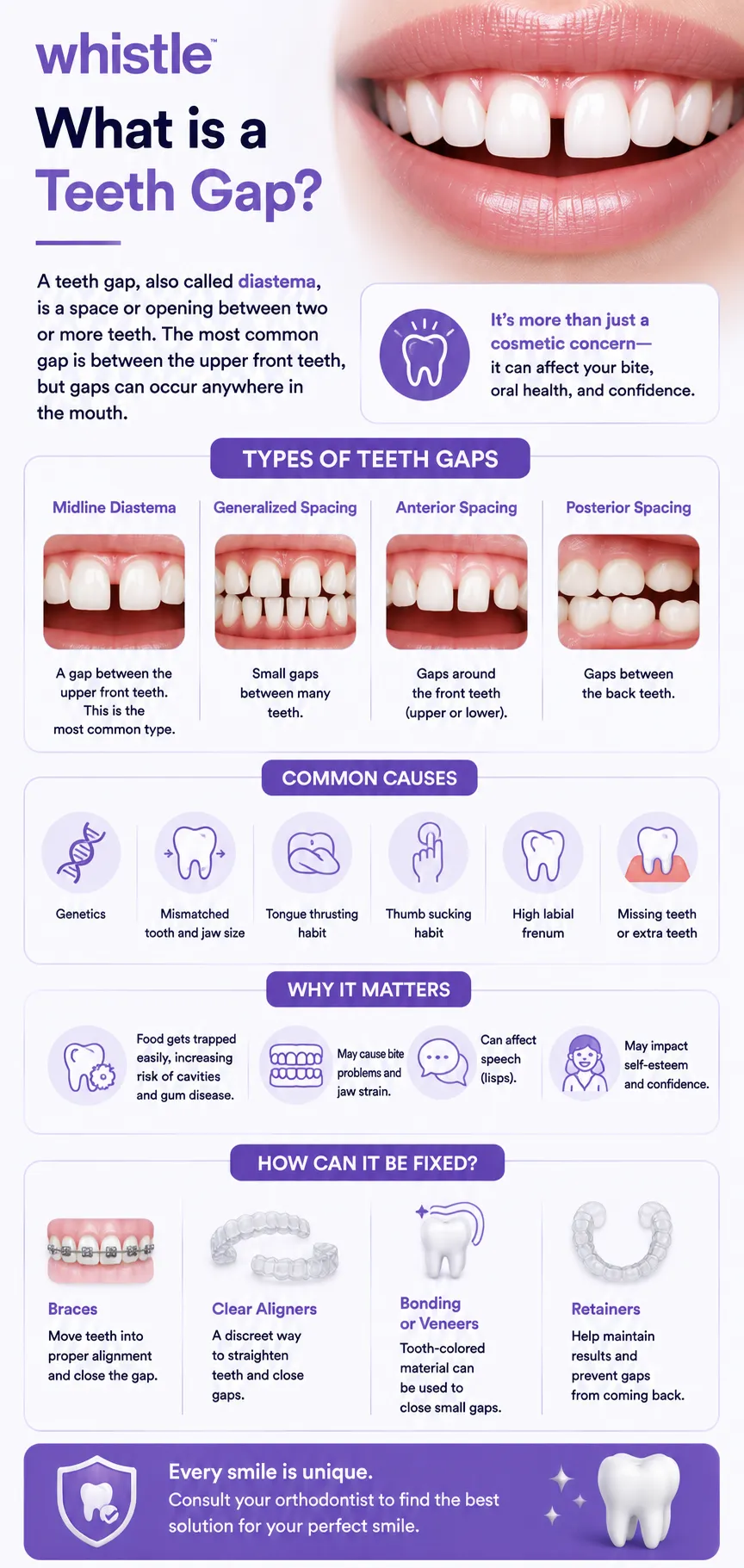
While some cultures consider a front tooth gap a sign of good luck or natural beauty, spacing often creates functional challenges. Food particles easily lodge in open gaps, causing localized gum inflammation and bad breath. In addition, unaddressed spacing can cause neighboring teeth to drift, leading to crooked teeth with gaps across your entire smile.
What Causes Teeth Gap and How Are They Fixed?
Understanding Crooked Teeth with Gaps
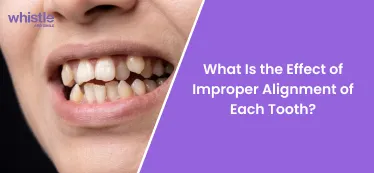
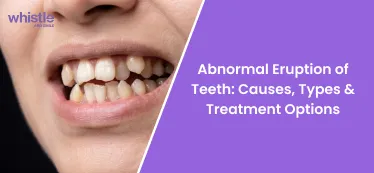
Many patients assume that teeth issues are strictly limited to either overcrowding or spacing. However, having crooked teeth with gaps is extremely common in orthodontic practice.
This combined malocclusion occurs when teeth erupt at irregular angles into a dental arch with uneven room. For example, a lateral incisor may twist sideways (rotated tooth) while leaving a wide gap next to the central incisor. Attempting to fix only the gap without correcting tooth rotation results in a compromised bite. Comprehensive orthodontic treatment using braces or Whistle clear aligners addresses both tooth alignment and gap closure simultaneously.
The Speech Impact: Why Front Gaps Cause Whistling Sounds
Have you ever noticed a faint whistling sound when speaking? Front tooth gaps directly alter speech acoustics.
When producing fricative speech sounds (such as 'S', 'Z', and 'TH'), your tongue directs a tight stream of air against the back of your upper front teeth. When a midline gap is present, high-velocity air escapes through the opening instead of being focused over the tooth surfaces. This air leakage creates an involuntary whistling noise or slight lisp. Closing the gap restores natural tongue placement and crisp speech articulation.
Also Read:
Treatment options for closing teeth gap
1. Clear Aligners (Whistle Invisible Trays)
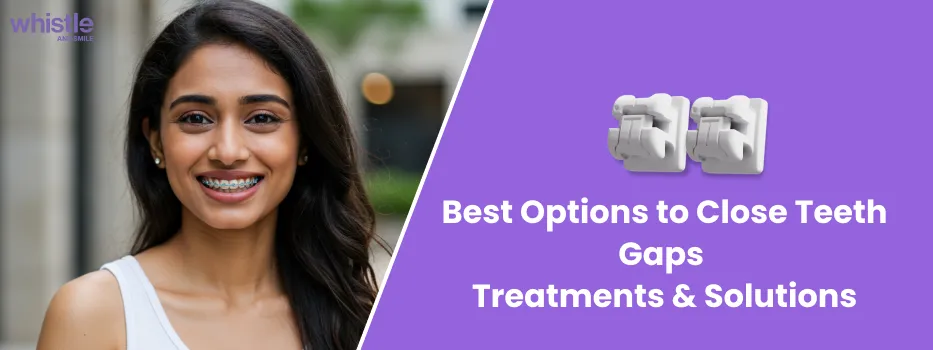
2. Conventional & Self-Ligating Braces
3. Direct Cosmetic Dental Bonding
4. Porcelain Veneers and Crowns
5. Laser Frenectomy (Surgical Tissue Release)
Comparison Table: Gap Closure Treatments Compared
| Treatment Method | Best Suited For | Primary Advantage | Main Consideration | Treatment Duration |
| Whistle Clear Aligners | Mild to severe gaps, crooked teeth, rotated teeth. | 100% invisible, removable for meals, up to 33% faster. | Requires 22 hours daily wear discipline. | 3 to 12 months |
| Metal & Ceramic Braces | Complex spacing, severe bite issues, jaw mismatches. | Handles extreme complex skeletal movements. | Visible hardware, food restrictions, bracket care. | 12 to 24 months |
Ready to Close Your Tooth Gap Discreetly? Discover Whistle Aligners
Say goodbye to teeth gaps and hello to a seamless smile. Whistle clear aligners use advanced digital 3D planning to close spacing comfortably under physical orthodontist supervision.
Book Your Whistle 3D Consultation Today across 600+ physical partner clinics nationwide.
Orthodontist Observation: Common Mistakes Orthodontists Often See
During routine clinical checkups at Whistle partner clinics, orthodontists frequently manage complications from improper gap closure habits. Here are five observed mistakes:
- Attempting DIY Rubber Band Gap Closure: Placing everyday elastic bands around gapped front teeth is extremely dangerous. The elastic band can slide up the tooth root into gum tissue, strangulating blood supply and causing permanent tooth loss.
- Ignoring Underlying Gum Disease: Attempting to close gaps with braces or aligners while active periodontitis is present accelerates bone loss. Gum disease must always be treated before starting tooth movement.
- Skipping Laser Frenectomy Before Orthodontics: Closing a midline gap without releasing a low, thick labial frenum leads to immediate gap relapse once braces come off.
- Treating Gap Closure as Purely Cosmetic: Patients often seek bonding for wide gaps, creating disproportionately wide "chiclet" teeth. Orthodontic movement creates balanced tooth proportions.
- Neglecting Post-Treatment Retainers: Teeth have a strong natural memory. Failing to wear custom retainers after closing a gap allows teeth to drift back open within months.
Daily Oral Hygiene Routine for Gapped & Straightened Teeth
Maintaining clean teeth during and after gap closure prevents plaque accumulation and gum inflammation:
- Use Interdental Brushes for Wide Spaces: Standard toothbrush bristles miss wide gaps. Use a slim interdental brush to sweep food debris out from between gapped teeth.
- Floss Daily with Superfloss: Thread dental floss under orthodontic wires or around aligner attachments to clean contact points thoroughly.
- Swish with Antimicrobial Mouthwash: Use an alcohol-free chlorhexidine or fluoride rinse to prevent plaque buildup in open gum embrasures.
- Clean Aligner Trays Regularly: Rinse Whistle aligner trays with cool water and mild soap twice daily to keep them crystal clear.
Your Next Steps
A tooth gap (diastema) is a common dental feature that can stem from genetics, oversized frenum tissue, or adult gum disease. Left unaddressed, spacing can lead to crooked teeth with gaps, food trapping, and speech whistling. Fortunately, modern orthodontics makes closing gaps safe, efficient, and virtually invisible.
If you want to close your teeth gap without bulky metal wires or high-maintenance braces, explore Whistle clear aligners. Book your 3D consultation at your nearest Whistle partner clinic today and take the first step toward your dream smile!
Also Read:
- Biting Teeth in Sleep: Causes, Symptoms and Treatments
- What Happens If You Keep Delaying Braces or Aligners?
Book 3D Teeth Scan
Consult our experts and get a 3D preview of your smile transformation!
What is teeth gap
FAQ's
Q1.What is a teeth gap medically called?
Q2.What causes teeth gap and how are they fixed?
Teeth gaps are caused by genetic size mismatches between teeth and jawbone, thick labial frenum tissue, thumb sucking or tongue thrusting habits, missing teeth, and gum disease. Gaps are fixed using orthodontic treatments like Whistle clear aligners or braces, as well as cosmetic bonding, veneers, or laser frenectomy surgery.
Q3.Can I reduce my teeth gap naturally at home?
No, you cannot safely reduce a teeth gap naturally at home. Attempting home hacks like wrapping rubber bands or threads around gapped teeth can cause severe gum strangulation, bone destruction, and sudden tooth loss. Always seek professional orthodontic treatment.
Q4.Why does a front tooth gap cause a whistling sound when speaking?
A front tooth gap allows high-velocity air stream to escape between central incisors during fricative speech sounds like 'S' and 'Z'. Closing the gap restores normal acoustic airflow against tooth backs, eliminating the lisp or whistle sound.
Q5.Will my teeth gap reopen after treatment is finished?
Teeth have natural elastic memory and can drift back open if post-treatment care is neglected. Wearing custom retainers (fixed wire or clear removable retainers) as prescribed by your Whistle orthodontist prevents gap relapse and locks your results in place permanently.
 Medically Reviewed by Whistle Dental Team
 Medically Reviewed by Whistle Dental Team

 Medically Reviewed by Whistle Dental Team