What is an Overbite in Teeth? Causes, Health Risks, and Modern Solutions
 Medically Reviewed by Whistle Dental Team
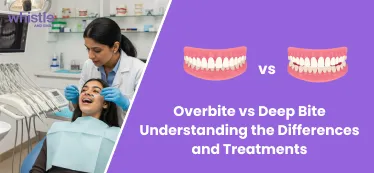
An overbite is a vertical dental misalignment where your upper front teeth overlap your lower front teeth by more than the normal one to two millimeters when your mouth is closed. While a slight overlap of ten to twenty percent is completely healthy for chewing, an excessive overbite, often called a deep bite, covers thirty to one hundred percent of your lower teeth.
This vertical overlap can stem from tooth positioning or jawbone size differences, causing enamel wear, gum irritation, and jaw strain if left uncorrected.
What Is an Overbite in Teeth?
An overbite refers to the vertical overlap between your upper and lower front teeth when you bite down. Some vertical overlap is completely normal; most people have their upper incisors covering roughly 2–4 mm, or about 10–30%, of their lower incisors. This overlap exists for good biomechanical reasons: it helps guide the jaw into a stable closing position and protects the back teeth from excessive contact during chewing.
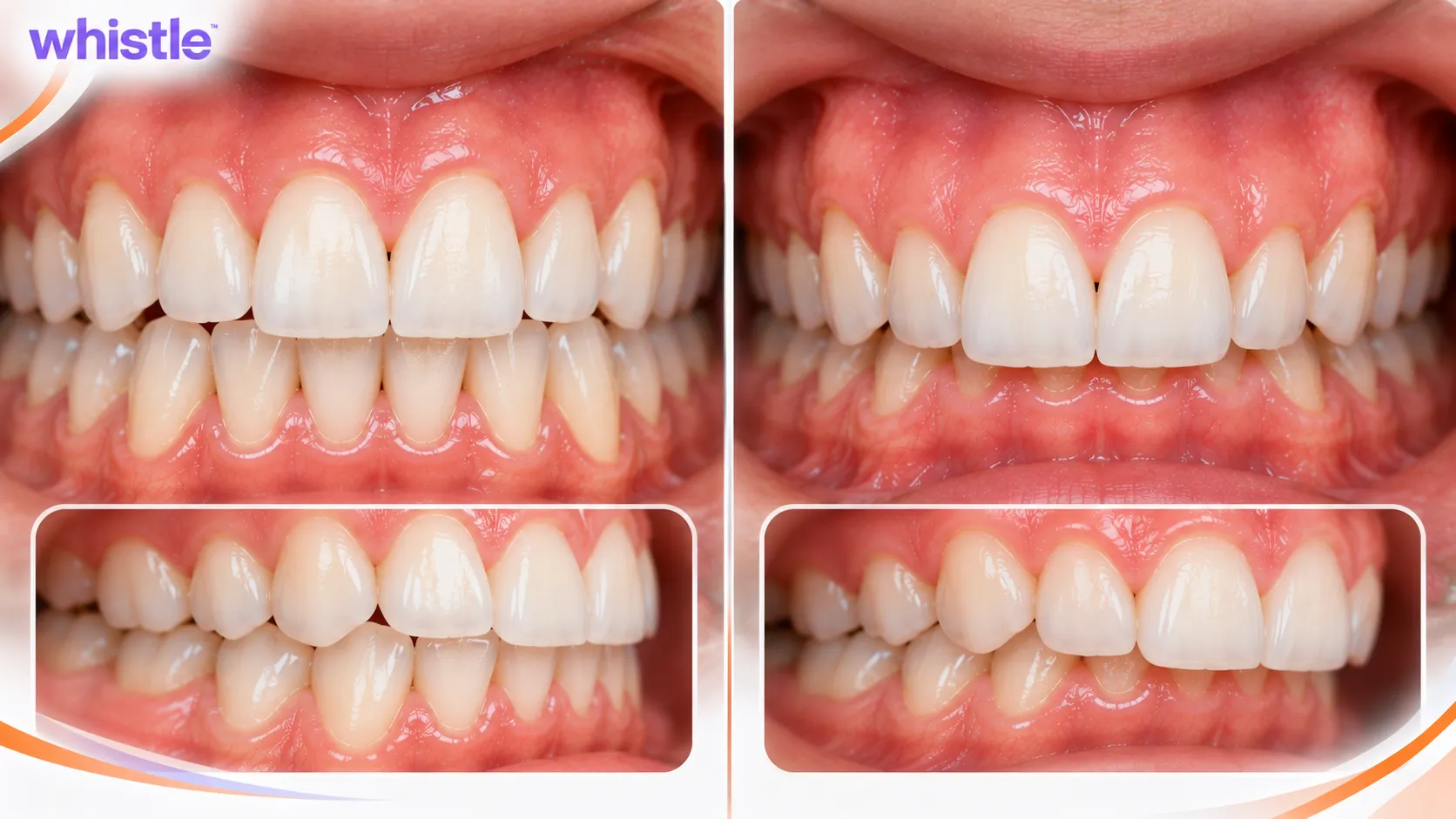
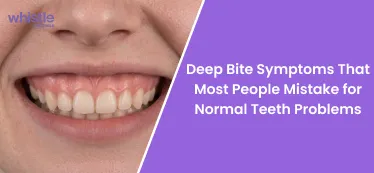
A “deep bite” is diagnosed when this vertical overlap becomes excessive, meaning the upper front teeth cover a significantly larger portion of the lower teeth than is functionally healthy sometimes even reaching the gum tissue behind the lower teeth.
Deep bites are one of the most prevalent malocclusions treated by orthodontists, and unlike crowding, they’re often less visible to the person experiencing them, since the teeth themselves may look reasonably straight even when the bite relationship is unhealthy.
Normal Overbite vs Deep Bite: How Much Overlap is Normal?
Many patients are surprised to learn that having some overlap between your top and bottom teeth is not a defect at all. In fact, human teeth are naturally designed to overlap slightly:
- Healthy Normal Overbite (1 to 2 mm overlap): When you bite together gently, your upper front teeth should cover roughly 10% to 20% of your lower front teeth. This healthy vertical lip guides your jaws into a stable resting position, protects your back chewing molars from sideways grinding, and helps you enunciate speech clearly.
- Moderate Overbite or Deep Bite (3 to 5 mm overlap): In this range, your top teeth cover 30% to 50% of your lower teeth. You might notice your bottom teeth look unusually short or hidden when you smile in photographs.
- Severe or Impinging Overbite (Over 5 mm overlap): In severe cases, your top teeth cover 100% of your lower front teeth. The edges of your lower teeth can bite directly into the delicate gum tissue on the roof of your mouth behind your upper teeth. Dentists call this an impinging bite because it causes chronic inflammation, painful sores, and gum stripping.
Overbite vs Overjet: Understanding the Critical Difference
Dental Overbite vs Skeletal Overbite: Why the Root Cause Matters
Why Does an Overbite Develop? Common Causes Explained Simply
Overbites develop from a combination of hereditary genetics, childhood development patterns, and everyday habits:
- Genetics and Family Jaw Structure: Just like eye color or height, the natural shape, size, and relationship of your jawbones are inherited from your parents. A naturally small lower jaw is the leading cause of deep skeletal overbites.
- Prolonged Childhood Habits: Thumb sucking, prolonged pacifier use past age three, and frequent bottle feeding place continuous outward pressure on the upper jaw while holding the lower jaw back. Over years, this habit molds the soft growing bone into a deep vertical overlap.
- Tongue Thrusting and Swallowing Patterns: Some individuals swallow by pressing their tongue forward against their front teeth instead of against the roof of the mouth. This repetitive muscle force gradually knocks teeth out of balance.
- Missing Lower Back Molars (Loss of Vertical Support): Your back molars act as pillars that hold your jaws at a healthy vertical height. If a lower molar is lost to tooth decay and not replaced with an implant or bridge, the bite collapses slightly inward. This loss of back support allows the front teeth to slide deeper over each other.
- Chronic Teeth Grinding (Bruxism): Severe nighttime grinding wears down the chewing surfaces of your back teeth over time. As back tooth enamel flattens, the jaw closes further than normal, turning a mild overlap into a noticeable deep bite.
The Hidden Health Risks of Living with an Untreated Overbite
An overbite is far more than a cosmetic concern. When teeth do not meet in harmony, the mechanical forces of everyday chewing begin to damage oral tissues:
- Accelerated Enamel Wear and Chipping: In a deep bite, the front teeth collide forcefully during normal chewing. This unnatural friction scrapes away the protective enamel on the backs of upper front teeth and the tips of lower front teeth, leading to jagged edges, thinning, and yellow dentin exposure.
- Severe Gum Recession and Roof of Mouth Damage: In deep impinging bites, lower teeth bite directly into the palatal gums behind your top teeth. This repetitive trauma creates painful ulcers, chronic bleeding, and causes the gums around the backs of your upper teeth to pull away permanently.
- TMJ Pain, Jaw Clicking, and Chronic Headaches: A deep overbite forces your lower jaw into a backward, compressed position every time you swallow or close your mouth. This backward displacement strains your temporomandibular joints (TMJ) and surrounding facial muscles, causing jaw clicking, ear fullness, neck stiffness, and morning tension headaches.
- Speech Lisps and Consonant Difficulties: Producing clear sounds like S, Z, SH, and CH requires precise air passage between your upper and lower incisors. An excessive vertical overlap disrupts this airflow, resulting in persistent whistling or lisping.
- Premature Facial Aging: Because a deep bite allows the lower jaw to close too far upward, it reduces the vertical height of your lower face. Over time, this creates a sunken chin appearance, deeper marionette facial folds, and thinner looking lips.
How Modern Orthodontics Fixes an Overbite Today
Correcting an overbite no longer requires headgear or painful contraptions. Today, modern orthodontists use biomechanically engineered tools designed for comfort, discretion, and lasting dental health:
1. Clear Aligners with Precision Bite Ramps
Clear aligners are now one of the most effective and popular methods for correcting mild to moderate dental overbites in teenagers and adults:
- How Bite Ramps Work: Advanced aligners feature built-in bite ramps, small, custom-formed ledges on the back of the upper aligner trays. When you bite down, your lower front teeth rest on these ramps, which keeps your back molars slightly separated.
- The Biomechanical Result: By disengaging the back bite, the aligners gently intrude (level) the front teeth while allowing your back molars to erupt into full, stable contact. This opens up the vertical bite naturally and levels your smile curve without bulky metal.
- Lifestyle Benefits: Removable for meals, zero food restrictions, virtually invisible in business and social meetings, and effortless to brush and floss.
2. Modern Self-Ligating Braces
For moderate to severe dental overbites, self-ligating braces provide continuous, low-friction control. Specialized archwires with built-in reverse curves gradually level the dental arches. When paired with small orthodontic elastics (intermaxillary rubber bands), they guide the upper and lower teeth into a balanced vertical and horizontal relationship. Ceramic tooth-colored brackets make this treatment subtle and aesthetic.
3. Early Childhood Growth Appliances (Ages 7 to 11)
When an overbite is identified in a growing child, pediatric orthodontists can take advantage of natural growth spurts. Functional appliances like Twin Block devices gently posture the lower jaw forward, stimulating natural bone growth to match the upper jaw before the growth plates fuse in puberty.
4. Corrective Jaw Surgery (Orthognathic Care for Severe Adult Skeletal Cases)
In adult patients where an extreme skeletal overbite causes airway constriction, severe chewing impairment, or facial asymmetry, a collaborative approach combining orthodontic alignment with corrective orthognathic surgery repositions the jawbone itself for optimal function and stability.
Clinical Reality Check: Why Cosmetic Veneers Cannot Fix an Overbite
Never attempt to fix a deep overbite by having healthy teeth ground down for porcelain veneers or cosmetic crowns. Veneers only change the outer facade of a tooth; they cannot move the tooth root or open a compressed bite. Placing veneers on a deep bite often leads to fractured porcelain, nerve damage, and worsening jaw pain. True orthodontic realignment is the only healthy, permanent answer.
Diagnostic Severity Matrix: Which Treatment Matches Your Overbite?
| Severity Level | Vertical Overlap | Clinical Signs & Symptoms | Recommended Modern Approach | Estimated Treatment Time |
| Normal | 1 mm to 2 mm (10% to 20%) | Stable chewing, no gum impingement, harmonious jaw resting posture. | No orthodontic correction needed; maintain routine hygiene cleanings. | None |
| Mild Overbite | 3 mm to 4 mm (30% to 40%) | Bottom teeth partially hidden; minor enamel wear on tooth edges. | Clear Aligners with precision bite ramps. | 6 to 9 months |
| Moderate Overbite | 4 mm to 6 mm (50% to 75%) | Bottom teeth largely concealed; occasional jaw joint clicking or tightness. | Clear Aligners with bite ramps and elastics, or Self-Ligating Braces. | 9 to 15 months |
| Severe / Impinging Overbite | Greater than 6 mm (75% to 100%) | Lower teeth striking the roof of mouth; gum ulceration; chronic TMJ headaches. | Comprehensive Clear Aligners, Multi-force Braces, or Orthognathic evaluation. | 14 to 20+ months |
5 Doctor Mistakes People Make When Dealing with an Overbite
- Assuming an Overbite is Just Cosmetic: Ignoring a deep bite because your front teeth look straight often results in severe gum recession, hidden enamel wear, and irreversible joint damage by your thirties and forties.
- Confusing Overbite with Overjet: Seeking treatment without a proper diagnostic scan can lead to mismatched expectations. A doctor must evaluate both vertical overlap and horizontal protrusion together.
- Using Direct-to-Consumer Mail-Order Aligners: Fixing an overbite requires precise 3D vertical bite opening and torque control. At-home aligner kits without in-person clinical supervision cannot properly manage bite mechanics and frequently cause traumatic bite interferences.
- Neglecting Underlying Habits: If tongue thrusting, mouth breathing, or nighttime teeth grinding are not addressed alongside tooth alignment, the overbite is likely to relapse even after treatment.
- Failing to Wear Retainers Consistently: The bone and periodontal ligaments around realigned teeth take up to a full year to stabilize completely. Wearing your custom retainers at night is essential to keep your corrected bite permanently stable.
Your Next Steps: How to Safely Check and Treat Your Overbite
If you suspect that your teeth overlap too deeply, or if you regularly experience jaw stiffness, chipped tooth edges, or roof-of-mouth sensitivity, scheduling an in-person clinical bite evaluation is your best next step. At a Whistle partner clinic, our experienced orthodontists conduct a thorough assessment including:
High-resolution 3D intraoral digital scanning to map your exact vertical and horizontal overlap down to the millimeter.
- Digital panoramic X-rays to verify jaw joint health, tooth root angles, and bone density.
- A personalized, computerized smile simulation showing how your bite will level out over time.
- A transparent clinical plan with flexible zero-interest payment assistance tailored to your personal health goals.
Protect your teeth from premature wear and enjoy a confident, balanced bite. Book a consultation at a Whistle partner clinic near you today.
Also Read:
Book 3D Teeth Scan
Consult our experts and get a 3D preview of your smile transformation!
What is an Overbite in Teeth
FAQ's
Q1.Can an overbite be corrected without braces or surgery?
Yes. Mild to moderate dental overbites can be corrected comfortably using clear aligners equipped with precision bite ramps. Clear aligners gently intrude the front teeth and guide the back teeth into a level plane without wires or brackets.
Q2.Do bite ramps on clear aligners feel uncomfortable?
Bite ramps may feel a little strange for the first 48 to 72 hours as your jaw muscles adapt to resting on the platforms. Most patients quickly get used to them, and any minor speech adjustment normalizes within a few days.
Q3.At what age is it best to fix an overbite?
The ideal window for early interceptive treatment is between ages 7 and 11, when an orthodontist can guide natural jaw growth. However, healthy teeth can be successfully moved at any age. Thousands of adults in their twenties, thirties, and fifties successfully fix overbites every year.
Q4.Can an overbite cause headaches and neck pain?
Yes. A deep bite forces your lower jaw backward, compressing the sensitive nerves and blood vessels in your temporomandibular joint (TMJ). This chronic pressure leads to muscle spasms in your cheeks, temples, and neck, triggering frequent tension headaches.


 Medically Reviewed by Whistle Dental Team

 Medically Reviewed by Whistle Dental Team


 Medically Reviewed by Whistle Dental Team