
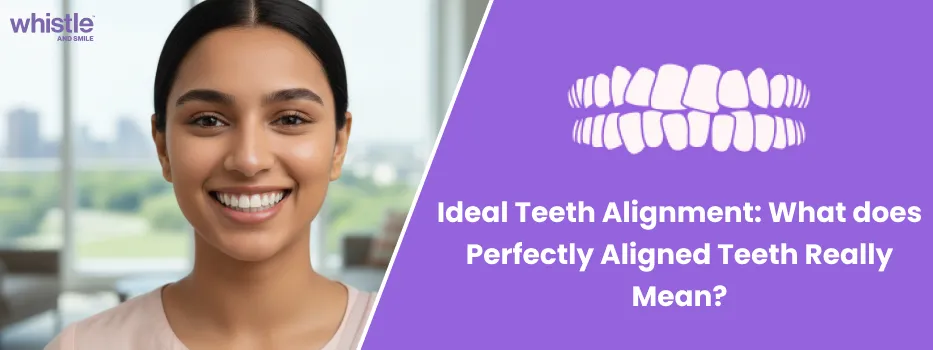
Ideal Teeth Alignment: What does Perfectly Aligned Teeth Really Mean?
 Medically Reviewed by Whistle Dental Team
A beautiful smile is often associated with straight teeth- but in dentistry, ideal teeth alignment means much more than visual appeal.
Proper alignment affects how your teeth function, how comfortable your bite feels, and how well your oral health is maintained over time.
Understanding what perfectly aligned teeth truly means can help you recognise alignment issues early and make informed decisions about your dental health.
What is Ideal Teeth Alignment?
Ideal teeth alignment means teeth are placed in the right position so they work together properly.
Perfectly aligned teeth should:
- Sit evenly within the dental arch
- Have proper spacing without crowding or gaps
- Meet correctly with the opposing teeth while biting
- Support comfortable chewing and clear speech
- Easy to clean and maintain
With ideal alignment is ideal, the teeth, gums, and jaws function in harmony, helping prevent unnecessary stress and long-term dental issues.
How Dentists Define Perfectly Aligned Teeth?
Dentists and orthodontists assess ideal teeth alignment using a combination of clinical and functional parameters. These are:
1. Alignment and spacing of teeth
In Ideal Alignment:
- Teeth follow a smooth, symmetrical curve
- No teeth are excessively crowded, rotated, tilted, or displaced.
- Front teeth are centred with the face
- Teeth have proper spacing that allows effective brushing and flossing.
- Crowded or maligned teeth can make cleaning difficult and increase the risk of cavities, gum diseases, and plaque build-up.
2. Bite Alignment (Occlusion)
Alignment is incomplete without a balanced bite.
A balanced bite's characteristics include:
- Upper teeth slightly overlap the lower teeth
- Back teeth interlocking evenly
- No excessive pressure on individual teeth
- No discomfort during jaw movement.
Bite issues like overbite, underbite, crossbite, and open bite can interfere with ideal teeth alignment and may lead to uneven tooth wear, jaw pain, and long-term dental problems.
3. Jaw Balance and Facial Harmony
Perfectly aligned teeth should work in harmony with the jawbones and facial structures.
Dentists assess:
- Jaw symmetry
- Smile line
- Lip support
- Overall facial proportions
A smile that looks straight but causes jaw strain or imbalance may not be considered ideal from a clinical standpoint.
Is Ideal Teeth Alignment Same for Everyone?
Short Answer: No two smiles are the same.
While dental science follows universal principles, ideal teeth alignment varies from person to person, depending on:
- Facial structure
- Jaw size and shape
- Tooth size and form
- Age
- Functional needs
Your “perfect alignment” is not about copying someone else's smile- it’s about achieving balance, comfort, and health for your face and bite.
Signs Your Teeth May Not Be Ideally Aligned
Think alignment issues are always obvious?
Not necessarily.
Here are subtle signs that ideal teeth alignment may be compromised:
- Difficulty flossing between certain teeth
- Frequent food trapping
- Jaw clicking or pain
- Uneven tooth wear
- Speech issues
- Headaches and Facial pains
- Gum recession around specific teeth
Self Check: Do you chew more on one side? That’s often a sign of bite imbalance.
Why Ideal Teeth Alignment is important (Beyond Aesthetics)
Let’s talk about the benefits- because alignment isn’t just cosmetic.
1. Better Oral health
Straight, well, aligned teeth are easier to clean, reducing:
- Tooth decay
- Gum disease
- Bad breath
2. Improved Chewing and digestion
Proper alignment allows efficient chewing, which supports better digestion.
3. Jaw and joint Health
Balanced alignment allows the jaw joints (TMJ) to function smoothly and helps prevent pain, clicking, and stiffness.
4. Long-term Tooth Preservation
Maligned teeth experience uneven pressure, making them more prone to fractures, mobility issues, and early tooth loss.
5. Improved Confidence
A healthy, aligned smile enhances self-confidence and overall quality of life.
How Dentists Assess Ideal Teeth Alignment
A professional evaluation includes:
- Clinical examination
- Digital scans or impressions
- X-Rays (OPG, Lateral Cephalogram)
- Bite Analysis
- Facial assessment
Based on this, dentists decide whether alignment correction is:
- Necessary for health
- Recommended or function
- Optimal for aesthetics
Can Ideal Teeth Alignment Be Achieved At Any Age?
Yes! Alignment correction is possible for:
- Children
- Teenager
- Adults
Modern options include:
- Metal Braces
- Ceramic Braces
- Self-ligating Braces
- Clear Aligners
Key takeaway: Age is not a barrier- oral health goals are timeless, and treatment options are selected based on dental needs, lifestyle, and comfort preferences.
- What is Crooked Teeth - Causes , Risks & Treatment Options
- Overbite vs Deep Bite | Understanding the Differences and Treatments
- How to Reduce Gap Between Teeth Naturally | Effective Solutions
- How to treat Crooked Teeth: Braces, Aligners & More
Ideal Teeth Alignment vs “Instagram Perfect Smile”
It’s important to separate reality from filters.
An Instagram-perfect smile may:
- Ignore bite issues
- Compromised tooth structure
- Look good but function poorly
True ideal teeth alignment balances:
- Health
- Function
- Aesthetics
- Longevity
Final Thoughts: What Does Perfectly Aligned Teeth Really Mean?
Perfectly aligned teeth are not about absolute straightness- they’re about balance, comfort, and health.
If your teeth:
- Function well
- Feel comfortable
- Are easy to maintain
- Complement your face
Then you are closer to ideal teeth alignment than you might think.
Thinking About Your Own Teeth Alignment?
A dental consultation is the best way to understand what ideal means for you. Because the best smile isn’t just beautiful- It’s healthy, functional, and built to last.
Also Read:
- Best Options to Close Teeth Gaps | Treatments & Solutions
- Straighten the Twist: Easy and Effective Treatment for Rotated Teeth
- What isa teeth gap: Causes, Risks & Treatment Options
- What Is the Correct Teeth Alignment? | Ideal Bite & Perfect Smile Treatment
Book 3D Teeth Scan
Consult our experts and get a 3D preview of your smile transformation!
FAQ's
Q1.Ideal Teeth Alignment
Ideal Teeth Alignment
 Medically Reviewed by Whistle Dental Team

 Medically Reviewed by Whistle Dental Team
 Medically Reviewed by Whistle Dental Team