How to Cure Mouth Ulcers: Remedies, Healing Timelines and Prevention
 Medically Reviewed by Whistle Dental Team
Learning how to cure mouth ulcers involves managing acute discomfort while addressing underlying nutritional or mechanical triggers. Most minor aphthous ulcers heal spontaneously within 7 to 14 days without scarring.
Fast symptomatic relief is achieved by applying topical anesthetic gels, rinsing with warm saline solution, and using protective barrier pastes like triamcinolone acetonide or medical-grade honey.
To prevent recurrences permanently, individuals must resolve vitamin B12 and iron deficiencies, avoid sodium lauryl sulfate toothpastes, and eliminate sharp dental friction.
At Whistle partner clinics, in partnership with Clove Dental across 600+ physical locations nationwide, experienced dental specialists provide comprehensive mucosal examinations and smooth clear aligner evaluations to protect your oral tissues.
Key Takeaways:
- Standard Recovery Time: Minor mouth ulcers typically resolve within 7 to 10 days, whereas major ulcers can take 2 to 6 weeks.
- Fastest Symptomatic Relief: Warm saline rinses, topical choline salicylate or benzocaine gels, and pure raw honey accelerate healing and dull sharp pain.
- Understanding Permanent Relief: While an active ulcer cannot vanish overnight, recurrent outbreaks can be prevented permanently by correcting vitamin B12, folate, and ferritin deficiencies.
- Mechanical Trauma Triggers: Accidental cheek bites, sharp fractured enamel edges, and protruding orthodontic braces brackets frequently initiate painful ulcerations.
- When to Seek Urgent Evaluation: Any solitary mouth ulcer that remains unhealed after 14 to 21 days requires professional clinical biopsy to rule out serious oral pathologies.
People often want to find ways to make the pain go away and help the mouth ulcer heal without using medicine. There are some ways to help the healing process. These methods are not a replacement for care if the mouth ulcers are serious or keep coming.
What Are Mouth Ulcers and Why Do They Develop?
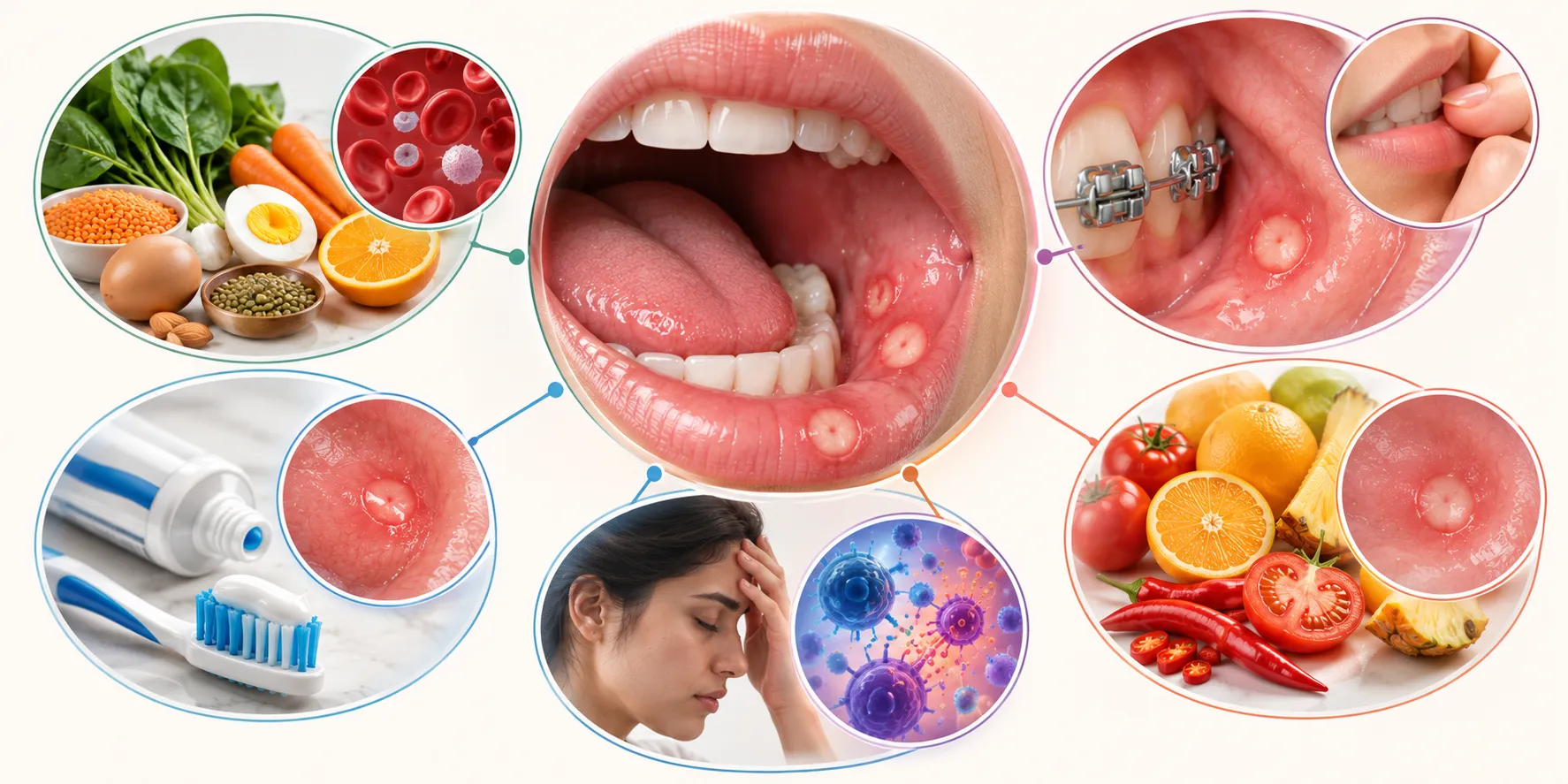
Clinical Classification: Diagnostic Comparison of Mouth Ulcer Types
| Ulcer Category | Clinical Size and Appearance | Usual Healing Timeline | Scarring Potential |
| Minor Aphthous Ulcer (80% to 85% of cases) | Small, oval-shaped sores with a greyish-white base and inflamed red border (< 10 mm diameter). | 7 to 10 days | Stress, minor trauma, mild B12/iron deficiency, SLS toothpaste. |
| Traumatic Ulcer | Single ulcer corresponding exactly to a sharp tooth cusp, cheek bite, or braces bracket. | 5 to 7 days after trigger removal | Direct physical or mechanical laceration of the oral mucosa. |
| Malignant or Premalignant Ulcer | Painless, persistent ulcer with hard, indurated base, rolled edges, and zero healing. | Progressive tissue destruction | Oral squamous cell carcinoma; requires immediate specialist biopsy. |
How to Cure Mouth Ulcers Fast: Evidence-Based Remedies and Rapid Relief
While an active aphthous ulcer requires time for epithelial cells to regenerate, evidence-backed home interventions significantly reduce inflammatory pain, prevent bacterial colonization, and accelerate tissue closure:
1. Warm Saline Mouthwash (Osmotic Healing)
Dissolve half a teaspoon of common salt in a glass of lukewarm water. Swish gently for 30 seconds and spit out, repeating 3 to 4 times daily. The hypertonic saline solution draws out interstitial fluid from swollen tissues via osmosis, cleanses debris, and reduces bacterial loads without chemical irritation.
2. Medical-Grade Raw Honey Application
Natural unheated honey possesses potent antibacterial, anti-inflammatory, and wound-healing properties. Applying a small drop of pure raw honey directly onto the ulcer creates an osmotic biological barrier that locks out saliva bacteria while stimulating local cellular repair. Clinical trials show honey reduces ulcer diameter and pain faster than standard antiseptic rinses.
3. Curcumin / Turmeric Paste
Turmeric contains curcumin, a bioactive polyphenol recognized for strong anti-inflammatory and antiseptic mechanisms. Mix a quarter teaspoon of turmeric powder with a few drops of water or pure ghee to form a thick paste. Dab gently onto the ulcer, leave for 5 minutes, and rinse with plain water twice daily to soothe throbbing pain.
4. Pure Virgin Coconut Oil Rinsing
Virgin coconut oil contains high concentrations of lauric acid, an antimicrobial fatty acid. Swishing a tablespoon of virgin coconut oil gently in the mouth (oil pulling) for 5 minutes coats inflamed oral surfaces, reduces microbial proliferation, and cushions ulcers during meals.
5. Cold Compress and Ice Cubes
Wrapping an ice cube in a clean paper towel or holding cold water in the mouth causes localized vasoconstriction. This temporarily numbs exposed mucosal nerve endings, providing immediate, non-pharmacological pain relief right before eating meals.
6. Mulethi (Licorice Root) Infusion
Licorice root contains glycyrrhizin, which exerts natural anti-ulcerogenic and mucosal protective effects. Rinsing with warm licorice tea or applying powdered licorice mixed with honey coats the ulcer bed and accelerates mucosal re-epithelialization.
Natural Remedies for Mouth Ulcers
1. Rinsing with Salt Water: Rinsing your mouth with salt water is a way to cure your mouth ulcer. Dissolve half a teaspoon of salt in a glass of water. Swish it around your mouth gently. The salt helps reduce the number of bacteria and draws out fluid from the tissue. You should do this two or three times a day. It might sting a little at first but it can bring relief over time.
2. Using Honey: Honey is known for its ability to fight off bacteria and reduce inflammation. It also keeps the area moist, which helps the tissue heal. You can put honey directly on the mouth ulcer three or four times a day. Studies have shown that honey can reduce pain and help the mouth ulcer heal faster.
3. Coconut Oil: Coconut oil can help reduce infection and swelling. You can gently put a little coconut oil on the mouth ulcer and swish it around in your mouth for 5 to 10 minutes to help keep your mouth clean though this does not directly heal the mouth ulcer.
4. Aloe Vera Gel: Aloe vera is good at reducing inflammation and helping wounds heal. It can soothe the irritation and can even help the tissue repair faster. You can use aloe vera gel by putting it carefully on the mouth ulcer. You can do this 2-3 times a day. Make sure to use aloe vera in gel form with clean cotton to avoid infecting the mouth ulcer.
5. Turmeric Paste: Turmeric has a part called curcumin that is known for reducing inflammation and fighting off ulcers and infections. You can make a paste by mixing turmeric powder with little water. Put it gently on the mouth ulcer and leave it for a few minutes before rinsing. This might reduce swelling and discomfort.
6. Chamomile Tea Rinse: Chamomile has parts that can reduce inflammation and fight off bacteria a little. Make a chamomile tea, let it cool down and use it to rinse your mouth. You can also put a soaked tea cotton pad in the area and keep it for a few minutes.
7. Applying Ice: Using ice can give you temporary relief from symptoms. Holding a piece of ice near the mouth ulcer can reduce nerve sensitivity and swelling. It can help with pain relief before eating.
8. Glycerine: Glycerine soothes the ulcer and forms a protective layer over it. This reduces irritation and helps healing. Apply a small amount with clean cotton 2-3 times a day, especially before meals to reduce pain.
Clinical Formulations and Over-the-Counter Medical Treatments
When natural home remedies provide insufficient relief, evidence-based pharmacy formulations can shorten ulcer duration and suppress acute pain:
- Topical Anesthetic Gels: Formulations containing Choline Salicylate, Benzocaine, or Lignocaine provide rapid localized numbness within 60 seconds, allowing comfortable eating and speaking for 2 to 3 hours.
- Bioadhesive Corticosteroid Pastes: Triamcinolone Acetonide (0.1%) oral paste forms a protective adhering shield over the ulcer while delivering a mild steroid to arrest local inflammatory cascades. Applying it before sleep drastically speeds recovery.
- Hyaluronic Acid Barrier Gels: High-molecular-weight hyaluronic acid sprays and gels promote tissue hydration, shield exposed nerve endings, and stimulate fibroblast migration for clean mucosal healing.
- Antiseptic Chlorhexidine Rinses: Alcohol-free Chlorhexidine Gluconate (0.2%) mouthwash prevents secondary bacterial infection of the open ulcer bed, particularly in patients unable to brush comfortably.
Diet Changes That Help Healing
Healing is not just about what you put on the mouth ulcer. What you eat also matters:
- Eat foods with Vitamin B and Vitamin B12
- Include foods rich in iron like green leafy vegetables and beans
- Avoid eating foods like citrus fruits when you have a mouth ulcer
- Limit spicy and fried foods that can irritate the mouth ulcer
Drink lots of water If you get mouth ulcers often you might need to check if you are getting nutrients.
How to Cure Mouth Ulcers Permanently: Long-Term Prevention Blueprint
- Correct Underlying Micronutrient Deficiencies: Get a complete blood count (CBC), serum ferritin, vitamin B12, and folic acid screening. If levels are suboptimal, doctor-prescribed oral supplements restore mucosal resilience and stop cyclical recurrences.
- Switch to SLS-Free Dental Products: Transition permanently to a gentle, non-foaming toothpaste formulated without sodium lauryl sulfate. Multiple randomized controlled trials confirm an immediate 40% to 60% reduction in ulcer outbreak frequency after eliminating SLS.
- Eliminate Mechanical Dental Friction: Visit your dentist to polish sharp, chipped enamel cusps, smooth rough restorations, or adjust ill-fitting dentures. For individuals with orthodontic appliances, applying silicone or wax over brackets stops traumatic mucosal chafing.
- Adopt an Anti-Inflammatory, Gut-Friendly Diet: Emphasize green leafy vegetables, lentils, paneer, eggs, curd (probiotics), and adequate daily water intake. Eliminate synthetic food dyes, acidic sodas, and excessive deep-fried snacks.
- Address Chronic Stress and Sleep Hygiene: Maintain consistent 7 to 8 hours of restorative sleep and practice mindfulness or breathwork to moderate systemic cortisol secretion.
Orthodontist Clinical Observation Layer: 5 Real-World Insights on Mouth Ulcers
- The Spicy Food Re-injury Trap: Patients often eat spicy or piping-hot curries as soon as pain begins to dull on Day 4. This chemical and thermal shock strips off the newly forming fragile epithelial layer, resetting the healing clock back to Day 1.
- Hard-Bristle Toothbrush Trauma: Many patients believe aggressive scrubbing removes bacteria from mouth ulcers. In reality, stiff bristles lacerate healing granulation tissue. Always use an ultra-soft surgical toothbrush when managing oral sores.
- Nighttime Oral Breathing Dehydration: Chronic mouth breathing during sleep severely dries out the oral mucosa. Without the protective lubricating antibodies in saliva (IgA and lysozymes), the oral lining becomes fragile and prone to morning ulcers.
- The Pre-Warmed Wax Technique for Braces: Orthodontic wax falls off easily if placed on wet enamel. Dry the offending bracket thoroughly with a clean tissue, soften the wax between warm fingers, and mold it firmly over the hardware for all-day relief.
- Ignoring Celiac or Gastric Red Flags: If mouth ulcers are accompanied by chronic bloating, fatigue, unexplained weight loss, or joint pain, the ulcers may be the earliest oral manifestation of gluten sensitivity or Crohn's disease.
When to See a Dentist or Doctor Immediately: Red Flag Symptoms
- Any mouth ulcer that persists longer than 2 to 3 weeks without visible signs of healing.
- A painless ulcer that has a firm, rubbery, or hard (indurated) raised border.
- Ulcers accompanied by persistent high fever, swollen neck lymph nodes, or fatigue.
- Unusually large ulcers (> 1 cm) that severely impair your ability to drink water or swallow food.
- Ulcers that spread to the lips, skin, eyes, or genital regions (suggesting systemic immune disorders like Behcet's syndrome).
Managing Mouth Ulcers with Science and Care
While mouth ulcers are painful and inconvenient, understanding their biological mechanisms helps patients choose safe, evidence-based remedies that deliver rapid comfort while tissues heal naturally.
By using warm saline rinses, topical anesthetic gels, and medical-grade orthodontic wax, you can significantly reduce discomfort and protect your oral mucosa. Avoid aggressive home cures like burning raw salt onto tissues, and maintain a balanced diet rich in essential vitamins.
If you wear braces and suffer from recurring friction sores, consider consulting an MDS Orthodontist at a Whistle partner clinic across our 600+ physical locations nationwide, in partnership with Clove Dental, to explore smooth clear aligners or hardware adjustments. Schedule your consultation today to keep your smile comfortable and healthy.
Read More:-
Book 3D Teeth Scan
Consult our experts and get a 3D preview of your smile transformation!
FAQ's
Q1.What Redue Mouth Ulcers Fast?
There is no instant cure for mouth ulcers, but certain treatments can help reduce pain and speed up healing. Salt water rinses, antiseptic mouth gels, medicated oral creams, and maintaining good oral hygiene can help mouth ulcers heal faster. Avoiding spicy, acidic, and hot foods may also prevent irritation. If mouth ulcers are severe, painful, or last more than two weeks, it is important to consult a dentist or doctor.
Q2.What Heals Mouth Ulcers Faster?
Mouth ulcers usually heal faster when the affected area is kept clean and protected from irritation. Drinking plenty of water, using antibacterial mouthwash, applying oral ulcer gels, and eating soft foods can support faster healing. Nutrient-rich foods containing vitamin B12, iron, and folic acid may also help prevent recurring mouth ulcers. Proper oral care and avoiding stress can improve recovery time.
Q3.Can Ghee Treat Mouth Ulcers?
Ghee is commonly used as a home remedy for mouth ulcers because of its soothing and moisturizing properties. Applying a small amount of pure ghee to the ulcer may help reduce irritation and discomfort temporarily. While ghee may provide relief, it is not a medically proven treatment for curing mouth ulcers. Persistent or frequently recurring ulcers should be checked by a healthcare professional.
Q4.What Drink Helps Mouth Ulcers?
Cool and soothing drinks can help reduce pain caused by mouth ulcers. Coconut water, cold milk, chamomile tea, and plain water are commonly recommended because they are gentle on the mouth. Drinking enough fluids also helps keep the mouth hydrated and supports healing. It is best to avoid acidic drinks like soda, citrus juices, and alcohol, as they may worsen irritation.
Q5.What Is the Main Reason for Mouth Ulcers?
Mouth ulcers can develop due to several reasons, including stress, accidental cheek bites, vitamin deficiencies, hormonal changes, spicy foods, poor oral hygiene, and certain medical conditions. In some cases, braces or sharp teeth may also irritate the mouth and trigger ulcers. Identifying the underlying cause is important for preventing recurring mouth ulcers and maintaining good oral health.
Q6.Can a Mouth Ulcer Heal in 3 Days?
Yes, a small and mild mouth ulcer may heal within 3 days, especially if the irritation is minor and proper oral care is followed. However, most mouth ulcers usually take around 7 to 14 days to heal completely. If an ulcer becomes very painful, grows larger, or does not heal after two weeks, it is recommended to seek medical or dental advice.
Q7.Can vitamin B12 deficiency cause recurrent mouth ulcers?
Yes. Vitamin B12 is essential for cellular DNA synthesis and rapid mucosal epithelial turnover. A deficiency thins the oral lining, rendering it fragile and prone to frequent aphthous outbreaks. Replenishing B12 levels through diet or doctor-prescribed supplements often resolves recurrent ulcers permanently.
Q8.When is a mouth ulcer a sign of something serious?
A mouth ulcer is a red flag if it lasts longer than 3 weeks without healing, is completely painless despite having a hard, raised edge, bleeds spontaneously, or is accompanied by difficulty swallowing and swollen neck lymph nodes. Any persistent ulcer requires urgent clinical evaluation and biopsy to rule out oral malignancy.



 Medically Reviewed by Whistle Dental Team

 Medically Reviewed by Whistle Dental Team







 Medically Reviewed by Whistle Dental Team