
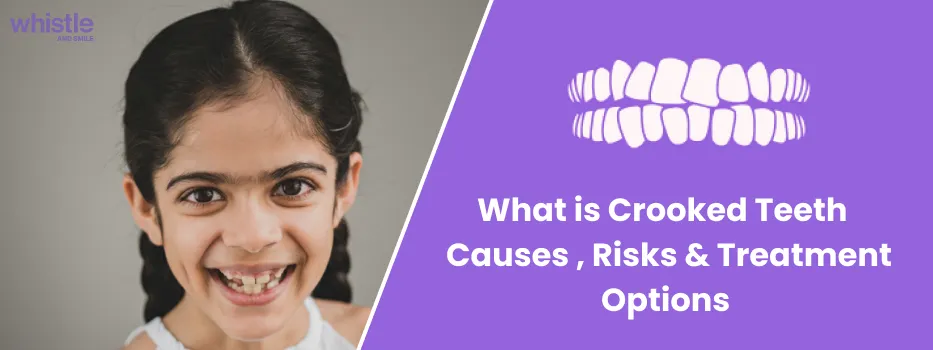
What is Crooked Teeth - 8 Hidden Risks of Misalignment and How to Fix Them
 Medically Reviewed by Whistle Dental Team
Hiding your smile in photos or covering your mouth when you laugh is an emotional burden many adults quietly carry. But beyond the aesthetic insecurity, living with an uneven smile affects your daily health in ways you might not realize—from how effectively you chew your food to the chronic tension you feel in your jaw muscles. Prevention and early intervention are always better than a late cure, but it is never too late to reclaim your smile.
Key Takeaways
- The Hygiene Trap: Misalignment of teeth creates hidden pockets where plaque thrives, drastically increasing your risk for gum disease and early tooth loss.
- Two Types of Causes: Crooked teeth causes are split between things you cannot control (genetics, large teeth) and things you can (childhood habits, nutrition, untreated cavities).
- Physical Damage: Leaving a twisted tooth untreated often leads to uneven enamel wear, cracked teeth, and painful jaw muscle strain (TMJ disorders).
- The Veneer Warning: Fixing crooked teeth with dental veneers requires permanently shaving away healthy enamel; orthodontics is the only way to actually fix the root problem.
- Advanced Options: Whistle offers both highly discreet clear aligners and AI-positioned Zirconia braces to treat any level of misalignment safely.
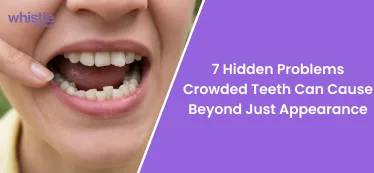
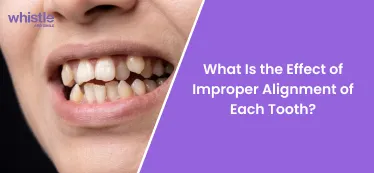
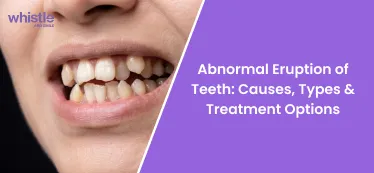
Crooked Teeth in clinical dentistry refers to the misalignment of teeth is known as malocclusion (when teeth are crowded, overlapping, or erupting at improper angles). The most common crooked teeth causes include genetics, childhood habits like thumb-sucking, and the premature loss of baby teeth. Fortunately, whether you are dealing with a single twisted tooth or severe crowding, modern treatments like Whistle clear aligners and AI-designed precision braces can safely guide your smile into perfect harmony.
Do Crooked Teeth Always Need Treatment?
From a purely medical standpoint, no. Millions of people live with slightly crooked teeth their entire lives without issue. A slightly misaligned tooth is often just a harmless, natural quirk that gives your smile character. However, treatment becomes medically necessary when the misalignment begins causing the functional issues discussed below, such as difficulty cleaning, jaw strain, or speech impediments.
The Floss Tension Test: Checking Your Alignment at Home
- The Test: Take a piece of dental floss and slide it between your lower front teeth, then your upper front teeth.
- The Result: The floss should slide down with a gentle "pop" and move smoothly up and down the side of each tooth.
- The Diagnosis: If the floss shreds, gets aggressively stuck, or simply cannot pass between certain teeth, those teeth are severely crowded and overlapping. This overlap is a prime breeding ground for periodontal disease (deep gum infection).
Crooked Teeth Causes: What You Can and Cannot Control
Teeth erupt into the mouth seeking space. When that space is compromised, malocclusion occurs. The etiology (underlying causes) can be broken into two categories:
Factors Beyond Your Control
- Genetics and Jaw Size: If there is a family history of crooked teeth, your probability of having them increases heavily. Often, patients inherit large teeth from one parent and a small jaw from another, leaving no physical room for the teeth to align properly.
- Trauma: Childhood jaw injuries or falls can displace developing tooth buds under the gums, causing adult teeth to erupt abnormally.
- Improper Eruption: Sometimes adult teeth simply emerge at improper angles or erupt before the primary (baby) teeth have naturally fallen out.
Factors Within Your Control
- Untreated Dental Cavities: If a child loses a baby tooth early due to decay, the adjacent teeth will experience mesial drift (the natural tendency of teeth to slowly shift forward into empty spaces). This blocks the adult tooth below, forcing it to erupt in a crooked position.
- Childhood Habits: Consistent thumb-sucking, prolonged pacifier use, tongue thrusting, and chronic mouth breathing alter the physical shape of the growing jawbone.
- Impacted Wisdom Teeth: Horizontally positioned wisdom teeth can exert immense pressure from the back of the mouth, causing crowding to ripple forward into the front teeth.
- Poor Nutrition: Severe nutritional deficiencies during early childhood can stunt the natural growth of the jawbones, leading to insufficient arch space.
The 8 Physical Risks of Crooked Teeth
Ignoring a misaligned bite leads to a cascade of functional health problems:
- Aesthetic Concerns - People with crooked teeth become conscious about their smile, which leads to low self-esteem and less confidence in professional settings.
- Tooth loss – Crowded teeth are difficult to clean, leading to caries and more calculus deposition, further leading to gum diseases, bad breath, and ultimately tooth loss if not treated timely manner.
- Excess Wear and tear – Crooked teeth led to excess wear and tear of teeth, leading to cracked teeth and chipped teeth.
- Increased frequency of biting of the cheek and tongue when teeth are malaligned.
- Improper Chewing and digestion – Chewing efficiency is affected, leading to digestive problems..
- Alignment becoming worse if not treated timely will require extensive treatment later.
- Pain in facial muscles – In Crooked teeth direction of forces gets affected, leading to stiffness among jaw muscles, jaw strain, and ultimately TMJ Disorders.
- Speech Difficulties – Improper positioning of teeth affects the pronunciation of words, leading to lisping, etc.
Diagnosis of Crooked Teeth
How a person will come to know about Crooked teeth. Early diagnosis of the condition and treating it prevent further harm and also reduce the complexity of treatment.
There is a term called Preventive and Interceptive Orthodontics. It basically deals with early prevention and intervention from further progressing the situation of malalignment, and at a later stage, preventing the person from undergoing more complex treatments. It is done basically in the growing age.
But still, there are some variants of malocclusion that a normal person cannot identify, but a dentist can. So one should visit a dentist timely manner and get himself and herself examined to know about the malocclusion.
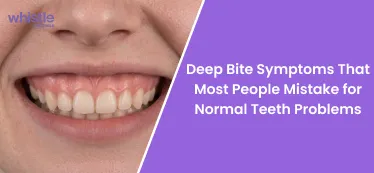
Deep bite, crossbite, etc., cannot be recognized by normal persons and need evaluation by a dentist.
After identification of the situation comes the treatment part, for which the willingness of the other person is utmost necessary, and the person should understand that a small problem, if timely recognized and treated, will prevent many other problems from occurring and also save money in the long run.
Comparing Your Treatment Options
| Feature | Whistle Clear Aligners | Whistle Advanced Braces (Metal / Zirconia / Ceramic) |
|---|---|---|
| Visibility | Transparent and virtually invisible | Wires and brackets are visible |
| Clinic Visits | Fewer clinic visits with remote monitoring | Monthly clinic visits are required for adjustments |
| Dietary Rules | Remove aligners before eating and enjoy all foods | Avoid hard, sticky, and chewy foods to prevent damage |
| Oral Hygiene | Easy to brush and floss after removing aligners | Requires careful cleaning with interdental brushes and extra effort |
| Comfort Level | Smooth, comfortable plastic with minimal irritation | May cause mild cheek and lip irritation during the initial adjustment period |
Are you unsure whether braces or aligners are right for your specific misalignment? Book a free Smile Assessment at your nearest Whistle Partner clinic - no commitment required.
Beyond Braces: Other Orthodontic and Surgical Options
- Palatal Expanders: Often used in interceptive orthodontics for children, these appliances gently widen a narrow upper jaw to create room before teeth become crowded.
- Standalone Retainers: If you only have very minor shifting (perhaps because you stopped wearing a retainer after childhood braces), a new retainer may be enough to gently push the teeth back without full braces.
- Cosmetic Contouring/Bonding: For a slightly jagged or twisted tooth, a dentist might simply polish (contour) the edge or apply composite bonding to reshape it cosmetically without moving the root.
- Orthognathic (Jaw) Surgery: If your crooked teeth are caused by a severe skeletal mismatch (meaning the upper and lower jawbones themselves are entirely different sizes), orthodontics alone may not be enough. Jaw surgery corrects the bone structure, while braces align the teeth.
Basically the two modalities which are used for correction of malalignment
Many adults ask if they can just get veneers or dental crowns to "fix" their crooked teeth. Your Whistle orthodontist will likely advise against this for healthy teeth. Placing a crown or veneer over a crooked tooth requires grinding away massive amounts of healthy tooth structure, and it only hides the problem without fixing the actual bite forces.
Orthodontics is the only true solution for moving the tooth root. Whistle offers two premium, International-standard pathways:
- Whistle Clear Aligners: Designed using high-precision digital scans, these personalized aligners offer maximum comfort. You can see your projected final results on a 3D simulation before treatment even begins.
- Whistle AI-Precision Braces: We do not just glue brackets on by eye. Using AI technology and an "indirect bonding" technique, a team of orthodontists digitally calculates the exact, micro-millimeter placement of every bracket before applying them. We even offer Zirconia braces, which provide the incredible strength of metal with the superior aesthetics of ceramic.
Also Read:
Difference between Braces and Aligners
| Braces | Aligners |
| Can be of metal, zirconia, ceramic, etc. Wires are visible. | Transparent, clear trays. |
| A monthly visit to the clinic is mandatory | Monthly visits are not mandatory. |
| Attached to the tooth surface and cannot be removed at will. | Can be removed willingly anytime. |
| Strict dietary compliance. Sticky, hard food to be avoided | Can eat anything after removing trays |
| Special effort to be made to maintain oral hygiene with braces | No special efforts needed to maintain oral hygiene, as brushing et,c can be done after removing trays as usual |
| More discomfort | Less discomfort |
| Results will be visible to patients only at the end of treatment | Results can be seen even at the start of treatment with the help of a customised scan. |
| More complex cases can be treated | Hybrid mechanics is used for complex cases, ie, Aligners plus auxillaries |
| More economical | Less economical at the start, but when the overall cost of treatment is compared. Equally economical |
| Special effort from the patient is not needed, as everything is under the control of the treating dentist | Special effort from the patient is needed, as full control is in his hands |
Why Choose Whistle Aligners Over Other Brands
1. Whistle Aligner is matching the International Standards.
2. Personalised Aligners are designed according to your specific needs using Digital Scan to ensure high precision.
3. As the Aligners delivered to you are personalised, it brings a high level of comfort, so your journey towards a perfect smile becomes smooth.
4. Monitoring at a higher level – Progress of your treatment is monitored using digital means, reducing the need for frequent visits.
5. Depending on the severity of malalignment, whether mild, moderate, or severe time period is decided for achieving the desired results and is communicated to you before starting the treatment.
Also Read:
- Orthodontics Isn’t Just About Straight Teeth - Here's What You Didn't Know
- What are Buck teeth: Causes, Risks & Treatment Options
- What Happens If You Keep Delaying Braces or Aligners?
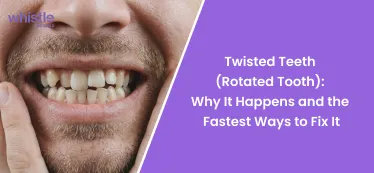
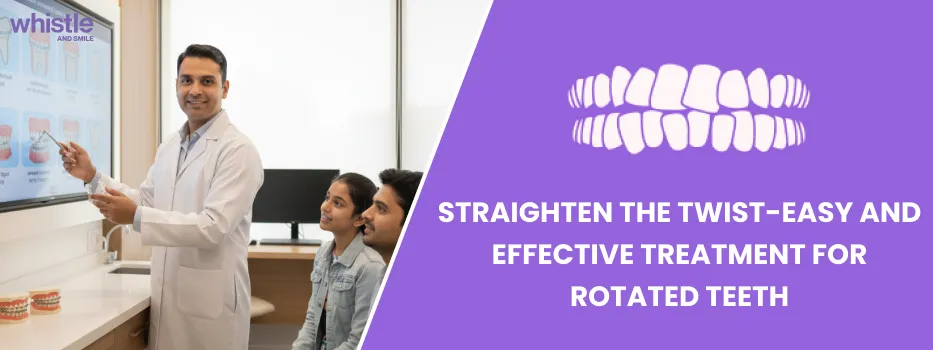
- Straighten the Twist-Easy and Effective Treatment for Rotated Teeth
Your Next Steps
You deserve a smile that actually makes you want to smile. Recognizing the problem early and treating it correctly not only boosts your confidence but saves you from a lifetime of dental wear, jaw pain, and expensive restorative treatments.
Ready to see what your smile could look like? Book a free Smile Assessment at your nearest Whistle Partner clinic today.
Book 3D Teeth Scan
Consult our experts and get a 3D preview of your smile transformation!
crooked teeth
crooked teeth treatment
crooked teeth causes
FAQ's
Q1.What is crooked teeth exactly, and why do they happen?
Crooked teeth (malocclusion) occur when there is a mismatch between the size of the jaw and the size of the teeth, causing them to overlap, twist, or erupt out of alignment. Common causes include genetics, early loss of baby teeth, and childhood thumb-sucking.
Q2.Does misalignment of teeth cause bad breath?
Yes. Heavily crowded and overlapping teeth create tiny, inaccessible pockets where toothbrush bristles and floss cannot reach. The trapped food and plaque inevitably lead to chronic bad breath (halitosis) and gingival inflammation.
Q3.How does malocclusion cause TMJ pain?
When teeth are misaligned, your upper and lower jaws cannot rest together naturally. This forces your facial muscles to constantly overcompensate and strain whenever you chew or swallow, eventually leading to stiffness and temporomandibular joint (TMJ) disorders.
Q4.What is interceptive orthodontics for crooked teeth?
Interceptive orthodontics involves treating a child (usually between ages 7 and 10) while their jaw is still growing. By using appliances to gently widen the palate or break a thumb-sucking habit, the orthodontist creates enough space for the adult teeth to erupt straight.
Q5.Are veneers a safe way to fix crooked teeth quickly?
Veneers provide an instant cosmetic fix, but they are not an orthodontic treatment. To place a veneer over a misaligned tooth, the dentist must permanently grind away healthy enamel. Orthodontics is always preferred to safely move the real tooth.
 Medically Reviewed by Whistle Dental Team
 Medically Reviewed by Whistle Dental Team

 Medically Reviewed by Whistle Dental Team