How Much Time Braces Take to Fill Teeth Gaps? A Complete Timeline
 Medically Reviewed by Whistle Dental Team
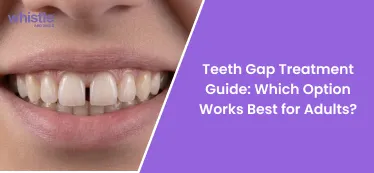
The time braces take to close teeth gaps depends on the size of the gap, your bite alignment, and how your teeth respond to treatment.
On average, small gaps can close within 6 to 9 months, while moderate to large gaps usually require 12 to 24 months. If gaps are part of a complex bite problem or treatment involves tooth extractions, braces may take up to 30 months or longer.
The typical teeth gap braces time period ranges from 6 to 24 months. A small 1mm to 2mm gap can close in as little as 6 to 8 months.
Medium gaps of 2mm to 4mm generally require 6 to 12 months. Large gaps of 5mm or more, or cases with multiple spaces, can take 12 to 24 months to fully close.
Key Takeaways
- Small Spaces Close Fastest: Minor midline diastemas (1mm to 2mm) show significant closure in as little as 6 to 8 months of continuous biological force.
- Large Gaps (5mm+) Require Translation: Moving teeth across large gaps requires bodily translation (moving roots along with crowns), which safely takes 12 to 24 months to protect bone integrity.
- Patient Compliance Directly Speeds Up Results: Wearing prescribed elastics as instructed, attending regular checkups, and maintaining pristine oral hygiene can shorten your treatment timeline by 3 to 6 months.
- Retainers are 100% Mandatory: Periodontal fibers have elastic memory. If you do not wear your retainers post-treatment, your gaps will reopen regardless of how long braces were worn.
- Whistle Clear Aligners Offer a Faster Alternative: Modern digital clear aligners at Whistle partner clinics move teeth simultaneously, closing spacing efficiently in 6 to 12 months with zero metal wires and transparent pricing.
So, you’ve got gaps in your teeth, and you’re wondering how long it’s going to take for braces to fix them. Maybe it’s that one gap right in the front that’s been bothering you for years, or maybe there are multiple spaces between your teeth.
Either way, you want answers. Well, let’s be real - braces don’t work overnight. But they do work. And if you’re committed to the process, you’ll end up with a smile that’s not just gap-free but also healthier and better aligned.
Well, let’s be real - braces don’t work overnight. But they do work. The truth is, it depends. But don’t worry - dentists at Whistle break it all down for you so you know exactly what to expect.
How Can You Check Your Teeth Gaps at Home?
You do not need to wait for a clinic visit to understand your spacing. Here are three simple, safe self-assessments you can perform in front of a mirror:
How do you perform the Mirror Light Gap Test?
- Stand in a well-lit room and smile naturally.
- Look closely at the spaces between your teeth.
- If you can see light passing clearly through the sides of your back teeth when your jaw is closed, you have generalized spacing (gaps distributed across multiple teeth).
- If light only passes through your front two teeth, you liky have a midline diastema (a gap specifically between your front two teeth).
Why Do Gaps Form Between Your Teeth?
Understanding why teeth gaps develop helps your orthodontist design a treatment plan that ensures your gaps stay permanently closed once treatment is finished:
- Jaw-to-Tooth Size Discrepancy: When your jawbone is genetically larger than the collective width of your teeth, natural spacing appears throughout the arch.
- Oversized or Low-Attaching Labial Frenum: The muscular tissue connecting your upper lip to your gum can attach too low between your front teeth, acting as a physical wedge that holds teeth apart.
- Missing or Peg-Shaped Lateral Incisors: If upper lateral incisors fail to develop or erupt as tiny peg-shaped teeth, adjacent teeth migrate into the empty space.
- Tongue Thrust Swallowing Habit: Pressing the tongue forward against the front teeth during swallowing pushes teeth outward over time, creating noticeable gaps.
- Periodontal Bone Loss in Adults: Adult-onset spacing is frequently caused by gum disease. As supporting bone deteriorates, teeth lose stability and splay outward.
Gaps aren’t just about looks - they can affect how you bite, chew, and even speak. That’s why getting them fixed is important. A gap is not just an aesthetic concern. Leaving spaces untreated can lead to long-term oral health problems:
- Food lodgement (food getting trapped between teeth): Gaps act as traps for fibrous foods. If you do not clean them, bacteria feast on the debris, leading to plaque buildup.
- Cavity formation: Persistent food debris between teeth leads to dental caries (tooth decay), which can destroy enamel.
- Inflamed gums: Trapped food irritates the gingiva (gum tissue), causing localized swelling, bleeding, and pain.
- Excessive stress on adjacent teeth: Gaps leave neighboring teeth unsupported. When you chew, these teeth experience abnormal forces, which can lead to premature wear or loosening.
- Speech difficulties: Air escaping through gaps can cause a lisp or make it hard to pronounce certain consonant sounds clearly.
How much time does braces take to straighten teeth?
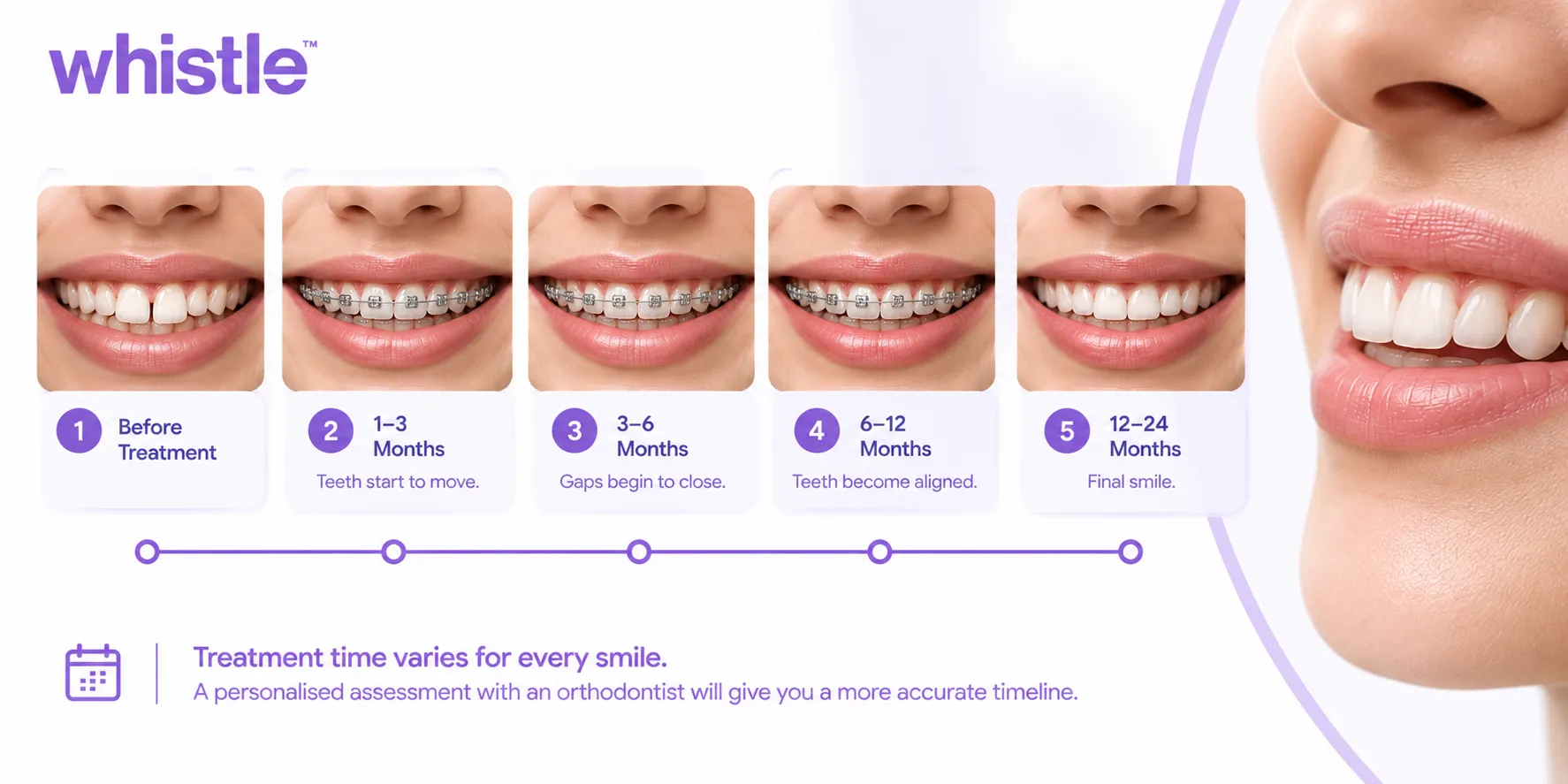
Braces treatment usually lasts anywhere from 6 months to 3 years, although most patients achieve their desired results within 18 to 24 months. The exact treatment time varies depending on the position of your teeth, the severity of your bite problem, and the orthodontic treatment plan recommended by your dentist.
A general timeline looks like this:
- 6–12 months: Suitable for mild cases involving small gaps, slight crowding, or minor alignment issues.
- 12–18 months: Common for moderate crowding, spacing, or less severe bite corrections.
- 18–30 months or more: Required for complex orthodontic problems such as severe crowding, significant overbites, underbites, crossbites, or treatments involving tooth extractions.
Several factors determine how quickly your teeth move during treatment:
- Age: Younger patients often respond more quickly because their jawbones are still developing, allowing teeth to shift more efficiently.
- Following your orthodontist's instructions: Keeping adjustment appointments, maintaining good oral hygiene, and wearing elastics or retainers as advised can help avoid unnecessary treatment delays.
- Type of braces: Conventional metal and ceramic braces generally require 1–2 years for full treatment, while limited orthodontic treatments that focus only on cosmetic alignment of the front teeth may be completed in as little as 6 months.
If you want a more accurate estimate, an orthodontic consultation is essential. After examining your teeth and bite, your orthodontist can provide a personalised treatment timeline based on your specific dental condition.
What Clinical Factors Affect How Fast Braces Close Teeth Gaps?
No two patients experience the exact same timeline. Several biological and procedural factors determine how quickly your gaps close:
1. Biological Age and Bone Density
Children and teenagers experience faster tooth movement because their alveolar bone is less dense and actively remodeling. In adults, bone turnover is slower, meaning teeth take slightly longer to shift safely without risking root resorption.
2. Bracket Technology: Passive Self-Ligating vs Traditional Elastic Ties
Traditional metal braces use rubber bands that produce high friction against the archwire, slowing down tooth gliding. Whistle self-ligating braces utilize precision passive slide clips that eliminate friction, allowing teeth to move smoothly with 50% shorter chair time and fewer clinic visits.
3. Strict Compliance with Orthodontic Elastics
If your orthodontist prescribes intermaxillary elastics to pull teeth together or coordinate your bite, wearing them 22 hours daily is essential. Skipping elastics for even a few days can stall tooth movement and add 2 to 3 months to your overall treatment timeline.
4. Routine Dental Checkups and Broken Bracket Prevention
Missing scheduled adjustment appointments or repeatedly breaking brackets on hard foods halts active tooth movement. Every broken bracket can delay your debonding date by 4 to 6 weeks.
What Affects the Treatment Time?
Different types of braces work at different speeds:
- Traditional Metal Braces – These usually work the fastest because they’re strong and efficient.
- Ceramic Braces – Aesthetic, but slightly slower than metal braces
1. Your Age
Baby teeth move faster because the jawbone is still developing. That’s why teens usually see results quicker than adults. 2. Consistency with Orthodontic Appointments Skipping appointments or delaying adjustments slows down the process. Stay on top of your visits to keep everything moving. 3. Following Instructions (Especially Rubber Bands!)
If your orthodontist gives you rubber bands (elastics) to wear, wear them! They help move your teeth faster. Not following instructions = longer treatment time.
4. How Well You Take Care of Your Teeth.
Cavities, gum disease, and broken brackets can slow everything down. Keep up with brushing, flossing, and avoiding foods that could damage your braces.
Month-by-Month Timeline: What to Expect
Here’s a general idea of what happens during treatment:
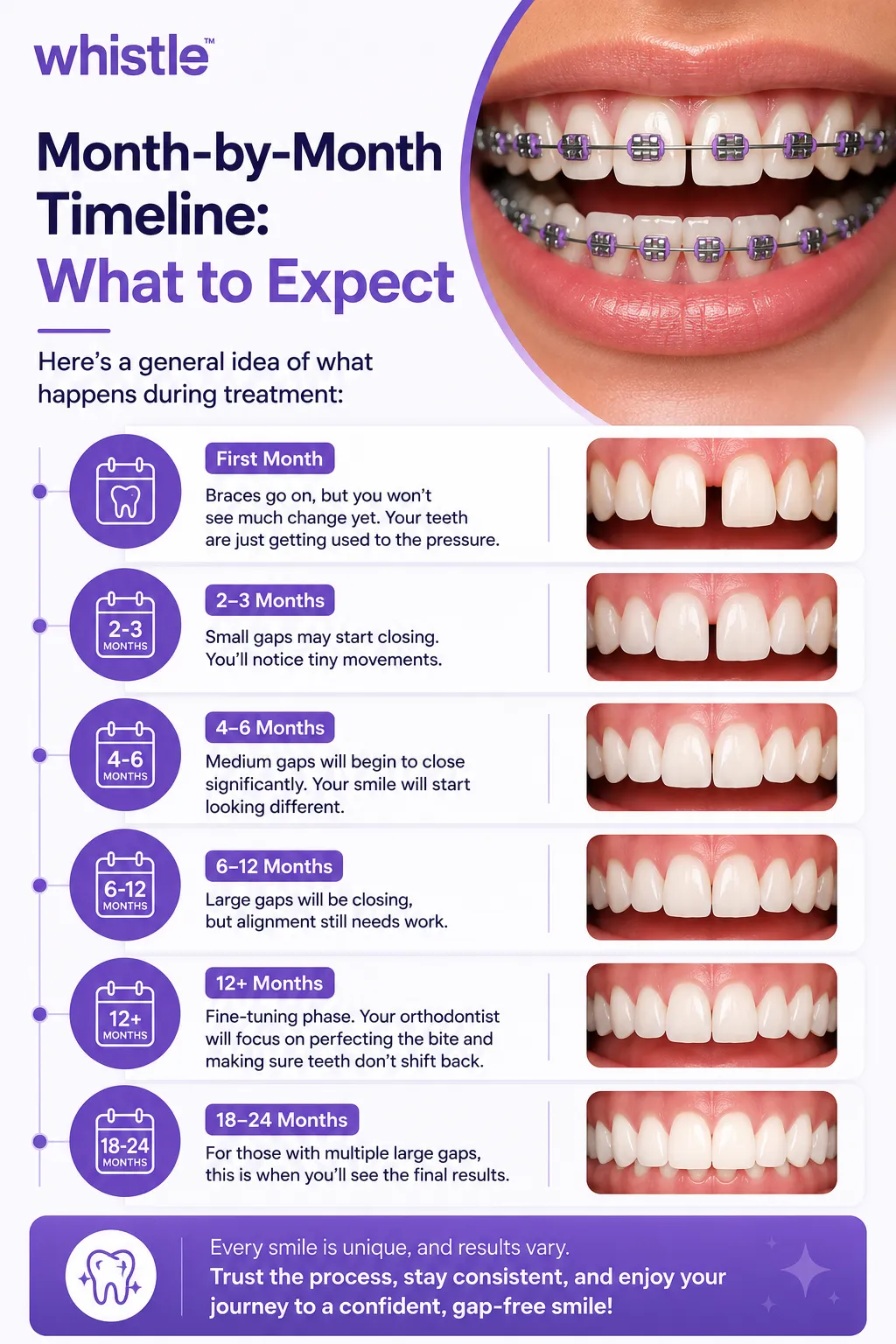
Orthodontic gap closure follows a structured biological sequence. Here is what happens month by month during your treatment journey:
- Month 1 (Placement & Initial Acclimatization): Brackets and initial light nickel-titanium (NiTi) archwires are placed. Teeth adapt to gentle pressure; visual gap movement is minimal as biological cellular pathways activate.
- Months 2 to 3 (Early Leveling and Alignment): Rotations correct and initial space closure begins. You will notice small 1mm to 2mm gaps starting to narrow.
- Months 4 to 6 (Active Space Closure Phase): Power chains (connected elastic modules) or closing loop archwires are introduced. Medium-sized gaps (2mm to 4mm) close noticeably. Your smile begins looking visibly transformed.
- Months 6 to 12 (Consolidation & Large Gap Closure): Large gaps (5mm+) finish closing. The orthodontist begins uprighting roots and aligning bite relationships.
- Months 12 to 18 (Fine-Tuning & Occlusal Settling): Teeth are in full contact. Treatment focuses on perfecting how upper and lower teeth interlock (occlusion) and preventing relapse.
- Months 18 to 24+ (Final Detailing for Complex Cases): For severe bite discrepancies, final microscopic torque adjustments ensure long-term stability before debonding and retainer delivery.
What Happens After the Gaps Are Closed?
Yes, look at the tissue connecting your upper lip to your gums. That fold of tissue is called the labial frenum (the muscular band under your top lip).
Sometimes, this tissue attaches too low, passing right between your two front teeth. When this happens, it physically blocks the teeth from coming together. This creates a midline diastema (front teeth gap)
Here is the thing. If your orthodontist closes this gap using braces but leaves the low frenum untouched, the gap will open right back up after treatment. To prevent this, we recommend a simple, quick procedure called a frenectomy (the minor surgical removal of the frenum attachment) after the gap is closed. This ensures your front teeth stay tightly aligned.
How Do Different Treatments Compare for Closing Gaps?
| Treatment Option | Best Suited For | Comfort and Visibility | Typical Timeline |
Traditional Metal Braces | Severe spacing, complex bite issues, and extraction gaps | High visibility, initial soreness, uses wires and brackets | 12 to 24 months |
Clear Ceramic Braces | Patients wanting traditional strength but with less visible brackets | Moderate visibility, clear brackets, same wire system | 12 to 24 months |
Lingual Braces | Complete invisibility, severe spacing cases | Attached to the back of teeth, can irritate the tongue | 12 to 24 months |
| Mild to moderate spacing, midline diastemas, and relapse cases | Virtually invisible, highly comfortable, removable trays | 6 to 12 months | |
Dental Veneers / Bonding | Single small gap, peg laterals, and cosmetic-only fixes | Immediate result, requires mild tooth preparation | 7 to 10 days |
How Do Clear Aligners Close Gaps Without Wires?
For mild to moderate spacing, clear aligners are the modern choice. Instead of brackets, you wear a series of custom, transparent trays made from premium medical-grade plastics.
At Whistle, we use advanced 3D scanning with the iTero Element Digital Impression Scanner to map your mouth. Our team then plans your tooth movement digitally. Each tray applies precise force vectors (directed pressure points) to push your teeth together.
The best part is that you can remove them to eat, brush, and floss. Since they do not have brackets to catch food, your risk of gum irritation is much lower. For spacing, clear aligners are incredibly efficient because they can move multiple teeth simultaneously.
Wondering which treatment fits your case? Book a free Smile Assessment at your nearest Whistle partner clinic, no commitment required.
Retainers: Your Best Friend
After braces come off, you’ll need to wear a retainer to keep your teeth in position.
- Fixed Retainers: A thin wire permanently placed behind your teeth.
- Removable Retainers: Clear plastic trays that you wear at night.
Can You Prevent Gaps from Forming in Your Teeth?
- Get an early evaluation: Children should have an orthodontic evaluation around age 7. Early detection of jaw mismatch or low frenum attachments allows for simpler, shorter treatments later.
- Stop childhood habits early: Help children stop thumb sucking or pacifier use by age 4 to prevent their front teeth from flaring forward.
- Treat gum disease immediately: Practice excellent oral hygiene by brushing twice daily and flossing. Visit Clove Dental for regular scaling (professional teeth cleaning) to prevent bone loss.
- Replace missing teeth quickly: If you lose a tooth, consult your dentist about an implant immediately. This stops neighboring teeth from tipping into the gap.
Where Can You Get Teeth Gap Braces with Whistle?
- Delhi NCR: Premium care in New Delhi (Connaught Place, GK), Gurgaon (DLF Phase 3), Noida (Sector 62), and Faridabad.
- Mumbai: Authorized providers in Bandra, Andheri, Powai, Navi Mumbai (Vashi), and Thane.
- Bangalore: Visit us in HSR Layout, Indiranagar, Whitefield, and Koramangala.
- Pune: Convenient locations in Koregaon Park, Aundh, and Wakad.
- Hyderabad: Physical clinics in Jubilee Hills, Gachibowli, and Secunderabad.
- Chennai: Serving patients in Adyar, Anna Nagar, and Velachery.
Final Thoughts: Is It Worth the Wait?
100% YES. The process might feel slow, but once those gaps are closed, you’ll have a perfectly aligned, gap-free smile that lasts a lifetime.
So, if you’re feeling impatient, just trust the process. Your future self will thank you when you see your brand-new smile in the mirror.
For a consultation, visit the nearest authorised Whistle provider Dental Clinic near you.
Also Read:
- Can I Put Braces at the Age of 35?
- Can I Put Braces at the Age of 25?
- How to choose the right type of braces
Teeth Braces in Your City
Teeth Braces in Ahmedabad | Teeth Braces in Amritsar | Teeth Braces in Bengaluru | Teeth Braces in Bhiwadi | Teeth Braces in Chandigarh | Teeth Braces in Chennai | Teeth Braces in Derabassi | Teeth Braces in Dombivli | Teeth Braces in Faridabad | Teeth Braces in Ghaziabad | Teeth Braces in Greater Noida | Teeth Braces in Gurgaon | Teeth Braces in Hyderabad | Teeth Braces in Jaipur | Teeth Braces in Jalandhar | Teeth Braces in Kakinada | Teeth Braces in Ludhiana | Teeth Braces in Mohali | Teeth Braces in Navi Mumbai | Teeth Braces in New Delhi | Teeth Braces in Noida | Teeth Braces in Panchkula | Teeth Braces in Panvel | Teeth Braces in Pune | Teeth Braces in Secunderabad | Teeth Braces in Surat | Teeth Braces in Thane | Teeth Braces in Vadodara | Teeth Braces in Vijayawada | Teeth Braces in Vizag | Teeth Braces in Zirakpur
Book 3D Teeth Scan
Consult our experts and get a 3D preview of your smile transformation!
How Much Time Do Braces Take to Fill Teeth Gaps?
teeth gap braces time
teeth gap treatment time period
FAQ's
Q1.How much time does it take to align teeth with braces?
Braces typically take 12 to 24 months to properly align teeth. Mild cases may show results in as little as 6 months, while complex bite or spacing issues may take longer.
Q2.How long does it take to close a 1mm gap with braces?
A small 1mm gap can take about 1 to 3 months to close with braces, depending on tooth movement speed and treatment consistency.
Q3.Can braces close gaps between front teeth?
Yes! Whether it’s a small space or a large one, braces can close gaps between front teeth effectively.
Q4.Do gaps close faster than crooked teeth?
Yes! Gaps usually close faster than correcting severe crowding or misalignment.
Q5.Will gaps come back after braces?
Not if you wear your retainer! Teeth naturally shift over time, so a retainer is crucial to maintaining your results.
Q6.How long does it take to close a 5mm gap with braces?
A large 5mm space requires 6 months to 2 years to close completely. Moving a tooth this far requires translation movement (shifting the entire tooth, including the root, rather than just tipping the crown). Because this takes time, Whistle offers flexible payment structures and EMI options to make the treatment journey stress-free.
You May Also Like

 Medically Reviewed by Whistle Dental Team




























 Medically Reviewed by Whistle Dental Team

 Medically Reviewed by Whistle Dental Team