
What Is a Dental Crown?
 Medically Reviewed by Whistle Dental Team
Have you been told you might need a dental crown? Or maybe you’ve heard people talk about getting a “cap for teeth” and wondered what it actually means. Don’t worry—you’re not alone.
A dental crown is a custom-made cover that goes over a tooth to protect it, strengthen it, and bring back its natural look. At Whistle, we believe in giving you not just the treatment, but the confidence to understand why it’s needed and how it helps.
In this guide, we’ll break down everything about dental crowns—what they are, when you need them, the types available, how the procedure works, how long crowns last, and why Whistle’s Ceramill crowns stand out for durability and aesthetics.
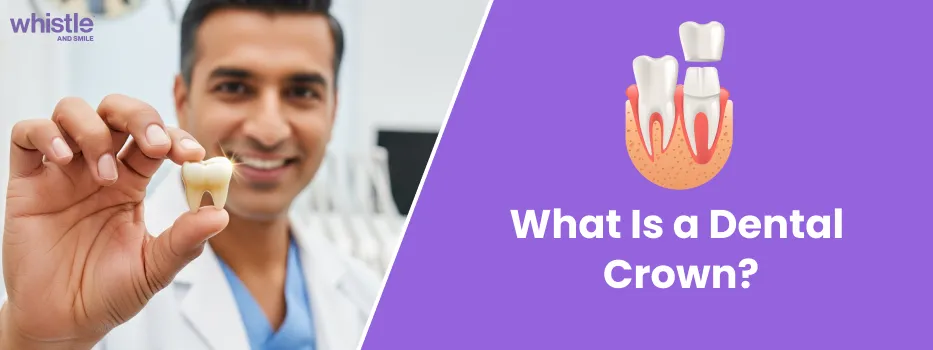
What Is a Dental Crown?
A dental crown (often called a tooth crown or tooth cap) is like a helmet for your tooth. It covers the entire visible part of the tooth, right down to the gumline.
Purpose of a crown:
Restores tooth shape and size
Strengthens a weak or broken tooth
Improves appearance (color or shape)
Protects teeth after procedures like root canals
Holds dental bridges in place
Completes a dental implant
Think of it as giving your tooth a second life when it can’t survive with just a filling.
Why Might You Need a Dental Crown?
Not every tooth with a cavity or damage needs a crown, but here are the most common reasons your dentist may recommend one:
Root canal treatment:
After root canals, teeth become brittle and require protection.
Dental implants:
A crown is placed over the implant to complete your new tooth.
Cosmetic concerns:
Discolored, misshapen, or uneven teeth can be capped for a natural smile.
Cracked or broken tooth:
A crown holds the tooth together and prevents further breakage.
Severe tooth decays that require large fillings:
When cavities are too large for a filling, most of the tooth structure is already gone.
Excessive wear and tear:
Teeth grinding (bruxism) or acid erosion can flatten teeth, making crowns necessary to restore chewing surfaces.
Misaligned bite pressure:
Sometimes a crown is needed to evenly distribute chewing forces if certain teeth are overworked.
If you’ve ever wondered, “Do I need a crown or a filling?”—the difference comes down to how much healthy tooth is left. Fillings repair small holes, while crowns protect the entire tooth structure.
Why Might You Need a Dental Crown?
Not every tooth with a cavity or damage needs a crown, but here are the most common reasons your dentist may recommend one:
- Root canal treatment:
After root canals, teeth become brittle and require protection.
- Dental implants:
A crown is placed over the implant to complete your new tooth.
- Cosmetic concerns:
Discolored, misshapen, or uneven teeth can be capped for a natural smile.
- Cracked or broken tooth:
A crown holds the tooth together and prevents further breakage.
- Severe tooth decays that require large fillings:
When cavities are too large for a filling, most of the tooth structure is already gone.
- Excessive wear and tear:
Teeth grinding (bruxism) or acid erosion can flatten teeth, making crowns necessary to restore chewing surfaces.
- Misaligned bite pressure:
Sometimes a crown is needed to evenly distribute chewing forces if certain teeth are overworked.
If you’ve ever wondered, “Do I need a crown or a filling?”—the difference comes down to how much healthy tooth is left. Fillings repair small holes, while crowns protect the entire tooth structure.
Types of Dental Crowns (Materials)
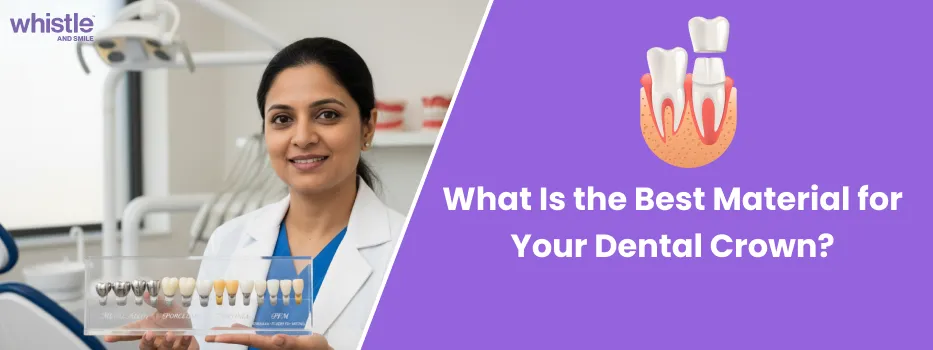
Dental crowns aren’t one-size-fits-all. They come in different materials, each with unique benefits.
| Type of Crown | Strength | Looks (Naturalness) | Best For | Lifespan (Average) |
| Metal Crowns (Gold, Alloys) | Very strong | Noticeable, not natural | Back teeth (molars) | 15–20 years |
| Porcelain-Fused-to-Metal (PFM) | Strong | Good, can chip over time | Affordable option | 10–15 years |
| All-Ceramic / Porcelain | Moderate | Excellent, very natural | Front teeth | 10–15 years |
| Zirconia Crowns | Extremely strong | Natural, long-lasting | Both front & back | 15–20 years |
| Ceramill Crowns (Whistle’s Choice) | Superior strength + aesthetics | Closest to natural teeth | Premium, long-term results | 15–25 years |
At Whistle, we recommend Ceramill crowns because they combine the strength of zirconia with the beauty of ceramics—offering both durability and a flawless, natural smile.
For more details, read this:
Why Choose Whistle Crowns?
At Whistle, we don’t just place any crown—we place Ceramill crowns, designed with advanced German technology.
Here’s why they’re better:
- Given its superior strength, it can withstand heavy chewing forces, perfect for those load-bearing teeth in the back.
- Superior material allows customisation for it to be matched to the look of natural enamel. This lets it blend in perfectly with natural teeth.
- Digitally planned and designed with the help of CAD/CAM technology, allowing for a perfectly snug & comfortable fit.
- Its material is built to last. With proper care, it can last for 20-25 years with proper oral care.
Choosing Whistle means choosing crowns that not only protect but also blend seamlessly with your smile.
Also Read:
The Dental Crown Procedure
Getting a crown usually takes two visits, though with digital technology, this can sometimes be faster.
Step 1: Tooth Preparation
The dentist numbs the area for comfort.
The damaged tooth is reshaped to make space for the crown.
Any decay is removed, and weak areas are reinforced.
Step 2: Impression or Digital Scan
A 3D digital scan or a traditional mold of your tooth is taken.
The shade (color) is chosen to match your other teeth.
Step 3: Temporary Crown
A temporary crown is placed to protect your tooth while the permanent one is being made.
This keeps you comfortable and allows you to chew normally.
Step 4: Permanent Crown Placement
Within 1–2 weeks, the permanent crown is ready.
The dentist checks the bite, fit, and color before cementing it securely.
With CAD/CAM technology (used at Whistle), crowns are designed with micromillimeter accuracy, making the fit more precise and natural than ever before.
Also Read:
How Long Do Dental Crowns Last?
On average, crowns last 10–15 years, but with modern materials like zirconia and Ceramill, many last 20+ years.
Tips for long-lasting crowns:
No fancy or complicated techniques, just make sure you don’t skip the basics:
- Stick to daily brushing and flossing. Ask your dentist to demonstrate the correct brushing and flossing technique for areas in and around your crown.
- Avoid chewing on ice, pens, or hard candy from that particular region.
- If you have a previous history or habit of teeth grinding at night, we recommend the use of a nightguard to protect your investment further.
- Also, make sure to schedule regular dental checkups for preventive measures.
Aftercare and Maintenance: Keeping Your Crown Strong
Crowns are tough, but they still need care. Here’s what helps extend their life:
- Oral hygiene is non-negotiable. After crown placement, you have given your tooth a strong exterior, which won’t decay, but if not taken care of well, the tooth under the same conditions can.
- Watch your diet. You are free to eat all you want with your newly restored teeth. But be careful when having very sticky food like caramel or chewing gum, as it may loosen the crown.
- Protect your bite with a custom nightguard.
- Immediate repair in case of any doubts. If your crown chips or feels loose, visit your dentist right away. If your doubts are left unchecked, it may even lead to swallowed crowns, worsening the issue.
Key Takeaways
- Dental crown or cap - a covering for decayed and broken teeth. It aids in restoring, strengthening, and enhancing the look and functionality of the natural tooth.
- The need for a dental crown ranges from decayed, cracked, RC-treated teeth to implants & for restoring the natural look of the tooth.
- Crowns are available in various materials, ranging from metals to ceramic. But investing in Whistle’s ceramill crown gives you the best of both worlds: great strength along with natural tooth beauty, zero compromises.
- With proper care & maintenance crowns can last decades.
Thinking about getting a dental crown?
Don’t delay treatment—protect your tooth and smile confidently with Whistle’s Ceramill crowns. Ask your dentist about Whistle crowns for detailed information & pricings.
Book your consultation today and experience the perfect blend of comfort, durability, and aesthetics.
Book 3D Teeth Scan
Consult our experts and get a 3D preview of your smile transformation!
FAQ's
Q1.Q1. How long do dental crowns last?
With proper care, 10–15 years. Some modern crowns last 20+ years.
Q2.Q2. Is getting a crown painful?
Not at all. The procedure is done under local anesthesia. You may feel mild sensitivity after, but it goes away quickly.
Q3.Q3. How much does a crown cost?
The cost depends on material and complexity. At Whistle, we provide clear pricing and EMI options so you’re never surprised.
Q4.Q4. What’s better: a filling or a crown?
Small cavities = filling. Large damage or weak teeth = crown.
Q5.Q5. Can a crown look natural?
Yes! With advanced materials like Ceramill, it’s almost impossible to tell the difference from your natural teeth.
Q6.Q6. Can I eat normally with a crown?
Absolutely. Once your crown is cemented, it functions like a natural tooth. Just avoid biting very hard objects.

 Medically Reviewed by Whistle Dental Team
 Medically Reviewed by Whistle Dental Team
 Medically Reviewed by Whistle Dental Team