

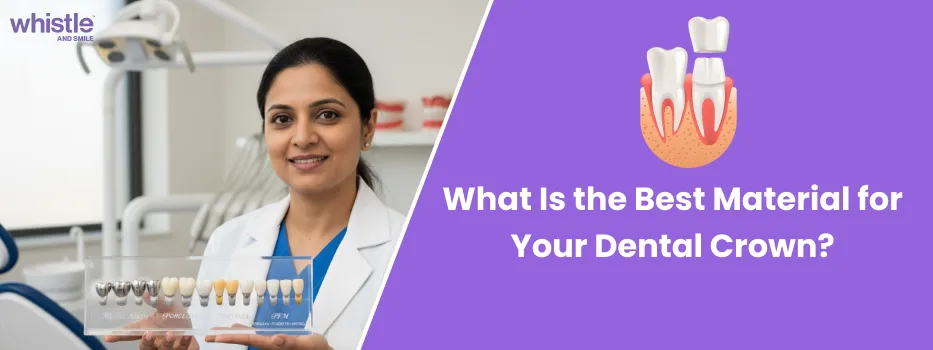
What Is the Best Material for Your Dental Crown?
 Medically Reviewed by Whistle Dental Team
When your dentist says you need a crown, the first thing that probably comes to mind is - what kind? Crowns come in different materials, and each has its own pros and cons. Some last longer, some look better, some cost less.
When your dentist tells you that you need a crown, the very first question that probably comes to mind is: What kind? Dental crowns (commonly called tooth caps) come in a variety of materials, and each type has its own distinct pros, cons, and price points. Some are built to last for decades, some are designed to look flawlessly natural, and some are just meant to be a temporary fix.
Choosing the best tooth cap material is not a one-size-fits-all decision. The right choice depends heavily on which tooth needs the cap, how hard you bite, and whether aesthetics or pure durability matters more to you.
Key Takeaways
- No Single "Best" Material: The best type of dental crown material depends entirely on the location of the tooth. Front teeth require highly aesthetic materials (like E-Max), while back molars need heavy-duty strength (like Zirconia or Metal).
- Zirconia is the Modern Gold Standard: Zirconia offers a near-perfect balance of extreme durability (lasting 15–20+ years) and natural tooth color.
- The PFM Compromise: Porcelain-Fused-to-Metal (PFM) caps are strong and budget-friendly but can reveal a dark grey line at your gums as you age.
- Crown vs. Cap: There is absolutely no difference. "Crown" is the clinical term, while "cap" is the colloquial term used by patients.
- Cost Factor in India: Depending on the material, a high-quality permanent crown in India ranges from ₹5,000 to ₹15,000+.
This master guide will break down the world of dental cap material comprehensively - covering costs, materials, the step-by-step procedure, and how to make your crown last a lifetime—so you can walk into your next dental appointment feeling confident and informed.
Let’s break it down simply so you can understand which crown might be best for your mouth.
When Do You Actually Need a Dental Crown?
Before diving into materials, it helps to understand why a tooth needs capping rather than a simple filling. You might need a crown if you have:
- A fractured or severely broken tooth that cannot support the force of chewing.
- Undergone a root canal, which leaves the remaining "dead" tooth brittle and in need of structural protection.
- A massive cavity where there is not enough natural enamel left to support a standard filling.
- A dental bridge that requires anchor crowns on adjacent teeth to hold the prosthetic in place.
- Severe cosmetic issues, such as deeply discolored or misshapen teeth that veneers cannot sufficiently cover.
Top 6 Types of Dental Crown Materials
If you are looking for the best dental crown material, you generally have six categories to choose from. Here is exactly how they stack up in terms of aesthetics, strength, and longevity.
1. Porcelain or Ceramic Crowns – The Natural Look
These are the most popular, especially for front teeth. They look like real teeth - same color, same shine. Dentists can match them to your natural shade so no one can tell the difference.
Pros:
- Great for front teeth where looks matter.
- No metal inside, so they’re safe if you have metal allergies.
- Feel smooth and natural in the mouth.
Cons:
- They can chip or crack under too much pressure.
- Not ideal for people who grind their teeth.
If your main concern is appearance, porcelain or full ceramic crowns are usually the best pick. They blend beautifully and are strong enough for most daily use.
2. Porcelain-Fused-to-Metal (PFM) Crowns – The Balance Between Strength and Looks
These have been around for decades. Basically, there’s a metal layer inside for strength and a porcelain layer on top for looks. It’s the “classic” type of crown most people got in the past.
Pros:
- Strong and durable - great for both front and back teeth.
- Looks decent, though not as natural as full ceramic.
- Less likely to crack compared to pure porcelain.
Cons:
- Sometimes, the metal line near the gum shows up as a dark edge.
- Over years, gums can recede and make that line more visible.
- The porcelain top can still chip.
PFM crowns are good if you want a balance between beauty and bite strength. But with better materials now available, dentists often recommend newer ceramics instead.
3. Metal Crowns – The Old School Powerhouses
- Extremely durable - can last 15–20 years easily.
- Don’t chip, don’t wear down easily.
- Require less removal of the natural tooth during fitting.
- Silver or gold color stands out - not great for visible teeth.
- Some people are allergic to certain metals.
4. Zirconia Crowns – The Modern Favorite
Zirconia is becoming the go-to crown material now. It’s a type of strong ceramic - almost like the best of both worlds: the strength of metal and the look of porcelain.
Pros:
- Very strong, resistant to cracking
- Can be matched to tooth color.
- Great for people who grind or clench their teeth.
- Long-lasting and biocompatible (safe for gums).
Cons:
- Slightly harder to adjust once fitted.
- Can sometimes wear down the opposite tooth if not polished properly.
Dentists often use zirconia for both front and back teeth now. It’s durable and aesthetic enough for most people. That’s why it’s becoming the most recommended option overall.
5. E-Max Crowns (Lithium Disilicate) – For a Beautiful Smile
E-Max crowns are the newer, more advanced version of all-ceramic crowns. They’re known for their glassy, lifelike look and good strength. Many dentists prefer them for front teeth restorations where appearance really matters.
Pros:
- Excellent aesthetics - they look almost identical to natural enamel.
- Stronger than traditional porcelain.
- No metal, so completely safe for sensitive mouths.
Cons:
- Slightly more expensive.
- Not as tough as zirconia for back molars.
If you’re restoring a front tooth and want it to look flawless, E-Max is usually the top choice.
6. Resin and Stainless Steel – The Temporary Fixes
Not all crowns are meant to last forever.
- Resin/Acrylic: These are used by your dentist to make a temporary crown right in the office. You wear it for 1-2 weeks while your permanent ceramic or metal crown is fabricated in an off-site dental lab. They are fragile and prone to staining.
- Stainless Steel: These are prefabricated metal caps most commonly used in pediatric dentistry. They are quickly snapped over a decayed baby tooth to protect it until the tooth naturally falls out, requiring only a single dental visit.
The Step-by-Step Dental Crown Procedure
Getting a dental crown is a standard, virtually painless procedure that usually takes two visits to the dentist.
Visit 1: Preparation and Impressions
- Diagnosis and Numbing: Your dentist will take X-rays to ensure the tooth roots are healthy. They will then administer local anesthesia so you feel no pain.
- Tooth Shaping: The tooth is filed down on the top and sides to make room for the crown. (If the tooth is severely decayed, the dentist will use filling material to "build up" the tooth first).
- Impressions: The dentist will take an impression of the shaped tooth. At modern clinics like Clove Dental, this is done using a digital 3D scanner, eliminating the need for gooey impression putty.
- Temporary Crown Placement: A temporary acrylic cap is cemented over the tooth to protect it while your permanent crown is manufactured in a dental lab.
Visit 2: Final Cementation (1 to 2 weeks later)
- Removal of Temporary Crown: The temporary cap is gently popped off, and the tooth is cleaned.
- Fit Check: The dentist will place the new permanent crown over the tooth to check the fit, bite alignment, and color match.
- Permanent Cementation: Once you and the dentist are happy with the fit, a high-strength dental adhesive is used to permanently cement the crown into place.
Long-Term Aftercare: How to Make Your Crown Last
A crown cannot get a cavity, but the natural tooth underneath it absolutely can! To ensure your crown lasts for decades, follow these rules:
- Practice Immaculate Hygiene: Brush twice a day and floss daily. Pay special attention to the gumline where the crown meets the natural tooth, as plaque loves to hide there.
- Avoid Hard and Sticky Foods: Stop chewing on ice, hard candies, pen caps, or opening packaging with your teeth. Avoid extremely sticky foods like caramel, which can physically pull a crown off over time.
- Protect Against Grinding (Bruxism): If you wake up with a sore jaw, you are likely grinding your teeth in your sleep. Ask your dentist for a custom night guard. Grinding applies immense pressure that can shatter even the strongest ceramic crowns.
- Routine Check-Ups: Visit your dentist every 6 months for a professional cleaning and X-rays to ensure the cement holding the crown remains completely sealed.
The Whistle Approach to Restorations
At Whistle, we do not believe in forcing a single material on every patient.
If you need a crown to support your bite, or if you need to anchor a bridge before starting orthodontic treatment with Whistle Clear Aligners, our specialists will evaluate your jaw pressure, cosmetic goals, and budget. We use state-of-the-art digital scanners to ensure a micro-millimeter perfect fit, selecting the exact material that will give you a lifetime of confident smiles.
Which Material is best in your Case?
There isn’t a single “best” crown for everyone. It depends on your tooth, bite, and needs. But here’s a quick way to think about it:
| Tooth Type | Best Material | Why |
| Front teeth | E-Max or Porcelain | Natural color and looks |
| Premolars | Zirconia or PFM | Mix of strength and beauty |
| Molars (back teeth) | Zirconia or Metal | Strong, handles chewing pressure |
| Teeth with heavy grinding | Full Zirconia | Very durable, resists cracking |
Also Read:
Cost of Dental Crowns
Cost varies a lot depending on the clinic and the material. In general:
- Metal crowns are usually cheapest.
- PFM crowns are mid-range.
- Zirconia and E-Max are premium choices.
But it’s better to think long-term. A cheaper crown that breaks early can end up costing more later.
Also Read:
- Everything You Need to Know About Dental Crown Replacement
- Getting a Dental Crown After Root Canal: What to Expect
- Pros and Cons of Dental Crowns: What to Consider
- Side Effects of Teeth Capping: Risks, Pain & What to Expect
Final Thoughts
Choosing the right crown isn’t just about what looks nice - it’s about what lasts and feels right in your mouth. Porcelain and E-Max are great for front teeth where appearance matters most. Zirconia or metal are ideal for molars that need strength.
Are you experiencing pain in a cracked tooth, or are you unhappy with a dark line forming around an old PFM crown? Do not wait until the tooth splits completely down the root—which would result in a mandatory extraction.
The best way to decide is to talk with your dentist. They’ll look at your bite, your habits, and your budget - and then suggest what fits best for you.
At the end of the day, the “best” crown is the one you don’t even notice once it’s in your mouth - strong, comfortable, and looking like your own tooth again.
Book a consultation at your nearest Whistle Partner clinic today. Our experts will assess your bite and recommend the absolute best tooth cap material to seamlessly restore your smile.
- How Long Does Tooth Pain Last After Getting a Crown?
- Do we need crowns for crooked front teeth?
- Tooth Cap vs Crown: What’s the Difference & Which Is Better?
- Is Tooth Capping Painful? What Do Patients Experience
Book 3D Teeth Scan
Consult our experts and get a 3D preview of your smile transformation!
What Is the Best Material for Your Dental Crown?
FAQ's
Q1.What is the most durable tooth cap material?
Full metal crowns (like gold alloys) are technically the most indestructible, but because of their metallic color, they are rarely used today. For a tooth-colored option, Zirconia is overwhelmingly the strongest and most fracture-resistant dental cap material available.
Q2.What material is a temporary dental crown made of?
Temporary crowns are usually milled in the dental office from acrylic or composite resin. Because they are designed to be easily removed after a week or two, they are soft and prone to breaking. You should avoid chewing hard or sticky foods on a temporary crown.
Q3.Can I get a clear aligner if I have a dental crown?
Absolutely. Whistle clear aligners can safely and effectively move teeth that have dental crowns. However, the crown must be fully cemented and structurally sound before orthodontic treatment begins.
Q4.How long does a dental crown last?
The lifespan of your crown depends heavily on the material and your oral hygiene. On average, a high-quality Zirconia or PFM crown lasts between 10 to 15 years. Metal crowns can easily last 20 years or more. If you clench your teeth at night, wearing a mouthguard will drastically extend the life of any crown material.
Q5.What is the best dental crown material for a front tooth?
E-Max (Lithium Disilicate) is widely considered the best material for front teeth. It offers a beautiful, glassy translucency that perfectly mimics the light-reflecting properties of natural enamel, ensuring your dental work remains completely invisible to others.

 Medically Reviewed by Whistle Dental Team
 Medically Reviewed by Whistle Dental Team
 Medically Reviewed by Whistle Dental Team
 Medically Reviewed by Whistle Dental Team


