

Is Tooth Capping Painful? What to Expect During the Procedure
 Medically Reviewed by Whistle Dental Team
Tooth capping is not painful during the dental procedure because dentists administer modern local anaesthetics to completely numb the treated tooth and adjacent gum tissues before preparation begins. Patients typically feel gentle physical pressure, water spray, and mild vibrations rather than sharp discomfort.
Following crown placement, mild gum soreness or temporary sensitivity to temperature changes can occur for 24 to 48 hours as tissues adapt.
However, persistent pain in tooth after capping, severe throbbing discomfort, or pain while biting down usually points to a high bite, nerve irritation, or recurrent microleakage, which requires a simple dental check and bite adjustment.
Key Takeaways
- Zero Pain During Preparation: Local anaesthesia numbs nerve conduction entirely during tooth reduction and digital scanning, ensuring you experience only mechanical vibrations and mild pressure rather than pain.
- Root Canal Advantage: Teeth that have already undergone endodontic root canal therapy have had their inner sensory pulp removed, making crown preparation physically incapable of generating internal nerve pain.
- Normal Post-Cap Soreness Window: Mild gum tenderness and brief thermal sensitivity for 2 to 4 days after cementation are normal biological reactions to dental shaping and cement curing.
- Primary Cause of Chewing Pain (High Bite): If your crown hurts when biting down or chewing, the crown is sitting a fraction of a millimetre too high, which your dentist can easily correct in minutes with articulating paper and fine polishing.
- Delayed Pain Requires Evaluation: Pain that develops weeks or months later is never normal. It indicates recurrent tooth decay under crown margins, cement washout, cracked tooth roots, or delayed pulpitis requiring prompt professional assessment.
Getting a tooth cap (crown) may sound painful, but the procedure is usually comfortable. Performed under local anesthesia, it may feel slightly strange or awkward, but not painful. Most discomfort comes from fear and anticipation rather than the procedure itself.
Why Does Tooth Capping Cause Temporary Sensitivity?
A tooth cap (dental crown) is a custom-crafted 360-degree protective cover. Preparing a tooth requires trimming away a thin outer layer of enamel so the crown fits flush against neighboring teeth.
Sensory responses depend on three distinct clinical factors:
1. Dentinal Tubule Exposure on Vital (Living) Teeth
If your tooth has a healthy living nerve (no prior root canal), trimming enamel exposes micro-channels called dentinal tubules. These tubules connect directly to the central dental pulp. Local anesthesia temporarily blocks voltage-gated sodium channels in the nerve, preventing pain signals from reaching your brain while the dentist shapes the tooth.
2. Periodontal Ligament (PDL) Pressure
Your tooth root is anchored into the jawbone by tiny elastic shock absorbers called the periodontal ligament (PDL). Pressing down during digital impressions or crown cementation compresses these ligament fibers. You perceive this movement as dull physical pressure or vibration, not sharp pain.
3. De-Nervated Status in Post-RCT Teeth
When capping follows root canal treatment, the internal dental pulp containing blood vessels and nerve fibers has been completely removed. Consequently, a root-canal-treated tooth has zero internal temperature or pain perception. The only sensation comes from the surrounding gum tissue.
Is Tooth Capping Painful During the Procedure?
Here's the thing. Many patients feel nervous about cap fitting after root canal treatment, wondering if the final capping step will hurt. The primary reason patients ask whether tooth capping is painful is dental anxiety regarding tooth preparation (shaping the tooth to accommodate the crown).
In modern restorative dentistry, tooth capping is a routine, comfortable outpatient procedure. Understanding each step demystifies the chairside experience:
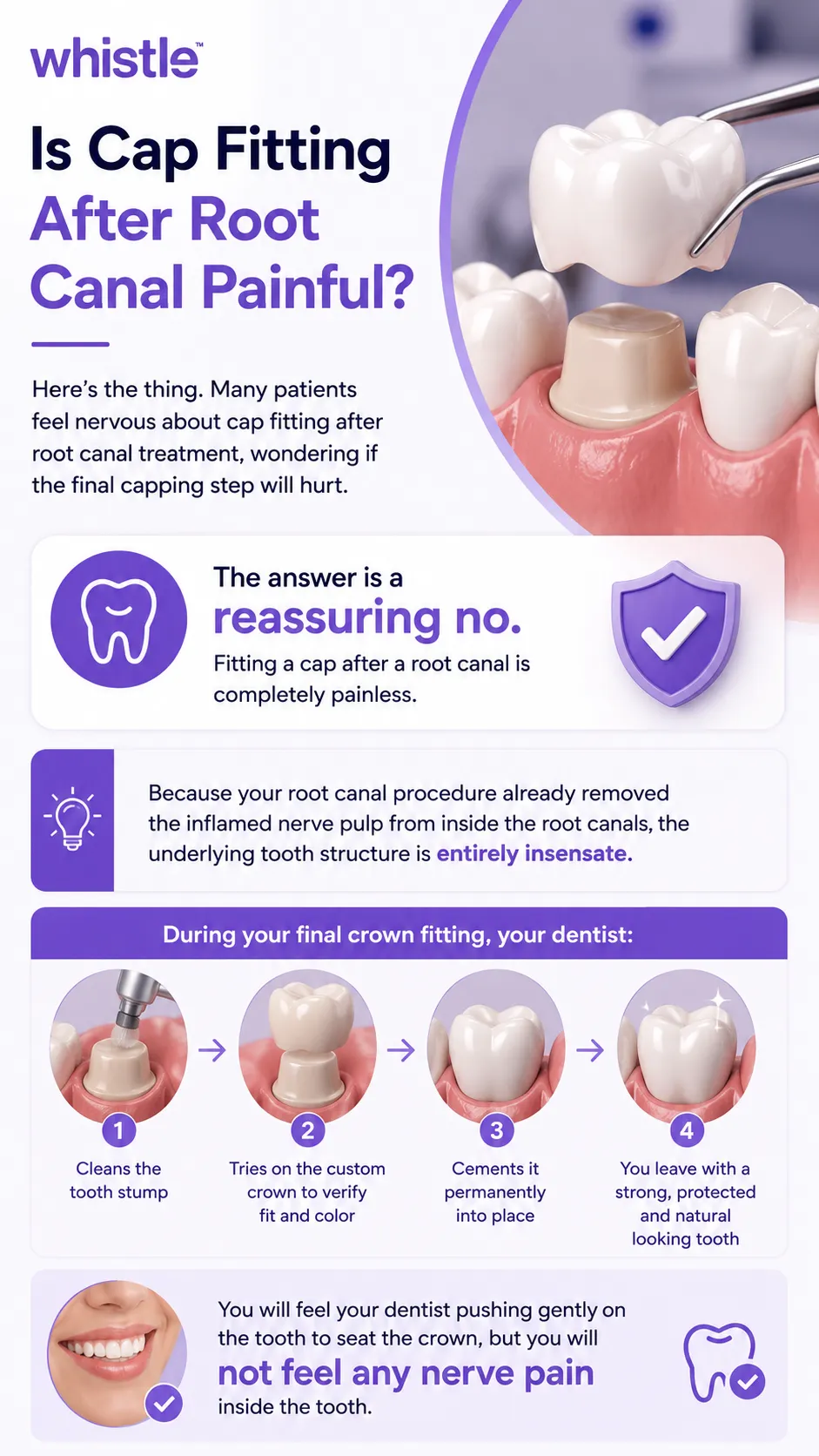
1. Targeted Local Anaesthesia
Before any dental instrument touches your tooth, your dentist applies a topical numbing gel followed by a targeted local anaesthetic injection. This temporarily blocks nerve pathways around the tooth, periodontal ligament, and surrounding gums. You will wait 5 to 10 minutes until profound numbness is confirmed before preparation begins.
2. Tooth Preparation and Shaping
Your dentist trims a thin outer layer of enamel (typically 1 to 1.5 millimetres) to create adequate space for the dental crown (such as zirconia, porcelain-fused-to-metal, or lithium disilicate). Because the area is completely numbed, you will not feel pain. You will only perceive the hum of the handpiece, cooling water spray, and mild tactile pressure.
3. The Endodontic Factor (Teeth with Prior Root Canals)
If the tooth being capped has previously received root canal treatment, the internal sensory pulp containing blood vessels and nerve endings has already been cleaned and sealed. Consequently, a root canal-treated tooth cannot register temperature or internal drill sensations, making crown placement completely pain-free.
4. Digital Scanning and Impression
Modern dental clinics utilize handheld 3D intraoral digital scanners rather than messy impression trays. A wand captures optical images of your prepared tooth in seconds, which is entirely non-invasive and painless.
5. Temporary Crown Placement
While your permanent crown is precision-milled in the dental laboratory, a temporary acrylic crown is cemented with gentle temporary adhesive to protect the exposed tooth and maintain your bite spacing.
Normal Post-Procedure Discomfort vs Abnormal Pain
Once the local anaesthetic wears off 2 to 4 hours post-treatment, it is natural to wonder whether your post-procedure sensations are part of normal healing or a warning sign. Here is how dentists distinguish normal adaptation from abnormal symptoms:
What Is Normal (24 to 72 Hours Post-Procedure)
- Mild Gum Tenderness: The gingival tissue around the margin of the tooth may feel bruised or tender where retraction cords or shaping tools rested. This resolves within 2 to 3 days.
- Transient Thermal Sensitivity: Vital teeth (teeth that still have a living nerve) may react briefly to cold water or warm beverages. This mild sensitivity gradually fades as the tooth pulp settles.
- Jaw Muscle Fatigue: Keeping your mouth open during the preparation appointment can cause temporary stiffness in your temporomandibular joint (TMJ) muscles, similar to mild post-exercise soreness.
What Is Abnormal (Requires Clinical Attention)
- Sharp Pain on Biting or Chewing: Feeling a sharp, localized shock whenever your upper and lower teeth touch indicates an uneven bite height.
- Spontaneous Throbbing Pain: A continuous, pulsating ache that worsens at night or keeps you awake indicates active nerve inflammation (pulpitis).
- Visible Swelling or Gum Boil: A raised pimple (abscess) or swelling on the gum tissue near the crown indicates bacterial infection requiring immediate evaluation.
Also Read:
Why Does My Crown Hurt? 6 Core Clinical Causes of Tooth Pain After Cap
Identifying the Cause of Tooth Pain After Capping
| Symptom & Pain Type | Onset Timing | Probable Clinical Cause | Recommended Clinical Solution |
| Sharp pain when biting down or chewing hard foods | Immediate (first 24 to 48 hours) | High bite (occlusal prematurity bruising the periodontal ligament) | Minor chairside bite adjustment using articulating paper |
| Mild, generalized gum tenderness along the tooth border | First 1 to 3 days after cementation | Soft tissue irritation from retraction cord or crown placement | Warm saltwater rinses and gentle soft-bristle brushing |
| Lingering thermal sensitivity (lasting over 10 seconds) | First week to 1 month post-placement | Pulp inflammation or deep dentin tubule stimulation | Vitality testing by dentist; potential desensitizing protocol or root canal |
| Spontaneous, throbbing ache worsening when lying flat | Anytime from 2 weeks to 6 months later | Irreversible pulpitis or internal pulp necrosis | Endodontic root canal therapy to remove inflamed nerve tissue |
| Dull ache, bad taste, or pain appearing months later | 6 months to several years after capping | Recurrent bacterial decay under margin or cement washout | Digital X-ray evaluation, crown removal, caries cleanup, and crown recementation/replacement |
Safe Chairside and Home Relief While Awaiting Clinical Evaluation
- Chew on the Opposite Side: Avoid putting direct biting pressure on the treated tooth to allow inflamed periodontal ligaments to recover.
- Warm Saltwater Rinses: Dissolve half a teaspoon of table salt in a glass of warm water and rinse gently three times a day. Saltwater reduces oral bacteria and accelerates gum healing.
- Use Desensitizing Toothpaste: Brush with a potassium nitrate or stannous fluoride toothpaste to calm sensitive nerve pathways in vital teeth.
- Over-the-Counter Pain Relief: Approved over-the-counter pain medications like paracetamol or ibuprofen can manage temporary discomfort, provided you follow packaging instructions and your doctor's medical advice.
- Avoid Extreme Food Temperatures: Steer clear of ice water, very hot coffee, or sticky foods that might pull on a temporary crown or irritate vital dentin.
Common Mistakes Patients Make After Tooth Capping
In clinical practice, dentists and prosthodontists frequently observe patient mistakes that lead to avoidable crown pain or failure. Here are five common mistakes to avoid:
- Delaying Crown Placement After Root Canal: Waiting months to cap an RCT tooth, allowing the brittle tooth structure to fracture under normal chewing pressure.
- Chewing Hard Foods on Temporary Crowns: Biting into hard nuts or sticky candy while wearing a temporary acrylic crown, dislodging the cap or cracking the tooth stump.
- Ignoring a High Bite After Cementation: Tolerating a crown that hits first when biting down, causing severe periodontal ligament bruising and tooth ache.
- Skipping Interdental Flossing Around Crown Margins: Avoiding floss around a new crown out of fear of dislodging it, allowing plaque build-up and decay underneath.
- Assuming All Crown Pain Requires a Root Canal: Panicking over minor 24-hour post-cementation gum tenderness that simply requires a minor bite adjustment.
How to Relieve Tooth Sensitivity After Capping
If you experience mild tenderness after getting a new tooth cap, try these safe home care remedies:
- Swish Warm Salt Water: Dissolve 1/2 teaspoon of salt in warm water and swish gently for 30 seconds to soothe gum margin inflammation.
- Use Desensitizing Toothpaste: Brush with a potassium nitrate or hydroxyapatite toothpaste to seal open dentinal tubules on living teeth.
- Avoid Extreme Temperatures: Stick to lukewarm food and beverages for 48 hours, avoiding ice-cold drinks or scalding hot soups.
- Take OTC Anti-Inflammatories: Take over-the-counter pain relievers as directed by your dentist to manage mild tissue soreness.
- Wear a Nightguard for Teeth Grinding: If you grind your teeth at night (bruxism), wear a soft nightguard to protect your new crown from heavy nocturnal biting forces.
When to See a Dental Specialist
Conclusion and Next Steps for a Pain-Free Crown
Tooth capping is a safe, routine, and highly effective treatment designed to restore damaged teeth and prevent tooth loss. Thanks to advanced local anaesthesia and digital dentistry, the tooth capping procedure itself is comfortable and virtually pain-free.
While mild temporary soreness can occasionally follow crown placement as your gums adapt, persistent pain in tooth after capping is easily treatable once evaluated by a qualified dentist.
If you are experiencing discomfort with a new or older dental crown, schedule an in-person clinical assessment at a Whistle partner dental clinic near you to restore full comfort, proper bite balance, and a confident smile.
Also Read:
- What are the different types of crowns for teeth?
- Pros and Cons of Dental Crowns: What to Consider
- Do we need crowns for crooked front teeth?
- Side Effects of Teeth Capping: Risks, Pain & What to Expect
Book 3D Teeth Scan
Consult our experts and get a 3D preview of your smile transformation!
Is Tooth Capping Painful
FAQ's
Q1.Is tooth capping painful during the appointment?
No. The procedure is not painful because the tooth and surrounding gums are thoroughly numbed with local anaesthetic before preparation begins. You will feel pressure and vibration from dental instruments, but no sharp discomfort. You may experience mild thermal sensitivity for a few days afterward as the nerve settles.
Q2.Does capping teeth hurt when biting down?
Capping teeth should not hurt when biting down. If you feel pain when chewing, the crown is likely slightly too high. A quick 2-minute bite adjustment by your dentist resolves the pain immediately.
Q3.Can a crowned tooth still get a cavity or infection?
While the crown itself cannot decay, the natural tooth stump along the gum margin can still accumulate plaque. Daily brushing and interdental flossing around crown edges prevent underlying decay.
Q4.How long does pain in tooth after capping typically last?
Normal post-procedure soreness in the gums or mild sensitivity usually lasts 2 to 4 days. If discomfort persists beyond a week, intensifies, or throbs continuously, schedule a clinical evaluation with your dentist.
Q5.What should I do if my temporary crown falls off or hurts?
If your temporary crown becomes loose or falls off, keep it safe and contact your dental clinic immediately. The temporary crown protects the prepared tooth and prevents adjacent teeth from drifting before your permanent crown is fitted.
Q6.What does an in-person clinical examination for crown pain involve?
During an evaluation at a partner dental clinic, a dentist uses blue articulating paper to check your bite alignment, performs gentle vitality tests, takes focused periapical digital X-rays to assess the root and surrounding bone, and inspects the crown margins.

 Medically Reviewed by Whistle Dental Team
 Medically Reviewed by Whistle Dental Team
 Medically Reviewed by Whistle Dental Team
 Medically Reviewed by Whistle Dental Team


