

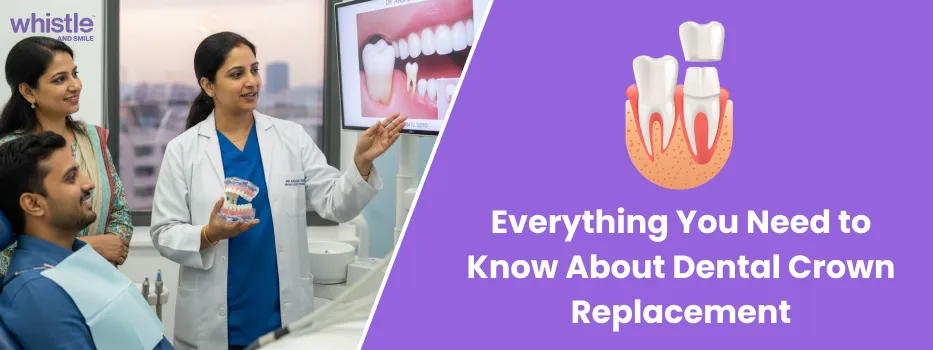
Everything You Need to Know About Dental Crown Replacement
 Medically Reviewed by Whistle Dental Team
Dental crowns are widely used. They cover teeth that are weak, broken, or discolored. They are strong and dependable, often lasting more than a decade, sometimes close to twenty years. But permanence is not part of the promise.
Crowns exist in the mouth, under constant chewing pressure, sudden shifts from hot to cold, and bacteria around the gumline. After years of this, they start showing problems. That does not mean crowns are poorly treated. It only means that everything in the mouth has a natural life span.
First Hints of Trouble
Sensitivity. Biting discomfort. Food slipping under the edge. Porcelain that chips. Gum tissue that swells. Crowns are coming loose enough that floss catches or food traps every time.
All of these are signals. Sometimes the crown simply falls off, and the problem is obvious. More often, the early changes are small and patients ignore them. Dentists, during check-ups, usually notice long before pain begins.
How Crowns Fail (Different Reasons, Same Result)
Cement weakens. Porcelain fractures. Metal wears thin. Gum recession exposes a new margin. Plaque enters. Decay starts at the border between tooth and crown. Grinding shortens life. Chewing ice or hard candy breaks porcelain edges.
Crowns can look solid from the outside, while hidden decay slowly eats at the tooth underneath. There isn’t one single failure pattern. It’s usually a mix.
Replacing an Old Crown
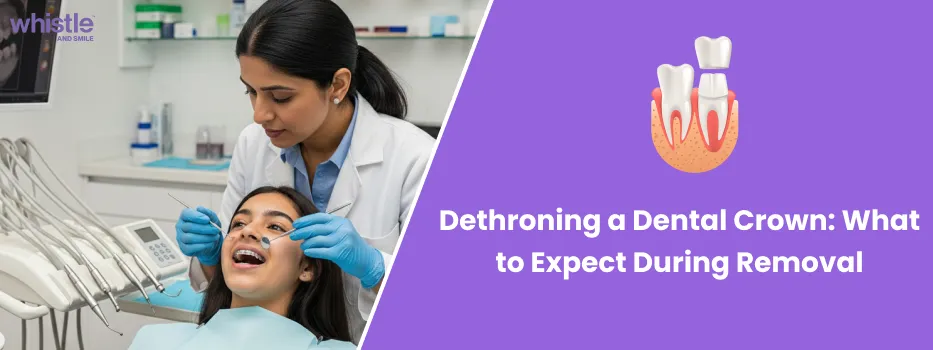
The process resembles the first time. The old crown is cut through with a bur and lifted off. If the cement has loosened, it comes away easily. The dentist checks the tooth below.
If decay is present, it is cleaned. If reshaping is needed, that is done. An impression or a digital scan is taken to record details. A temporary crown is placed. Later, the permanent crown is cemented. The description sounds complex, but the appointment is routine.
How It Feels
Local anesthesia keeps the procedure comfortable. The removal is mostly mechanical. Patients expect pain, yet replacement is usually easier than feared. Mild sensitivity follows, but it fades in days. Once the permanent crown is fixed, the tooth feels strong again.
Also Read:
- Toothache After Dental Crown: Is It Normal & When to Worry?
- What are the different types of crowns for teeth?
- What Is a Dental Crown?
Picking the Next Crown
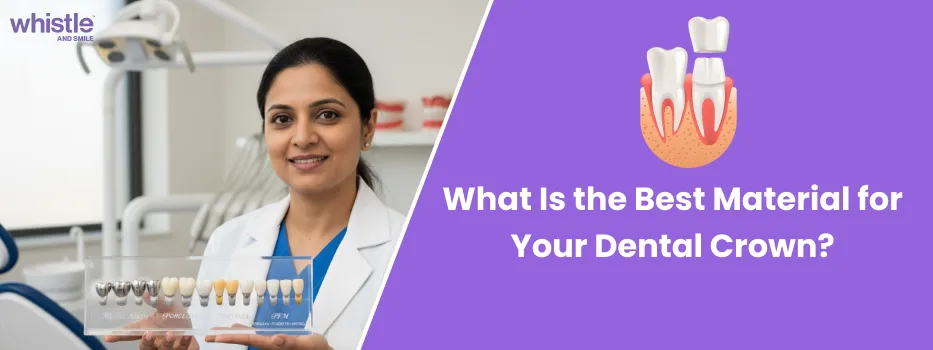
Replacement offers a chance to choose better materials than before. Zirconia for strength. Lithium disilicate for front teeth because it looks like enamel. Porcelain fused to metal for balance.
Full metal for back molars, where appearance is less important. Sometimes the new crown is chosen specifically to fix a weakness from the old one — for example, if porcelain chipped last time, zirconia may be the next choice.
How Long a Replacement Can Last
Another ten to fifteen years, often longer, with proper care. Improved cements and modern ceramics increase durability. Still, longevity depends on daily habits. Brushing, flossing, avoiding harmful chewing, and wearing guards for grinding. Maintenance is as important as the crown itself. Without it, lifespan drops quickly.
Risks Along the Way
Removing an old crown may weaken the remaining tooth. Sometimes the pulp becomes irritated, and root canal treatment follows. Porcelain can still chip. Cement can still loosen. Decay can still creep in at the margins. Most risks are preventable with hygiene and routine checks, but they exist and should be understood.
Money Matters (But Waiting Costs More)
Costs vary widely. Metal crowns are usually cheaper. Ceramic and zirconia crowns cost more. Insurance may cover part of the replacement. While prices are a concern, ignoring a failing crown only increases costs later, when infection or extraction becomes necessary. Early replacement is nearly always the cheaper path in the long run.
Aftercare and Everyday Habits
Brushing twice a day with fluoride toothpaste. Flossing near the edges. Professional cleanings. Avoiding bad habits like chewing on pens or ice. For grinders, night guards are strongly advised. Crowns themselves do not decay, but the teeth under them still can. Maintenance is what keeps them strong.
When a Dentist May Delay
Not every crown has to be replaced the moment something looks wrong. Small chips can sometimes be polished. Minor cosmetic flaws do not demand urgent action. But looseness, pain, or decay beneath the crown mean replacement is not optional. Waiting too long can lead to tooth loss.
Alternatives When Crowns Are Not an Option
If too little tooth structure remains, replacement may not work. Alternatives include extraction and implant placement, bridges anchored to nearby teeth, or removable partial dentures. The decision depends on the specific case. The goal is always the same: restore function and preserve comfort.
Crowns are one of dentistry’s most trusted treatments. They last many years, they protect natural teeth, and they restore chewing and appearance. Replacement is not failure; it is part of the expected life cycle. Recognizing early signs, replacing when needed, and maintaining proper care ensures teeth stay healthy and functional. Whether it is the first crown or the second, the job remains the same: protect the tooth, restore strength, and keep the smile steady in everyday life.



 Medically Reviewed by Whistle Dental Team
 Medically Reviewed by Whistle Dental Team

 Medically Reviewed by Whistle Dental Team

 Medically Reviewed by Whistle Dental Team


