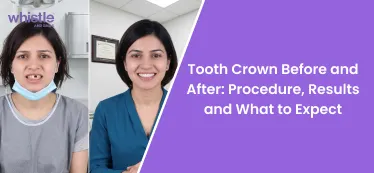
Tooth Crown Before and After: Procedure, Transformation, and Care Guide
 Medically Reviewed by Whistle Dental Team
What Is a Dental Crown?
A dental crown, often referred to as a tooth cap, is a custom-engineered prosthetic restoration that completely encloses the visible portion of a natural tooth above the gingival margin.
It serves as an artificial enamel shield designed to replicate the exact anatomical contours, biting cusps, and optical shade of healthy dentition.
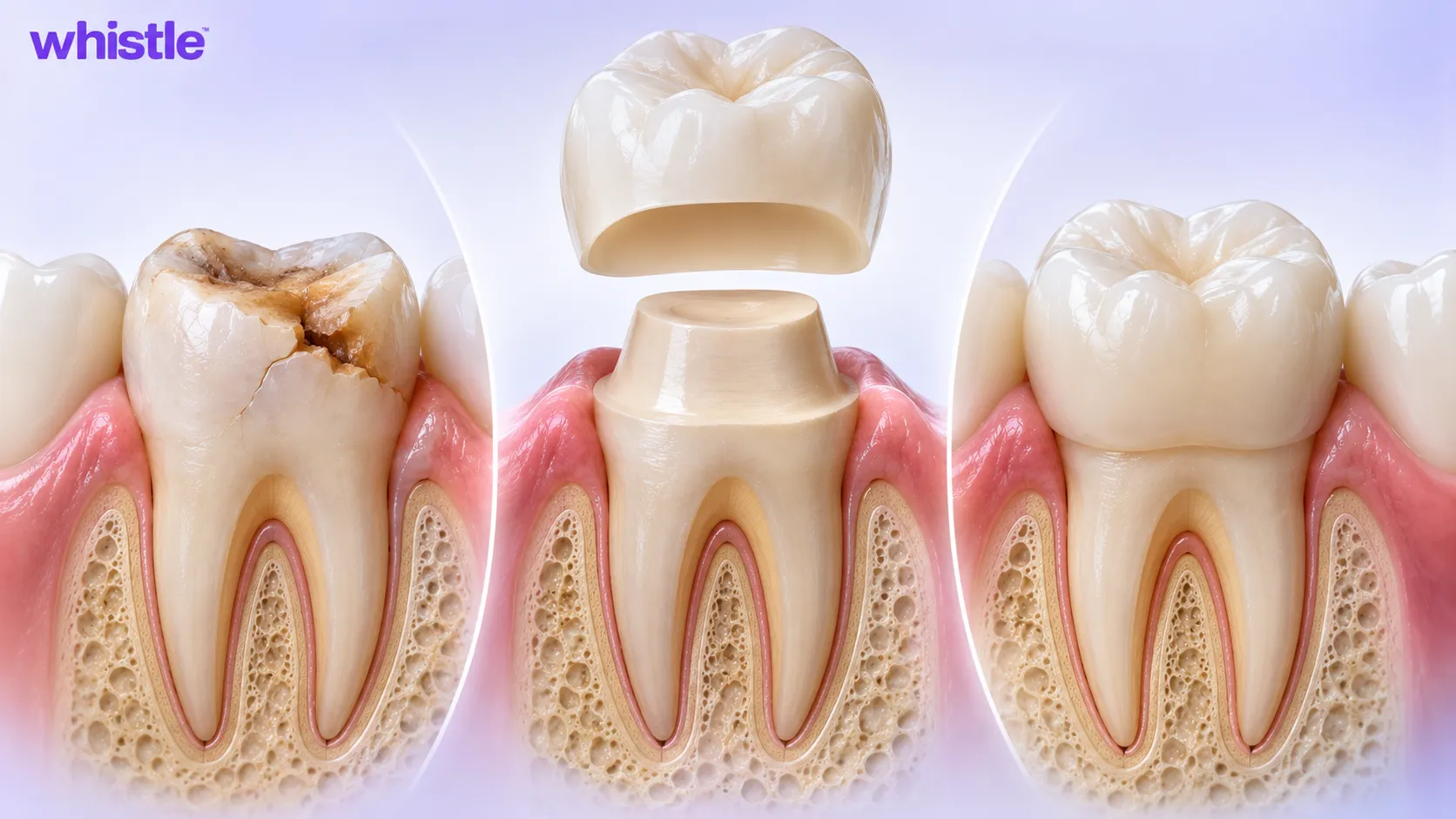
Unlike dental veneers that cover only the front facial surface of a tooth, or dental inlays that fill internal cavities, a full-coverage crown provides 360-degree circumferential protection.
When a tooth is severely weakened by trauma, extensive carious breakdown, or previous endodontic therapy, a crown binds the remaining tooth structure together, preventing catastrophic vertical root fractures that would otherwise necessitate tooth extraction.
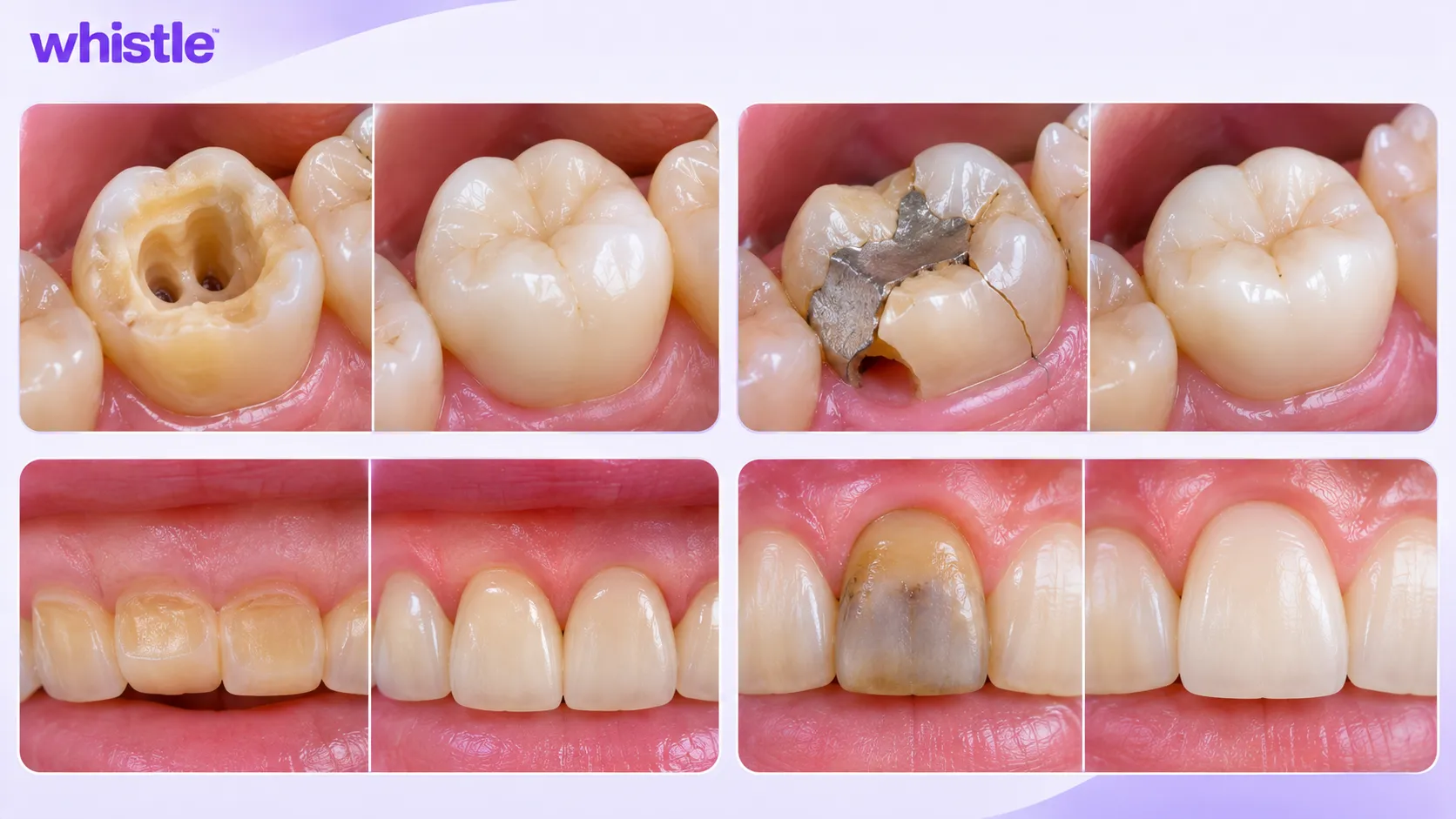
The Tooth Crown Before and After Transformation:
Visual Appearance and Symmetry:
Before: Cracked, discolored, heavily filled, or misshapen tooth creating aesthetic self-consciousness.
After: Natural enamel translucency, lifelike light reflection, and perfect shade matching to neighboring natural teeth.
Structural Strength and Durability:
Before: Fragile tooth structure with micro-fractures susceptible to shearing forces during normal eating.
After: High-strength monolithic zirconia or ceramic cap capable of withstanding heavy masticatory biting pressures.
Chewing Efficiency and Comfort:
Before: Compensatory chewing on one side of the mouth to avoid food impaction or pain.
After: Unrestricted, bilateral chewing function restored without fear of tooth breakage.
Temperature Sensitivity Relief:
Before: Sharp sensitivity to hot, cold, or sugary foods due to exposed underlying dentin tubules.
After: Complete hermetic seal insulating nerve endings from thermal fluctuations.
Gingival and Periodontal Health:
Before: Food packing between broken tooth edges, causing localized gum inflammation and bleeding.
After: Smooth, physiologically contoured emergence profiles that support healthy pink gingival tissues.
Common Clinical Scenarios: Before and After Profiles
The Step-by-Step Crown Transformation Procedure
Types of Dental Crowns: Materials and Aesthetic Outcomes
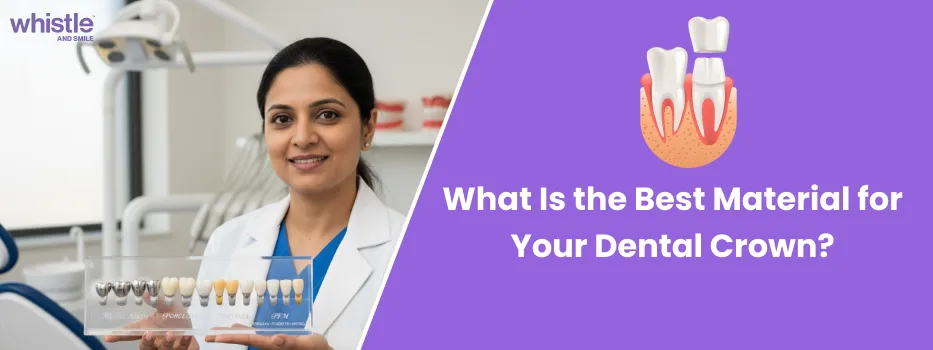
| Crown Material | Aesthetic Realism | Mechanical Strength | Best Clinical Location | Gumline Black Line Risk |
| Monolithic Zirconia (Whistle Ceramill) | Exceptional, tooth-colored natural translucency | Extreme fracture resistance (>1200 MPa) | Front incisors, premolars, and heavy-bite molars | Zero (100% metal-free, no dark line) |
| Lithium Disilicate (E-max) | Superb glass-ceramic optical translucency | Moderate-to-high strength (~500 MPa) | Front anterior teeth and premolars | Zero (Completely metal-free ceramic) |
| Porcelain-Fused-to-Metal (PFM) | Good porcelain exterior over metal substructure | High strength from underlying metal core | Posterior molars and multi-unit bridges | High (Dark metal collar often shows as gums recede) |
| Full Metal / Gold Alloy | Metallic silver or yellow gold appearance | Maximum ductility and gentle on opposing teeth | Second molars where aesthetics are hidden | N/A (Entire crown is metallic alloy) |
Whistle Dental Crowns: Precision Zirconia Engineering
Whistle Dental Crowns utilize advanced German Ceramill zirconia technology, setting a new benchmark for structural longevity and natural smile aesthetics. Engineered using 100 percent digital workflows, Whistle crowns provide distinct advantages over conventional crowns:
- Biocompatible and 100% Metal-Free: Unlike older PFM crowns that can trigger metal allergies or show an unsightly black collar along the gumline as tissue naturally recedes with age, Whistle Ceramill zirconia is entirely metal-free, maintaining seamless tooth-colored aesthetics.
- Micron-Level Marginal Seal: Direct 3D intraoral scanning and robotic CAD/CAM milling ensure an airtight fit against the prepared tooth margin, preventing microscopic bacterial microleakage and secondary decay.
- Generous Clinical Warranty Packages: Whistle Dental Crowns are offered in two verified clinical tiers: Whistle Crown Ultimo (backed by a 7-year warranty) and Whistle Crown Ultimo+ (backed by an extensive 15-year warranty), providing long-term peace of mind.
Post-Procedure Recovery and Essential Aftercare
Understanding what to expect immediately after your crown placement ensures a smooth, comfortable recovery:
The First 48 Hours
- Numbness and Sensation: Wait until local anesthesia has completely worn off before eating to avoid accidentally biting your tongue, lip, or cheek.
- Mild Thermal Sensitivity: Minor sensitivity to cold drinks or warm foods is normal for 3 to 5 days as the tooth pulp recovers from preparation. This resolves spontaneously.
- Bite Sensation Check: When you bite down naturally, your crowned tooth should contact evenly with opposing teeth without feeling elevated. If the crown feels high, visit your dentist for a two-minute occlusal adjustment to prevent muscle tenderness.
Long-Term Crown Maintenance Protocol
- Brush the Margins Meticulously: While a zirconia crown itself is impervious to cavities, the underlying tooth root where the crown meets the gum remains vulnerable to plaque. Brush twice daily using fluoride toothpaste.
- Proper Flossing Technique: Floss between crowned teeth daily. Slide the floss gently down to the gumline, hug the tooth, and pull it through cleanly. Avoid snapping floss upward forcefully.
- Night Guards for Bruxism: If you clench or grind your teeth during sleep, wear a custom night guard to prevent chipping opposing natural teeth or stressing the crown cement.
- Avoid Using Teeth as Tools: Never chew ice cubes, hard candy, unpopped popcorn kernels, or use crowned teeth to open plastic packaging.
When to Consult a Dentist or Prosthodontist
Contact your dental clinic if you experience any of the following signs after crown placement:
- Persistent High Bite Sensation: A crown that feels even slightly higher than other teeth when chewing can cause periodontal ligament bruising and intense pain within days.
- Lingering Spontaneous Throbbing Pain: Continuous throbbing pain that persists days after cementation may indicate irreversible pulpitis requiring root canal therapy.
- Visible Crack or Chip on Ceramic: Any visible fracture or rough edge on the crown surface should be clinically evaluated to protect the underlying tooth.
- Biannual Preventive Checkups: Schedule professional dental cleanings and examinations every six months to monitor marginal seal integrity and bone stability.
Comprehensive In-Person Care Across Whistle Partner Clinics
Achieving a flawless tooth crown before and after result requires experienced clinical craftsmanship and advanced diagnostic infrastructure. Whistle operates in partnership with Clove Dental across 600+ physical partner clinics nationwide, ensuring accessible, high-caliber restorative care in your neighborhood.
From high-resolution 3D digital impressions and precision Ceramill zirconia milling to comfortable, long-lasting crown fittings, every step is performed by verified dental specialists.
Whistle partner clinics offer transparent treatment plans, comprehensive warranty options, and flexible monthly EMI payment plans, ensuring your restorative journey is completely comfortable, transparent, and predictable.
Book 3D Teeth Scan
Consult our experts and get a 3D preview of your smile transformation!
Tooth Crowns
Teeth Capping
FAQ's
Q1.Does getting a dental crown hurt?
No. The procedure is performed under effective local anesthesia, completely numbing the tooth and surrounding gums so you feel zero pain during tooth preparation and scanning. Mild, temporary sensitivity to hot and cold liquids for a few days after cementation is normal and resolves quickly.
Q2.Will a dental crown look natural next to my other teeth?
Yes. Modern crowns fabricated from monolithic zirconia (like Whistle Ceramill) or lithium disilicate (E-max) are custom shade-matched to your surrounding natural enamel. They replicate natural translucency, light reflection, and contour, making them virtually indistinguishable from real teeth.
Q3.Do all teeth need a crown after root canal treatment?
Most posterior molars and premolars require a crown following root canal therapy because losing internal blood supply makes back teeth brittle under heavy chewing forces. Front incisors with minimal structural loss may occasionally be restored with composite resin, but a crown is indicated if extensive tooth structure is missing.
Q4.Can a crowned tooth still develop a cavity?
Yes. While the crown material itself (zirconia or porcelain) cannot decay, the natural tooth structure underneath, especially along the margin where the crown meets the gumline, remains vulnerable to bacterial plaque. Daily brushing and flossing are essential to prevent recurrent decay.
Q5.Can I whiten my dental crown if my natural teeth darken?
No. Dental ceramic and zirconia do not respond to bleaching gels. If you wish to whiten your smile, professional teeth whitening should always be performed before your crown is fabricated so the laboratory can match the crown shade to your newly lightened enamel.
Q6.Why do some old crowns show a dark gray line at the gumline?
A dark gray line is characteristic of traditional Porcelain-Fused-to-Metal (PFM) crowns. As gums naturally recede with age, the underlying metal substructure becomes exposed. Modern metal-free zirconia crowns like Whistle Ceramill eliminate this issue entirely.
 Medically Reviewed by Whistle Dental Team

 Medically Reviewed by Whistle Dental Team
 Medically Reviewed by Whistle Dental Team
 Medically Reviewed by Whistle Dental Team