
Do we need crowns for crooked front teeth?
 Medically Reviewed by Whistle Dental Team
When someone has slightly crooked front teeth, the first instinct is often to wonder if crowns could “fix” the smile quickly. After all, dental crowns are known for transforming damaged, misshapen, or discolored teeth into picture-perfect versions of themselves.
The short answer: not usually and for healthy teeth with mild crookedness, crowns are rarely the right first choice.
That's not a dismissal. Dental crowns are excellent restorations. But they carry a permanent biological cost to the tooth underneath, and applying that cost to a healthy tooth simply to achieve a cosmetic correction is something most dentists will and should - advise against.
That said, there are genuine situations where a crown is the most logical solution for a crooked front tooth. Understanding the difference between when a crown helps versus when it harms your long-term dental health is what this article is about.
Key Factors Summary
- Crowns are not usually the best solution for healthy crooked front teeth because they only change the tooth's appearance and do not correct the underlying position or bite.
- Crowns are most appropriate when a tooth is already damaged, such as after a root canal, fracture, severe decay, or large failed filling, allowing both restoration and cosmetic improvement.
- Orthodontic treatments like clear aligners or braces remain the gold standard for correcting crooked teeth because they move the entire tooth and root into the proper position while preserving natural enamel.
- Preparing a healthy tooth for a crown is irreversible, requiring significant enamel removal and potentially leading to future replacement cycles that can weaken the tooth over time.
- Conservative alternatives such as veneers, composite bonding, or clear aligners often provide better long-term outcomes for healthy crooked teeth by preserving more natural tooth structure.
But when it comes to crooked front teeth, the answer isn’t as straightforward as it seems. Crowns can help in certain situations, but they are not always the right solution.
Let’s understand why.
What a Crown Actually Does and Doesn't Do
A dental crown is an artificial cap that covers the entire visible portion of a tooth. It restores shape, size, strength, and appearance - particularly when the underlying tooth is cracked, heavily decayed, structurally compromised, or has undergone root canal treatment.
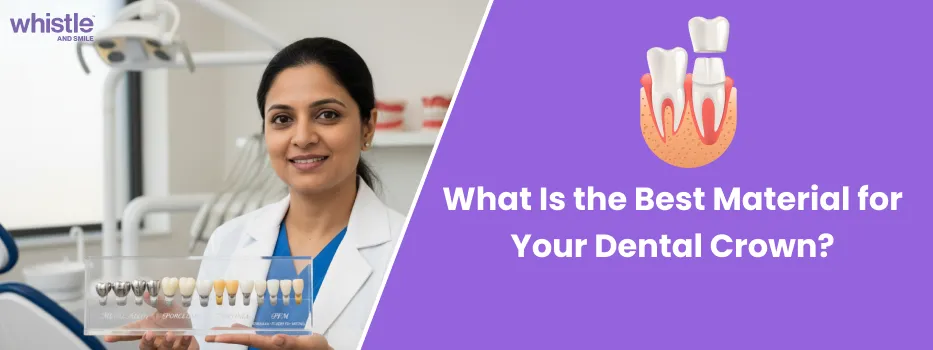
Crowns can be made from porcelain, zirconia, or porcelain-fused-to-metal, each with different translucency, strength, and aesthetic properties.
The critical distinction: a crown does not move a tooth. It cannot reposition the root within the bone or change how the tooth sits in the jaw. What it does is redefine the visible shape of the crown — the part above the gum line — so that it appears more aligned, more even, or more proportionate.
This is a cosmetic illusion, not an orthodontic correction. The underlying tooth remains exactly where it was.
What a Crown Actually Does?
A dental crown is an artificial covering of the visible part of a tooth. It not only strengthens but also gives form particularly to the underlying tooth that may be cracked, heavily filled or weak structurally.
The materials that can be used to make crowns include porcelain, zirconia or mixes of ceramic and metal, which resemble the look and translucency of natural enamel.
The crown is not capable of going and repositioning a tooth. Rather, it redefines what is visible to such an extent that it appears to have been straightened or made more regular.
When Crowns Are Appropriate?
Crowns are usually used in the cases of:
1. Teeth, which are severely damaged or worn
In case a crooked tooth is fractured, eroded or has big fillings, a crown can not only restore its functions but also level it. In this case, the crown has two functions: the good repair and cosmetic enhancement.
2. Integrated Restorative/ Aesthetic Needs
With adults who already have crowns on several front teeth (such as following root canals, or traumas), the crowns can be made to appear more straight together.
3. Post-Orthodontic Refinement
Some patients can even experience minor unevenness, chipped edges, or discoloration after braces or aligners. In such circumstances, the use of minimal-prep crowns or veneers would be used to finish the smile line without significant enamel loss.
The crown is not being applied to replace orthodontics in these instances, but as one of the final touches or as a restoration.
Also Read:
When Crowns Are Appropriate for Crooked Teeth
The cases where a crown genuinely makes sense for a crooked front tooth share a common thread: there is a structural or restorative reason for the crown independent of the crookedness. The crookedness is addressed as part of the restoration — not as the sole reason for it.
Teeth That Are Severely Damaged or Structurally Compromised
If a crooked front tooth is also fractured, heavily eroded, has large failed fillings, or has undergone root canal treatment, a crown serves two purposes simultaneously: restoring structural integrity and improving appearance. In these cases, the crown is clinically necessary regardless - the cosmetic alignment improvement is an additional benefit, not the primary reason.
This is the "dual indication" principle that should guide all crown decisions on crooked teeth: is the crown clinically justified by the tooth's structural condition? If yes, the cosmetic correction of crookedness can be incorporated. If no — if the tooth is structurally sound the risks of crown preparation need to be weighed very carefully against the benefit.
Multiple Front Teeth Already Requiring Crowns
When a patient already needs crowns on several adjacent front teeth — typically following multiple root canals, trauma, or severe wear — the crowns can be designed as a set with a consistent, straighter aesthetic line. This makes clinical and cosmetic sense: the restorations are necessary anyway, and the design can address the alignment at the same time.
Post-Orthodontic Smile Refinement
After braces or aligner treatment, some patients have minor residual imperfections: a slightly chipped edge, a tooth that's a different shape from its neighbours, minor discolouration. In these cases, minimal-prep crowns or veneers provide the finishing detail without the full tooth reduction that a conventional crown requires. The key is that orthodontics has already done the alignment work — the crown or veneer is the final cosmetic refinement, not a substitute for alignment.
When are crowns not preferred?
Having a crown is an irreversible treatment. The dentist files down the natural tooth structure to make room in it to place the material, which in some cases can be 1 to 2 millimeters on all sides. When that enamel is lost it grows no more. That is the reason why dentists do not easily use crowns to provide cosmetic straightening only.
If your teeth are:
- Structurally sound
- Mildly rotated or overlapping only.
- And have healthy enamel
Then orthodontic treatment (such as braces or clear aligners) is typically the more conservative, long-term solution.
One should also keep in mind that crowns do not alter the position of the root of a tooth. In case the misalignment is on your bite or jaw symmetry, a crown cannot help that. Infact, crowns on crooked teeth which are not aligned may place uneven pressures on the new restorations resulting in premature wear or even fracture.
Other alternatives to be considered
Orthodontics (Braces or Aligners)
The contemporary clear aligners have made orthodontic correction inconspicuous and comfortable. They shift teeth to their correct positions in a slow manner with no changes in the enamel surface. When alignment has been done, small defects would only need a little reshaping or bonding.
Veneers
Porcelain or composite veneers are thin shells that are glued on the front side of the teeth. They need less enamel removal than crowns and can successfully conceal slight misalignment, small spaces and discoloration. Veneers are effective in case the teeth beneath them are in good condition and the misalignment factor is more cosmetic than structural.
Cosmetic Bonding
In case of very minor irregularities, dentists are able to apply the tooth-colored composite resin on the enamel and keep the teeth straight. It is the least invasive procedure and may at times be done in one sitting.
All of these alternatives offer varying durability, cost and maintenance advantages, yet they all maintain more of your natural tooth than full-coverage crowns.
Crown Materials for Front Teeth: What's Used and Why
When a crown is the right decision for a crooked front tooth, material selection matters significantly more than for back teeth. Front teeth are highly visible, and the crown must closely replicate the translucency and shade variation of natural enamel.
- Zirconia crowns: The strongest all-ceramic option. Modern zirconia can be layered with porcelain or manufactured with gradient translucency to closely mimic natural tooth appearance. Highly resistant to fracture. Preferred when durability is the priority and the dentist has access to high-quality zirconia systems.
- Full-porcelain (e-max / lithium disilicate) crowns: Excellent aesthetics — translucency that closely matches natural enamel. More suited to lower-force areas. For front teeth with a normal bite load, they are often the most natural-looking option.
- Porcelain-fused-to-metal (PFM): A metal core with porcelain overlay. Stronger than all-ceramic but can show a grey margin at the gum line as gums recede over time. Less preferred for aesthetic front teeth today where all-ceramic options are available.
For crooked front teeth where a crown is clinically appropriate, zirconia or full-porcelain options are the standard of care — both for aesthetics and to avoid the grey gum-margin problem that PFM can develop over years.
The Biological Cost of Crowns
The other reason why crowns are not to be used casually is the biological cost to the tooth. Tooth preparation which is done to put on a crown may sometimes reveal the nerve chamber. The tooth can require a root canal in the future in cases when it can be sensitive or infected.
Also, gum tissue surrounding a crown should be hygienically maintained. A minor overhang or inconsistency may be a source of plaque and cause inflammation.
Crowns are also used in instances where the crowns are part of a larger treatment plan which incorporates orthodontics. For example:
- To restore lost structure a patient with multiple front teeth that are worn goes through a temporary aligner treatment to realign the teeth after which crowns or veneers are applied.
- A person that has a bite collapse because of grinding might require orthodontic adjustment of the jaw position, and subsequently crowns to regain correct height and appearance.
Such a combination strategy is healthy and harmonious. It recognizes the fact that alignment is the structural correction and crowns are the restorative ones.
Also Read:
Alternatives to Crowns for Crooked Front Teeth
For healthy teeth with crookedness as the primary or only concern, these options preserve more natural tooth structure and address the underlying issue more effectively.
1. Orthodontics (Braces or Clear Aligners)
Braces and clear aligners reposition the actual teeth root and all within the bone. This is the only approach that corrects misalignment at its source. After treatment, teeth sit in their correct positions, bite forces distribute evenly, and the natural enamel remains entirely intact. For mild to moderate crookedness, clear aligners achieve this with no visible hardware during treatment.
2. Porcelain or Composite Veneers
Veneers are thin shells applied to the front surface of a tooth only they don't cap the entire tooth. They require significantly less enamel removal than crowns (typically 0.3–0.7 mm from the front surface, compared to 1–2 mm all around for a crown). Veneers work well for mild cosmetic crookedness when teeth are structurally healthy and the misalignment is visual rather than functional. They address appearance — not position — but do so with considerably less biological cost than a crown.
3. Composite Dental Bonding
For very minor rotations, edge irregularities, or small gaps, a dentist can sculpt tooth-coloured composite resin directly onto the enamel. No removal of tooth structure is required. Bonding can be done in a single appointment, costs significantly less than crowns or veneers, and is reversible. Longevity is lower than porcelain (5–7 years typically), but the absence of irreversible tooth reduction makes it the most conservative first option for minor cases.
Treatment Matching Guide: What's Right for Your Situation?
| Clinical Situation | Most Appropriate Treatment |
|---|---|
| Healthy, mildly rotated or crowded teeth, no structural damage | Clear aligners or braces |
| Healthy teeth with mild cosmetic crookedness, good bite | Veneers or composite bonding |
| Very minor edge irregularities or small rotations | Composite bonding |
| Crooked tooth with fracture, large decay, or failed root canal | Crown (dual indication — clinically justified) |
| Multiple front teeth already needing crowns + crookedness | Crowns designed to improve overall aesthetic alignment |
| Post-orthodontic refinement (shape or colour irregularities) | Minimal-prep crown or veneer |
| Crookedness affecting bite symmetry or jaw loading | Orthodontics first, then assess whether any restorations needed |
| Severely worn teeth with collapsed bite + crookedness | Orthodontics + crowns (combination approach) |
The Decision-Making Process: What Your Dentist Should Evaluate
When a patient poses a question, Should I have crowns to fix my crooked teeth, the dentist considers the following factors:
- Degree and nature of misalignment: Is the crookedness purely visual a slightly turned tooth that looks off? Or is there a bite component an overbite, crossbite, or uneven occlusion that will remain even after a crown is placed?
- Structural condition of the tooth: Is the enamel and dentin healthy? Are there existing large fillings, cracks, erosion, or previous root canal treatment that independently justify a crown?
- Enamel volume: Has previous dental work or acid erosion already compromised the enamel to a point where a crown is more appropriate than a veneer?
- Bite alignment (occlusion): How do the upper and lower teeth meet? Will a crown placed on a crooked tooth bear appropriate bite forces, or will it be subject to off-axis loading that risks premature failure?
- Patient's long-term outlook: Will this patient need orthodontic treatment at any point in the future? A tooth that has been crowned for cosmetic reasons cannot readily be moved with braces or aligners later — the crown's bond and the altered tooth shape complicate future treatment.
- Aesthetic expectations: Are the patient's expectations achievable through a crown on a mildly crooked tooth, or would the result look disproportionate or artificial given the tooth's underlying position?
Once these are evaluated, the dentist is able to suggest either crowns, veneers, or orthodontics that will be the most appropriate in your situation. It is hardly a universal solution.
What Whistle Recommends
At Whistle, when a patient comes asking about crowns for crooked teeth, we start with the same question every time: is the crown clinically necessary for the tooth's structural health, or is the crookedness the only concern?
If it's the latter if the tooth is healthy and the issue is purely alignment our orthodontists will typically recommend a clear aligner assessment. Aligners correct the position of the tooth permanently, preserve all natural enamel, and produce a result that doesn't require future replacement cycles.
If there's a genuine dual indication structural damage alongside the crookedness our team coordinates the restorative and orthodontic plan so both are addressed in the right sequence: alignment first, then restoration.
The right answer is always the one that preserves the most of your natural tooth while achieving the result you need.
Book 3D Teeth Scan
Consult our experts and get a 3D preview of your smile transformation!
Do we need crowns for crooked front teeth?
FAQ's
Q1.Can a dental crown fix a crooked front tooth?
A crown can change the visible shape of a tooth so that it appears more aligned but it cannot move the tooth. The root stays in its original position. For structurally healthy teeth with mild crookedness, clear aligners or veneers are usually more appropriate. Crowns make most sense when the tooth needs a restoration anyway due to damage or decay, and the crookedness can be addressed as part of that restoration.
Q2.Is it bad to put a crown on a healthy crooked tooth just to straighten it?
Most dentists consider this to be poor clinical practice unless there is a dual indication meaning the crown is needed for structural reasons independent of the cosmetic concern. Preparing a healthy tooth for a crown removes up to 70% of the tooth structure irreversibly. Over a lifetime, repeated crown replacements accumulate biological damage that could have been avoided entirely with orthodontic treatment.
Q3.Can I straighten my teeth with crowns instead of braces?
Only in a cosmetic, appearance-based sense — the teeth won't actually move. If your crookedness affects your bite, jaw symmetry, or the health of your gums and bone, crowns will not correct those issues. For structural correction, braces or clear aligners are the only approach that repositions teeth at the root level.
Q4.Is a crown needed after braces or aligners for crooked teeth?
Rarely, unless there is a specific restorative need. After orthodontic treatment, teeth are in their correct positions. Minor cosmetic imperfections edge chips, colour differences, slight shape variations can usually be addressed with bonding or minimal-prep veneers. A full crown after orthodontics is only warranted when a tooth is also structurally damaged or weak.

 Medically Reviewed by Whistle Dental Team
 Medically Reviewed by Whistle Dental Team

 Medically Reviewed by Whistle Dental Team