
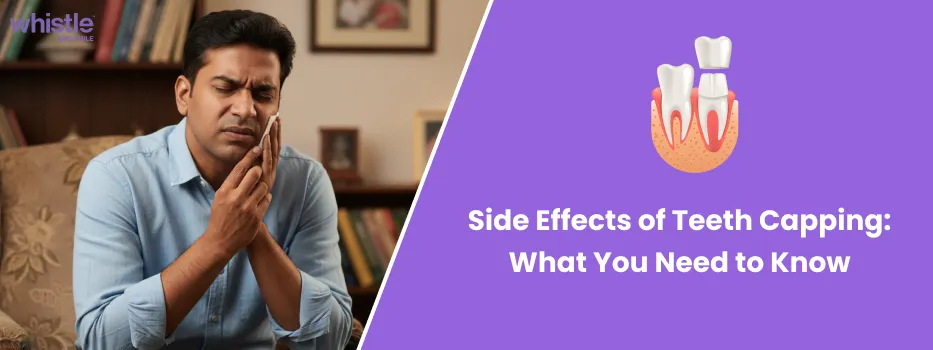
Side Effects of Teeth Capping: Risks, Pain & What to Expect
 Medically Reviewed by Whistle Dental Team
Teeth Capping, more commonly known as a dental crown, is one of the most popular restorative dental procedures. Whether it is to protect a weak tooth, restore a broken one, or improve aesthetics, crowns can be absolute lifesavers for your smile.
When your dentist tells you that you need a crown, the immediate focus is usually on the relief it will provide. Capping of teeth is one of the most reliable ways to protect a weak tooth, restore a broken one, or lock in the success of a root canal. The most common side effects of capping are temporary temperature sensitivity, mild gum irritation, and a feeling that your bite is "too high."
These usually resolve within 1 to 3 weeks. However, long-term risks include recurrent decay underneath the crown, chipping of porcelain materials, and the irreversible removal of your natural tooth enamel required to fit the cap.
Key Takeaways
- Irreversible Preparation: To fit a crown, your natural tooth enamel must be permanently shaved down. This cannot be undone.
- The "High Bite" Problem: If your tooth only hurts when you bite down, the crown is sitting too high and needs a quick 5-minute adjustment by your dentist.
- Crowns Don't Decay, But Teeth Do: Crowns Don't Decay, But Teeth Do: gumline and rot the natural tooth underneath your new crown.
- Zirconia Prevents Chipping: If you grind your teeth, standard porcelain crowns may chip. Zirconia crowns offer superior fracture resistance.
- Cost Consideration: When calculating the total root canal treatment cost with cap in India, remember that choosing a premium crown material upfront prevents expensive replacement fees later.
But like any medical procedure, capping comes with a physical adjustment period. It is completely normal to wonder: Will it hurt? Can the tooth still decay? What if it falls off?
While most tooth cap side effects are minor and fade within a few weeks, some require immediate professional attention. Here is a step-by-step breakdown of exactly what to expect, how to manage the discomfort at home, and how to protect your investment.
This blog breaks it all down in a clear and honest way- so you know exactly what to expect and when to act.
The Core Problem: Why Teeth Capping Causes Side Effects
To understand the risks, you have to understand the procedure. Capping in teeth is not just gluing a cover on top of your tooth.
The dentist must aggressively trim away the outer layer of your enamel to create a small peg. Because enamel is your tooth's natural insulation, removing it temporarily exposes the inner, sensitive layers of the tooth to temperature changes. Furthermore, the act of pushing the gums aside to take a mold naturally causes tissue trauma.
- Everything You Need to Know About Dental Crown Replacement
- Getting a Dental Crown After Root Canal: What to Expect
- Pros and Cons of Dental Crowns: What to Consider
4 Common Side Effects of Teeth Capping
1. Tooth Sensitivity
This is the most frequently reported side effect of teeth capping.
You may feel a sharp sensation when:
- Drinking cold water
- Eating Ice Cream
- Having hot tea or coffee
Why does this happen?
During crown preparation, the outer enamel layer is slightly trimmed, making the tooth temporarily sensitive.
Should you worry?
- No- this usually settles within 1-3 weeks.
- Use desensitising toothpaste
- Avoid extremely hot or cold foods initially
Quick Check: Does the sensitivity reduce each day? If yes, it’s normal.
Tip: If sensitivity lasts more than a month, consult your dentist.
2. Pain or discomfort while chewing
Does your tooth with a crown hurt only when chewing?
This often indicates a bite imbalance, where the crown is slightly higher than the surrounding teeth.
Signs to watch for:
- Sharp pain while biting
- Discomfort only on one side
- Relief when you stop chewing
The fix is simple:
A quick bite adjustment can immediately relieve the pain.
Note: This is one side effect that should not be ignored
3. Gum irritation or swelling
What you may notice:
- Red or swollen gums around the capped tooth.
- Mild bleeding while brushing
Why does it happen?
The gums are gently pushed aside during the procedure, which can irritate them.
What Helps?
- Gentle brushing near the gums
- Warm saltwater rinses
- Proper flossing around the crown
When to worry: Persistent swelling or bleeding may signal gum infection or improper crown fit.
4. Bite Problems (High Crown Feeling)
What you may notice:
- The tooth feels too high.
- Discomfort while chewing.
- Jaw pain or headache.
Why does it happen?
Even a tiny mismatch in crown height can affect your bite.
- Important: This is not something you should ignore.
- Quick Check: Does chewing feel uneven or uncomfortable? If yes, see your dentist for a quick adjustment. If no, you are good to go.
Less Common but Important Side Effects
1. Crown loosening or falling off
Though uncommon, a crown can loosen or come off due to:
- Weak cement bonding
- Tooth decay underneath
- Excessive pressure from grinding
Important: Keep the crown safe. Do not try home fixes or adhesives. Visit your dentist ASAP.
Early action often allows the same crown to be reused.
2. Tooth decay under the crown
A common misconception is that crowned tooth can’t decay.
The truth? The tooth underneath is still vulnerable, especially near the gum line.
Causes:
- Poor oral hygiene
- Food trapped near crown margins
- Irregular dental check-ups
Warning signs:
- Bad breath
- Sensitivity returning months later
- Pain or swelling
Tip: Proper brushing, flossing, and routine dental visits can help prevent this completely.
3. Cracked or chipped crown
Crown are strong-but not unbreakable.
They can chip due to:
- Chewing ice
- Hard foods
- Nail biting
- Teeth grinding(bruxism)
Porcelain crowns are more prone to chipping than metal or zirconia crowns.
Tip: If you are grinding at night, a night guard can save your crown (and your sleep).
4. Allergic Reactions (Very rare)
Some patients may be sensitive to metals used in dental crowns.
Symptoms may include:
- Burning sensation
- Gum irritation
- Metallic taste
Note: If you have metal allergies, inform your dentist beforehand. All- ceramic zirconia crowns are excellent alternatives.
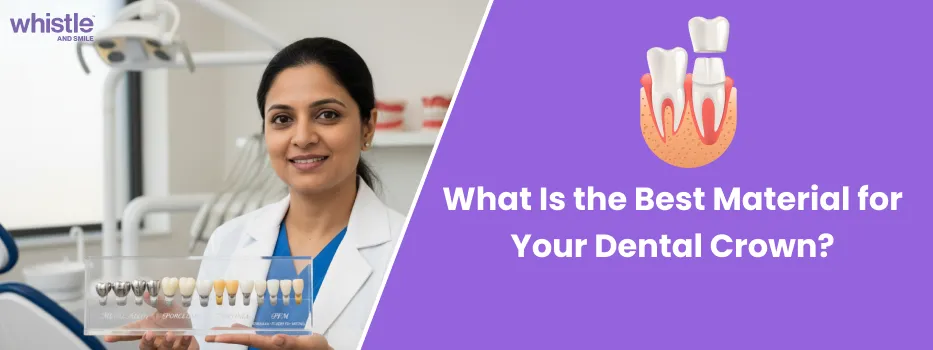
- What Is the Best Material for Your Dental Crown?
- How Long Does Tooth Pain Last After Getting a Crown?
- Do we need crowns for crooked front teeth?
- Tooth Cap vs Crown: What’s the Difference & Which Is Better?
- Is Tooth Capping Painful? What Do Patients Experience?
Comparing Crown Materials to Minimize Side Effects
Choosing the right material can drastically reduce your risk of long-term problems like chipping or allergic reactions.
| Crown Type | Fracture Risk | Allergy Risk | Aesthetic Quality | Best Suited For |
|---|---|---|---|---|
| Zirconia | Very Low | Zero (Biocompatible) | High | Heavy chewers; back molars |
| E-Max (Ceramic) | Medium | Zero (Biocompatible) | Maximum | Highly visible front teeth |
| PFM (Metal Core) | Medium (Porcelain may chip) | Low to Medium | Moderate (May show a dark gum line) | Budget-conscious cases |
Wondering how to manage the root canal treatment cost with cap without sacrificing quality? Book a free consultation at your nearest Whistle Partner clinic to explore our Zirconia and ceramic options.
Long-Term Side Effects: Should You be Concerned?
While initial sensitivity fades, there are three long-term dangers you must actively prevent:
- Recurrent Decay Under the Crown: A common misconception is that a capped tooth is immune to cavities. The truth? The margin where the crown meets the gum is highly vulnerable. If plaque builds up there, bacteria will rot the natural tooth structure from the inside out.
- Cement Degradation: Over the span of 10 to 15 years, the dental cement holding the crown can slowly wash out. This causes the crown to loosen or fall off completely, especially if you eat sticky foods like caramel.
- Chipping from Bruxism: If you grind your teeth in your sleep (bruxism), the immense pressure can crack porcelain crowns in half. If you grind, you must wear a night guard.
Serious complications from teeth capping are rare and usually linked to:
- Poor crown fit
- Delayed follow-ups
- Ignoring symptoms
Tip: With proper care, crowns can last 10-15 years or longer without issues.
How to Reduce Side Effects Of Teeth Capping
Follow these simple rules for a smooth experience:
- Brush twice daily with a soft-bristle toothbrush
- Avoid chewing hard and sticky foods initially
- Floss gently around the crown.
- Use desensitizing toothpaste if needed
- Attend follow-up appointments
- Don’t delay pain or discomfort complaints
Also Read:
- Dethroning a Dental Crown: What to Expect During Removal
- Dental Crown Not Seated Properly? Causes & Fixes
- Is MRI Safe with Dental Crowns? What You Need to Know
- How long should tooth pain last after getting a crown?
When To Call Your Dentist Immediately?
If you notice:
- Severe or worsening pain
- Crown loosening
- Swelling or pus around the crown.
- Persistent sensitivity beyond 3 weeks.
- Persistent bad taste
Early intervention= simple fix. Delay=bigger problems
Final Thoughts: Are Teeth Crowns Safe?
When performed correctly, the capping of teeth is incredibly safe and highly effective. Do not let the fear of temporary sensitivity stop you from protecting a vulnerable tooth.
Quick Self Check:
- Do you feel mild sensitivity only? - Normal
- Does chewing feel off?- Get it adjusted
- Are your gums sore but improving?- Healing
- Is pain increasing or persistent?- Dentist visit time
If your new crown feels uncomfortably high, or if you have an old crown that is suddenly causing you pain, do not wait for the tooth to crack. Book a free Smile Assessment at your nearest Whistle Partner Clinic today, and let our experts ensure your bite is perfectly balanced.
Book 3D Teeth Scan
Consult our experts and get a 3D preview of your smile transformation!
Side Effects of Teeth Capping
Teeth Capping effects
FAQ's
Q1.Is it normal for a capped tooth to hurt when I bite down?
If it only hurts when you apply chewing pressure, your crown is likely sitting too high and disrupting your natural bite. This is not normal, but it is very common and easily fixed. Your dentist can painlessly polish the top of the crown to level your bite.
Q2.How long does tooth sensitivity last after capping?
Mild temperature sensitivity is normal for 1 to 3 weeks after the procedure due to the removal of your enamel. If the sensitivity persists beyond a month, or becomes a throbbing ache, the nerve inside the tooth may be irreversibly damaged.
Q3.What should I do if my crown falls off?
Do not panic, and do not use household glue. Carefully retrieve the crown, rinse it, and store it in a clean container. Contact your dentist immediately. In many cases, if the underlying tooth is healthy, the dentist can simply re-cement the same crown back into place.
Q4.Are there side effects to metal crowns?
Some patients with metal allergies may experience a burning sensation, gum irritation, or a persistent metallic taste when fitted with metal or PFM crowns. For these patients, 100% biocompatible ceramic or Zirconia crowns are the safest option.
Q5.Can I get clear aligners if I have several dental crowns?
Yes, Whistle clear aligners can safely move teeth that have been capped, provided the crowns are securely cemented and the underlying tooth roots are healthy. Your orthodontist will perform a full X-ray assessment before beginning treatment.
 Medically Reviewed by Whistle Dental Team
 Medically Reviewed by Whistle Dental Team
 Medically Reviewed by Whistle Dental Team