
Dental Crown After Root Canal: Why It Is Necessary, Types, Pain & Procedure Guide
 Medically Reviewed by Whistle Dental Team
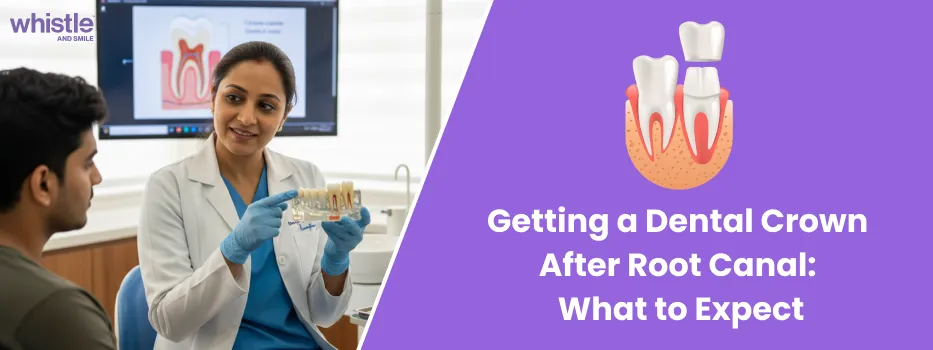
A dental crown after root canal treatment is essential to protect the hollowed, devitalized tooth from catastrophic fractures and bacterial microleakage.
Because root canal therapy removes the living pulp and blood supply, the remaining tooth structure becomes brittle under daily chewing forces. Placing a custom monolithic Zirconia, E-Max ceramic, or PFM crown restores full bite strength and natural aesthetics.
Key Takeaways :
- Structural Protection: A dental cap acts as a 360-degree protective helmet that binds weakened tooth walls together, preventing vertical root fractures under heavy bite pressure.
- Bacterial Seal: While temporary fillings degrade within weeks, a permanent crown cemented with biocompatible resin creates a hermetic seal against oral bacteria and secondary infections.
- Completely Painless Fitting: Completely Painless Fitting:on are painless because the tooth nerve has been removed during the root canal, and local anesthesia numbs the surrounding gum tissue.
- Material Selection: Monolithic Zirconia is the gold standard for back molars due to fracture resistance, while E-Max ceramic delivers flawless translucency for front teeth.
- Prompt Placement Timeline: Placing your permanent crown within 1 to 3 weeks after root canal completion ensures the highest long-term tooth survival rate.
The cap fitting procedure is completely painless because the nerve is gone. Certified Whistle partner clinics provide precision digital crowns with flexible payment options across 600+ clinics nationwide.
Is Capping Necessary After RCT?
Many patients wonder whether a root canal cap is mandatory or if a simple dental filling is sufficient. To understand why a crown after root canal is necessary, it helps to examine what happens to a tooth during endodontic treatment:
- Loss of Internal Moisture & Vitality: During a root canal, infected pulp tissue (nerves, blood vessels, and connective cells) is completely cleaned out. Without blood circulation, the dentin dehydrates and loses its natural elasticity, turning the tooth brittle over time.
- Loss of Structural Tooth Volume: Cavities and the access cavity drilled by the dentist to reach the root canals remove a large portion of the tooth crown. With thin remaining enamel walls, regular chewing forces (up to 70 pounds per square inch on molars) can easily snap the tooth.
- Risk of Catastrophic Vertical Fractures: An uncapped root-canaled molar often suffers a split that travels vertically down into the root beneath the gumline. Vertical root fractures cannot be repaired and require total tooth extraction.
- Prevention of Coronal Microleakage: Saliva contains billions of bacteria. If a temporary or standard filling leaks, bacteria travel down the root filling (gutta-percha), reigniting a painful bone infection at the root tip.
How to Check Your Root-Canaled Tooth at Home
If you had a root canal months or years ago and skipped the crown, perform this quick mirror check tonight:
- The Discoloration Test: Shine a phone flashlight on the tooth. Is it turning grey or dark yellow compared to its neighbors? A dead, uncrowned tooth will slowly darken over time.
- The Pressure Test: Tap the tooth very gently with the back of a plastic spoon. Does it feel noticeably more brittle or sound "hollow" compared to the tooth next to it?
- The Crack Check: Look closely at the chewing surface. Do you see tiny hairline fractures forming near the old filling?
If you see these signs, the tooth is structurally failing and needs a crown immediately before it splits in half.
When Is a Crown Mandatory vs When Is a Filling Permissible?
- Back Molars & Premolars (Crown Mandatory): Molars endure tremendous grinding and vertical forces during daily chewing. Clinical studies confirm that uncapped molars have a six-fold higher failure rate compared to crowned molars.
- Front Incisors & Canines (Case-by-Case): Front teeth experience shearing forces rather than heavy crushing loads. If the access hole is small and both side walls of the tooth are intact, an endodontist may use a composite resin restoration. However, if the tooth is extensively broken down or discolored, an aesthetic crown is strongly recommended.
Types of Dental Crowns After Root Canal (Material Comparison)
| Crown Material Type | Ideal Tooth Position | Aesthetic Appeal | Bite Strength & Durability | Clinical Advantages |
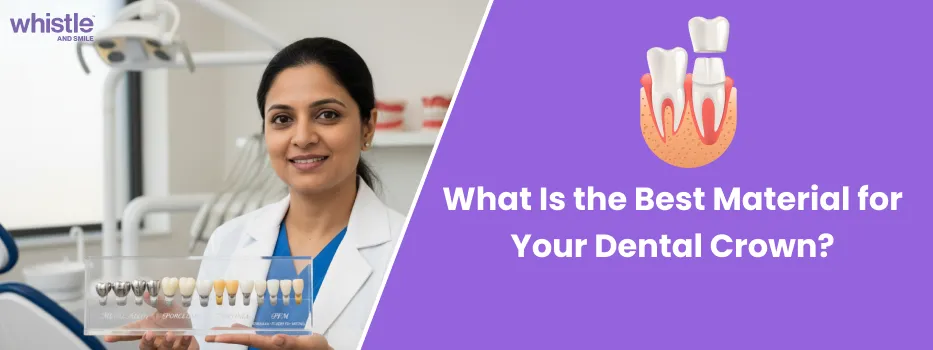
| Monolithic Zirconia Crown | Back Molars & Premolars | High (Tooth-colored, multi-layered translucency) | Exceptional (1200+ MPa, virtually unbreakable) | Resistant to chipping, biocompatible, requires minimal natural tooth shaving. |
| E-Max Ceramic (Lithium Disilicate) | Front Teeth (Incisors & Canines) | Outstanding (Glass-ceramic mimicking natural enamel) | High (400 to 500 MPa, ideal for anterior bite) | Superior lifelike light reflection; zero dark metal shadows at gumline. |
| Full Metal / Gold Alloy Crown | Second Molars (Hidden back teeth) | Metallic (Gold or base metal alloy) | Maximum (Extremely gentle on opposing teeth) | Requires minimal tooth removal; zero risk of porcelain fracture. |
Step-by-Step Procedure: How a Dental Cap Is Fitted After Root Canal
Visit 1: Tooth Preparation & Digital 3D Scan
- Local Anesthesia: Mild numbing gel and local anesthesia are applied to ensure complete gum comfort.
- Core Build-Up: The hollow chamber of the tooth is reinforced with a high-strength composite core (and a glass fiber post if structural reinforcement is required).
- Crown Shaping: The dentist carefully trims 1 to 1.5mm of outer enamel to create a smooth, tapered foundation for the cap.
- Intraoral 3D Digital Scan: A high-precision optical scanner captures an accurate 3D digital model of your bite, eliminating messy traditional impression trays.
- Temporary Crown Placement: A temporary resin cap is bonded with soft cement to protect the tooth while the dental laboratory crafts your permanent crown.
Visit 2: Permanent Crown Cementation (5 to 7 Days Later)
- Temporary Removal: The temporary cap is gently detached, and the tooth is thoroughly disinfected.
- Try-In & Bite Verification: The permanent crown is seated to check contact points, shade match, and occlusion harmony.
- Final Bonding: The crown is permanently bonded using dual-cure resin cement, instantly restoring full chewing strength.
Is Cap Fitting After Root Canal Painful? (Overcoming Dental Anxiety)
- The Tooth Has No Nerve: The root canal procedure has already removed the dental pulp and nerve fibers inside the tooth. The tooth itself cannot feel hot, cold, or drilling sensations.
- Local Anesthesia for Gum Tissues: Your dentist applies local anesthesia around the surrounding gum tissue so that you feel no discomfort while the tooth margins are prepared near the gumline.
- Sensations You Will Feel: You will only experience gentle vibrations, the sound of the dental handpiece, and light pressure on your jaw during seating.
- Post-Procedure Tenderness: It is normal for the gums around the newly capped tooth to feel mildly tender for 24 to 48 hours. This mild sensitivity is easily managed with warm salt water rinses and over-the-counter pain relief.
How to Care for Your Temporary Crown Between Visits
While your permanent crown is being custom-milled in the laboratory, taking care of your temporary crown is essential to keep the underlying tooth protected.
- Avoid Sticky & Hard Foods: Do not chew chewing gum, sticky candies, chikki, ice cubes, or hard nuts on the side with the temporary crown.
- Modify Your Flossing Technique: When cleaning between teeth near the temporary cap, slide the dental floss out horizontally at the gumline rather than snapping it upward, which could dislodge the temporary cement.
- Chew on the Opposite Side: Direct heavy chewing to the untreated side of your mouth until your permanent crown is bonded.
- What to Do If It Loosens: If your temporary cap pops off, keep it safe, avoid chewing on the exposed tooth, and visit your Whistle partner clinic within 24 to 48 hours to have it re-cemented.
Orthodontist & Restorative Specialist Observation Layer: 5 Common Post-RCT Mistakes
- Assuming Capped Teeth Cannot Develop Cavities: While porcelain and Zirconia cannot decay, the natural tooth structure at the margin where the crown meets the gumline is still vulnerable to plaque accumulation and decay. Regular brushing and flossing are vital.
- Ignoring a 'High' Bite After Cementation: If your new crown feels slightly elevated when you bite down, do not wait for it to adjust on its own. A high crown concentrates excessive force on the root tip, leading to severe soreness and inflammation of the periodontal ligament. Contact your clinic for a quick 2-minute occlusal polish.
- Using Teeth as Tools: Biting into bottle caps, tearing plastic packets, or crunching hard bones can fracture even the strongest ceramic crowns and shatter the underlying root.
- Skipping Routine 6-Month Check-Ups: Regular clinical exams and digital X-rays allow your dentist to evaluate the integrity of the crown margin and ensure the underlying jawbone remains healthy.
Is Cap Fitting After Root Canal Painful?
This is the biggest fear patients have. They imagine the agony of an infected tooth and project it onto the crown procedure. The straight answer is no.
First, the tooth is completely dead; it has no nerve left to feel sharp pain. Second, your dentist will still use local anesthesia to numb the surrounding gums.
What you will experience is the sound of the drill, a vibration in your jaw, and a sensation of pushing or buzzing. The anxiety leading up to the appointment is almost always significantly worse than the actual time spent in the chair. Once the permanent crown is in place, the tooth simply feels like a strong, natural part of your mouth again.
What It Feels Like Afterwards
The days after getting a crown can involve mild sensitivity. The tooth may feel tender to bite on, or react to hot and cold for a short time. This usually resolves in a few days. Over-the-counter pain relief is enough if anything stronger is needed at all.
Chewing stabilizes, the bite feels even, and patients describe the tooth as part of the mouth again rather than a fragile spot.
How to Protect Your Temporary Crown
Between your first and second visit, you must live with a temporary crown. This is often the most annoying part of the process. To prevent it from falling off or breaking:
- Do not chew gum, caramel, or sticky candies on that side of your mouth.
- Avoid aggressively crunching on ice or hard nuts.
- When flossing around the temporary crown, pull the floss through the teeth near the gumline rather than popping it up, which can pull the crown off.
There are rare situations where discomfort is stronger. If anesthesia does not work fully, pain can break through. If the pulp is still irritated, there may be lingering soreness.
If the crown is too high, biting can feel sharp and sore. But all of these are manageable. Dentists add more anesthesia, adjust the bite, or recommend a root canal if the pulp is inflamed. They are exceptions, not the usual outcome.
Also Read:
- Pros and Cons of Dental Crowns: What to Consider
- Everything You Need to Know About Dental Crown Replacement
- Side Effects of Teeth Capping: Risks, Pain & What to Expect
Your Next Steps
Completing your root canal therapy is only the first half of saving your natural tooth. Placing a high-quality dental crown after root canal is the definitive step that shields your devitalized tooth against fractures, seals out harmful oral bacteria, and restores your natural chewing confidence for decades.
Do not let fear of discomfort or treatment delays put your treated tooth at risk of extraction. With modern digital 3D scanning, gentle local anesthesia, and custom Zirconia and E-Max ceramic crowns, the cap fitting procedure is smooth, fast, and completely painless. Schedule an appointment at your nearest Whistle partner clinic today to secure your smile with permanent, high-precision restorative care.
Ready to restore your tooth's strength or explore a straighter smile? Book a free Smile Assessment at your nearest Whistle Partner Clinic today.
Also Read:
- Toothache After Dental Crown: Is It Normal & When to Worry?
- What Is a Dental Crown?
- Do we need crowns for crooked front teeth?
Book 3D Teeth Scan
Consult our experts and get a 3D preview of your smile transformation!
Dental Crown After Root Canal
tooth cap after root canal
FAQ's
Q1.How long can I wait to get a crown after a root canal?
You should aim to have the crown placed within one to three weeks after the root canal is finished. Waiting months allows the temporary filling to degrade, which invites bacteria back into the root and often leads to a severe secondary infection.
Q2.Is it painful to get a tooth cap after a root canal?
No, because the nerve inside the tooth was completely removed during the root canal, the tooth itself cannot feel pain. You will feel vibration and pressure from the dental tools, but local anesthesia applied to the gums ensures the procedure remains highly comfortable.
Q3.Why does my tooth look grey after a root canal?
When the living pulp and blood supply are removed from inside the tooth, the remaining dentin (the layer beneath the enamel) dehydrates and slowly darkens. A porcelain or Zirconia crown completely covers this discoloration, restoring the bright, natural look of the tooth.
Q4.Can a crowned tooth still get a cavity?
While the porcelain or metal crown itself cannot decay, the natural tooth structure underneath it absolutely can. If you do not brush and floss properly, plaque can accumulate at the gumline where the crown meets the tooth, causing decay to rot the tooth from underneath the cap.
Q5.How long does a dental crown last after root canal?
With good oral hygiene (daily brushing, flossing, and 6-month checkups), high-quality Zirconia and ceramic crowns typically last 15 to 20+ years, providing lifelong functional protection.


 Medically Reviewed by Whistle Dental Team
 Medically Reviewed by Whistle Dental Team

 Medically Reviewed by Whistle Dental Team