
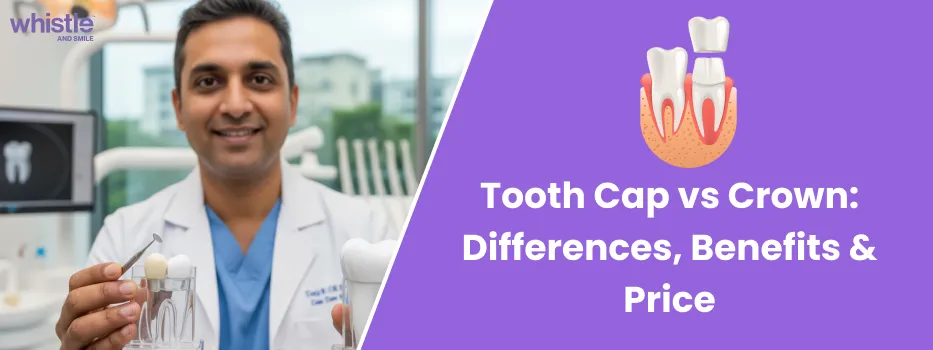
Tooth Cap vs Crown: What’s the Difference & Which Is Better?
 Medically Reviewed by Whistle Dental Team
When people hear the terms tooth cap and dental crown, they often think of two different treatments. In reality, they overlap almost completely.
One is the word patients are used to, the other is the word dentists use in paperwork. This article is not written to sound polished but to explain it in a straightforward way, even if the sentences feel rough at times.
What People Call a Cap
A cap is basically a cover. That word stuck because it is easy to picture. Something sits on top of the tooth and shields it. For children, it is usually stainless steel.
Those shiny silver caps go on baby molars with cavities. They are not attractive, but they protect until the tooth falls out. Adults are usually given porcelain or ceramic caps. These look more like enamel, blending with the smile.
Caps are common after root canals. A root canal leaves the tooth hollow and fragile. Without extra protection, the tooth can break.
A cap helps prevent that. They are also used for chips, small cracks, or moderate wear. In short, the cap is about keeping what is left safe, not rebuilding everything.
Also Read:
What Dentists Mean by a Crown
A crown is the precise word. It means a restoration that covers the entire visible part of the tooth. Always full coverage, never partial. It is custom-made, either in a lab or milled digitally.
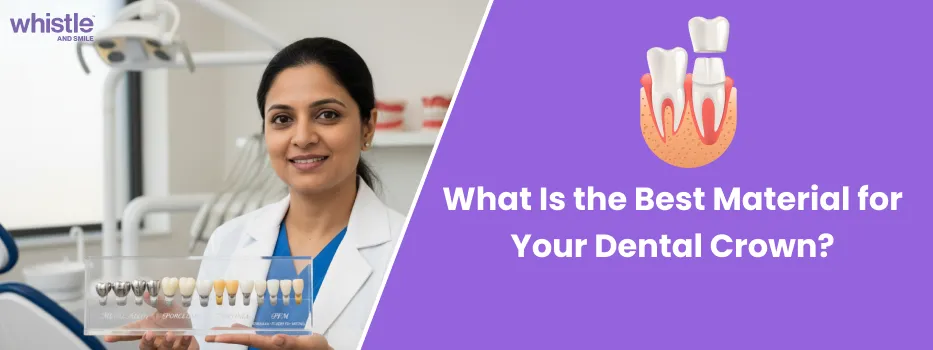
Materials vary: metal alloys, porcelain fused to metal, zirconia, lithium disilicate. Each has pros and cons. Metal is strong but not pretty. Porcelain-metal is balanced. Zirconia is strong and looks natural.
Crowns are chosen when teeth are very damaged. Large fractures, severe wear from grinding, huge fillings leaving no structure. They are also the visible part of implants. They hold bridges. They are not temporary. They are meant to last for many years.
Why People Mix the Words
From the chair, the procedures feel the same. The tooth is trimmed, an impression or scan is taken, a temporary is placed, and later the permanent version is cemented. Patients often hear “cap” but later see “crown” on paperwork. The similarity of steps makes it easy to blur them.
Benefits of Caps
Caps are quick, protective, and cheaper in some settings. They reduce sensitivity, make chewing easier, and keep fragile teeth from breaking. Porcelain caps on front teeth also improve appearance. They can be used as a stopgap solution until something stronger is done.
Also Read:
Benefits of Crowns
Crowns provide strength and longevity. They allow normal chewing, they stop nearby teeth from drifting, they complete implants, and they hold bridges. They also change how teeth look. With modern ceramics, crowns can be indistinguishable from real enamel.
Crowns often last ten to fifteen years, sometimes twenty. Stronger options like zirconia are good for people who grind their teeth.
The Procedure, Roughly
The tooth is numbed. It is shaped. Weak parts removed. A mold or scan is taken. A temporary crown goes on, but it is not given for all cases. A few weeks later, the permanent crown or cap is cemented. Sensitivity may appear but fades. Patients usually expect more pain than they actually feel.
Care and Maintenance
Brushing twice a day with fluoride toothpaste. Flossing around the margins. Dental check-ups. The covering itself does not decay, but the tooth under it still can.
Avoid chewing on ice, pens, or hard foods. Night guards are recommended for grinders. With proper care, many crowns last well beyond a decade.
Risks and Problems
Possible sensitivity after placement. Porcelain can chip. Cement can loosen. Decay may appear at the border if hygiene is poor. Not common, but possible. Prevention is mostly achieved with regular care and follow-up.
Also Read:
How Dentists Choose
The decision depends on age, tooth location, and condition. Children get stainless steel caps for baby molars. Adults with severely damaged molars get crowns. For front teeth, porcelain or ceramic is preferred for appearance. People who grind are directed toward zirconia.
Also Read:
- Everything You Need to Know About Dental Crown Replacement
- Do we need crowns for crooked front teeth?
Final Thought
Cap and crown are often used as if they are different. In practice, they describe the same idea, with crown being the correct technical word. Both protect, both restore function, and both keep natural teeth alive longer.
Book 3D Teeth Scan
Consult our experts and get a 3D preview of your smile transformation!
Tooth Cap vs Crown

 Medically Reviewed by Whistle Dental Team
 Medically Reviewed by Whistle Dental Team
 Medically Reviewed by Whistle Dental Team