

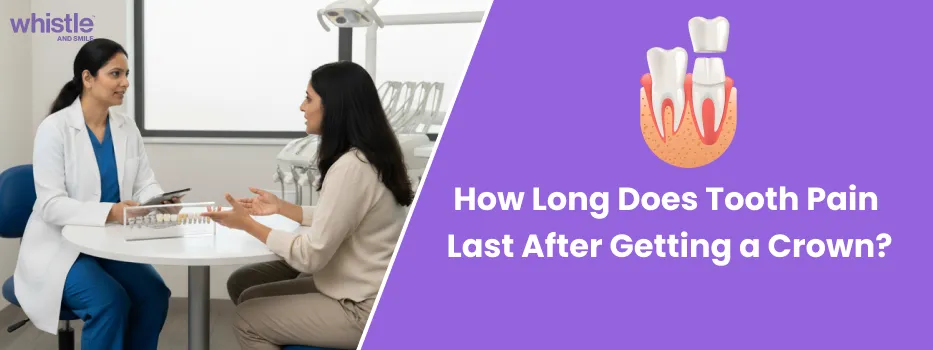
How Long Does Tooth Pain Last After Getting a Crown?
 Medically Reviewed by Whistle Dental Team
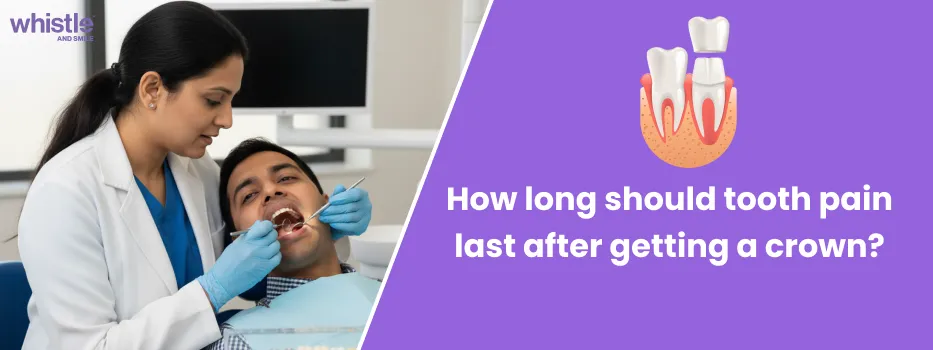
Mild tooth pain and sensitivity after getting a dental crown typically last for a few days up to two weeks. The discomfort should be worst in the first 24 to 48 hours and gradually fade each day.
However, if the pain is severe, if it begins throbbing, if it wakes you up at night, or if it lasts longer than two weeks, this is not normal and requires an immediate dental evaluation to check the bite alignment or the tooth nerve.
Key Takeaways:
- The 14-Day Rule: Mild tenderness is perfectly normal for up to two weeks as the ligaments around your tooth heal.
- The Bite is Often to Blame: A sharp, stabbing pain specifically when you bite down usually means the crown is slightly "too high" and needs a 5-minute adjustment.
- Root Canal Crowns Don't Feel Cold: If your crowned tooth had a root canal but still feels sharp pain from cold water, the pain is actually coming from the gums or an adjacent tooth.
- Throbbing is a Red Flag: A dull ache is normal; a heartbeat-like throbbing pain indicates active nerve inflammation (pulpitis).
- Don't Wait it Out: If pain worsens after day four, do not wait for the two-week mark. Contact your dentist immediately.
A bit of pain is your tooth getting used to the crown. In most cases, it settles in a few days, maybe a week. If it hangs around longer than that, or if it keeps changing, that’s when you check in with your dentist.
Is Putting a Crown on a Tooth Painful?
Patients often ask, "Is putting a crown on tooth painful?"
The procedure itself is entirely painless. Your dentist will use local anesthesia to completely numb the tooth and the surrounding gum tissue before reshaping the enamel and cementing the crown. You will feel pressure and vibration from the drill, but no sharp pain.
However, does it pain after capping on teeth? Yes. Once the anesthesia wears off, the periodontal ligament (the tissue that holds your tooth in the jawbone) is bruised from the pressure of the procedure. The gums are also slightly inflamed from the dental cement and the temporary retraction cord used during the visit. This is why the tooth feels bruised for a few days.
The First Few Days
The tooth under the crown isn’t dead. It still has a nerve, and it’s surrounded by ligaments and bone. When the dentist trims the tooth, it irritates that area a bit. That’s why it feels sore.
First few days, you might feel:
- Tender while chewing
- Sensitive to hot or cold
- Gums a bit sore
A dull ache that just lingers
That’s okay. The tissue is just swollen from the dental work. Usually, by day three or four, it starts getting better. Don’t chew on that side for a few days. You can ask your dentist to prescribe you a painkiller for the same. Eating soft food helps too.
After a Week
By the end of the week, it should feel easier. You can chew more comfortably, gums settle down, the sharp sensitivity fades. If you still get a small sting with ice water or tea, that’s fine.
But if pain gets stronger or feels deep, that’s not normal. It can be because:
- The crown’s too high and the bite is off.
- The nerve inside the tooth got inflamed.
- The cement touched the nerve through tiny channels.
- The crown edge is hitting the gum.
A quick adjustment by your dentist usually fixes it.
The Normal Recovery Timeline: What to Expect
To help you determine if your recovery is on track, here is the clinical timeline of what you should feel after your procedure.
Every mouth’s different. Some heal in a few days; others take weeks.
| After Crown | Feels Normal | Needs Dentist |
| 1–3 days | Mild soreness, sensitive, tender gums | Sharp pain, swelling, hard to bite |
| 4–7 days | Feels better each day | Pain getting worse |
| 2 weeks | Almost normal | Still throbbing, sore when chewing |
| 3+ weeks | Rare mild twinge only | Pain spreading, heat pain that stays |
When Pain Won’t Leave
If it’s been more than two weeks and the pain’s still there, it’s time for a check.
Two possible reasons:
The bite/crown or the nerve.
Bite issues: the tooth is taking more pressure when you chew. It keeps getting irritated, and the ligament stays sore. Sometimes the crown isn’t sealed perfectly and food gets stuck under the edge.
Nerve issues: the pulp inside the tooth is inflamed. You’ll know it if:
- Pain wakes you up at night
- It throbs when you’re not eating
- Hot drinks make it hurt for a long time
- The pain spreads to the jaw or ear
If that’s happening, the tooth might need a root canal. It sounds worse than it is: it actually saves both the crown and the tooth.
Why Some Teeth Take Longer to Heal
Not every tooth heals at the same pace after dental treatment. While many people experience significant improvement within a few days, others may notice mild discomfort or sensitivity for several weeks.
The healing timeline depends on factors such as the extent of the infection or decay, the complexity of the procedure, the condition of the surrounding tissues, your overall oral health, and how well you follow post-treatment care instructions.
Understanding these factors can help you know what to expect and recognize when healing is progressing normally.
- Metal or porcelain-metal crowns transfer heat more, so they feel more sensitive.
- The tooth was already weak or cracked before. You grind your teeth at night.
- Gums are inflamed or pulled back.
- There’s a hidden infection that flares up later.
- These don’t mean something’s wrong, just that your tooth needs more time or a small fix.
What Causes Dental Crown Tooth Pain? (The 3 Culprits)
If you are past the initial 48-hour bruising phase and your tooth still hurts, one of these three issues is likely the cause.
1. The Bite is "Too High" (Hyperocclusion)
When a crown is manufactured, it must perfectly match the opposing teeth. If the crown is even a fraction of a millimeter too tall, it will hit the opposite tooth before the rest of your teeth meet. This forces that single tooth to absorb the entire pressure of your jaw closing. This traumatizes the ligament and causes a sharp, stabbing pain specifically when chewing. Fortunately, this is fixed with a rapid, painless polishing adjustment by your dentist.
2. The Nerve is Inflamed (Pulpitis)
If the tooth did not have a root canal, the living nerve (the pulp) inside the tooth might have been traumatized by the friction of the dental drill or the chemical dental cement. If the nerve becomes inflamed, it swells inside the hard shell of the tooth, causing intense pressure.
3. Exposed Dentin or Receded Gums
Sometimes, the edge (margin) of the crown does not perfectly meet the gum line, or the gums temporarily pull back (recede) after the procedure. This exposes the sensitive root of the tooth, resulting in a sharp, shocking pain when you drink cold liquids.
How Long Will Throbbing Pain Last After a Crown?
A throbbing, heartbeat-like pain is the ultimate red flag in dentistry.
If you are wondering how long will throbbing pain last after a crown, the harsh reality is that it will not stop on its own. Throbbing pain, especially if it wakes you up in the middle of the night or radiates into your ear and jaw, is the primary symptom of irreversible pulpitis (a dying nerve) or an active bacterial infection.
If your tooth throbs, do not wait for the two-week healing window to close. Contact your Whistle partner clinic immediately. The tooth will likely require a root canal through the top of the crown to relieve the pressure and save the tooth.
How to Manage Pain in Tooth After Capping at Home
While you wait for the normal bruising to subside over the first week, you can manage the discomfort with these simple steps:
- The "Soft Diet" Rule: Stick to yogurt, mashed potatoes, and soups for the first 48 hours to avoid traumatizing the bruised ligament.
- Chew on the Other Side: Give the crowned tooth a complete rest from the mechanical force of chewing.
- Warm Salt Water Rinses: Rinse gently with warm salt water twice a day to soothe the inflamed gum tissue around the margins of the crown.
- OTC Pain Relief: Take over-the-counter anti-inflammatory medications (like Ibuprofen) exactly as directed by your dentist to reduce swelling in the ligament.
- Desensitizing Toothpaste: Brush gently using a toothpaste formulated for sensitive teeth (containing potassium nitrate) to block pain signals from reaching the nerve.
- Tooth Cap vs Crown: What’s the Difference & Which Is Better?
- Do we need crowns for crooked front teeth?
- Side Effects of Teeth Capping: Risks, Pain & What to Expect
When to Go Back to the Dentist
Call your dentist if:
1. The pain persists throughout the night
2. Heat makes it worse There’s swelling or a pimple on your gum
3. The crown feels loose You taste something bad around that tooth
Those usually mean infection or nerve irritation. They don’t go away by themselves and you will have to take professional advice.
Also Read:
- Pros and Cons of Dental Crowns: What to Consider
- Getting a Dental Crown After Root Canal: What to Expect
- Everything You Need to Know About Dental Crown Replacement
- Is Tooth Capping Painful? What Do Patients Experience?
Your Next Steps
Experiencing some discomfort after getting a crown is a normal, temporary hurdle on the path to restoring your smile. However, you should never have to suffer through severe or lingering pain.
Pain after a crown isn’t strange. It’s the tooth settling down after all the drilling and reshaping. Most of the time it’s gone within a week. But if it stays longer, throbs, or spreads, don’t wait it out.
Crowns are meant to protect, not punish. If it doesn’t feel right, trust your gut and get it looked at. Quick checks save a lot of trouble later.
If your crown feels high, sensitive, or is keeping you awake at night, do not ignore it.
Book a consultation at your nearest Whistle partner clinic today. Our expert dentists will evaluate your bite, check your nerve health, and ensure your new crown functions flawlessly and painlessly.
Book 3D Teeth Scan
Consult our experts and get a 3D preview of your smile transformation!
FAQ's
Q1.How long does crown pain last if the bite is high?
If your crown is too high, the pain will last indefinitely until a dentist adjusts it. Because the tooth is constantly being battered by the opposing teeth when you chew, the ligament will remain bruised and painful. Once the dentist polishes down the high spot, the pain usually resolves within 24 to 48 hours.
Q2.Is it normal for a crowned tooth to hurt months later?
No. If a crowned tooth begins to hurt months or years after the procedure, it is a sign of a new problem. This could indicate that a cavity has formed underneath the crown, the cement seal has broken, or the nerve inside the tooth is dying and requires a root canal.
Q3.Can a dental crown cause jaw pain?
Yes. If your new crown alters your bite even slightly, the muscles in your jaw will subconsciously try to compensate and adjust to the new chewing pattern. This muscular strain can lead to jaw aches, headaches, and temporomandibular joint (TMJ) discomfort until the bite is corrected.
Q4.Can I take painkillers to fix crown pain?
Painkillers will mask the symptoms of a bruised ligament during the first few days of normal healing. However, painkillers will not cure an infection, reverse a dying nerve, or fix a crown that is seated too high. If you rely on painkillers for more than a few days, you need a clinical adjustment.
Q5.Will I need a root canal if my crown hurts?
Not necessarily. Most post-crown pain is simply a bruised ligament or a bite issue that requires a minor polishing adjustment. However, if the pain is severe, spontaneous, or highly sensitive to heat, it means the nerve is dying, and a root canal will be required to save the tooth.

 Medically Reviewed by Whistle Dental Team
 Medically Reviewed by Whistle Dental Team
 Medically Reviewed by Whistle Dental Team
 Medically Reviewed by Whistle Dental Team


