
Deep Cleaning Teeth: Benefits, Gaps, Side Effects & Gum Health Explained
 Medically Reviewed by Whistle Dental Team
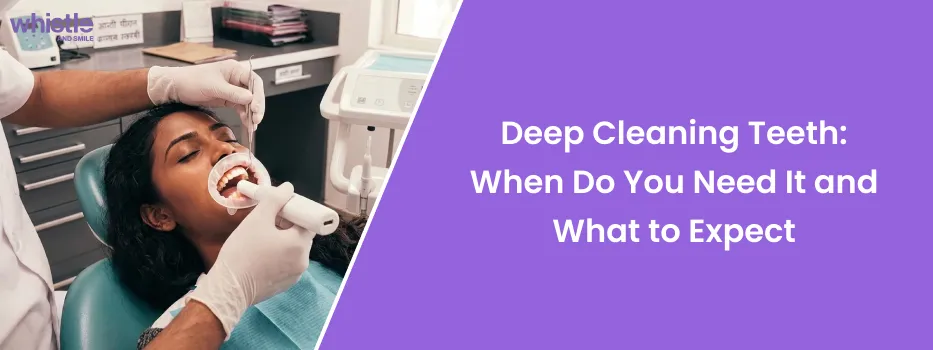
Deep cleaning of teeth, commonly known as scaling and root planning, is a non-surgical dental treatment that removes plaque and hardened tartar from below the gumline.
Unlike routine teeth cleaning or polishing, deep cleaning also targets deposits around the tooth roots and helps reduce the bacteria associated with gum disease, gum bleeding, bad breath, and periodontal pockets.
After deep cleaning, some people may notice gaps between their teeth becoming more visible. This can happen when hardened tartar that was occupying spaces between the teeth is removed and swollen gums gradually return to a healthier state.
These changes do not necessarily mean that the teeth have been damaged. The appearance of the gums and spaces can vary depending on the extent of existing gum disease and tartar buildup.
Key Takeaways:
- Targeted Bacterial Removal: Deep cleaning of teeth and gums clears calcified tartar beneath the gumline where regular toothbrush bristles cannot reach.
- Why Gaps Appear: Gaps in teeth after deep cleaning occur because swollen gums shrink back to health and bulky tartar blocks are cleared away.
- Manageable Side Effects: Expected deep cleaning of teeth side effects include mild sensitivity and slight gum tenderness lasting 2 to 5 days.
- Prevents Irreversible Damage: Addressing deep gum pockets stops periodontitis before bacterial infection degrades jawbone structure holding your teeth.
- Whistle Glow Integration: Applying biomimetic post-scaling remineralization at Whistle partner clinics smooths enamel micro-irregularities and calms sensitivity without harsh peroxides.
Deep cleaning stops that process. It doesn't hurt the way most people fear it will. And understanding what to expect makes the whole thing far less daunting. And if your dentist applies Whistle Glow afterward, you'll also leave with noticeably smoother, brighter teeth without any bleaching involved.
Why Do You Need Deep Cleaning of Teeth and Gums?
Gum disease develops silently. You might not feel sharp pain early on. Bacterial plaque constantly forms on tooth surfaces. If you miss plaque during daily brushing, minerals in your saliva harden it into tartar (dental calculus) within 24 to 72 hours.
Tartar has a rough, sponge-like surface. It acts as a fortress for destructive anaerobic bacteria. As tartar expands below your gumline, your immune system triggers localized inflammation (gingivitis). Over time, toxins released by bacteria destroy the fibrous attachments between your teeth and gums. This creates deep pockets (periodontal pockets).
Here are the primary clinical causes that mandate deep scaling and root planing:
- Subgingival Calculus Buildup: Hardened bacterial crusts sitting on root surfaces beneath gum tissue.
- Deep Periodontal Pockets: Pocket depths measuring 4mm, 5mm, or deeper during dental probing (healthy pockets measure 1mm to 3mm).
- Chronic Periodontal Inflammation: Persistent red, swollen, or easily bleeding gum tissue triggered by bacterial toxins.
- Dietary and Lifestyle Staining: Heavy Indian diet habits, such as daily chai, coffee, turmeric curries, or paan chewing, which accelerate plaque retention.
- Pre-Orthodontic Preparation: Clear aligner treatment requires 100% healthy, non-inflamed gums before applying light directional force to move teeth safely.
Regular Cleaning vs. Deep Cleaning: What's the Difference?
- Regular cleaning (prophylaxis) removes plaque and surface stains from the visible part of your teeth above the gumline. It keeps healthy gums healthy.
- Deep cleaning (scaling and root planing) goes below the gumline. It removes hardened tartar deposits from the root surfaces of your teeth. Then it smooths those roots so your gums can heal and reattach tightly.
Think of regular cleaning like washing the outside of your car. Deep cleaning is getting under the hood. Same car, very different job.
5 Warning Signs You Need Deep Cleaning
Gum disease is often called a "silent" condition. It rarely hurts in the early stages. But your gums send out signals when bacteria start moving below the surface. Look at your smile in the mirror. Gums send out subtle diagnostic signals when bacteria invade below the surface.
- Sign 1: Pink in the Sink (Bleeding Gums):
Healthy gums never bleed during routine brushing or flossing. If you notice blood while rinsing, your gums are fighting subgingival bacterial infection. - Sign 2: Persistent Bad Breath (Halitosis):
Chronic bad breath that resists mouthwash or tongue scraping stems from volatile sulfur compounds produced by bacteria hiding inside deep gum pockets. - Sign 3: Deep Gum Pockets (4mm+):
During your dental checkup, your dentist uses a tiny millimeter probe. Measurements above 3mm confirm that plaque has calcified beneath your gumline. - Sign 4: Receding Gums and "Longer" Teeth:
As chronic inflammation damages gum tissue, the margin pulls back. This exposes yellow root dentin and makes teeth look unnaturally elongated. - Sign 5: Tender, Puffy, or Dark Red Gums:
Healthy gums are firm and coral pink. Swollen, dark red, or spongy tissue signals active tissue destruction underneath.
Truth About Gaps in Teeth after Deep Cleaning
One of the most common anxieties patients express is: "Why do I see new gaps in teeth after deep cleaning?"
Here's the honest truth. Deep cleaning does not create gaps or push your teeth apart.
Before deep cleaning, heavy tartar buildup fills the small natural spaces between your teeth near the gumline. This hard tartar acts like fake cement. In addition, chronically inflamed gums are swollen and puffy, masking existing spaces.
When your dentist removes the tartar crusts and your gum inflammation subsides, two things happen:
- The False Cement Is Gone: Clearing calcified bridge deposits reveals the natural triangular spaces between teeth.
- Swollen Gums Shrink Back: As infection clears, puffy gum tissue tightens and shrinks down to its healthy, firm state. This exposes the empty spaces (sometimes called "black triangles").
Look, these gaps were already there under the disease and buildup. Leaving tartar in place to hide gaps allows bacteria to destroy your underlying jawbone. Removing tartar saves your teeth from loosening.
Step by Step Truth About Gaps in Teeth after Deep Cleaning
Step 1: Local Numbing
Before anything begins, your dentist applies a numbing gel and gently numbs the area with a local anaesthetic. You'll feel pressure during the procedure, but not pain.
Step 2: Ultrasonic Scaling
An ultrasonic tool vibrates at high frequency while spraying cool water. It breaks up the heavy plaque and tartar sitting on your teeth and deep inside the gum pockets. This is the part that clears the bacterial deposits your toothbrush never reached.
Step 3: Root Planing
Specialized hand instruments then smooth out the rough surfaces on your tooth roots. Rough roots give bacteria places to grip and hide. Smooth roots allow your gums to heal and press back firmly against the tooth.
Step 4: Post-Scaling Enamel Care with Whistle Glow
After scaling, the cleaned tooth surfaces can temporarily feel rough or slightly more sensitive than usual. This is normal, the mechanical cleaning process leaves microscopic surface irregularities on the enamel.
At Whistle partner clinics, your dentist can apply Whistle Glow immediately after scaling. It's a post-cleaning enamel remineralisation treatment designed to address exactly this:
- Biomimetic hydroxy-peptide formula - Whistle Glow uses a bio-active serum that works with your enamel's natural structure, no harsh peroxides, no bleaching chemicals.
- Fills microscopic surface irregularities - Applied with polishing brushes, the serum fills micro-pores and surface irregularities in enamel, the kind that builds up from daily wear and the scaling process itself.
- Helps soothe post-scaling sensitivity - Whistle Glow's remineralisation formula helps reduce post-scaling sensitivity and restores a smooth, natural gloss to your enamel so you leave the chair more comfortable than after a standard scaling alone.
- Peroxide-free - Unlike chemical bleaching, Whistle Glow doesn't dehydrate the enamel or cause the sharp sensitivity that peroxide treatments sometimes trigger.
Curious about Whistle Glow pricing? Your Whistle partner doctor will walk you through the treatment and cost at your consultation.
Disadvantages of Deep Cleaning Teeth & Honest Side Effects
Is deep cleaning perfect? No dental procedure is entirely free of drawbacks. Understanding the disadvantages of deep cleaning teeth helps set realistic expectations.
Potential Disadvantages of Deep Cleaning Teeth
- Multiple Clinic Visits Required: Deep cleaning of teeth and gums is detailed work. Dentists usually treat one or two quadrants per visit, requiring 1 to 2 appointments of 45 to 60 minutes each.
- Temporary Cold Sensitivity: Exposing cleaned tooth roots to temperature changes can trigger minor zings when drinking cold water or hot tea for a few days.
- Investment of Time and Cost: Deep scaling requires localized anesthesia and specialized ultrasonic tools, making it more intensive than routine cleaning.
- Visual Appearance of Recession: Healing gums shrink back, which may briefly make teeth appear longer or reveal black triangle spaces.
Common Deep Cleaning of Teeth Side Effects
Expected deep cleaning of teeth side effects are temporary and mild. They reflect natural tissue healing:
- Slight gum soreness or tenderness for 48 to 72 hours.
- Minor pinpoint bleeding during the first 24 hours of gentle brushing.
- Temporary sensitivity to very hot, cold, or sweet foods.
- Mild feeling of "space" or roughness around tooth roots until enamel settles.
Orthodontist Observation Layer: Common Patient Mistakes
Our network of 600+ Whistle partner clinics observes thousands of gum health cases annually. Here are the top mistakes patients make regarding deep cleaning:
- Stopping Flossing Due to "Gaps": When patients notice gaps in teeth after deep cleaning, some stop flossing out of fear. This is counterproductive. Flossing keeps newly cleaned pockets free of food debris while gums heal.
- Starting Clear Aligners Over Inflamed Gums: Applying corrective aligner force to teeth with active deep gum pockets can accelerate bone loss. Gums must be healthy and deep-cleaned first.
- Aggressive Brushing Post-Treatment: Scrubbing tender gums with hard bristles damages healing tissue. Always use an ultra-soft toothbrush with gentle circular motions.
- Delaying Deep Cleaning Out of Fear: Postponing deep scaling allows periodontitis to progress from reversible gum inflammation to permanent jawbone erosion.
Recovery Protocol & Daily Care Routine
Recovery after deep cleaning of teeth and gums is fast when you follow these clinical guidelines:
First 24 to 48 Hours
- Eat soft, lukewarm foods like khichdi, curd rice, soup, or smoothies. Avoid hot, spicy, or crunchy foods.
- Rinse gently with warm salt water (half a teaspoon of salt in warm water) 3 times daily.
- Avoid tobacco, smoking, or alcohol, as they severely impede gum reattachment.
First Week
- Brush gently using a soft-bristled toothbrush and desensitizing toothpaste.
- Use prescribed antimicrobial mouthwash (like Chlorhexidine) for the full recommended duration.
- Clean between teeth daily using interdental brushes or water flossers.
Why Post-Scaling Enamel Care Matters, and What Whistle Glow Does
Deep cleaning removes years of hardened buildup. But the mechanical process of scaling also temporarily leaves microscopic surface irregularities on your enamel. Think of it like scrubbing a floor: it's cleaner, but the surface needs attention before it's truly smooth again.
- Remineralises the surface - The bio-active serum fills microscopic surface irregularities and micro-pores in the enamel, the kind left behind by daily wear and the scaling process. The result is a visibly smoother, naturally glossy surface.
- Helps reduce post-scaling sensitivity - Because it works with your enamel's natural structure rather than against it, Whistle Glow helps calm the temporary sensitivity that many patients feel in the days after deep cleaning.
- No peroxides, no bleaching - Whistle Glow restores your enamel's natural brightness, not by stripping or bleaching, but by repairing the surface from within.
What does it feel like? Most patients describe leaving the chair with teeth that feel noticeably smoother than after a standard scaling, and a brightness that comes from the surface being genuinely cleaner, not chemically treated.
Ask your Whistle partner doctor about Whistle Glow at your consultation.
Also Read:-
Conclusion
Deep cleaning of teeth and gums is not a cosmetic luxury. It is a vital clinical reset that stops gum disease, shrinks deep pockets, and preserves your natural teeth for life. While noticing small gaps in teeth after deep cleaning or mild sensitivity can feel unexpected, these are positive signs that chronic infection is clearing and your gums are tightening back to health.
Combine deep scaling with Whistle Glow enamel remineralisation to enjoy silky-smooth, protected enamel right out of the dental chair. Take control of your gum health and smile confidence today. Book your comprehensive 3D teeth scan and consultation at your nearest Whistle partner clinic!
Take the first step toward healthier gums today. Take our quick smile assessment and find a certified Whistle partner clinic near you.
Also Read:-
Book 3D Teeth Scan
Consult our experts and get a 3D preview of your smile transformation!
Deep Cleaning Teeth
Teeth cleaning
FAQ's
Q1.Is deep cleaning teeth painful?
No. Your dentist numbs the area with a local anaesthetic before starting. You'll feel pressure and vibration, not pain. Afterward, mild tenderness for a couple of days is normal. Paracetamol or ibuprofen handles it for most people. Warm salt water rinses help too.
Q2.How long does a deep cleaning take?
A thorough deep cleaning is usually done in one to two sessions. Each session covers roughly half the mouth, one to two hours per visit, depending on the amount of buildup and the depth of the pockets. Your dentist will tell you upfront how many visits your case needs.
Q3.How often do you need a deep cleaning?
Deep cleaning is a treatment for active gum disease, not a routine procedure done on a schedule. Once your gums heal and pockets shrink back to healthy levels (1 to 3mm), regular 6-month maintenance cleanings are usually all you need to stay on track.
Q4.Is deep cleaning the same as scaling?
Scaling is the first part of deep cleaning, it removes the tartar deposits from tooth surfaces and inside pockets. Root planing is the additional step that smooths the root surfaces. Together, they make up the full deep cleaning procedure. A regular scale and polish only addresses the part above the gumline.
Q5.Can deep cleaning damage your teeth or loosen them?
No, deep cleaning protects teeth, it doesn't damage them. Sometimes heavy tartar acts like a false scaffold holding disease-weakened teeth together. When it's removed, a tooth may feel slightly less "gripped." But as gums heal and reattach to the cleaned root, that support returns. If a tooth feels looser after deep cleaning, that needs evaluation, it means the underlying bone loss was more advanced than the initial examination showed.
Q6.How is Whistle Glow different from regular teeth whitening?
Regular whitening uses peroxides to bleach deep stains. This often dehydrates enamel and causes sensitivity. Whistle Glow is a remineralisation treatment - it doesn't bleach. It repairs the enamel surface by filling microscopic surface irregularities, restoring your teeth's natural smoothness and brightness.

 Medically Reviewed by Whistle Dental Team
 Medically Reviewed by Whistle Dental Team



 Medically Reviewed by Whistle Dental Team