

Can Baking Soda Whiten Teeth? Clinical Truth, Risks and Safe Methods
 Medically Reviewed by Whistle Dental Team
Using baking soda teeth whitening can help brighten your smile by removing surface stains, but it is essential to understand its biological limitations and enamel risks.
If you are wondering does baking soda whiten teeth, the short clinical answer is yes, but only for extrinsic (surface-level) stains caused by coffee, tea, turmeric curries, and smoking.
Baking soda (sodium bicarbonate) is a mild mechanical abrasive that physically scrubs external pigmentation off enamel; it does not chemically bleach or change the natural internal shade of your teeth.
Key Takeaways:
- Surface Stains vs. Deep Bleaching: Baking soda removes extrinsic surface stains from food and beverages. It cannot alter intrinsic (internal) tooth color or whiten teeth beyond their natural shade.
- Low Relative Dentin Abrasivity (RDA): Pure baking soda has a low abrasivity rating (RDA around 7), making it gentler than harsh charcoal powders, but aggressive scrubbing can still wear down thin enamel margins.
- The "Yellowing" Paradox: Enamel does not regenerate. Scrubbing too hard or too frequently wears away white outer enamel, revealing the naturally yellow dentin core beneath.
- Strict Warning on Acidic DIY Hacks: Never mix baking soda with lemon juice, strawberries, or apple cider vinegar. Concentrated fruit acids chemically dissolve enamel while abrasives scrub it away, causing rapid enamel loss.
- Professional In-Clinic Alternatives: For safe, long-lasting brightness without enamel damage, professional dental whitening or pairing alignment with in-clinic whitening delivers visible results safely.
However, baking soda cannot chemically bleach or alter your intrinsic natural tooth shade because it contains no active peroxide bleaching agents.
Overusing raw baking soda for teeth strips away permanent protective enamel, exposing the yellow dentin underneath and causing severe tooth sensitivity. When considering baking soda and teeth whitening, dental experts recommend safe, controlled home applications or professional clinic treatments.
Does Baking Soda Whiten Teeth? How It Works Clinically
Baking soda (chemically known as sodium bicarbonate) is a mild alkaline salt. When you brush with it, two distinct mechanisms occur:
- Mechanical Plaque and Stain Scrubbing: Sodium bicarbonate crystals have fine microscopic edges. When gently agitated against enamel, these crystals create mild friction that dislodges sticky pellicle proteins and chromogenic stain molecules left behind by chai, coffee, and spices.
- Acid Neutralization and Oral pH Balancing: Acidic oral environments produced by carbohydrate fermentation break down enamel minerals. Baking soda has an alkaline pH (around 8.3), which neutralizes harmful oral acids, creates an unfavorable environment for cavity-causing bacteria, and temporarily freshens breath.
- What It CANNOT Do: Baking soda contains no peroxide bleaching agents (such as hydrogen peroxide or carbamide peroxide). It cannot penetrate through the porous enamel prisms into the dentin layer to oxidize deep genetic or age-related discoloration.
Why Baking Soda Is Used For Teeth Whitening?
Baking soda (sodium bicarbonate) does not bleach teeth; it acts as a mild sandpaper. It physically scrubs away surface-level stains caused by coffee, tea, and smoking, making the teeth appear brighter. To use it safely, mix a small pinch with plain water to form a paste, and brush very gently for one minute, no more than twice a week.
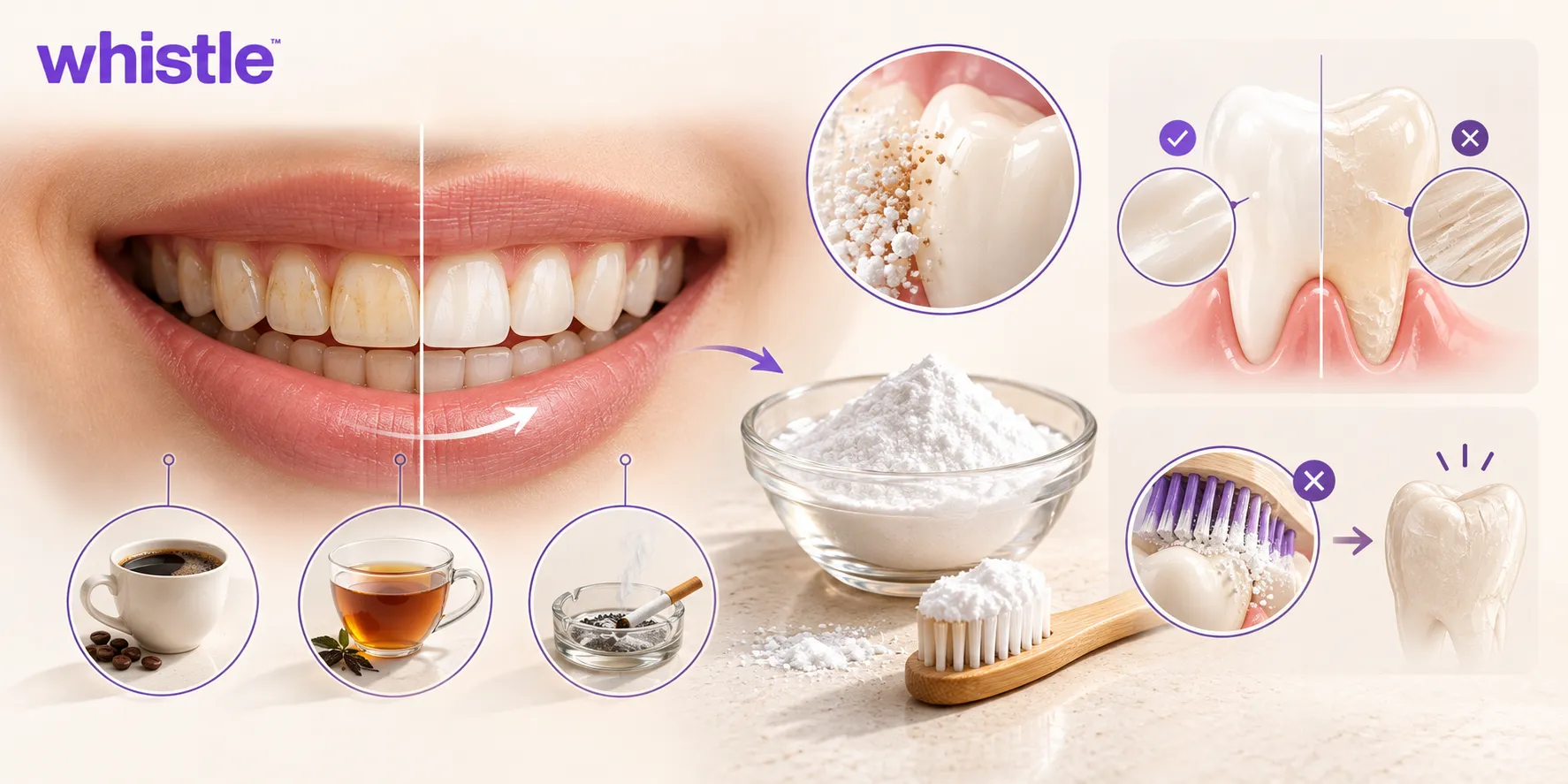
Scrubbing too hard or too frequently will permanently wear away your white enamel. It doesn’t usually change the internal color of your teeth the way professional whitening treatments do. So if someone expects a movie-star level whitening after brushing with baking soda for three days, they’ll probably end up disappointed.
How Baking Soda Whitens Teeth: The Biological Mechanism
Sodium bicarbonate is a crystalline, alkaline chemical compound. When used for dental brushing, it interacts with your teeth through three distinct physiological and chemical actions:
1. Mechanical Surface Polishing
Baking soda crystals have soft, microscopic facets. When agitated against enamel with a wet toothbrush, these fine particles create gentle friction that breaks the electrostatic bonds holding the salivary pellicle and chromogenic food pigments (tannins from tea, polyphenols from coffee, and curcumin from spices) to the tooth surface.
This lifts extrinsic discoloration, revealing your natural baseline enamel shade.
2. Acid Neutralization and Oral pH Balancing
Acidogenic bacteria such as Streptococcus mutans ferment dietary sugars, producing lactic acid that lowers intraoral pH below the critical threshold of 5.5, triggering enamel demineralization. Baking soda has an alkaline pH of approximately 8.3.
Brushing with sodium bicarbonate neutralizes salivary acidity, buffers against acid attacks, and fosters a remineralizing environment for dental enamel.
3. Biofilm and Plaque Disruption
Beyond cosmetic stain removal, sodium bicarbonate crystals penetrate interproximal micro-crevices, disrupting bacterial biofilm matrices.
Clinical studies show that regular brushing with sodium bicarbonate formulations significantly reduces bacterial colony formation and plaque indices compared to non-bicarbonate dentifrices.
How to Check if Baking Soda is Ruining Your Teeth
If you have been using raw baking soda or DIY kitchen remedies, perform this quick self-assessment in front of a mirror:
- The Cold Water Zing Test: Sip a glass of cold water. Do you feel a sharp, lingering electric twinge near your gumline? This indicates your protective enamel has been scrubbed too thin, exposing sensitive dentinal tubules.
- The Flashlight Transparency Test: Shine a phone flashlight behind your upper front teeth while looking in the mirror. Do the biting edges look transparent, glassy, or bluish-grey? This is a classic sign of advanced enamel thinning.
- The Enamel Texture Test: Run your tongue across the facial surfaces of your front teeth. If they feel rough, chalky, or gritty instead of smooth like polished glass, your brushing routine is overly abrasive.
Still, results are subtle and gradual. Anyone expecting movie-star teeth whitening after a few uses will probably end up disappointed.
Benefits and Clinical Advantages of Baking Soda for Teeth
When used appropriately under clinical guidelines, sodium bicarbonate offers several documented oral health benefits:
| Benefit Category | Clinical Mechanism | Patient Advantage |
| Effective Stain Removal | Gently lifts extrinsic chromogens from coffee, tea, and tobacco | Restores teeth to their natural clean shade without expensive OTC kits |
| Gentle on Relative Abrasivity Scale | RDA score of approximately 7 (compared to 70 to 150 for conventional toothpastes) | Significantly safer for enamel than activated charcoal or crushed sea salt |
| Antibacterial & Breath Freshening | Disrupts the biofilm matrix of Streptococcus mutans | Helps reduce morning breath and lowers interdental plaque accumulation |
The Viral Hack You MUST Avoid (Lemon Juice)
Several popular online blogs and social media influencers claim that mixing baking soda with lemon juice, strawberries, or apple cider vinegar creates the ultimate DIY whitening paste.
Lemon juice contains highly concentrated citric acid. When you mix acid (which chemically softens and dissolves tooth enamel) with an abrasive like baking soda (which physically scrubs), you create a highly destructive paste that strips the white enamel straight off your teeth. We have seen patients destroy years of dental health in a few months using this hack. Keep fruit acids out of your brushing routine.
The Yellowing Paradox and Severe Risks of Improper DIY Use
While occasional, controlled use of sodium bicarbonate is safe, improper or aggressive use creates severe oral complications:
1. The Yellowing Paradox
Human tooth enamel is an acellular mineralized tissue composed of 96% hydroxyapatite. Because enamel contains no living cells, it cannot regrow or repair itself once lost. The underlying dentin layer is naturally dark yellow. When individuals aggressively scrub their teeth with raw baking soda every day, they gradually polish away the outer white enamel.
As the translucent enamel thins, the underlying yellow dentin reflects more light, paradoxically causing the teeth to appear more yellow rather than whiter.
2. Dentin Hypersensitivity
Beneath the enamel lie thousands of microscopic fluid-filled dentinal tubules connected directly to the dental pulp nerve. As enamel thins from over-abrasion, hot, cold, sweet, or acidic stimuli trigger sudden fluid shifts in these tubules, causing acute, sharp electric twinges (dentin hypersensitivity).
3. Gingival Irritation and Recession
Vigorous brushing with crystalline baking soda along the gingival margin causes micro-lacerations to the delicate marginal gum tissue. Over time, chronic mechanical friction accelerates irreversible gum recession, exposing sensitive tooth root surfaces.
4. Lack of Cavity Protection (No Fluoride)
Pure baking soda from a kitchen container contains zero fluoride. Replacing regular toothpaste entirely with raw baking soda deprives your teeth of the essential fluoride ions needed for daily enamel remineralization and acid resistance, significantly increasing your risk of dental caries.
The Severe Risks of Improper Baking Soda Use
- Permanent Enamel Erosion: Tooth enamel is the hardest substance in the human body, but it contains zero living cells. Once enamel is scrubbed away, your body cannot regrow it. Daily or heavy-handed scrubbing permanently thins your enamel barrier.
- The Yellowing Paradox: Underneath your translucent white enamel lies dentin, which is naturally deep yellow. As aggressive baking soda use thins your enamel, the underlying yellow dentin shines through more prominently, making your teeth appear more yellow rather than whiter.
- Zero Cavity Protection (No Fluoride): Pure baking soda contains no fluoride. Replacing regular fluoride toothpaste entirely with baking soda deprives your teeth of the essential minerals needed for daily enamel remineralization, increasing your vulnerability to tooth decay.
- Gum Line Irritation & Recession: Scrubbing baking soda crystals directly against delicate gingival margins causes micro-tears and localized inflammation, accelerating gum recession over time.
3 Safe Ways to Whiten Teeth with Baking Soda
If you want to incorporate baking soda into your routine, here is how to do it without harming your smile:
1. Commercial Baking Soda Toothpaste (The Safest Option)
The safest way to use baking soda is by choosing a commercially manufactured toothpaste that contains sodium bicarbonate. These toothpastes are laboratory-formulated with optimized particle sizes to protect enamel while providing essential fluoride for cavity defense.
2. The Gentle Baking Soda Water Paste
Mix half a teaspoon of baking soda with a few drops of water in a small cup until it forms a smooth, watery paste. Dip a soft-bristled toothbrush into the paste, gently dab it onto stained front teeth, and brush with light circular motions for no more than 60 seconds. Rinse thoroughly with water. Limit this to once or twice a week.
3. The Toothpaste Sprinkle Technique
Apply your normal pea-sized amount of fluoride toothpaste to your brush, then sprinkle a tiny pinch of baking soda over the top. Brush gently for two minutes. This delivers stain-lifting friction while preserving the protective remineralizing benefits of fluoride.
Comparison: Baking Soda vs. Charcoal vs. Professional In-Clinic Whitening
| Whitening Modality | Whitening Modality | Typical Cost (INR) |
| Baking Soda (Sodium Bicarbonate) | Extrinsic surface stains only | Minimal household cost |
| Activated Charcoal Powder | Extrinsic surface stains | Rs. 300 - Rs. 800 |
| In-Office Professional Whitening | Both extrinsic and deep intrinsic dentin stains | Rs. 8,000 - Rs. 18,000 per session |
| Whistle Glow + Whitening | Deep intrinsic stains + Structural crookedness/gaps | Contact Your Nearest Whistle Partner Clinic |
Orthodontist Observation Layer: 5 Common Mistakes with DIY Whitening
Our senior orthodontic specialists across Whistle partner clinics see many patients trying to brighten their smiles at home. Avoid these critical mistakes:
- Using Raw Baking Soda with Clear Aligners: Brushing with raw abrasive powders leaves microscopic scratches on tooth enamel and resin attachments. When aligners are worn for 22 hours daily, plaque bacteria colonize these scratches, increasing the risk of white spot lesions. Use non-abrasive fluoride toothpaste during aligner treatment.
- Confusing Calculus / Tartar with Surface Staining: Hardened yellow or brown tartar buildup along the gumline cannot be scrubbed away with baking soda. Aggressively scrubbing tartar will only damage your gums. Professional ultrasonic scaling by a dentist is required.
- Whitening Crooked or Overlapping Teeth First: When teeth overlap, whitening gels and baking soda pastes cannot reach crowded contact points. This results in uneven, patchy whitening. Aligning teeth first with Whistle clear aligners ensures uniform light reflection and even shade distribution.
- Brushing Hard Immediately After Drinking Chai or Coffee: Hot, acidic drinks temporarily soften the outer micron of enamel. Scrubbing immediately with baking soda strips this softened layer. Wait 30 minutes after drinking coffee or chai before brushing.
- Neglecting Daily Fluoride Remineralization: If you use baking soda occasionally to lift coffee stains, always pair it with a fluoride or nano-hydroxyapatite toothpaste at night to replenish essential calcium and phosphate ions back into your enamel.
Your Next Steps
Baking soda can help whiten teeth slightly, especially when it comes to removing surface stains from coffee, tea, or smoking. It’s inexpensive, easy to use, and generally safer than many viral DIY whitening trends online.
But it’s not a miracle solution. Using baking soda to lift a mild coffee stain once a week is a perfectly fine, affordable home remedy. However, if you are aggressively scrubbing your teeth every single morning hoping for a Hollywood smile, you are actively destroying your enamel.
If you want dramatic, visibly brighter teeth fast, put down the baking soda and trust the science. Book a free Smile Assessment at your nearest Whistle Partner clinic today to explore professional Laser Whitening or our advanced Whistle Glow Enamel Rejuvenation treatment.
Also Read
Book 3D Teeth Scan
Consult our experts and get a 3D preview of your smile transformation!
Baking Soda Teeth Whitening
Natural Teeth Whitening
Dental Care
Oral Health
Tooth Stains
Whitening Treatments
FAQ's
Q1.How long does it take for baking soda to whiten teeth?
Because baking soda only removes surface stains, you will not see immediate results. With safe, twice-weekly use, it generally takes 3 to 6 weeks of consistent application to notice a mild brightening effect on coffee or tea stains.
Q2.Can I brush my teeth with baking soda every day?
No, Dental professionals strongly advise against using raw baking soda every day. Its abrasive nature will slowly wear down your tooth enamel, making your teeth highly sensitive and eventually exposing the naturally yellow dentin underneath.
Q3.Can I use baking soda while undergoing clear aligner treatment?
You should avoid raw baking soda while using clear aligners. The abrasive powder can leave microscopic scratches on your teeth, which can harbor bacteria when trapped beneath the plastic aligner trays for 22 hours a day. Stick to a gentle, non-abrasive fluoride toothpaste.
Q4.What is the safest way to use baking soda for teeth?
Q5.Can I mix baking soda with lemon juice or vinegar for faster whitening?
No. Mixing baking soda with lemon juice or vinegar is dangerous for your teeth. Fruit acids dissolve enamel minerals, while the abrasive powder scrubs the softened enamel away, leading to severe enamel loss and sensitivity.
Q6.Can baking soda whiten dental crowns, veneers, or fillings?
No. Baking soda cannot lighten or bleach dental restorations such as composite fillings, porcelain crowns, or ceramic veneers. While it may remove light surface stains from restorative materials, excessive scrubbing can scratch their polished glaze, causing them to stain more easily in the future.
Q7.Why do my teeth look more yellow after using baking soda?
If your teeth look yellower after frequent baking soda use, you are likely experiencing the yellowing paradox. Daily, heavy scrubbing thins your outer white enamel layer, allowing the naturally dark yellow dentin underneath to show through more prominently.
 Medically Reviewed by Whistle Dental Team
 Medically Reviewed by Whistle Dental Team


 Medically Reviewed by Whistle Dental Team