
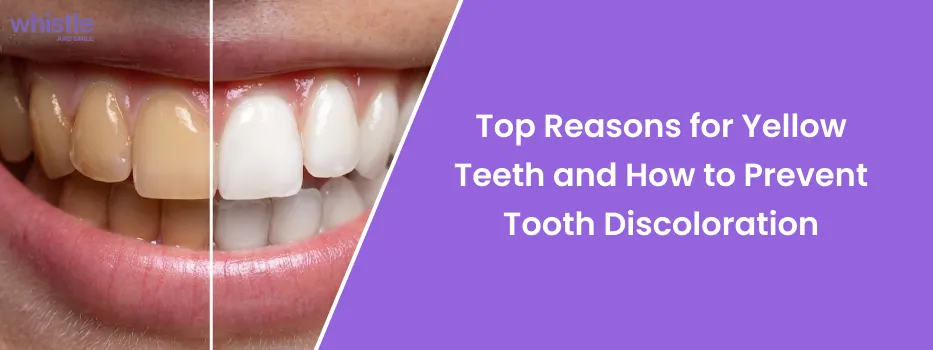
Top 6 Reasons for Yellow Teeth: Causes, Prevention, and Safe Whitening Options
 Medically Reviewed by Whistle Dental Team
Wondering the reason for yellow teeth even after brushing twice daily the right way? Sometimes the answer lies beyond your toothbrush and toothpaste.
Your daily morning coffee, those stress-relieving smoke breaks, that can of sugar-free cold drink, or sometimes even biological factors such as ageing, and developmental defects are the ones to blame.
No matter whether the realisation is gradual or sudden, with proper care and treatment, your teeth can always regain their lost glow. Keep reading to understand dentist-approved teeth whitening techniques that help your teeth regain their shine while being safe and gentle on your enamel.
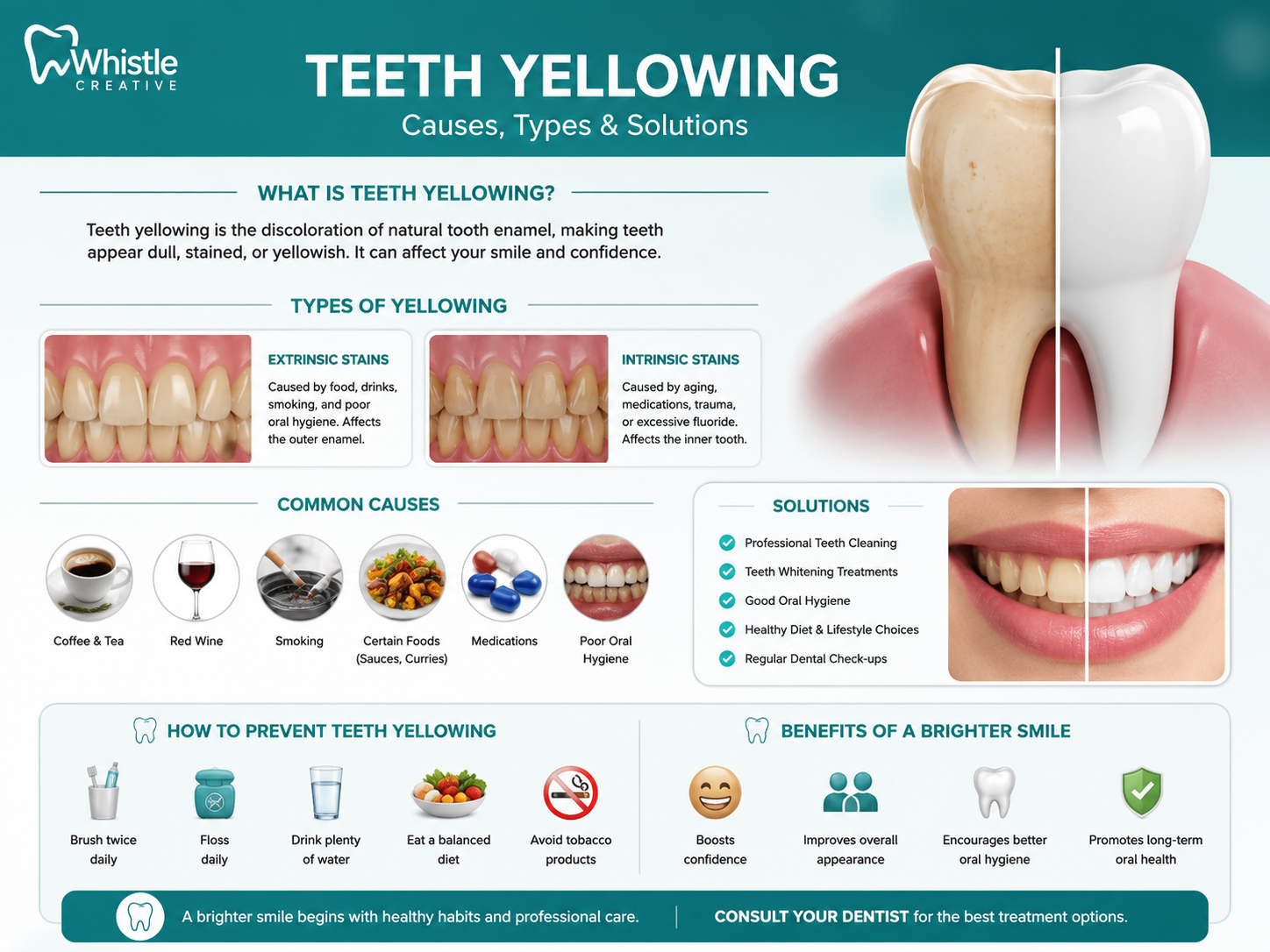
Why Do Teeth Turn Yellow?
To understand the reason for yellow teeth, it helps to first understand tooth structure. Your teeth have two important layers:
Enamel: The hard, white outer covering, which is a little translucent
Dentin: The naturally yellow layer underneath enamel
When enamel becomes stained, thinner, or damaged, more of the yellow dentin underneath starts showing through. This is why teeth gradually lose their brightness over time.
Some discoloration happens externally due to stains, while some changes happen internally within the tooth itself.
Understanding the Two Types of Tooth Stains
Not all yellow teeth happen for the same reason. Tooth discolouration is broadly divided into two categories: extrinsic stains and intrinsic stains.
| Extrinsic Stains | Intrinsic Stains |
| Develop on the outer enamel surface | Develop within the tooth structure |
| Commonly caused by coffee, tea, smoking, plaque, and food pigments | Commonly caused by ageing, enamel thinning, trauma, medications, or fluorosis |
| Usually appear yellow or brown on the surface | Often appear deeper, darker, or more difficult to remove |
| May improve with cleaning and whitening | May require professional treatment |
| Easier to prevent with good oral hygiene maintenance | Often linked to structural or internal changes in teeth |
Understanding this difference is important because not every whitening treatment works equally well on every type of stain. Surface stains are generally easier to improve, while deeper intrinsic discolouration may need more advanced dental care, or maybe a combination therapy.
Top Reasons for Yellow Teeth
1. Coffee, Tea, and Dark-Coloured Drinks:
Today, the most common teeth-staining culprits are coffee, tea, red wine, cola, and even energy drinks. These drinks include strong pigments that attach to the enamel and, over time, darken the tooth surface.
What adds to the trouble is that most of these drinks are also acidic. Repeated consumption of the acid begins to slowly soften the enamel, causing stronger, deeper-set stains.
Here are some tips on how to protect your enamel while still enjoying all your favorite drinks:
- Drink coffee or tea and rinse your mouth with water.
- never sip slowly all day long. Repeated and continuous exposure causes more damage.
- When your drink is cold, use a straw so it does not touch your teeth.
- Maintain regular dental cleanings every 6 months.
2. Smoking and Tobacco Use
Smoking is one of the fastest ways to develop stubborn yellow or brown stains on teeth. Nicotine and tar penetrate microscopic pores in enamel and create discoloration that brushing alone often cannot remove.
People who smoke heavily may notice:
- Dark yellow patches
- Brown staining near the gums
- Uneven tooth colour
- Faster tartar buildup
Tobacco stains usually become deeper over time and often require professional polishing or whitening treatments.
3. Poor Oral Hygiene
Sometimes, the simplest reason for yellow teeth is inadequate oral hygiene. When plaque is not removed properly, it hardens into tartar, which naturally appears yellowish. Over time, this buildup traps stains more easily.
Signs that poor oral hygiene may be contributing include:
- Yellowing near the gum line
- Bad breath
- Bleeding gums
- Rough tooth surfaces
Brushing twice daily, flossing regularly, and getting professional cleanings can significantly reduce this type of discoloration.
4. Ageing and Enamel Thinning
One of the most natural and inevitable reasons for yellow teeth is aging. With increasing age, the natural thickness of enamel starts to decrease due to years of chewing food, consumption of acidic foods, and general wear of teeth. Once the enamel thins, the underlying yellow dentinal layer starts to reflect its colour through the translucent enamel.
5. Teeth Grinding (Bruxism)
Many people are surprised to learn that grinding teeth can also contribute to yellowing. Grinding causes mechanical wear of enamel, especially along:
- Front teeth
- Biting edges
- Canine tips
As enamel wears away, the darker dentin underneath becomes more noticeable. People who grind their teeth may also experience:
- Jaw pain
- Morning headaches
- Tooth sensitivity
- Flattened teeth surfaces
6. Dry Mouth
Saliva plays an important role in naturally cleaning teeth. It helps wash away:
- Food particles
- Acids
- Bacteria
- Pigments from food and drinks
When saliva production decreases, stains settle more easily and plaque builds up faster. Dry mouth may happen due to:
- Dehydration
- Smoking
- Mouth breathing
- Certain medications
An Important Truth About Teeth Whitening
Social media these days is filled with convincing results photographs from magical at-home DIY teeth whitening remedies that simply require everyday kitchen items. Influencers have been convincing everyone to simply rub lemon, baking soda, and sometimes activated charcoal on their teeth.
Before trying any whitening treatment, there is one thing people should understand clearly: All whitening treatments work primarily on the outermost layer of the tooth, i.e., the enamel. Enamel is the protective white covering of your teeth. Once enamel becomes thin or damaged, the naturally yellow dentin underneath becomes more visible.
Unlike skin or hair, enamel cannot naturally grow back once it is lost. This is why excessive whitening or abrasive DIY remedies can sometimes make teeth:
- More sensitive
- More translucent
- More yellow over time
The healthiest whitening approach is not the harshest one. It is the one that reduces stains while also protecting enamel integrity.
Professional Whitening vs Surface Bleaching
| Surface Bleaching Products/ At Home Whitening Strips & Kits | Professionally Guided Whitening Systems |
| Primarily focus on temporarily lightening stains | Focus on stain reduction while supporting enamel health |
| Often rely heavily on peroxide-based bleaching agents | May use peroxide-free or sensitivity-conscious approaches |
| Can sometimes increase tooth sensitivity | Designed to balance whitening with comfort |
| Usually work only on visible surface discoloration | May combine polishing, remineralization, and enamel-support technologies |
| Results may fade quickly if oral habits remain unchanged | Often paired with professional guidance and long-term oral care |
| Overuse may contribute to enamel weakening | Safer approaches focus on protecting existing enamel |
| Common in DIY whitening kits and trending online hacks | More structured and personalised based on dental needs |
What is Whistle Glow?
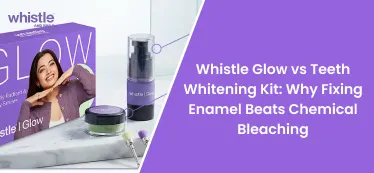
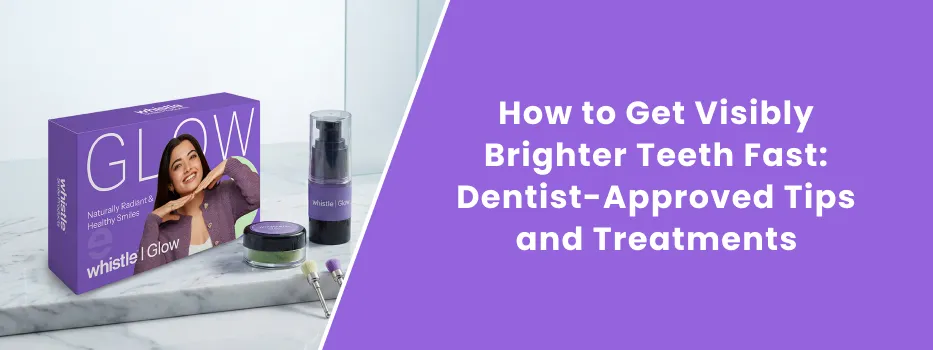
Whistle Glow is a teeth remineralization process that has a scientifically formulated and professionally applied enamel-safe formula. It gently lifts surface stains, is peroxide-free, without harsh bleaching, and promotes enamel remineralization for stronger, healthier teeth. In simple words, it is a safe, rejuvenating solution that does not damage or harm the tooth but makes the tooth healthier
But Whistle Glow doesn’t just remove stains, like many whitening products; it uses polishing, stain-fighting, and enamel-support technology:
What Makes Whistle Glow Different?
Peroxide-Free and Sensitivity Safe Formula:
Many whitening systems use peroxide-based chemicals that can sometimes trigger:
- Tooth sensitivity
- Gum irritation
- Temporary discomfort
Whistle Glow is designed as a peroxide-free whitening solution, making it a more comfortable option for people concerned about sensitivity.
Sequential 3-Step Polishing Technique:
Whistle Glow uses a structured polishing approach, which is initiated only after professional scaling is done, that helps:
- Remove deposits and surface stains
- Smooth enamel surfaces
- Prepare teeth for better serum interaction
This can help improve staining caused by coffee, tea, smoking, or plaque buildup.
Biomimetic Remineralization with Hydroxy Peptides:
One of the most unique aspects of Whistle Glow is its use of hydroxy peptides.
These nano-sized bioactive crystals are designed to mimic hydroxyapatite, the natural mineral present in enamel.
Since enamel cannot naturally regenerate once lost, modern dentistry increasingly focuses on protecting and supporting the remaining enamel structure.
Hydroxy peptides help support surface remineralization, enamel smoothness, and better structural integrity.
Support for Structural Repair
Daily wear and tear can create microscopic pores and irregularities on enamel surfaces. Whistle Glow’s hydroxy peptide technology is designed to interact with these exposed areas and support smoother, healthier-looking enamel.
Also Read:
How to Prevent Teeth from Turning Yellow
Preventing yellow teeth is often easier than treating deep discoloration later.
Healthy habits that help include:
- Brushing twice daily
- Flossing regularly
- Drinking water after consuming foods
- Avoiding smoking
- Limiting acidic beverages
- Visiting your dentist regularly
Small habits done consistently matter far more than occasional whitening treatments.
Also Read:
- Teeth Whitening Services: Types, Benefits, Costs
- Oil Pulling Before and After: What Actually Happens When You Try It
Are Yellow Teeth Always Unhealthy?
Not necessarily. Healthy teeth are not naturally paper-white. Slight yellow tones can still be completely normal because dentin underneath enamel is naturally yellow. The real goal should be:
- Healthy enamel
- Healthy gums
- Minimal plaque buildup
- Strong teeth
A bright smile should never come at the cost of enamel damage.
Also Read:
Conclusion
The reasons for yellow teeth vary from lifestyle to developmental defects, depending on the type of stain. Some discoloration is natural, but many cases can be easily prevented by using the right oral care routine.
Before you start thinking of at-home whitening solutions or bleaching agents, let’s remind ourselves that the approach towards teeth whitening should be mindful, and enamel loss should always be taken seriously.
When it comes to teeth, there is no one tooth shade that fits all healthy standards. The goal is always strong enamel, healthy gums, and long-term oral health support.
Book 3D Teeth Scan
Consult our experts and get a 3D preview of your smile transformation!
FAQ's
Q1.Can yellow teeth become white again?
The results with Whistle Glow have been exceptional. With no post-whitening sensitivity, the tooth colour returns to its natural shade. Sub-surface or intrinsic stains require a different treatment approach (veneers/crowns in some cases) for restoration of tooth health and structure.
Q2.Why are my teeth yellow even after brushing?
Yellowing of teeth in a few cases is independent of brushing frequency and technique. Due to enamel thinning, genetics, smoking, tartar buildup, or developmental defects, teeth may appear yellow even after proper oral hygiene maintenance.
Q3.Can enamel grow back after whitening damage?
No. Enamel does not naturally regenerate once lost, which is why excessive whitening or abrasive DIY methods should be avoided.
Q4.Does coffee permanently stain teeth?
Frequent coffee consumption can lead to long-term staining, especially when combined with poor oral hygiene or enamel erosion.
Q5.Is whitening safe for sensitive teeth?
Sensitivity-safe options like peroxide-free whitening systems may be more suitable for people who experience discomfort with traditional bleaching methods.
 Medically Reviewed by Whistle Dental Team
 Medically Reviewed by Whistle Dental Team


 Medically Reviewed by Whistle Dental Team