Step-by-Step Teeth Whitening Process: What to Expect Before, During & After
 Medically Reviewed by Whistle Dental Team
The professional teeth whitening procedure takes about 45 to 90 minutes. After a thorough cleaning, a dentist applies a peroxide-based agent or a bio-active serum to your teeth. This serum breaks down the molecular bonds of deep stains. To get the best results, you must undergo a dental exam first to ensure you have no hidden cavities, and follow a strict "white diet" for 48 hours afterward to prevent new stains from setting in.
A brighter smile sounds simple in theory - you walk into a clinic, get your teeth whitened, and walk out looking like you belong in a toothpaste commercial. At least that's what most people expect, but the actual process is a little more detailed and knowing what happens beforehand makes the experience much less intimidating. Many patients come in worrying about sensitivity, confused about how long whitening lasts, or expecting unrealistic paper-white teeth overnight. The truth sits somewhere in the middle. Teeth whitening can make a noticeable difference, but understanding the full process matters just as much as the treatment itself.
Key Takeaways
- Pre-Cleaning is Mandatory: You cannot whiten a tooth covered in plaque. Professional scaling and cleaning must happen before the whitening gel is applied.
- Yellow vs. Grey Stains: Teeth whitening works phenomenally well on yellowish stains (coffee, tea, aging), but struggles significantly with brownish or greyish stains caused by internal tooth trauma.
- Restorations Do Not Whiten: Dental crowns, veneers, and composite fillings will not change color during the bleaching process.
- The "White Diet": For 48 hours after treatment, your enamel is slightly porous. You must avoid turmeric, red wine, soy sauce, and coffee.
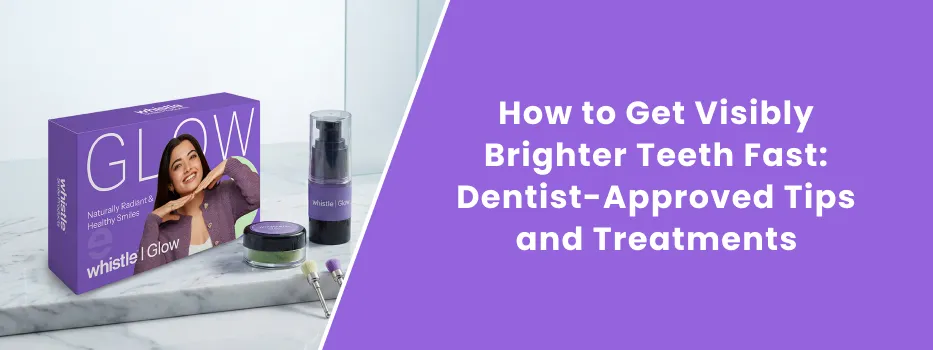
- The Whistle Glow Difference: While traditional bleaching dehydrates the tooth to lift stains, Whistle Glow uses a nanohydroxy-peptide crystal serum to actively remineralize and rejuvenate the enamel.
So if you’ve been thinking about getting your teeth whitened, here’s a realistic step-by-step breakdown of what actually happens before, during, and after the procedure.
Before Teeth Whitening
A good whitening doesn’t really begin with the whitening gel. It starts with an examination.
Most dentists first check whether your teeth and gums are healthy enough for the procedure. This part usually gets skipped in the social media videos, but it’s important. If someone has decayed teeth, gum inflammation, worn enamel, or heavy plaque build-up, whitening can actually make things worse.
Sometimes patients walk in wanting whitening when what they really need first is a cleaning.
Step 1: The Pre-Whitening Dental Examination
Your dentist will evaluate:
- Cavities or tooth decay
- Gum Health
- Tooth sensitivity
- Existing dental restorations
- Plaque and tartar build-up
- Natural Tooth Shade
One thing that people often don’t realise is that whitening works only on natural teeth. Crowns, veneers and fillings don’t change colour with whitening. So if you have restorations in visible areas, the final result may not match perfectly.
Step 2: Professional Cleaning
Would you paint a dusty wall without cleaning it first?
Probably not-
The same logic applies to teeth whitening.
- Before whitening, dentists often recommend professional scaling and cleaning to remove plaque and tartar build up.
- A clean tooth surface allows whitening products to work evenly and effectively.
Step 3: Choosing your Teeth Whitening Treatment
Professional teeth whitening treatments include traditional teeth whitening, which uses peroxide-based bleaching agents to remove stains, laser or LED whitening, where light technology activates the whitening gel for faster results, and enamel rejuvenation treatments like Whistle Glow, which enhance the natural brightness of teeth by improving enamel health and smoothness.
The right option depends on your dental condition and desired results. Unlike traditional whitening, Whistle glow is an enamel rejuvenation procedure designed to restore the natural brightness of teeth while improving enamel smoothness.
During the Teeth Whitening Procedure
This is usually the part people are most nervous about.
The good news?
Professional teeth whitening procedures are generally quick, safe and minimally uncomfortable. Most appointments take around 45-90 minutes depending on the system being used.
1. Protecting Gums and Soft Tissues
Before applying whitening products, the dentist protects your gums, cheeks, and lips using a barrier gel or rubber shield.
This helps prevent irritation caused by bleaching agents.
2. Surface Preparation
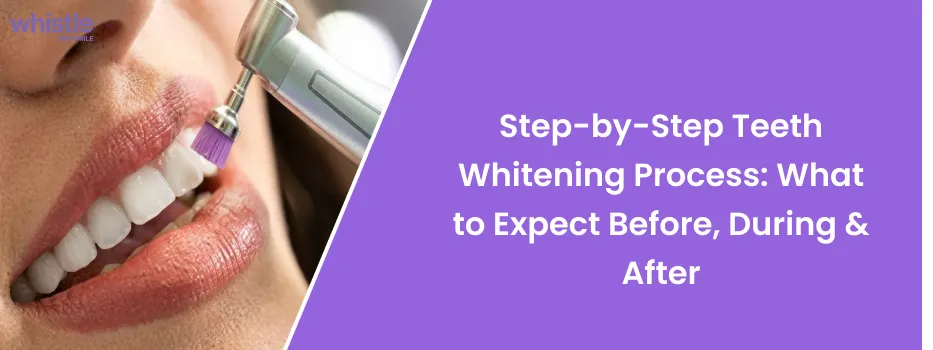
For treatments like Whistle glow, the procedure begins with sequential polishing using specialized silicone brushes of different textures and bristle thickness.
This process smoothens microscopic irregularities and enamel microcracks created due to cleaning procedures.
Smooth enamel allows deeper penetration of treatment serums.
3. Whitening or Serum Application
Depending on treatment selected:
In Traditional Teeth Whitening
A peroxide-based whitening gel is applied to teeth to break down stain molecules between the layers.
In Whistle Glow
A bio-active serum containing nanohydroxy-peptide crystals is applied to the enamel.
These nanoparticles penetrate the enamel and help restore the natural luminosity of teeth through remineralization.
Unlike conventional bleaching, this approach focuses on enamel rejuvenation rather than dehydration.
4. Activation Process
Some whitening systems use LED lights or lasers to activate the whitening gel for faster results.
In enamel rejuvenation treatments, the serum works by enhancing enamel smoothness and improving light reflection naturally.
5. Final Rinse and Evaluation
Once the procedure is completed, the dentist rinses the mouth thoroughly and evaluates the results.
- Patient often notice:
- Brighter teeth
- Smoother enamel surface
- Enhanced shine
- Cleaner overall appearance
Step 4: After Teeth Whitening: What to Expect
Warning for Teeth Whitening Hacks
With the rise of social media, many people attempt to whiten their teeth using baking soda scrubs, lemon juice, or cheap, unregulated online whitening kits.
Do not do this. Lemon juice is highly acidic and baking soda is severely abrasive. Together, they will permanently scrub away your protective enamel, leaving the yellow dentin underneath permanently exposed. Furthermore, over-the-counter whitening strips use weak, one-size-fits-all trays that often leak bleaching gel onto your gums, causing painful chemical burns.
Whether you are looking to brighten a stained smile, or completely transform your alignment using clear aligners, having a certified dentist oversee your treatment is the only way to guarantee the safety of your enamel and alveolar bone.
Is Teeth Whitening Worth it?
For many people- Yes.
Not because perfectly white teeth suddenly change your life, because feeling confident while smiling affects the way people carry themselves. People become less hesitant in photos, presentations, and conversations after whitening treatment. It’s subtle sometimes, but noticeable.
At the same time whitening works best when expectations are realistic. Teeth naturally have undertones. Slight imperfections are normal. The healthiest smile rarely looks artificially perfect.
And honestly, that’s usually what looks best anyway.
Your Next Steps
The teeth whitening process is fairly straightforward, but knowing what happens before, during, and after treatment makes it much easier to navigate. It’s not magic, and it’s definitely not one-size-fits-all. A proper consultation, realistic expectations, and good aftercare make the biggest difference in how successful the treatment feels.
If you’re considering professional teeth whitening, the safest approach is always to consult a qualified dentist rather than experimenting aggressively with random online hacks. Teeth are surprisingly easy to irritate when treatments are overdone.
A brighter smile should look healthy first. Book a free Smile Assessment at your nearest Whistle Partner clinic today. Our experts will evaluate your enamel, identify the exact cause of your discoloration, and safely restore your natural, confident glow.
Also Read
- How to Get Visibly Brighter Teeth Fast
- Can Baking Soda Whiten Teeth
- Stained Teeth From Braces: Why Some People Get White Spots While Others Don't
Book 3D Teeth Scan
Consult our experts and get a 3D preview of your smile transformation!
Teeth Whitening
Professional Teeth Whitening
Cosmetic Dentistry
Dental Care
Smile Makeover
Teeth Whitening Process
FAQ's
Q1.Is the teeth whitening procedure painful?
The procedure itself is entirely painless, though you may feel some warmth if a laser or LED light is used. Some patients experience sharp, temporary sensitivity to cold foods for about 24 hours afterward as the enamel rehydrates.
Q2.Can I get my teeth whitened if I have dental crowns?
Yes, but you must be aware that the bleaching agent will only lighten your natural teeth. The porcelain or ceramic material of a dental crown, bridge, or veneer will not change color, which may leave you with an unevenly colored smile.
Q3.Can I wear clear aligners while using whitening gel?
Some patients attempt to put whitening gel inside their clear aligners. This is not recommended unless explicitly prescribed by your orthodontist, as standard aligners are tightly fitted to move teeth and the excess gel will be squeezed out onto your gums, causing chemical burns.
Q4.Why do my teeth look yellow even though I brush them?
As you age, the outer layer of white enamel naturally wears down, revealing the layer beneath it called dentin. Dentin is naturally yellow in color. This type of intrinsic discoloration requires professional clinical whitening or enamel rejuvenation to correct.
 Medically Reviewed by Whistle Dental Team
 Medically Reviewed by Whistle Dental Team
 Medically Reviewed by Whistle Dental Team