
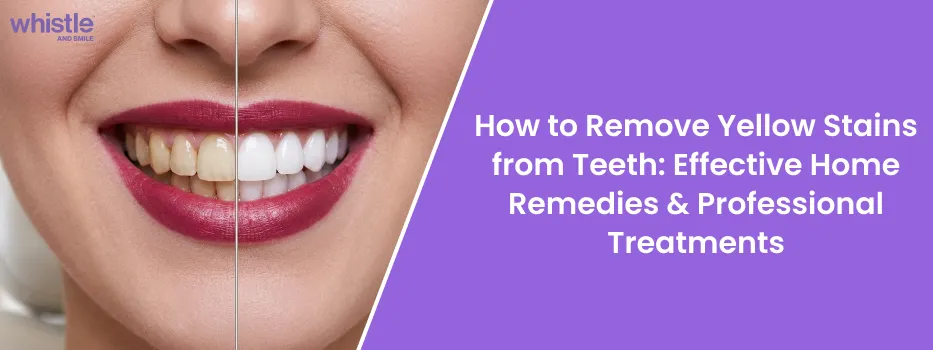
How to Remove Yellow Stains from Teeth: Natural Remedies, Instant Results & Clinical Whitening
 Medically Reviewed by Whistle Dental Team
Tooth Discoloration: Extrinsic vs Intrinsic Stains
- Extrinsic Staining (Enamel Surface): Occurs when dark pigment compounds called chromogens and tannins from tea, coffee, red wine, curry, and tobacco bind to the salivary pellicle on the enamel surface. Poor hygiene allows plaque to mineralize into hardened yellow or brown tartar (calculus) that cannot be brushed away at home.
- Intrinsic Discoloration (Internal Dentin Layer): Occurs within the inner dentin layer. As enamel naturally wears down with age or acid erosion, its translucent shell thins, causing the underlying yellow dentin to shine through more prominently. Intrinsic yellowing can also stem from childhood tetracycline exposure, excessive systemic fluoride during tooth development (fluorosis), or pulpal necrosis following tooth trauma.
| Stain Category | Tooth Layer Involved | Primary Causes | Response to Home Remedies | Gold-Standard Clinical Treatment |
| Extrinsic Surface Stains | Outer enamel pellicle | Tea, coffee, turmeric, tobacco, smoking, red wine | Moderate (low-abrasive brushing & flossing) | Professional ultrasonic scaling and airflow polishing |
| Hardened Dental Calculus (Tartar) | Supra- and sub-gingival enamel margin | Mineralized bacterial plaque, salivary calcium phosphate | Zero response (cannot be brushed away at home) | Ultrasonic dental scaling by a qualified dental hygienist |
| Enamel Thinning (Age-Related) | Thinned translucent enamel exposing dentin | Aging, acid reflux, aggressive brushing, bruxism wear | Negative (abrasives make teeth yellower by stripping enamel) | Professional in-office bleaching or composite bonding |
| Intrinsic Drug / Trauma Staining | Deep dentinal matrix and tubular network | Tetracycline in childhood, non-vital necrotic pulp | Zero response to topical abrasives | Internal non-vital bleaching, custom trays, or ceramic veneers |
| Fluorosis Staining | Hypomineralized enamel subsurface | High fluoride ingestion during tooth formation (< 8 years) | Zero response to regular brushing | Enamel microabrasion and resin infiltration (ICON) therapy |
How to Remove Yellow Stains from Teeth Naturally: Clinical Truth vs Dangerous DIY Myths
Millions search online for how to remove yellow stains from teeth naturally, hoping to bypass the dental clinic with common kitchen ingredients. Dental science differentiates between safe hygiene habits and damaging home myths:
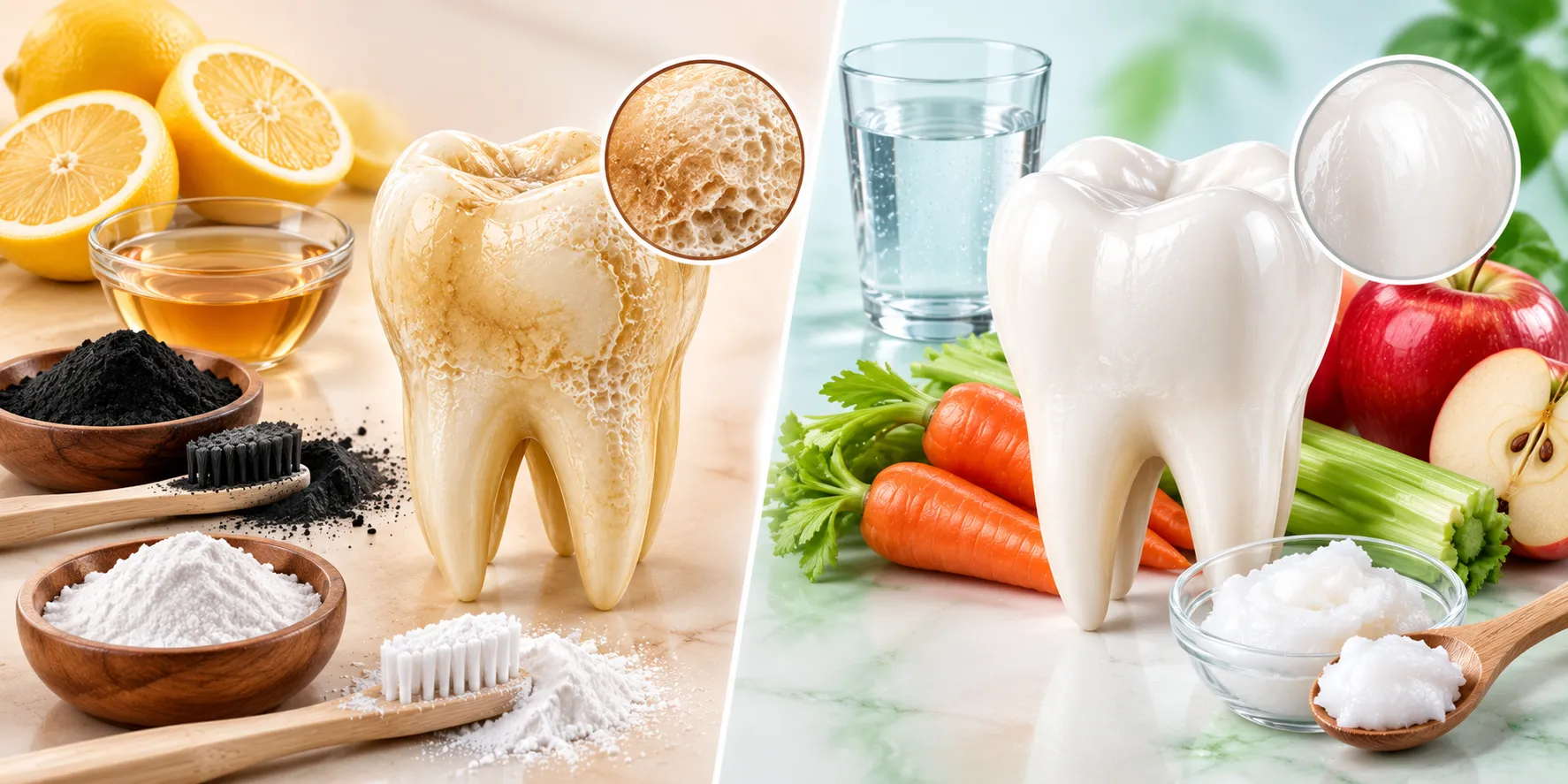
1. The Dangerous Natural Myths Dentists Advise Against
- Lemon Juice, Apple Cider Vinegar, and Fruit Peels (High Danger): Household acids have a pH between 2.0 and 3.0, far below the critical enamel dissolution threshold of 5.5 pH. Applying citrus or vinegar dissolves the calcium hydroxyapatite crystalline lattice. While teeth may briefly appear chalky-white, you are actually stripping away precious enamel, exposing yellow dentin and causing extreme hot-cold nerve sensitivity.
- Activated Charcoal Powders (High Abrasiveness): Charcoal particles possess jagged crystalline edges that micro-scratch enamel. Over time, these microscopic scratches create a rough surface where tea and coffee tannins accumulate faster, accelerating tooth discoloration.
- Raw Baking Soda Scrubbed Daily (Enamel Wear Risk): While sodium bicarbonate is a gentle stain remover when formulated in ADA-approved toothpastes, scrubbing raw baking soda granules vigorously with a dry toothbrush wears away protective enamel.
2. Safe, Evidence-Based Natural Habits That Actually Help
- Post-Meal Water Rinsing Protocol: Immediately rinsing with plain water after enjoying dark chai, black coffee, or turmeric-rich curries washes away chromogens before they bond to the enamel pellicle.
- Crunchy, High-Fiber Raw Vegetables: Eating apples, raw celery, and carrots stimulates abundant salivary flow. Saliva contains natural bicarbonate buffers and calcium ions that neutralize dietary acids and physically sweep away loose debris.
- Coconut Oil Pulling (Supportive Hygiene Only): Swishing cold-pressed coconut oil for 10 to 15 minutes helps reduce oral bacteria (Streptococcus mutans) via lauric acid saponification. While it supports gum tissue health, clinical trials confirm it cannot bleach intrinsic yellowing or dissolve hardened tartar.
Can You Remove Yellow Stains from Teeth Instantly? The Clinical Reality
The desire to know how to remove yellow stains from teeth instantly is understandable before major life events like weddings, job interviews, or photoshoots. However, true instantaneous whitening does not exist in nature:
Over-the-counter whitening pens, LED light kits from social media, and DIY hydrogen peroxide mixtures claiming instant one-minute results carry substantial risks. Many unmonitored kits contain unregulated acidic concentrations that dehydrate enamel. While dehydrated teeth temporarily appear brighter for several hours, they rapidly rebound as saliva rehydrates them, frequently leaving severe chemical gum burns in their wake.
In clinical practice, the closest safe path to rapid stain elimination is a professional 45-minute in-office dental procedure combining ultrasonic scaling and dentist-applied hydrogen peroxide bleaching.
- Teeth Whitening Services: Types, Benefits, Costs
- Top 6 Reasons for Yellow Teeth: Causes, Prevention, and Safe Whitening Options
Professional Clinical Solutions: How Dentists Remove Yellow Stains
When superficial brushing fails to brighten your smile, modern dental clinics provide scientifically proven restorative solutions tailored to your enamel health:
| Clinical Modality | Mechanism of Action | Target Discoloration | Expected Appointment Time | Enamel Safety Profile |
| Ultrasonic Scaling & Airflow Polishing | High-frequency micro-vibrations and water spray detach hardened calculus, followed by glycine powder polishing | Extrinsic dark stains, tea/coffee deposits, yellow tartar buildup | 30 to 45 minutes | 100% safe; preserves natural tooth enamel entirely |
| In-Office Chairside Teeth Whitening | Professional 25% to 35% hydrogen peroxide gel activated under strict gingival barrier protection | Moderate to severe intrinsic and extrinsic yellowing | 60 to 75 minutes (Single visit) | Safe under dentist supervision; temporary mild sensitivity |
| Custom-Molded Take-Home Whitening Trays | Dentist-prescribed 10% to 16% carbamide peroxide worn nightly in custom vacuum-formed trays | Generalized intrinsic discoloration and shade maintenance | 10 to 14 consecutive nights | Controlled, gentle shade progression with minimal sensitivity |
| Enamel Microabrasion & Resin Infiltration | Hydrochloric acid and pumice slurry gently removes superficial 0.1 mm enamel defect, followed by resin bonding | Localized fluorosis patches, white/yellow demineralization scars | 45 to 60 minutes | Conservative, permanent physical correction of enamel defects |
- How to Get Visibly Brighter Teeth Fast: Dentist-Approved Tips and Treatments
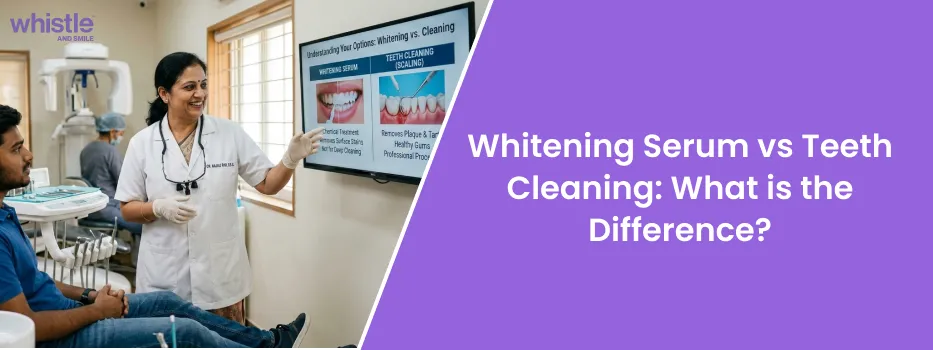
- Whitening Serum vs Teeth Cleaning: What is the Difference?
- How to Whiten Teeth Fast: Dentist-Approved Tips & Treatments
- Stained Teeth From Braces: Why Some People Get White Spots While Others Don't
Understanding Relative Dentin Abrasivity (RDA): Protecting Your Enamel
- Low Abrasive (RDA 0 to 70): Ideal for sensitive teeth and individuals with thin enamel or exposed root dentin. Provides gentle daily plaque removal without surface wear.
- Medium Abrasive (RDA 70 to 100): The gold standard for normal daily tooth cleaning, balancing stain removal efficacy with enamel preservation.
- High Abrasive (RDA 100 to 150): Effective for occasional removal of heavy tobacco or coffee stains, but should not be used long-term.
- Extremely Abrasive (RDA Above 150 to 250+): Found in many unregulated whitening powders and abrasive charcoal scrubs. Exceeding an RDA of 150 permanently wears away enamel margins, exposing yellow dentin.
Dentist Clinical Observation Layer: Insights from 600+ Partner Clinics
Drawing on routine clinical experience across Whistle partner clinics, in partnership with Clove Dental across 600+ centers nationwide, dental specialists observe common patient pitfalls:
- The Enamel Paradox: Many patients vigorously scrub yellowing teeth with hard-bristle brushes thinking they are dirty. In reality, their enamel has thinned from wear, exposing naturally yellow dentin. Aggressive brushing accelerates enamel loss, making teeth look more yellow, not whiter.
- Calculus Cannot Be Brushed Off: Once plaque absorbs salivary minerals and hardens into calculus, no home toothbrush, sonic device, or kitchen remedy can remove it. Forcing home instruments against calculus causes gum recession and enamel chipping. Only professional ultrasonic scaling can safely dislodge it.
- Orthodontic Alignment Enhances Natural Light Reflection: Crowded, overlapping teeth create dark shadowed crevices where chromogens accumulate rapidly. Once teeth are aligned straight using clear aligners, light reflects evenly across the facial enamel, instantly creating a brighter, cleaner appearance.
- Post-Bleaching White Diet Protocol: Following in-office bleaching, microscopic enamel pores remain temporarily open for 48 hours. Consuming dark curries, turmeric, coffee, or soy sauce during this window leads to rapid restaining. Patients must strictly observe a white diet (milk, plain rice, paneer, oats) for two full days.
Step-by-Step Daily Routine to Prevent and Manage Yellow Stains
Preserving a bright, healthy smile requires a balanced daily preventative regimen:
- Morning Routine: Brush for two full minutes using a soft-bristled manual or electric toothbrush held at a 45-degree angle to the gumline with a medium-abrasive fluoridated toothpaste.
- Post-Meal Hydration: After drinking morning tea or coffee, swish thoroughly with water. If you enjoy iced beverages, sip through a straw to minimize direct contact with front incisors.
- Evening Interdental Care: Floss between every tooth contact before night-time brushing to eliminate interproximal plaque that creates unsightly yellow borders between teeth.
- Biannual Professional Scaling: Visit a dental clinic every six months for routine ultrasonic scaling and polishing to remove early tartar before it hardens and discolors.
Symptom and Sensitivity Triage: What to Expect During Stain Removal
Understanding expected sensations versus clinical warning signs protects your comfort during treatment:
- Mild Transient Sensitivity (Normal: 24 to 48 Hours Post-Whitening): A slight zing or sensitivity to cold air or iced drinks often occurs after in-office bleaching as peroxide molecules pass through dentinal tubules. Easily managed by applying potassium nitrate desensitizing gel.
- Mild Gum Blanching (Temporary: 1 to 2 Hours): If concentrated bleaching gel slightly contacts gum tissue, it creates temporary white blanching that resolves spontaneously within a couple of hours.
- Severe Burning or Bleeding Gums (Abnormal: Immediate Attention): Indicates chemical irritation from unregulated over-the-counter kits lacking custom barriers. Rinse immediately with cold water and see a dentist.
- Severe Spontaneous Pulpitis / Throbbing Toothache (Emergency): Indicates bleaching agent leakage into an undetected cavity, cracked tooth, or leaky restoration. Requires immediate clinical endodontic evaluation.
Your Next Steps
Book 3D Teeth Scan
Consult our experts and get a 3D preview of your smile transformation!
FAQ's
Q1.Can yellow teeth become white again permanently?
Extrinsic yellow stains from food and drinks can be completely removed through professional scaling and polishing. However, teeth naturally accumulate pigments over time and undergo age-related dentin maturation, so maintaining results requires good daily hygiene and periodic touch-ups.
Q2.Why are my teeth yellow even though I brush twice a day?
Brushing only clears soft plaque; it cannot reverse hardened calculus, genetic tooth shades, or age-related enamel thinning. If your enamel is naturally thin or translucent, the underlying yellow dentin shows through regardless of how diligently you brush.
Q3.Is baking soda safe for removing yellow stains at home?
Baking soda is safe only when used occasionally in an ADA-approved toothpaste formulation with an RDA under 100. Scrubbing raw baking soda powder directly on your teeth wears down enamel over time, exposing yellowish dentin.
Q4.Can clear aligners help with yellow teeth?
Yes, indirectly. Overlapping or crowded teeth trap food particles and dark pigments in shadowed crevices that are difficult to clean. Straightening teeth with clear aligners eliminates these food traps and allows light to reflect evenly, creating a noticeably brighter smile.
Q5.How much time does in-office professional teeth whitening take?
A standard in-office chairside whitening appointment takes between 60 and 75 minutes. A protective barrier is applied over your gums, follow
Q6.Are charcoal toothpastes recommended for daily use?
No. Major dental associations, including the ADA and IDA, do not endorse charcoal toothpastes for daily use. Their high abrasiveness micro-scratches enamel and can create rough patches that attract stains more rapidly.
Q7.What foods cause the worst yellow stains on teeth?
Dark tea, black coffee, turmeric, red wine, soy sauce, and cola contain intense chromogens and tannins that adhere to dental enamel. Rinsing with water immediately after consuming them significantly reduces stain deposition.
 Medically Reviewed by Whistle Dental Team

 Medically Reviewed by Whistle Dental Team

 Medically Reviewed by Whistle Dental Team