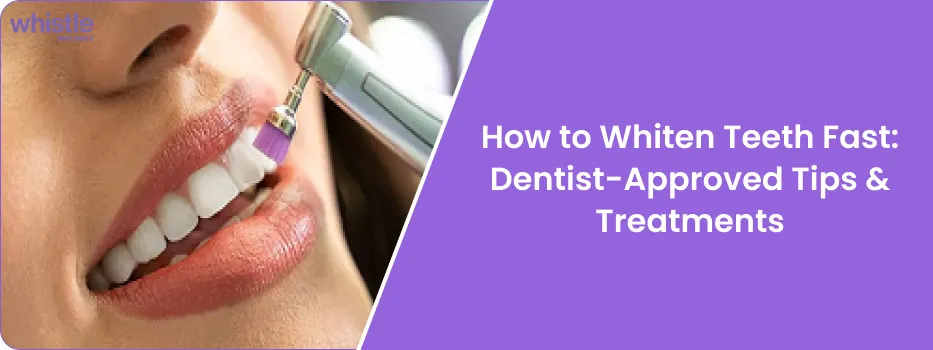
How to Whiten Teeth Fast: Dentist-Approved Tips & Treatments
 Medically Reviewed by Whistle Dental Team
- In-office whitening is fastest: Professional chairside bleaching brightens teeth by multiple shades in a single 60-minute visit.
- Extrinsic vs. intrinsic stains: Scaling removes surface chai/coffee stains in 30 minutes, whereas peroxide bleaching breaks down deep dentin stains.
- Custom trays beat store-bought strips: Dentist-fitted whitening trays ensure uniform gel contact while preventing chemical burns on gum tissue.
- Avoid acidic DIY hacks: Scrubbing teeth with lemon juice, vinegar, or charcoal strips away enamel, exposing yellow dentin underneath.
- Orthodontic timing matters: Removable Whistle clear aligners allow easy whitening access, unlike fixed metal brackets that block tooth surfaces.
For at-home whitening, dentist-prescribed custom trays deliver visible results in 7 to 14 days. Often, what feels like yellowing is simply extrinsic tea, coffee, or plaque buildup, which a professional scaling and polishing session removes in just 30 minutes.
How Teeth Become Stained Over Time
If you want to whiten your teeth quickly, it helps to understand why they become stained in the first place. Not all tooth discoloration is the same, and the type of stain determines which whitening treatment will work best.
Your teeth have two main layers. The outer layer, called enamel, is hard and naturally translucent, while the inner layer, known as dentin, has a slightly yellow shade. When stains develop on or beneath these layers, your teeth can appear yellow, brown, or discolored.
Extrinsic Stains (Surface Stains)
Extrinsic stains develop on the outer surface of the enamel. They are commonly caused by everyday habits such as drinking tea, coffee, red wine, or consuming deeply pigmented foods like turmeric. Tobacco use and poor oral hygiene can also contribute to these stains.
Because these stains remain on the surface, they can often be removed with professional dental cleaning or whitening treatments.
Intrinsic Stains (Deep Stains)
Intrinsic stains develop inside the tooth, affecting the enamel or dentin. They are usually caused by ageing, genetics, excessive fluoride exposure (dental fluorosis), certain medications, or previous tooth injuries.
Unlike surface stains, intrinsic discoloration cannot be removed by brushing alone. Professional teeth whitening treatments use whitening agents, such as hydrogen peroxide or carbamide peroxide, to break down the stain molecules deep within the tooth and restore a brighter appearance.
Why the Type of Stain Matters
Surface stains usually respond well to polishing and professional whitening, while deeper intrinsic stains often require stronger whitening treatments or, in some cases, cosmetic options such as veneers or dental bonding. An evaluation by your dentist can help identify the cause of discoloration and recommend the most effective treatment for your smile. So if someone comes in asking for “fast teeth whitening treatment”, the dentists examine and then do scaling and polishing.
Professional Teeth Whitening Options
If you're looking for how to whiten teeth, maintaining proper oral hygiene is the first step. Regular brushing, flossing, and professional dental cleanings can help remove surface stains and improve the appearance of your smile.
For more noticeable results, dentists may recommend professional whitening treatments tailored to your dental needs.
- Brush twice daily and floss regularly to prevent plaque buildup.
- Reduce consumption of stain-causing foods and beverages such as coffee and tea.
- Visit your dentist for routine cleanings and oral health check-ups.
- Consider professional whitening procedures for faster and longer-lasting results.
- Follow healthy oral care habits to maintain white teeth and a confident smile.
- Teeth Whitening Services: Types, Benefits, Costs
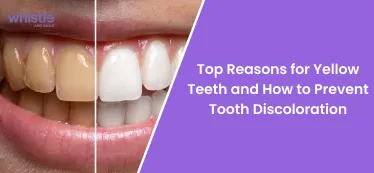
- Top 6 Reasons for Yellow Teeth: Causes, Prevention, and Safe Whitening Options
Yellow Teeth Home Remedies
Many people search for yellow teeth home remedies to improve the appearance of stained or discolored teeth naturally.
While good oral hygiene remains the most effective approach, simple habits such as regular brushing, flossing, and limiting stain-causing foods can help reduce yellowing over time.
For persistent discoloration, professional dental treatments may provide more effective and lasting results.
- Brush your teeth twice daily to remove surface stains and plaque buildup.
- Rinse your mouth after consuming coffee, tea, or other staining beverages.
- Eat crunchy fruits and vegetables that can help clean teeth naturally.
- Maintain regular dental check-ups and professional cleanings.
- Consult a dentist if yellow teeth persist despite consistent oral care.
In-Clinic vs. At-Home Teeth Whitening
Honestly, selecting the right whitening method depends on your timeline, budget, and baseline tooth health.
1. In-Office Professional Whitening (Fastest: 1 Session / 60 Minutes)
If you have an upcoming wedding, photo shoot, or job interview and need immediate results, in-office chairside whitening is the gold standard. Your dentist applies a protective rubber barrier over your gums, coats your teeth with high-concentration hydrogen peroxide gel (25% to 40%), and illuminates the gel with a specialized light or laser.
The light accelerates the oxidation reaction, breaking down deep chromogens in three 15-minute cycles. You walk out of the clinic with a dramatically brighter smile in under an hour.
2. Dentist-Prescribed Custom Take-Home Trays (Fast: 7 to 14 Days)
If you prefer whitening at home with professional-grade safety, your dentist takes a 3D digital scan of your mouth to fabricate custom-fitted flexible trays. You fill these trays with a lower concentration of carbamide peroxide or hydrogen peroxide gel (10% to 22%) and wear them for 30 to 60 minutes daily. This method delivers gradual, highly controlled whitening over 1 to 2 weeks with minimal tooth sensitivity.
3. Over-the-Counter (OTC) Strips and Gels (Moderate: 2 to 4 Weeks)
Store-bought whitening strips contain low-concentration bleaching gel (typically 5% to 10% hydrogen peroxide) on plastic strips. While they can lighten mild surface stains over several weeks, generic flat strips fail to conform to curved tooth anatomy, often leading to uneven whitening and temporary gum irritation.
4. Professional Scaling and Polishing (Instant Surface Clean: 30 Minutes)
Before undergoing any chemical bleaching, get a professional cleaning. Scaling uses ultrasonic vibrations to blast away hardened tartar, while polishing removes stubborn chai and coffee stains. For many patients, scaling and polishing instantly restores their natural bright shade without any bleaching chemicals.
Safe vs. Unsafe Teeth Whitening Methods
Here's the thing. The internet is flooded with DIY home remedies claiming to show you how to make your teeth white using kitchen ingredients. Most of these remedies cause severe, permanent enamel damage.
Safe Home Methods
- Dentist-Prescribed Custom Trays: The only clinically proven, safe way to whiten teeth at home under doctor guidance.
- ADA-Accepted Whitening Toothpastes: Toothpastes containing mild silica abrasives help prevent new surface stains from settling after meals.
Dangerous DIY Hacks to Avoid
- Lemon Juice & Apple Cider Vinegar: Lemon juice has an acidic pH of 2.2, which chemically dissolves tooth enamel on contact. As enamel thins, the underlying yellow dentin shows through, making your teeth permanently yellow and hyper-sensitive.
- Activated Charcoal Powder: Charcoal particles are extremely abrasive. Scrubbing with charcoal acts like sandpaper, scratching protective enamel prisms and creating microscopic grooves that catch more stains in the future.
- Baking Soda & Hydrogen Peroxide Mix: Mixing raw baking soda with store-bought hydrogen peroxide creates an uncalibrated, harsh abrasive paste that burns gum tissue and erodes enamel.
Teeth Whitening with Braces and Clear Aligners
Orthodontic hardware drastically impacts your ability to whiten your teeth.
1. Whitening with Fixed Metal or Ceramic Braces
If you wear traditional fixed braces, attempting to whiten your teeth is a major mistake. Bleaching agents cannot penetrate beneath metal or ceramic brackets glued to your teeth. If you whiten with braces on, you will end up with dark, unbleached yellow squares in the center of every tooth once your brackets are removed. Always wait until your braces are removed before bleaching.
2. Whitening with Whistle Clear Aligners
Whistle clear aligners offer a massive advantage for smile aesthetics. Because aligners are completely removable, you can brush and floss thoroughly without obstruction, preventing stain accumulation. Furthermore, once your teeth are aligned, your custom Whistle aligner trays can double as whitening delivery trays under your dentist's guidance, allowing you to straighten and brighten your smile seamlessly.
Common Mistakes Orthodontists Often See
In clinical practice, dentists and orthodontists frequently observe patient habits that ruin their whitening results or harm their teeth. Here are five common mistakes to avoid:
- Scrubbing Teeth with Acidic Kitchen Hacks: Using lemon juice, baking soda, or charcoal scrubs that permanently strip enamel and expose yellow dentin.
- Bleaching Over Active Cavities or Gum Disease: Applying whitening gel over untreated tooth decay or inflamed gums causes severe chemical nerve pain and tissue burns.
- Whitening with Fixed Braces: Applying bleaching strips while wearing metal brackets, resulting in discolored square patches after bracket removal.
- Ignoring the Post-Whitening "White Diet": Drinking dark chai, coffee, or eating turmeric-laden curry within 48 hours of whitening when enamel pores are open.
- Buying Uncalibrated Online UV Whitening Lights: Using cheap viral LED mouthpieces that generate excess heat, dehydrating teeth and causing acute pulpitis.
Maintaining Your Whitening Results
Protecting your newly brightened smile requires simple, proactive daily habits:
- Follow the 48-Hour "White Diet": Avoid dark liquids and pigmented foods (chai, coffee, soy sauce, turmeric curry, berries) for 48 hours post-whitening while enamel pores close.
- Sip Dark Beverages Through a Straw: Use a straw when drinking iced coffee or tea to minimize direct contact with your front teeth.
- Rinse with Water After Meals: Swish warm water around your mouth immediately after eating dark or acidic foods to prevent stain adherence.
- Get Bi-Annual Dental Cleanings: Schedule professional scaling and polishing every 6 months at a Whistle partner clinic to sweep away fresh surface plaque.
Teeth Whitening Cost and What to Expect
People also search for “teeth whitening cost in India” before deciding. In-clinic whitening may range from ₹8,000 to ₹20,000 depending on location and technique. Cleaning is significantly less. Sometimes that alone provides the improvement patients were chasing through products.
It is also important to understand something many advertisements do not say, whitening is not permanent. Tea does not stop. Coffee does not stop. Smoking does not stop unless you choose to stop. Over time, stains return gradually.
Maintenance cleaning every six months often preserves brightness longer than repeating bleaching frequently.
There is also a subtle shift happening in aesthetic dentistry. Instead of pushing teeth toward an unnaturally bright shade, the focus is increasingly on strengthening enamel so it appears naturally luminous. A healthy enamel surface reflects light better than a dehydrated one.
Bright should still look believable.
If someone asks me how to whiten teeth fast, the honest answer is usually this:
- First, check whether whitening is even required.
- Second, clean the teeth properly.
- Third, bleach only if indicated.
- Skipping the first step is where dissatisfaction begins.
Fast results are possible. Reckless results are also possible. The difference is in the evaluation.
If you are unsure what your teeth actually need, get examined before trying another product. Not every yellow tooth needs chemicals. Sometimes it just needs cleaning. Sometimes it needs patience. Sometimes it needs adjusted expectations.
Teeth are biological structures. They respond better to judgment than urgency.
Your Journey to a Brighter Smile
You may have seen online advertisements for direct-to-consumer whitening kits promising instant white teeth at low prices. We strongly warn you against unmonitored bleaching.
Unregulated whitening products often contain unstable peroxide concentrations or acidic stabilizing agents that dissolve enamel.
Without a physical dental exam, applying strong bleaching gel over hidden cavities or cracked teeth allows chemicals to penetrate directly into the tooth pulp, causing excruciating nerve pain and irreversible pulp necrosis. Safe whitening requires professional evaluation by a dentist or orthodontist at a Whistle partner clinic.
Expected vs. Red-Flag Emergency Signals
| Symptom | Normal & Expected | Contact Your Dentist or Whistle Partner Clinic Immediately If… |
|---|---|---|
| Tooth Sensitivity | Mild sensitivity or brief "zingers" to cold foods and drinks for 24–48 hours after whitening is common. | You experience severe, constant, or throbbing pain that lasts longer than 3 days. |
| Gum Response | Temporary whitening (blanching) of the gums or mild irritation that resolves within about 1 hour is normal. | You notice blisters, ulcers, severe gum burns, or persistent swelling after treatment. |
| Enamel Appearance | Teeth appear brighter with a more even shade following whitening treatment. | Your teeth develop chalky white patches, translucent edges, or painful exposed dentin, which may indicate enamel damage. |
| Dental Restorations | Natural teeth become whiter, while crowns, veneers, and fillings retain their original colour. | You notice a significant colour mismatch between natural teeth and existing restorations after whitening and need professional evaluation. |
Your Next Steps
Learning how to whiten teeth fast safely comes down to choosing dentist-approved methods over dangerous DIY kitchen hacks.
Whether you need an instant 30-minute professional scaling session to remove stubborn chai stains or a 60-minute in-office laser whitening session for deep intrinsic discoloration, professional care protects your enamel while delivering maximum brightness.
Ready to unlock your brightest, healthiest smile? Book a free Whistle Assessment at your nearest Whistle partner clinic today.
Also Read:
- How to Get Visibly Brighter Teeth Fast: Dentist-Approved Tips and Treatments
- Whitening Serum vs Teeth Cleaning: What is the Difference?
- How to Remove Yellow Stains from Teeth: Effective Home Remedies & Professional Treatments
- Stained Teeth From Braces: Why Some People Get White Spots While Others Don't
Book 3D Teeth Scan
Consult our experts and get a 3D preview of your smile transformation!
FAQ's
Q1.How can I whiten my teeth immediately?
If you want to whiten your teeth immediately, the fastest option is professional teeth whitening at a dental clinic. Dentists use high-strength whitening agents and special lights that can lighten teeth several shades in a single session.
Q2.What is the 2-2-2 rule for teeth?
The 2-2-2 rule for teeth is a simple dental hygiene guideline recommended by many dentists:
- Brush your teeth twice a day
- Brush for at least 2 minutes each time
- Visit the dentist every 2 times a year (every 6 months)
Following this rule helps maintain healthy gums, prevent cavities, and keep teeth looking cleaner and brighter.
Q3.How can I get white teeth in 7 days?
You can make your teeth noticeably whiter in about 7 days by following a consistent whitening routine.
Some effective methods include:
- Using whitening strips daily
- Brushing with whitening toothpaste
- Applying a teeth whitening serum or gel
- Avoiding staining foods such as coffee, tea, and red wine
- Maintaining proper brushing and flossing habits
Q4.Can I whiten my teeth in 24 hours?
Yes, it is possible to whiten your teeth in 24 hours, but the level of whitening depends on the method used.
The fastest option is in-office dental whitening, which can significantly brighten teeth in a single appointment. Some at-home whitening kits can also show visible improvement within a day, though results are usually more subtle.
Q5.Can baking soda and lemon juice whiten teeth fast?
No, baking soda and lemon juice are dangerous for your teeth. Lemon juice is highly acidic and dissolves enamel, while baking soda scratches the tooth surface, exposing yellow dentin underneath.
Q6.How to get white teeth while wearing clear aligners?
With removable clear aligners like Whistle aligners, you can take your trays out to brush and floss normally. Once your treatment is complete, your custom aligner trays can double as whitening trays under your doctor's supervision.
 Medically Reviewed by Whistle Dental Team
 Medically Reviewed by Whistle Dental Team

 Medically Reviewed by Whistle Dental Team