

Misaligned Teeth - Causes, Treatments, and Why Teeth Aligners Are Best
 Medically Reviewed by Whistle Dental Team
Misaligned teeth, clinically termed malocclusion, occur when the upper and lower dental arches fail to meet in proper anatomical alignment when biting down. This misalignment stems from discrepancies in jaw size, genetic traits, childhood mouth breathing, or premature primary tooth loss, disrupting regular chewing mechanics and periodontal health.
Key Clinical Takeaways
- Malocclusion is a treatable structural condition affecting dental arches, facial symmetry, and masticatory bite function.
- Common types of misaligned teeth include dental crowding, spacing gaps, overbite, underbite, crossbite, and open bite.
- Angle's classification categorizes malocclusion into Class 1 (balanced molars with localized crowding), Class 2 (overjet with retruded lower jaw), and Class 3 (underbite with protruding lower jaw).
- Leaving misaligned teeth untreated increases the clinical risk of TMJ pain, accelerated enamel attrition, chewing fatigue, and periodontal gum pockets.
- Correction pathways range from fixed metal or ceramic braces to removable clear aligners, planned with 3D intraoral digital scans and overseen in-person by qualified MDS orthodontists.
Modern clinical orthodontics corrects misaligned teeth using fixed braces or custom clear aligners under in-clinic MDS Orthodontist supervision across 600+ partner clinics nationwide, in partnership with Clove Dental. Early diagnostic assessment helps prevent progressive enamel wear, jaw joint strain, and chronic oral health complications.
What Are Misaligned Teeth? Defining Malocclusion
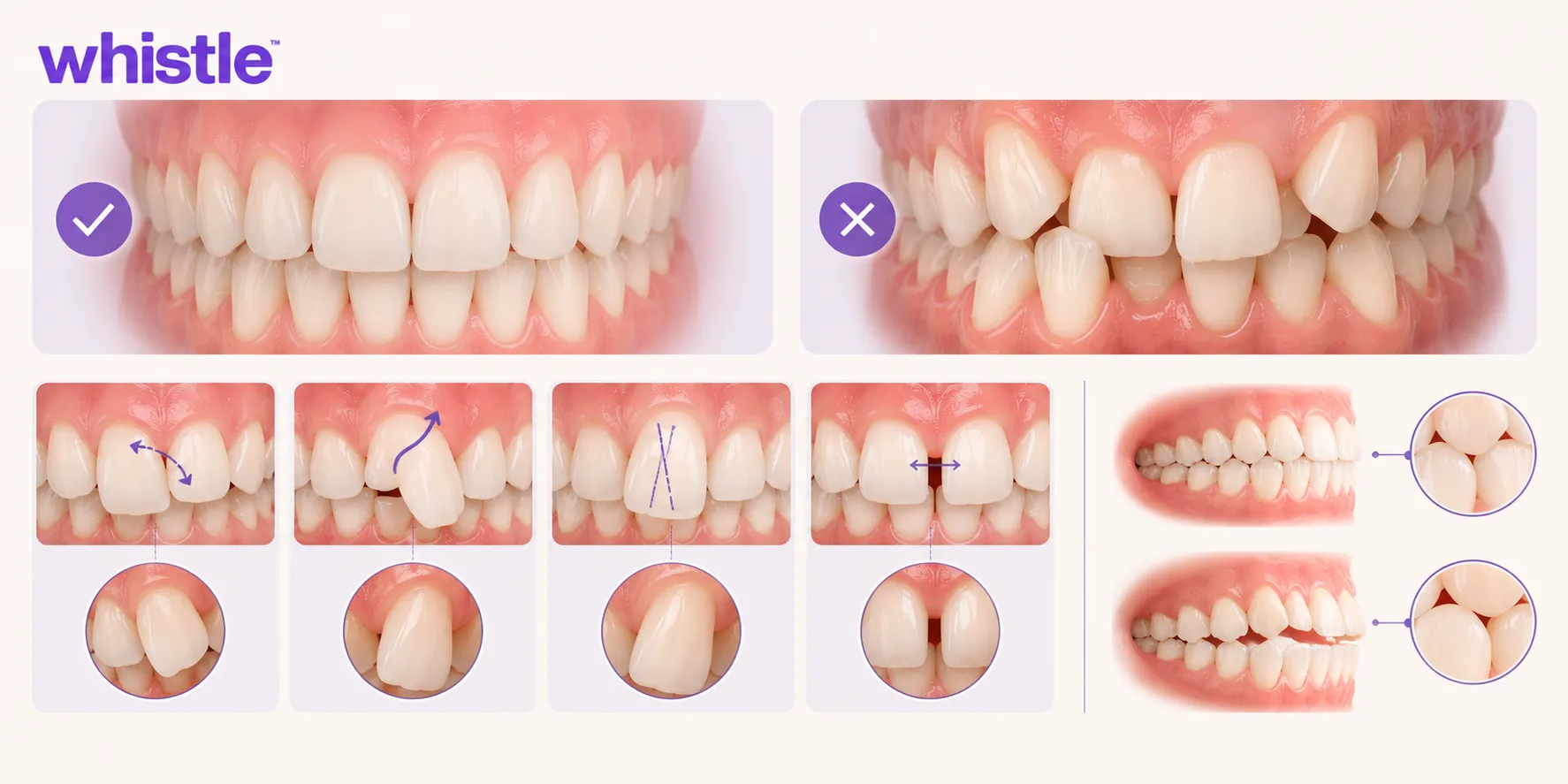
Causes of Misaligned Teeth:
- Genetics and Arch-to-Tooth Discrepancy: Hereditary genetics determine jaw dimensions and tooth size. Inheriting a narrow jaw alongside broad teeth results in severe dental crowding, while a spacious jaw with smaller teeth produces persistent gaps.
- Prolonged Childhood Habits: Extended thumb-sucking, bottle feeding past early toddlerhood, and chronic tongue thrusting exert continuous outward force against developing alveolar bone, tilting anterior teeth outward.
- Chronic Mouth Breathing: Nasal airway obstructions caused by enlarged adenoids, allergic rhinitis, or deviated septums force children to breathe through their mouths. This alters resting tongue posture from the roof of the mouth to the floor, resulting in high, narrow palatal arches and crossbites.
- Premature or Delayed Loss of Milk Teeth: Deciduous baby teeth serve as natural space maintainers for permanent teeth. Losing a milk tooth prematurely allows adjacent teeth to tilt into the space, blocking the erupting permanent tooth.
- Facial Trauma and Dental Injury: Direct impacts from sports or accidents can displace teeth, damage underlying periodontal ligaments, or alter the growth trajectory of the maxilla or mandible.
- Hyperdontia and Hypodontia: Congenital conditions resulting in extra teeth (supernumerary teeth) or missing tooth buds disrupt uniform dental arch equilibrium.
Types of Misaligned Teeth: Clinical Variations
- Dental Crowding: Teeth overlap, rotate, or bunch together due to insufficient space along the jawbone. Crowded teeth create narrow crevices where food particles collect, accelerating tartar build-up.
- Spacing and Diastema: Noticeable gaps between adjacent teeth caused by microdontia (undersized teeth), missing tooth buds, or an enlarged labial frenum separating front incisors.
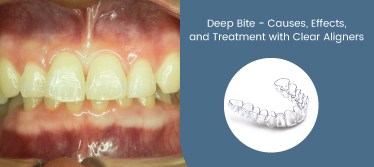
- Overbite and Deep Bite: The upper front teeth excessively cover the lower front incisors vertically. In severe deep bites, lower teeth can bite directly into the palatal gum tissue behind the upper front teeth.
- Underbite (Anterior Crossbite): The lower jaw extends forward, causing the lower front teeth to sit ahead of the upper front teeth, altering chewing motion and facial profiles.
- Crossbite: Upper teeth bite inside the lower teeth instead of resting outside. Crossbites can be posterior (affecting back molars) or anterior (affecting front teeth), frequently causing jaw shifting to one side.
- Open Bite: Upper and lower anterior teeth fail to meet when back molars bite together, leaving an open oval gap that causes persistent speech lisps and difficulty shearing food.
- Overjet: Upper incisors project horizontally outward over the lower teeth, commonly referred to as protruding front teeth, increasing vulnerability to accidental chipping.
Angle's Classification of Malocclusion: Understanding Classes 1, 2, and 3
- Class 1 Malocclusion (Neutroclusion): The bite relationship of back molars is normal, but individual anterior teeth are crowded, rotated, tipped, or spaced.
- Class 2 Malocclusion (Distoclusion / Retrognathism): The upper dental arch and jaw sit significantly forward relative to the lower jaw. Division 1 presents with flared upper front teeth, while Division 2 exhibits retroclined central incisors with overlapping lateral incisors.
- Class 3 Malocclusion (Mesioclusion / Prognathism): The lower dental arch sits significantly forward of the upper arch, creating an underbite. This class frequently involves a genetic skeletal discrepancy with an underdeveloped upper jaw, an overdeveloped mandible, or both.
Oral Health Risks and Functional Complications of Untreated Misalignment
- Temporomandibular Joint (TMJ) Dysfunction: Uneven dental contact forces jaw joints to compensate, producing clicking sounds, jaw tightness, neck pain, and chronic tension headaches.
- Accelerated Enamel Attrition: When teeth do not glide smoothly during mastication, opposing surfaces grind aggressively, eroding protective enamel and exposing sensitive dentin.
- Periodontal Disease and Cavities: Severely crowded teeth resist standard toothbrush bristles and dental floss, leading to persistent plaque biofilm, gingivitis, and bone recession around tooth roots.
- Masticatory Inefficiency and Digestive Stress: Inability to grind fibrous foods evenly places an increased workload on digestive enzymes, contributing to gastrointestinal discomfort.
- Speech Impediments: Structural gaps or tongue obstructions from open bites and crossbites distort sibilant sounds, creating persistent lisps.
Modern Treatment Options for Misaligned Teeth
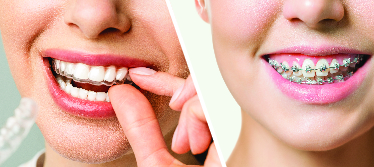
- Clear Aligners: Removable, transparent thermoplastic trays manufactured from medical-grade polyurethane. Custom-designed using 3D digital scans, clear aligners apply calibrated micro-forces to guide teeth into alignment. They offer uncompromised aesthetics and effortless oral hygiene, ideal for mild, moderate, and complex malocclusions under regular in-clinic orthodontist monitoring.
- Traditional Metal Braces: High-grade stainless steel brackets bonded to teeth, connected with orthodontic archwires and elastomeric modules. They deliver dependable three-dimensional tooth movement, particularly effective for severe skeletal rotations and root uprighting.
- Ceramic Tooth-Colored Braces: Polycrystalline or monocrystalline ceramic brackets that blend with natural tooth enamel, offering a more discreet appearance than metal brackets while maintaining fixed mechanical leverage.
- Interceptive Orthodontics and Palatal Expanders: Early orthopedic interventions in growing children aged 7 to 11 to widen narrow palatal bones and direct facial growth before skeletal sutures fuse.
- Orthognathic Jaw Surgery: Combined surgical-orthodontic procedures for adult patients with severe skeletal Class 2 or Class 3 discrepancies where jaw discrepancy cannot be resolved by tooth movement alone.
Comparing Treatment Modalities for Misaligned Teeth
Reviewing how major orthodontic options compare across everyday clinical factors helps guide your consultation:
| Treatment Modality | Ideal Malocclusion Scope | Visibility / Aesthetics | Oral Hygiene Maintenance | Dietary Restrictions |
| Clear Aligners | Mild, moderate, and complex dental malocclusions | Virtually invisible, transparent trays | Effortless: remove trays to brush and floss normally | Zero: trays are removed before eating meals |
| Metal Braces | Comprehensive: mild to severe skeletal discrepancies | Visible silver or metallic brackets | Requires interdental brushes, floss threaders | Avoid sticky, hard, or crunchy foods |
| Surgical Orthodontics | Severe adult skeletal Class 2 or Class 3 jaw mismatches | Pre-surgical braces or aligners required | Specialized post-surgical oral rinses and care | Soft and liquid diet during jaw bone recovery |
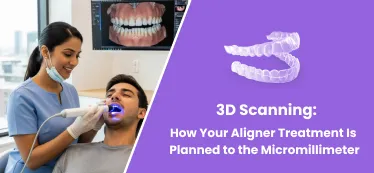
In-Clinic Orthodontist Consultation at Whistle Partner Clinics Understanding your specific dental alignment starts with an in-person clinical examination. At Whistle, in partnership with Clove Dental across 600+ physical partner clinics nationwide, qualified MDS Orthodontists use advanced 3D digital intraoral scanners to map your bite with sub-millimeter precision, presenting tailored treatment pathways with flexible monthly EMI options.
Orthodontist Observation Layer: Common Clinical Observations
- Prioritizing Cosmetic Straightening Over Bite Function: Many individuals focus solely on straightening front teeth, overlooking deep bites or crossbites that cause long-term joint damage.
- Assuming Adults Cannot Move Teeth: Tooth movement depends on healthy bone biology and periodontal ligament response, not chronological age. Adults achieve successful alignment with proper bone support.
- Underestimating Retention Protocols: Without wearing post-treatment retainers as prescribed, natural periodontal memory causes teeth to drift back toward original positions.
- Inconsistent Daily Aligner Wear: Successful clear aligner therapy requires 20 to 22 hours of daily wear. Inconsistent wear delays tooth tracking and prolongs overall treatment duration.
Symptom Guide: Expected Adjustment Sensations vs. Clinical Attention Signals
Knowing what sensations to expect during orthodontic treatment helps distinguish normal adaptation from issues requiring doctor evaluation:
| Symptom | Expected Clinical Adjustment | Requires Immediate Doctor Review |
| Tooth Pressure | Mild dull ache for 24 to 48 hours following tray changes or archwire adjustments | Sharp, throbbing, or continuous tooth pain lasting beyond 5 consecutive days |
| Soft Tissue Sensation | Temporary minor irritation on cheek lining or tongue as oral tissues adapt | Persistent bleeding ulceration, deep tissue lacerations, or allergic swelling |
| Bite Perception | Slight sensation of bite change as teeth transit toward planned positions | Inability to close jaws, sudden jaw lock, or severe acute temporomandibular joint pain |
Next Steps for Your Smile
Also Read:
Book 3D Teeth Scan
Consult our experts and get a 3D preview of your smile transformation!
Aligners
FAQ's
Q1.Can misaligned teeth correct themselves naturally over time?
No, misaligned teeth do not straighten on their own. Once permanent teeth erupt and jaw bones mature, teeth tend to maintain their position or become more crowded due to natural mesial drift. Professional orthodontic treatment is necessary to reposition teeth safely.
Q2.Are clear aligners effective for treating severe misaligned teeth?
Yes, modern clear aligners engineered from high-grade multi-layer polyurethane can address a wide variety of mild, moderate, and complex malocclusions. In complex cases, orthodontists use smart force attachments and elastics to achieve precise tooth movement.
Q3.How do misaligned teeth trigger TMJ and jaw pain?
When teeth do not interlock in a balanced bite, jaw muscles and the temporomandibular joint work extra hard to stabilize the bite. This unequal muscular strain leads to joint clicking, muscle spasms, facial soreness, and tension headaches.
Q4.How long does orthodontic treatment typically take for misaligned teeth?
Total treatment duration generally ranges from 6 to 18 months depending on the severity of malocclusion, the orthodontic appliance selected, and patient compliance with daily wear protocols.
Q5.Why are retainers mandatory after correcting misaligned teeth?
Periodontal ligament fibers retain elastic memory and require time to reorganize around newly positioned teeth. Wearing retainers preserves the corrected alignment and prevents gradual relapse.

 Medically Reviewed by Whistle Dental Team

 Medically Reviewed by Whistle Dental Team








 Medically Reviewed by Whistle Dental Team