What is a Mouthguard? How It Works, Types, and Key Protection Facts
 Medically Reviewed by Whistle Dental Team
A mouthguard is a protective, flexible dental appliance designed to fit comfortably over your teeth and gums to shield them from trauma, impact injuries, and chronic wear. Typically worn over the upper dental arch, it acts as a shock-absorbing barrier between your teeth, jaw joints, and soft oral tissues.
Mouthguards are primarily used in contact sports to prevent broken teeth and concussions, during sleep to stop nocturnal bruxism and jaw clenching, and in specialized dental treatments to manage temporomandibular joint pain and mild sleep apnea.
Key Takeaways
- Shock-Absorbing Protection: A mouthguard functions as a resilient dental shield that cushions your teeth, lips, tongue, and jaw joints against sudden sports collisions and chronic sleep grinding forces.
- Three Distinct Appliance Types: Available in pre-formed stock trays, boil-and-bite options, and custom dental laboratory designs. Custom-fitted guards provide superior retention, uniform protection thickness, and unhindered breathing.
- Dedicated Clinical Purposes: Sports guards absorb high-energy impact on the athletic field, whereas night guards provide a dense sliding wear-barrier against teeth grinding. A soft sports guard must never be worn for sleep bruxism.
- Clear Aligners Are Not Guards: Aligners are active orthodontic devices under 1 millimeter thick designed to move teeth, offering zero impact shock absorption. Mouthguards hold teeth stationary and absorb heavy blows.
- Significant Preventative Value: Wearing a properly fitted guard prevents chipped enamel, knocked-out teeth, and costly emergency root canals or dental implants, protecting natural teeth as well as fixed orthodontic braces.
Many people assume mouthguards are only for boxers or people with serious dental issues. In reality, a mouthguard is one of the most effective protective tools in dentistry. It can save your teeth from a stray elbow on the field.
It can stop the morning headaches caused by night-time grinding. Let's break down the types, the benefits, and how to choose the right one for you.
What Does Mouth Guard Do? (Core Protective Functions)
- Prevents Fractured and Knocked-Out Teeth: Without a guard, an unexpected elbow on the cricket field or a fall during basketball concentrates hundreds of pounds of sudden force onto a single tooth, easily snapping the crown or knocking the root completely out of its socket. A mouthguard spreads this kinetic energy across your entire dental arch.
- Protects Lips, Cheeks, and Tongue: During a facial collision, your sharp tooth edges can pierce through your inner lips and cheek lining, leading to severe lacerations and stitches. A mouthguard covers those sharp edges with smooth, resilient padding.
- Buffers Jaw Joints and Reduces Concussion Risk: When your lower jaw slams violently upward against your upper teeth, the shockwave travels straight into your temporomandibular joints (TMJ) and the base of your skull. By creating a cushion between the jaws, a mouthguard dampens this upward impact, reducing the risk of jaw fractures and neck strain.
- Shields Tooth Enamel from Nighttime Grinding (Bruxism): When you clench or grind your teeth in your sleep, your jaw muscles exert tremendous mechanical pressure. A night guard provides a protective sliding surface, preventing flattened enamel, cracked fillings, and morning jaw soreness.
How to Clean and Care for Your Mouthguard
Because your mouthguard sits in a warm, moist mouth environment, bacteria and plaque can build up quickly if it is not cleaned properly. Follow these simple rules to keep your guard hygienic and odor-free:
- Rinse Immediately After Use: Rinse your guard under cool tap water every time you take it out to wash away saliva and loose debris.
- Brush Gently with Liquid Soap: Use a soft-bristled toothbrush and a drop of antibacterial liquid soap to clean the surfaces. Avoid abrasive whitening toothpaste, which can create microscopic scratches where bacteria breed.
- Store in a Ventilated Case: Always keep your guard in a sturdy, perforated plastic case so air can circulate and dry the material completely.
- Keep Away from Heat: Never wash your mouthguard in hot water, leave it inside a hot car, or expose it to direct sunlight. Heat warps the plastic, ruining its custom fit.
- Bring It to Routine Dental Visits: Bring your guard to your regular checkups so your dentist can inspect it for tears, thinning, or loose fit.
How Mouth Guard Works: The Biomechanics Explained Simply
To understand how a mouthguard works, think of it as a specialized helmet or high-performance shock absorber built specifically for your teeth:
1. Force Redistribution Across the Arch
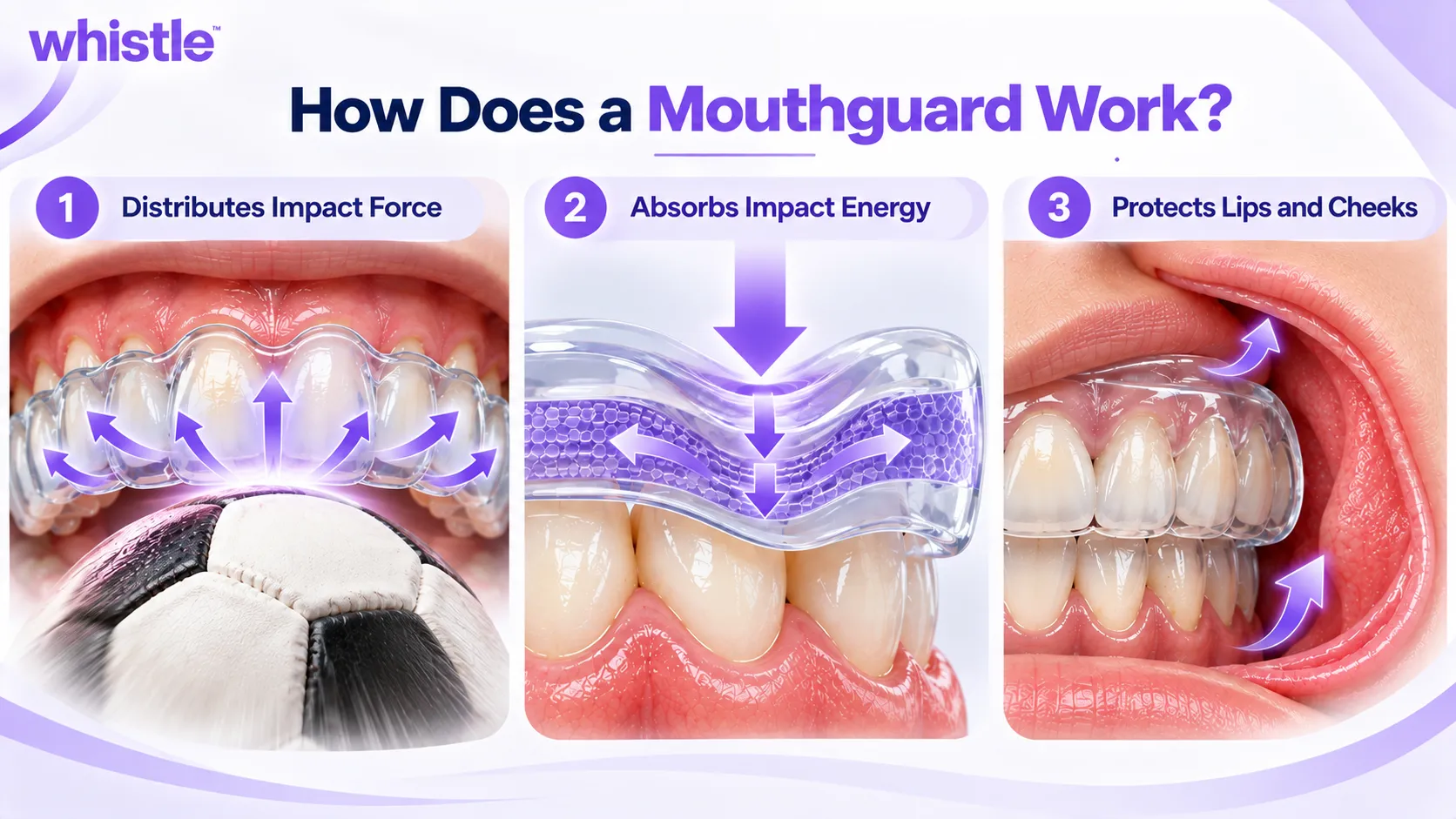
When an object strikes an unprotected mouth, the impact force lands on one or two front teeth. Because front incisors have single roots, they cannot withstand sudden high-energy blows. A mouthguard acts as a rigid yet flexible bridge. When an impact hits the front, the guard dissipates the energy sideways across all 14 or 16 teeth in the arch, neutralizing the force so no single tooth bears the brunt of the trauma.
2. Elastic Energy Absorption
Mouthguards are made from specialized medical-grade polymers (such as ethylene vinyl acetate or multi-layer polyurethane). These materials compress microscopically upon impact, converting violent kinetic energy into harmless thermal energy before it can fracture brittle dental enamel or travel to the delicate nerve pulp inside the tooth.
3. Soft Tissue Separation
By forming a smooth, rounded barrier over your dental arch, the mouthguard holds the delicate soft tissues of your lips and cheeks away from the sharp edges of your teeth. Even if your mouth takes a direct hit, your lips press against smooth plastic rather than jagged enamel or metal brackets.
Always Fitted by Trusted Dental Experts
Protecting your jaws or changing your bite needs clinical oversight. Whistle products are only fitted through certified dental partners. We never sell direct-to-consumer mail-order kits. An at-home impression kit can't check your bone health or jaw joints. Getting it wrong can cause permanent damage.
We partner with a network of 2,500+ certified dental clinics. Your Whistle partner doctor examines your mouth in person, takes X-rays where needed, and creates a high-definition 3D scan. The result: a guard or aligner that fits safely and precisely.
The 2 Main Types of Mouthguards (and 1 Common Lookalike)
Not all mouthguards do the same job. Using a sports guard to stop teeth grinding, or the reverse can strain your jaw. Here's what you need to know.
1. Sports Mouthguards (The Athletic Shields)
- What they do: Absorb sudden, heavy impacts on the field or court.
- When to wear them: During any contact or high-exertion sport. Football, cricket, basketball, hockey, skating, cycling, all of them.
- How they help: They stop teeth from being knocked out. They prevent painful enamel fractures. And they cover the sharp edges of your teeth, so a collision doesn't drive your teeth through your own lips or tongue.
2. Night Guards for Teeth Grinding (The Sleep Protectors)
- What they do: Protect your teeth from bruxism, the involuntary clenching and grinding of teeth during sleep.
- When to wear them: Only while sleeping.
- How they help: A night guard is typically made from harder, denser material than a sports guard. It doesn't absorb outside impacts. Instead, it works as a smooth wear-barrier. When you grind at night, your teeth glide across the plastic instead of scraping against each other. This prevents flattened enamel, cracked fillings, and jaw joint (TMJ) soreness.
Not a Mouthguard: Clear Aligners (The Common Lookalike)
Mouthguards by Purpose: Sports Guards vs Night Guards vs Sleep Splints
A very common patient mistake is using one type of mouthguard for a completely different purpose. Each guard is engineered for specific biomechanical demands:
- Athletic Sports Mouthguards: Made from thicker, shock-absorbing, resilient polymers designed to absorb sudden outside impacts from balls, sticks, elbows, and turf. They cover the teeth and facial gum tissue to absorb blunt force trauma.
- Bruxism Night Guards: Made from harder, dense, crystal-clear acrylics or dual-laminate plastics. They are much thinner than sports guards and designed specifically to withstand thousands of hours of friction and heavy jaw clenching without wearing through.
- Mandibular Advancement Splints (Sleep Apnea): Specialized oral appliances that hold the lower jaw slightly forward during sleep to prevent the airway from collapsing, helping to reduce snoring and mild obstructive sleep apnea.
Custom-Fit vs. Store-Bought: The Comparison
When choosing a mouthguard, you'll face two options: generic store-bought guards or professional custom-fitted ones.
| Feature | Store-Bought "Boil-and-Bite" | Professional Custom-Fit Guard |
| How it fits | You soften it in hot water and shape it with your fingers | Made from a precise 3D digital scan of your teeth |
| Comfort | Bulky and loose; pushes your lips out; makes speaking and deep breathing hard | Slim; fits like a snug "second skin"; stays in place when you open wide |
| Protection | Biting down during molding thins the plastic at your bite points, exactly where protection matters most | Even, uniform thickness across the whole guard for maximum shock absorption |
| Lifespan | A month at best for optimal protection | 10-12 months for adults |
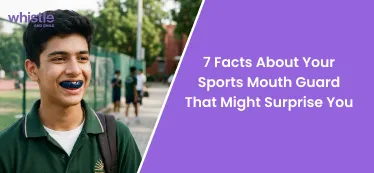
7 Surprising Facts About the Mouth Guard
- Invented for 19th-Century Boxing: The very first mouthguard was crafted in 1890 by London dentist Woolf Krause using gutta-percha (a natural rubber tree resin) to protect boxers from lip cuts and broken front teeth.
- Saves Over 5 Million Teeth Every Year: According to dental research, athletes who wear properly fitted mouthguards prevent an estimated 5 million dental and facial injuries each year worldwide.
- Non-Contact Sports Cause Serious Dental Trauma: While boxing and hockey are obvious candidates, basketball, cycling, skateboarding, and soccer account for a huge percentage of knocked-out teeth because participants rarely wear protective gear.
- Upper Teeth Need 90% of the Protection: In almost all sports, mouthguards are worn only on the upper dental arch. Because your upper front teeth naturally project slightly forward of your lower teeth, they absorb almost all direct frontal hits.
- Helps Cushion Concussion Forces: While a mouthguard cannot stop your brain from moving inside your skull, studies show that by separating the lower jaw from the base of the skull, a custom-fitted guard noticeably dampens kinetic shockwaves transmitted to the brain.
- Orthodontic Braces Require Special Guards: Wearing fixed metal braces on the field without a guard turns your brackets into razor blades against your inner cheeks during a fall. Specialized orthodontic mouthguards feature an internal channel that shields the brackets while allowing teeth to continue moving.
- Custom Guards Cost Far Less Than Emergency Repair: Replacing a single knocked-out permanent tooth with an emergency root canal, bone graft, and dental implant is painful and costly. A custom mouthguard provides years of prevention for a small fraction of that expense.
Clear Aligners vs Mouthguards: The Critical Difference
Because clear aligners and custom mouthguards look similar in photographs, patients often ask if their aligner trays can double as a protective mouthguard.
The answer is an absolute no. While they share a transparent, horseshoe-shaped appearance, their clinical purposes are opposite:
- Clear Aligners move teeth: They are ultra-thin (less than 1 millimeter) and engineered to apply targeted, programmed pressure to shift crooked teeth into alignment. They have zero impact absorption capacity. A stray ball or elbow on the field will instantly shatter a clear aligner and drive plastic shards into your gums.
- Mouthguards protect teeth: They are thicker (3 to 5 millimeters for sports guards) and designed to keep teeth exactly where they are while absorbing blunt force impacts.
Can You Wear a Mouthguard with Braces?
5 Common Mistakes People Make with Mouthguards
- Using a Night Guard for Contact Sports: Night guards are thin, rigid acrylics designed to resist grinding, not heavy blunt impacts. Wearing a night guard on the sports field can cause it to shatter into sharp pieces upon impact.
- Trimming the Edges at Home: Cutting or shaving your mouthguard with kitchen scissors leaves rough, jagged borders that cut into your gums and weakens its structural integrity.
- Boiling a Guard Repeatedly: Re-boiling a boil-and-bite guard multiple times breaks down the polymer chains, making the material brittle and drastically reducing its shock absorption.
- Chewing on the Ends: Habitually chewing on the back wings of your mouthguard while waiting on the sidelines distorts the plastic and creates gaps where saliva and bacteria pool.
- Waiting Until an Accident Happens: Many athletes only consider getting a mouthguard after they have already chipped a tooth or suffered a painful lip cut. Prevention is always safer, easier, and healthier than emergency tooth repair.
Make the Smart Choice for Your Smile
Whether you need heavy-duty athletic protection on the sports field or a durable night guard to stop teeth grinding, a generic piece of store-bought plastic cannot match the comfort and safety of a custom dental appliance.
At a Whistle partner clinic, our experienced dental team will:
- Perform a detailed oral exam to evaluate your bite and tooth alignment.
- Capture a fast, comfortable 3D digital intraoral scan of your teeth with zero messy impression putty.
- Fabricate a medical-grade, multi-layer custom guard calibrated to your exact sport or bruxism needs.
- Ensure a perfect, snug fit that protects your teeth, jaw joints, and facial aesthetics for the long run.
Protect your smile before your next game or good night’s sleep. Visit a Whistle partner clinic near you to get your custom-fitted mouthguard today.
Also Read:
Book 3D Teeth Scan
Consult our experts and get a 3D preview of your smile transformation!
Mouthguard
What is a Mouthguard
FAQ's
Q1.Can I use a sports mouthguard as a night guard?
No. Sports guards are made from thick, soft, rubbery plastic designed to absorb outside hits. Chewing on that soft plastic all night can encourage your jaw muscles to clench even harder. This can worsen jaw soreness and aggravate your grinding. Night guards use harder, denser material built for exactly that job.
Q2.How much does a custom mouthguard cost in India?
Custom mouthguards typically cost between ₹3,000 and ₹10,000+, depending on the type, material, and clinic. Store-bought guards cost less upfront (₹200–₹2,500) but protect less and wear out faster. Repairing a single broken tooth costs far more than any guard.
Q3.How long does a custom mouthguard last?
For adults, a quality custom guard lasts around 12 to 24 months before the material wears down and loses its shock absorption. For growing kids and teens, have the guard checked every sports season, jaws grow and new teeth emerge quickly.
Q4.Is it difficult to breathe or talk while wearing a custom mouthguard?
No. While bulky store-bought guards make breathing and speaking difficult because you have to clench your teeth to hold them up, a custom-fitted guard snaps firmly onto your dental arch on its own. Your airway stays open, allowing you to breathe deeply and call out plays clearly on the field.
Q5.Can I wear a mouthguard with braces?
Yes, and if you or your child plays sports with fixed braces, you absolutely should. A specialized orthodontic sports guard shields the brackets, stops the metal from cutting into lips during a collision, and still leaves room for teeth to keep moving safely.

 Medically Reviewed by Whistle Dental Team