Sports Mouth Guard: Types, Benefits, Boxing Guards & Dental Protection
 Medically Reviewed by Whistle Dental Team
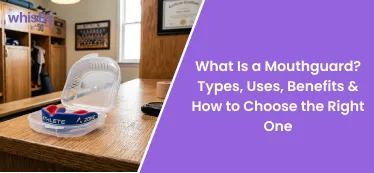
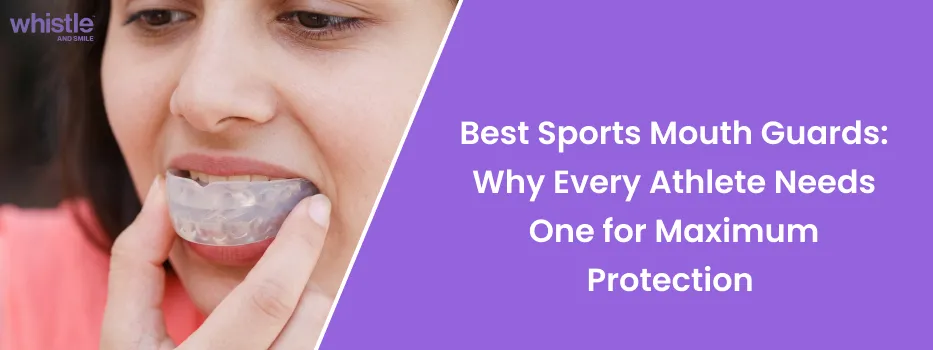
A sports mouth guard is a resilient, shock-absorbing oral appliance worn over teeth to dissipate mechanical impact forces during athletic activities, contact sports, and recreational games.
While store-bought boil-and-bite models offer basic barrier defense, custom-laminated mouthguards fabricated from digital 3D intraoral scans provide superior retention, unhindered breathing, and maximum clinical protection across Whistle's network of 600+ partner clinics nationwide.
- Proven Shock Dissipation: A sports mouth guard distributes sudden blunt forces across the entire dental arch, preventing isolated tooth fractures and traumatic avulsions.
- What Boxers Keep in Mouth: Combat athletes wear heavy-duty, multi-laminated ethylene vinyl acetate (EVA) gumshields designed to absorb high-velocity impacts, prevent jaw dislocations, and shield against severe tongue lacerations.
- Comprehensive Oral Protection: Key sports mouthguard benefits and protective mouthguards benefits include guarding lips and cheeks from bracket cuts, reducing jaw concussion forces, and shielding developing tooth roots.
- Types of Mouthguards Compared: While stock and boil-and-bite trays are inexpensive, custom-molded pressure-laminated guards provide unmatched retention, optimal 3mm to 4mm occlusal thickness, and effortless breathing.
- Essential for Orthodontic Patients: Athletes wearing fixed braces or clear aligners must wear specialized protective mouthguards to protect both brackets and soft tissues without impeding orthodontic tooth movement.
It's an easy miss. Most people think mouthguards are only for boxers or MMA fighters, but that assumption is an expensive one.
According to the American Dental Association, players who go without a mouthguard are 60 times more likely to damage their teeth. And fixing that damage isn't a one-time cost. A single knocked-out tooth usually needs a splinting, RCT & crown, sometimes even implant along with regular follow-up care, which can add up to several lakhs of rupees over a lifetime.
If you want to play your best while keeping your smile safe, finding the best sports mouth guard for your needs is your smartest play. Let's start with the basics.
What Exactly Is a Sports Mouthguard? (And What Does It Feel Like?)
What Boxers Keep in Mouth: The Science of Combat Gumshields
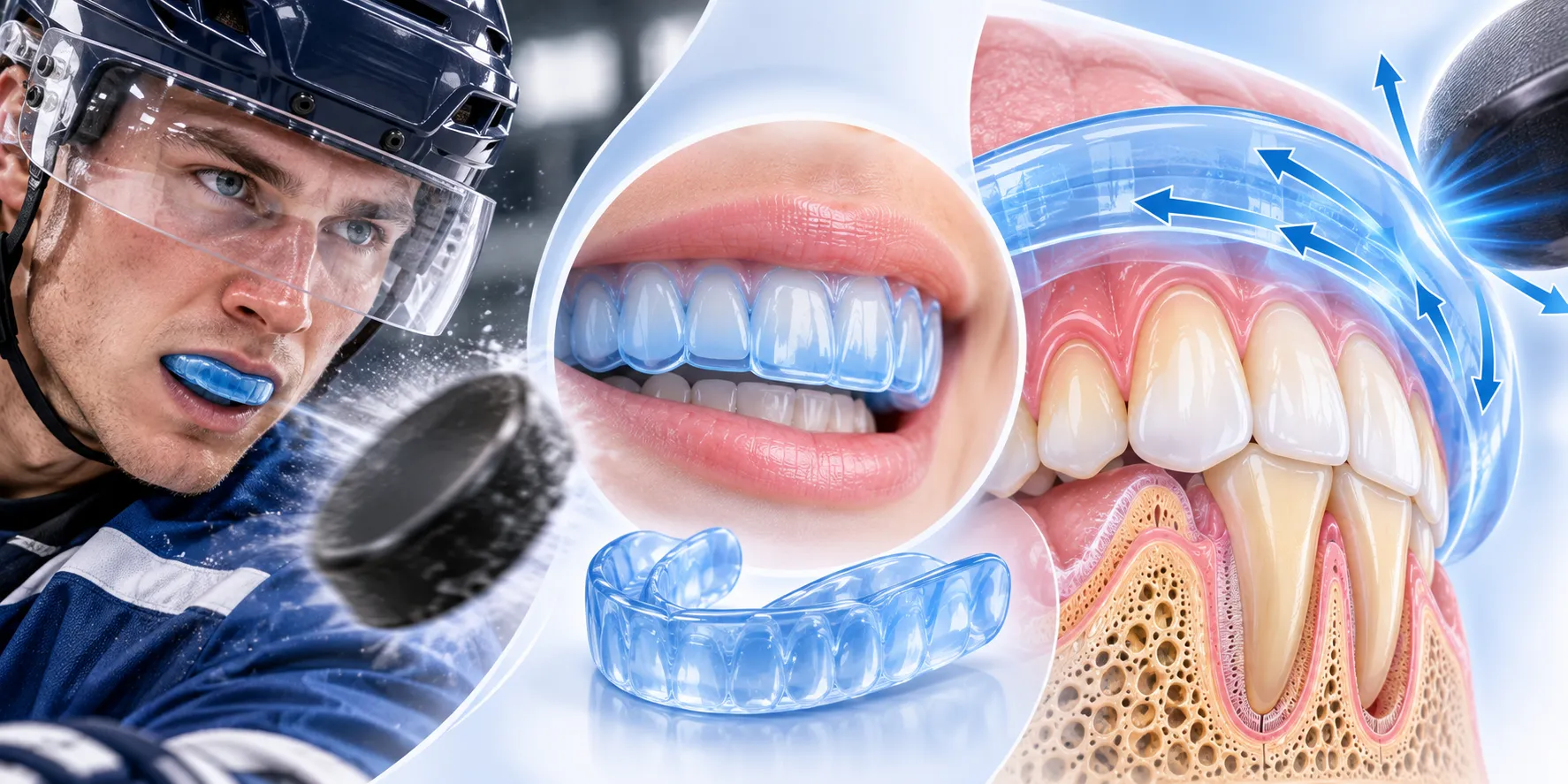
In combat sports such as professional boxing, kickboxing, and Muay Thai, the device fighters keep clamped between their teeth is a specialized, multi-laminated boxing mouthguard (historically referred to as a gumshield). Boxers do not wear generic retail plastic trays; they rely on heavy-duty, multi-layer custom mouthguards engineered to withstand hundreds of pounds of direct blunt force.
Combat Sports Anatomy: Why Boxers Never Fight Without a Guard
In boxing, taking a direct hook or uppercut to an unprotected jaw can cause three severe injuries: the sharp lower teeth can bite clean through the tongue or lower lip; the lower jaw (mandible) can snap at the condylar neck; and the lower jaw head can be driven violently upward into the skull's glenoid fossa, transmitting shock waves directly to the brain.
The custom guard boxers keep in mouth acts as a hydraulic damper, locking the upper and lower jaws into a stable, aligned bite that prevents mandibular dislocation, shields the tongue, and dampens cranial shock.
Key Sports Mouthguard Benefits: Why Every Athlete Needs One
Understanding the 3 Types of Mouthguards
Not all mouthguards offer the same level of safety, comfort, and breathability. When evaluating the different types of mouthguards available, sports dentists categorize them into three distinct tiers:
| Mouthguard Type | Fabrication Method | Shock Absorption & Safety | Breathing & Speaking Comfort | Durability & Fit |
| Type I: Custom-Made (In-Clinic) | Fabricated by a dentist from digital 3D intraoral scans using multi-layer heat pressure lamination | Maximum shock dissipation; precise 3mm to 4mm uniform thickness across all critical zones | Exceptional; stays locked onto teeth without clenching; easy breathing and speaking | High durability; lasts 1 to 2 seasons; retains exact anatomical fit |
| Type II: Mouth-Formed (Boil-and-Bite) | Over-the-counter thermoplastic tray softened in boiling water and molded by biting down | Moderate; biting down hard often thins out the plastic over biting edges by 50% to 70% | Moderate; bulky feeling; athlete must frequently bite down to prevent dislodging | Moderate to low; tends to loosen, crack, or warp over time |
| Type III: Stock (Ready-Made) | Pre-formed generic plastic tray bought off retail store shelves; zero customization | Minimal; loose fit provides uneven and unreliable impact cushioning | Poor; extremely bulky; obstructs airway and impedes communication with teammates | Low; prone to falling out during physical exertion |
High-Risk Sports That Demand a Protective Mouthguard
- Full-Contact Team Sports: Football, rugby, ice hockey, field hockey, lacrosse, and kabaddi.
- High-Velocity Non-Contact Sports: Cricket (batsmen, wicketkeepers, and close fielders), baseball, and softball.
- Combat and Martial Arts: Boxing, MMA, karate, taekwondo, Brazilian jiu-jitsu, and wrestling.
- Court and Recreational Sports: Basketball (leading cause of dental injuries in high school athletics), handball, and squash.
- Action Sports: Skateboarding, mountain biking, rollerblading, gymnastics, and horse riding.
The 4-Step Custom Mouthguard Process at Whistle Partner Clinics
- Clinical Dental Examination: A licensed dental specialist checks your dental health, inspects tooth eruption status (crucial for growing children), and evaluates existing orthodontic appliances or bite conditions.
- Precision 3D Digital Intraoral Scan: Instead of messy, uncomfortable putty impressions that trigger gagging, we use advanced high-definition 3D intraoral scanners to map every tooth contour and gum margin with sub-millimeter accuracy.
- Multi-Layer Pressure Lamination: Using medical-grade, BPA-free ethylene vinyl acetate (EVA), dental technicians heat-laminate multiple resilient layers under high pressure. This ensures uniform 3mm to 4mm shock-absorbing thickness that cannot be replicated at home.
- Clinical Seating and Fit Verification: You return for a quick fitting appointment. Your dentist checks retention, ensures speech and airway clarity, and verifies smooth, laser-scalloped gingival margins that will never chafe your gums.
How to Care for Your Sports Mouth Guard: Hygiene Best Practices
- Rinse Immediately After Every Use: Always rinse your mouthguard with cool water or an antimicrobial mouthwash right after taking it off the field.
- Brush with a Soft Toothbrush: Clean your guard regularly with a soft toothbrush and mild antibacterial liquid soap. Avoid abrasive toothpastes, which create microscopic scratches that harbor odor-causing bacteria.
- Never Use Hot Water: Boiling water or hot tap water will warp the custom thermoplastic polymer, permanently ruining its anatomical retention.
- Store in a Rigid, Ventilated Case: Always keep your guard in a sturdy, well-ventilated protective case. Good air circulation allows the guard to dry completely, preventing mold and bacterial growth.
- Bring It to Your Routine Dental Checkups: Bring your sports guard to your 6-month dental checkups so your dentist can inspect it for cracks, thinning, or bite changes.
Can a Mouthguard Improve Your Performance?
The research that connects mouthguards with enhanced strength or speed for athletes is a little mixed. While no clear data that backs these claims. But some studies do indicate that a well-balanced bite during intense activities, helps reduce jaw tension, which eventually results in some athletes feeling more comfortable and focused.
But one thing that’s for sure is that a properly fitted custom guard won’t hold you back the way a bulky one does. The comfort is unmatched with a good quality sports guard, better breathing, clearer speech and also allows hydration, and that in itself is better than playing with one that feels like a loose piece of plastic in their mouth.
Why Athletes Choose Whistle Sports Mouthguards
At Whistle, we believe the best sports mouth guard should never force you to choose between safety and comfort. We've applied advanced dental science directly to athletic protection:
- Advanced impact materials - Whistle guards use multi-layered, shock-absorbing polymers that soak up heavy hits while staying slim and lightweight.
- Easy breathing and speaking - Because each guard is custom-made from a scan of your teeth, it clicks firmly into place. It won't fall out when you shout a play, and you can breathe and drink water freely.
- Braces-friendly options - Wearing braces? Whistle offers special guards with an internal channel that cushions your brackets, protects your lips from cuts, and still lets your teeth move as planned.
How You Get One: 3 Simple Steps
Take the quick smile assessment on our website and find a certified Whistle partner clinic near you. Get a 3D scan at the clinic, powered by our largest DSO partner - It's quick, comfortable, and takes under 5 minutes, no messy impressions. Collect your custom guard at your fitting appointment, usually within 7-10 days, checked and adjusted by your dentist for a perfect fit.
Whistle guards are only fitted through certified dental partners, never through mail-order "at-home" kits. A blind impression made at home can't accurately map your bite, and a badly mapped bite can actually increase your risk of jaw injury during an impact. We partner with a network of 2,500+ certified dental clinics so a qualified professional gets your fit exactly right.
Conclusion: Play Hard, Protect Your Smile Smart
A chipped tooth or shattered jaw happens in a split second, but the emotional, physical, and financial consequences can last a lifetime. Wearing a high-performance sports mouth guard is as fundamental to athletic safety as wearing a helmet, shin pads, or gloves.
Whether you are stepping into a boxing ring, batting on the cricket pitch, or scoring on the football field, a custom-fitted mouthguard gives you the confidence to compete fearlessly without jeopardizing your teeth.
By moving beyond bulky, ill-fitting store-bought trays and choosing professional 3D custom dental lamination, you ensure optimal breathing, maximum shock dissipation, and absolute peace of mind. Protect your athletic passion by booking an in-person 3D scan at a Whistle partner clinic near you today!
Also Read:
- Why Use a Mouth Guard When Playing Sports
- 7 Facts About Your Sports Mouth Guard
- What Is a Mouthguard?
- How to Use a Mouth Guard
Book 3D Teeth Scan
Consult our experts and get a 3D preview of your smile transformation!
Best Sports Mouth Guards
Sports Mouth Guard
FAQ's
Q1.How much does a custom sports mouthguard cost in India?
Custom sports mouthguards in India typically cost between ₹3,000 and ₹10,000+, depending on the material, design, and clinic. That's more than a store-bought guard, but it lasts longer, protects far better, and costs a fraction of what repairing a single broken tooth would.
Q2.Why is a custom-fit mouthguard better than a store-bought one?
A custom guard is made from an accurate 3D scan of your teeth, so the material stays at full protective thickness and fits precisely. Unlike bulky store-bought guards that slide around, a custom guard stays locked on your teeth while you breathe, speak, and drink comfortably.
Q3.How long does a custom sports mouthguard last?
For adults, a quality custom guard typically lasts 10 to 12 months before the material starts losing its spring. For kids and teens, have the guard checked every sports season, growing jaws and new teeth change the fit quickly.
Q4.How often should a sports mouth guard be replaced?
Adult mouthguards should generally be replaced every 1 to 2 sporting seasons, or sooner if they show signs of chewing wear, cracks, or loose fit. For growing children and teenagers, mouthguards must be replaced every season or after major orthodontic shifts to accommodate developing teeth and jaws.
Q5.Can wearing a mouthguard help prevent concussions?
While a mouthguard cannot prevent all concussions, clinical sports medicine studies show that a well-fitted, shock-absorbing mouthguard significantly dampens the shock waves transmitted from lower jaw impacts through the temporomandibular joints into the base of the skull, reducing the severity of traumatic brain acceleration.
 Medically Reviewed by Whistle Dental Team